The twelfth film was conceived by artist Bianca Bondi. In her video, she undertook to convey the sense of timelessness and existence beyond time that is the very fabric of the Louvre.
Musée du Louvre (April 20, 2023) – As part of its contemporary programs, the Louvre has invited twenty young creative figures to present their take on the museum in the form of a 3:30 min film.
The “Louvre Looks” initiative brings together creatives under forty – whether they come from the visual arts, poetry, film, experimental music, or fashion. They created new films in the palace itself and thus reconnect with the past of the Louvre – which hosted artist studios even before it became a museum.
These films go live every Thursday on YouTube. Over the course of twenty weeks, you will be given the opportunity to discover many fresh insights into the Louvre.
The tenth film was conceived by painter, performer, and musician Eliza Douglas. She assembled images released by visitors on their Instagram feed to give a polyphonic image of the museum’s lives through its audiences – your Louvre.
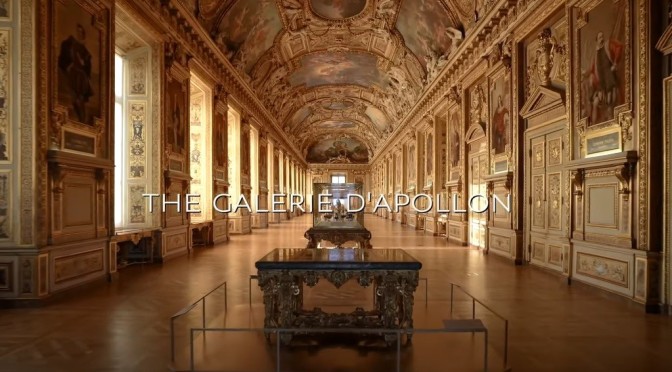
King Louis XIV famously identified himself with the sun god Apollo and this splendid gallery was the first tangible representation of that image. To create this masterpiece of architectural decoration, he summoned the greatest painters, gilders and sculptors of the day, who later worked on the Hall of Mirrors at the Château de Versailles. Today, the Galerie d’Apollon is home to the royal collection of hardstone vessels and the French Crown Jewels.
The French Crown Jewels
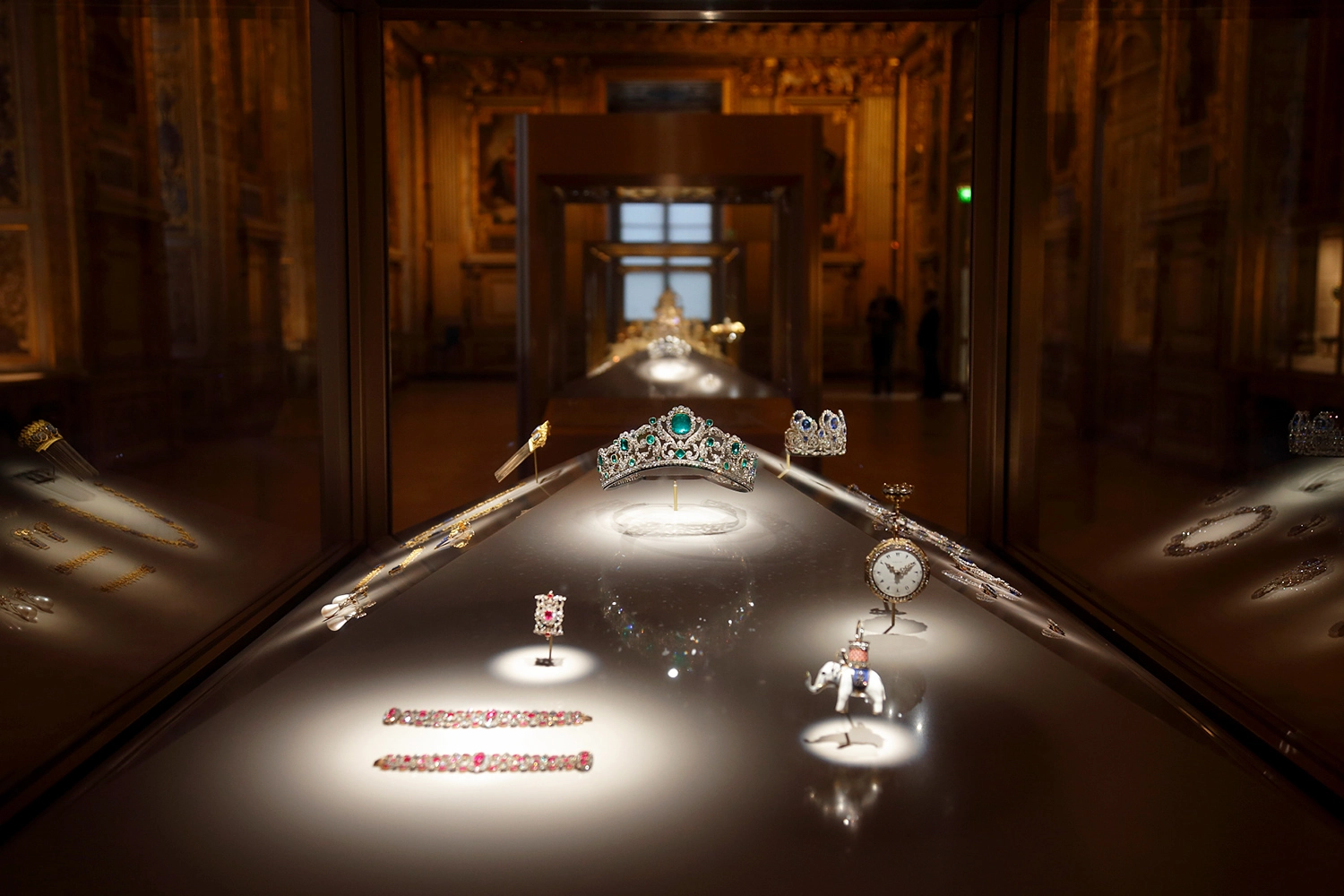
The royal collection also includes the Crown Jewels. The so-called ‘Côte de Bretagne’ spinel, which once belonged to Anne de Bretagne, is the oldest of the gems to have survived a tumultuous history involving theft, dispersal and sale. Three historical diamonds – the Regent, the Sancy and the Hortensia – formerly adorned royal crowns or garments. The spectacular 19th-century jewellery sets in the collection include emerald and diamond pieces that once belonged to Empress Marie Louise.
The French Crown Jewels
The 60-meter-long Apollo Gallery contains 105 extraordinary pieces, the most famous being the Crown Jewels of France. “This generic term covers not just the jewels that belonged to the kings of France but all the regalia as well: the precious stones and glyptic pieces,” says Pierre Rainero, director of style and heritage with the jeweler Cartier, which has sponsored the renovation work.
PHARAOH OF THE TWO LANDS – The African Story of the Kings of Napata
28 April – 25 July 2022
OVERVIEW
In the 8th century BC, a kingdom grew up around the Nubian capital, Napata. In about 730 BC, the Nubian king Piankhy conquered Egypt and founded the 25th Dynasty of Kushite kings, who ruled for more than fifty years over a kingdom stretching from the Nile Delta to the confluence of the White and Blue Niles. The most famous of those kings is the pharaoh Taharqa.
The exhibition highlights the importance of this vast kingdom, located in what is now northern Sudan. It is organised in connection with the Louvre’s archaeological campaign in Sudan, which focused for ten years on the site of Muweis before moving some 30 kilometres northwards to El-Hassa, not far from the pyramids of Meroe.
#Paris, the city of light, love and art; So, it's no surprise it also has the most visited museum in the world.
Despite travel restrictions and closures of tourist attractions due to Covid19, the Museé de Louvre still saw 2.7 million people visiting its exhibitions in 2020.
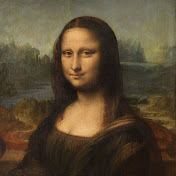
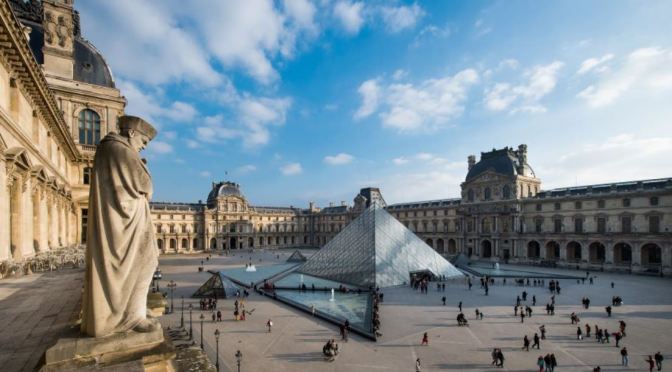
The Louvre, or the Louvre Museum, is the world’s largest art museum and a historic monument in Paris, France, and is best known for being the home of the Mona Lisa. A central landmark of the city, it is located on the Right Bank of the Seine in the city’s 1st arrondissement.
The Tuileries Garden is a public garden located between the Louvre and the Place de la Concorde in the 1st arrondissement of Paris, France. Created by Catherine de’ Medici as the garden of the Tuileries Palace in 1564, it was eventually opened to the public in 1667 and became a public park after the French Revolution.
Paris, France’s capital, is a major European city and a global center for art, fashion, gastronomy and culture. Its 19th-century cityscape is crisscrossed by wide boulevards and the River Seine. Beyond such landmarks as the Eiffel Tower and the 12th-century, Gothic Notre-Dame cathedral, the city is known for its cafe culture and designer boutiques along the Rue du Faubourg Saint-Honoré.
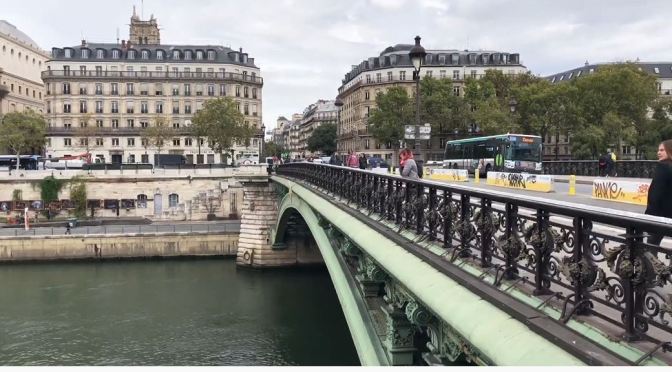
Video timeline: 00:00 Introduction 00:35 Shakespeare and Company Bookstore 01:25 Wallace fountains 02:14 Oldest bridge in the City 03:15 Pont des Arts 04:00 Notre Dame 05:27 Louvre Museum 06:08 Eiffel Tower 06:53 Montmartre 07:40 Wall of Love
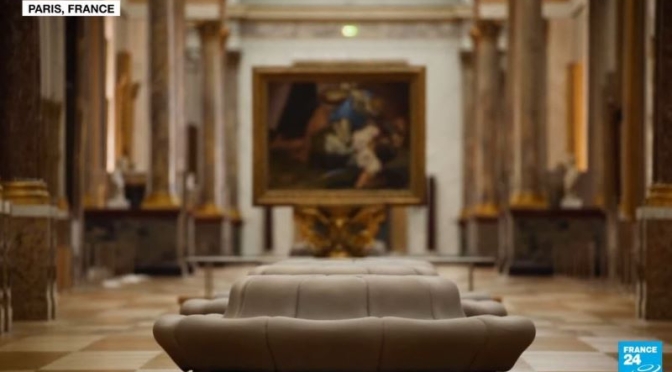
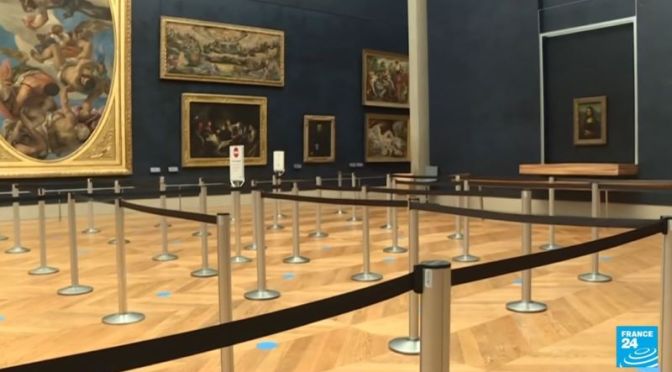
After months of closure since the beginning of the health crisis and only a reopening for a few short months between two confinements last summer, the #Louvre lost 72% of attendance by 2020. But despite the absence of visitors, the heart of the #museum has not completely stopped beating. The Louvre is even taking advantage of this period to carry out #renovations.
After six months of cumulative closure since the beginning of the health crisis and only a reopening for a few short months between two confinements this summer, the #Louvre lost 72% of attendance by 2020. But despite the absence of visitors, the heart of the museum has not completely stopped beating. The Louvre is even taking advantage of this period to carry out #renovations.
News, Views and Reviews For The Intellectually Curious





 Boomers Daily