
Tag Archives: Technology

Top Science Podcasts: Tracking Landslides In Taiwan, The Universality Of Music (ScienceMag)

scimag_pc_logo_120_120 (2)You may have seen the aftermath of a landslide, driving along a twisty mountain road—a scattering of rocks and scree impinging on the pavement. And up until now, that’s pretty much how scientists have tracked landslides—roadside observations and spotty satellite images. Now, researchers are hoping to track landslides systematically by instrumenting an entire national park in Taiwan. The park is riddled with landslides—so much so that visitors wear helmets. Host Sarah Crespi talks with one of those visitors—freelance science journalist Katherine Kornei—about what we can learn from landslides.

In a second rocking segment, Sarah also talks with Manvir Singh about the universality of music. His team asked the big questions in a Science paper out this week: Do all societies make music? What are the common elements that can be picked out from songs worldwide? Sarah and Manvir listen to songs and talk about what love ballads and lullabies have in common, regardless of their culture of origin.

To read more: https://www.sciencemag.org/podcast/building-landslide-observatory-and-universality-music


 

Photography: “Stunning” 52-Megapixel Photos Of Moon By Eric Morgunov

From an Interesting Engineering online article:

Morgunov said, “This picture is two different types of photos, a long exposure (to capture earthshine) and a fast shutter to capture the illuminated side.”

Eric Morgunov 52 Megapixel Photo of the Moon Using 500 Images

He continued to explain the additional images he used, which created the final piece: “The illuminated side is 500 photos of 1/60 at 100iso, was stacked and sharpened in autostakertt3 and registax6. The earthshine was around 15 photos at 3-second expo w/ 1600iso stacked and sharpened in autostakertt3 and registax6. I blended the two photos together in photoshop (a lot more work then it seems) added a star trail background gave it glow.”

https://www.instagram.com/ericmorgunov/

Eric Morgunov’s image of the Moon stands out for one main reason: it’s 500 pictures of the Moon brought together to create one incredible 52 megapixel photograph.

To read more: https://interestingengineering.com/man-creates-amazing-52-megapixel-photo-of-the-moon-using-500-images?_source=newsletter&_campaign=23rY2Mo8goQjd&_uid=46dBBxnxd7&_h=0c209d493fa27bb2c39469a873cbbd733289c833&utm_source=newsletter&utm_medium=mailing&utm_campaign=Newsletter-19-11-2019

Automobile Nostalgia: “1949 Healey Silverstone” Was Designed As “Both Road And Racing Car”

From a ClassicDriver.com online article:

Classic Driver Logo“Originally designed as both a road and racing car, little compromise was made for comfort and practicality. With a light body and a peppy 2½ litre Riley engine, the Healey Silverstone performed well; even the headlights were brought inside behind the grille to make it more aerodynamic. It had a very limited run; just 105 produced making correct examples extremely desirable. 

1949 Healey Silverstone Classic Driver

…Donald Healey himself raced one, winning the 1949 Alpine Rally. A Healey Silverstone also won Belgium’s Liège-Rome-Liège Rally, the Isle of Man Manx Cup, various races at Goodwood and other national events.

Due to the limited production run, cars with important period competition history are desirable and so when a previously undiscovered chassis turns up, correct identification is key.

To read more: https://www.classicdriver.com/en/car/healey/silverstone/1949/712691?utm_medium=email&utm_campaign=Classic%20Driver%20Daily%203252019&utm_content=Classic%20Driver%20Daily%203252019+CID_45cd83d4933f01b9587a4a72c19b3141&utm_source=newsletter

Medical Technology: Mobile Ultrasound For Smart Phones Or Devices Assists In Cardiac Arrest

From a Philips.com online release:

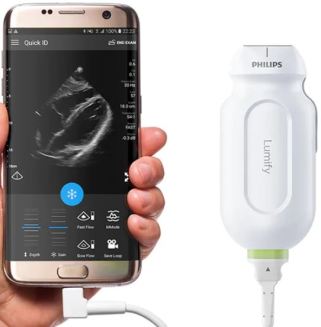
Philips Lumify Handheld UltrasoundPhilips Lumify ultrasound technology is an important component of the mobile ECMO unit. Members of the ECMO team use Lumify for real-time visual guidance when inserting tubes in veins and arteries in a process called ECMO cannulation.

“Lumify has excellent image quality and is easy to use – it was instrumental in our first pre-hospital ECMO cannulation,” said Dr. Darren Braude.

Physicians from the University of New Mexico (UNM) and local emergency responders recently treated a cardiac arrest patient with the first ever out-of-hospital portable life-support system available in the United States.

The machine performs a function called extracorporeal membrane oxygenation, or ECMO. ECMO machines mimic a functioning heart and lungs, circulating oxygenated blood for patients who have suffered a cardiac arrest.

To read more: https://www.philips.com/a-w/about/news/archive/standard/news/articles/2019/20191119-philips-lumify-handheld-ultrasound-supports-life-saving-technology-in-pre-hospital-setting.html

Technology Innovations: “WI-CHARGE” Charges Smart Devices Wirelessly With Infrared Light

From an Interesting Engineering online review:

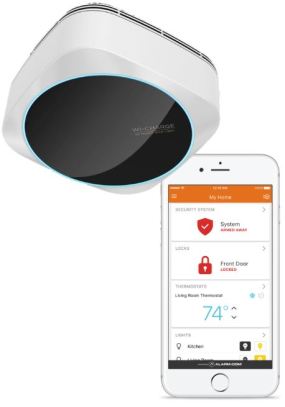
Wi-Charge TechnologyWi-Charge says it has a solution to the problem. Its technology allows users to power small devices, such as smartphones, smart fire alarms, and smart locks, from several feet away without any wires.

The technology works by sending out a thin beam of infrared light. A receiver on the enabled device then converts the beam into electricity.

Electronic waste is expected to exceed 50 million tonnes by 2020. That number simply isn’t sustainable.

One company is aiming to get rid of one of the main culprits in e-waste: the electronic cable. Wi-Charge has created a method for powering devices wirelessly using safe and efficient infrared technology.

Aside from having the potential to end a great deal of waste, the company is also aiming to meet a growing demand for power that will only increase with the advent of 5G.

WiCharge_Charging_-infographic_wide_v2

To read more: https://interestingengineering.com/is-wireless-power-the-future-for-charging-smart-home-devices?_source=newsletter&_campaign=YqN5dY3r3bJLA&_uid=46dBBxnxd7&_h=0c209d493fa27bb2c39469a873cbbd733289c833&utm_source=newsletter&utm_medium=mailing&utm_campaign=Newsletter-15-11-2019


Top Science Podcasts: Researchers “Locked In Arctic Ice Flow”, “Spikes Of Plasma” Heating The Sun’s Corona (ScienceMag)

The Polarstern research vessel will spend 1 year locked in an Arctic ice floe. Aboard the ship and on the nearby ice, researchers will take measurements of the ice, air, water, and more in an effort to understand this pristine place. Science journalist Shannon Hall joins host Sarah Crespi to talk about her time aboard the Polarstern and how difficult these measurements are, when the researchers’ temporary Arctic home is the noisiest, smokiest, brightest thing around.

After that icy start, Sarah talks also with Tanmoy Samanta, a postdoctoral researcher at Peking University in Beijing, about the source of the extreme temperature of the Sun’s corona, which can be up to 1 million K hotter than the surface of the Sun. His team’s careful measurements of spicules—small, plentiful, short-lived spikes of plasma that constantly ruffle the Sun’s surface—and the magnetic networks that seem to generate these spikes, suggest a solution to the long-standing problem of how spicules arise and, at the same time, their likely role in the heating of the corona.

To read more: https://www.sciencemag.org/podcast/how-make-arctic-ship-vanish-and-how-fast-moving-spikes-are-heating-sun-s-atmosphere

Medical Podcasts: New Stanford Hospital Uses Technology To Stay “Future-Proofed”

From a Stanford Medicine online article:

Stanford Medicine“A simple example would be copper and fiber wires. When you’re putting wires in a new facility, it’s easier to put in many more than you need that moment because putting them in 5 years from now or 10 years from now is quite hard. Something like 85 percent of our copper wires and fiber optic cables are dark right now because we know we’re going to need them in the future.”


When you consider the fast pace of technological advances today, you wonder how do you go about building a new hospital and keep the technology relevant for 10, 20 or even 50 years?  I put that question to Stanford Health Care’s technology wiz Gary Fritz. He told me:

“We try to do something we call future-proof the hospital. We tried to make design decisions and technology decisions that allow us to move to the current or the next generation technology as easily as possible.”


Top New Science Podcasts: 3D Printer Advances, Gut Microbes Linked To Liver Disease (Nature Magazine)

Nature PodcastHear this week’s science news, with Nick Howe and Shamini Bundell. This week, a new 3D printer allows quick shifting between many materials, and understanding the link between gut microbes and liver disease.


In this episode:

00:46 A new dimension for 3D printers

A new nozzle lets a 3D printer switch between materials at a rapid rate, opening the door to a range of applications. Research Article: Skylar-Scott et al.News and Views: How to print multi-material devices in one go

08:07 Research Highlights

The slippery secrets of ice, and cells wrapping up their nuclei. Research Highlight: Viscous water holds the secret to an ice skater’s smooth glideResearch Highlight: Super-thin layer of ‘bubble wrap’ cushions a cell’s nucleus

10:17 Linking bacteria to liver disease

Researchers have isolated a bacterial strain that appears to play an important role in alcoholic liver disease. Research paper: Duan et al.News and Views: Microbial clues to a liver disease

17:10 News Chat

‘Megaconstellations’ of satellites concern astronomers, and a report on the gender gap in chemistry. News: SpaceX launch highlights threat to astronomy from ‘megaconstellations’News: Huge study documents gender gap in chemistry publishing

Consumer Surveys: Only 30% Of Baby Boomers Use Online Grocery Services

From a Chain Store Age online release:

Chain Store Age CoverAccording to a recent survey of 1,000 U.S. consumers from advertising platform Criteo, 48% of millennial and Gen Z respondents use online grocery delivery services, compared to 37% of Gen X respondents and only 30% of baby boomer respondents. 

Baby boomers are much less likely than younger consumers to participate in a particular omnichannel grocery activity.

Results for browsing multiple sites to read product reviews are essentially the same across generations. But Gen X consumers are much more likely to browse multiple sites if a product they want is unavailable (37%) than Gen Z/millennial (28%) or baby boomer/silent generation consumers (22%). And more than half (51%) of baby boomer/silent generation consumers will browse multiple sites for none of these reasons, compared to 27% of Gen X and 15% of Gen Z/millennial consumers.

To read more: https://chainstoreage.com/survey-boomers-dont-say-ok-grocery-service

Trends In Transportation: The BST-Hypertek Electric, Carbon Fiber Motorcycle Is “The New Standard”

From a New Atlas online review:

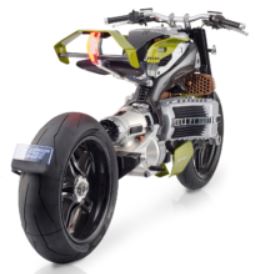
BST-Hypertek Electric MotorcycleWell, with this extraordinary electric bike, I think I finally understand what Terblanche has been trying to get at all these years, and I absolutely love it. Designed and built in partnership with South African carbon wheel specialists BST, meet the all-electric Hypertek.

There could be no better name for this thing and its unabashed, triumphant futuristicism. Every component and detail seems stripped back, technical, modular, functional. It’s like a Confederate jumped in a teleportation machine without realizing there was already a Dyson vacuum in there.

The Hypertek is built around the reasonably unglamorous DHX Hawk water-cooled PMS electric motor, presumably chosen for its compact size and high torque output of 120 Nm (88.5 lb-ft). BST claims a peak power of 80 kW (107 hp), but we can’t find any motor on the DHX website capable of such peaks – the company’s largest advertised Hawk motor makes 120 Nm but peaks at 55.3 kW (74 hp) and offers a continuous power of 34.5 kW (46.3 hp). So perhaps it’s a custom build.

To read more: https://newatlas.com/motorcycles/bst-hypertek-crazy-electric-motorcycle/