


Tag Archives: Technology
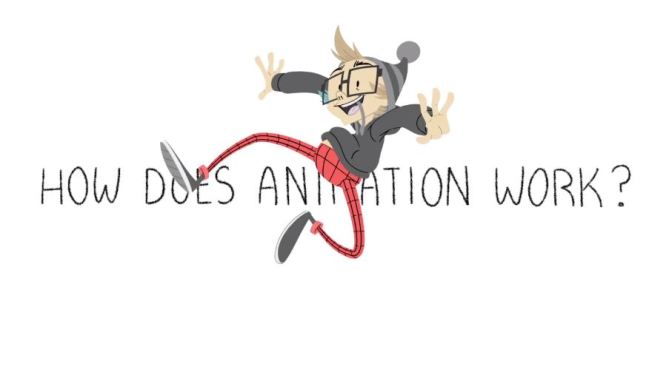
Creative Arts Video: “How Does Animation Work?”
Created, Animated and Directed by: Tyler Pacana
An overview of how animation is made with traditional, 2D-rigged, stop-motion, and CG techniques.
Music: Hub World – Yotam Perel
Produced at Sheridan College [2020].

Coronavirus/Covid-19: Francis Crick Institute On “Large-Scale, Reliable Testing” (LRB Podcast)
 Rupert Beale talks again to Thomas Jones about his work at the Francis Crick Institute, where he’s helping to set up a testing lab for Covid-19.
He talks about the challenges of creating a scalable process, explains why a successful antibody test could be hard to achieve, and finds some reasons to be hopeful.
You can find a full transcript of this episode HERE.

History: “European Castle Ruins” Digitally Restored By NeoMam Studios
From AtlasObscura.com (March 26, 2020):
…a team of designers recently looked at the now-ruined castles of Middle Ages Europe, lifting the fortifications up from their dilapidated states and digitally reimagining the structures as they were in their heyday.

Seven European castles were virtually rebuilt, restoring them from their keeps to their baileys. Architects pored over old paintings, blueprints, and other research documents that describe the strongholds, then offered their opinions to the NeoMam Studios design team, which digitally revived the structures from the ground up.
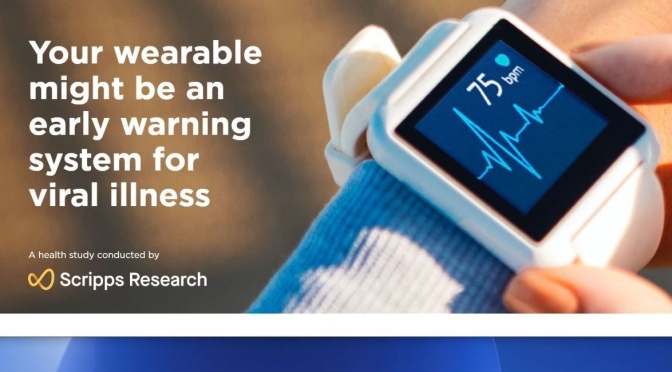
Health: Scripps Research “DETECT” Wearable APP Study – A Viral Illness Early Warning System
 When your heart beats faster than usual, it can mean that you’re coming down with a cold, flu, coronavirus, or other viral infection. That’s the conclusion of recent medical research.
So wearable devices that measure your resting heart rate—made by Apple, Fitbit, Garmin, and others—might help scientists spot viral outbreaks, and also give you more insight into your own health.
Scripps Research designed DETECT (Digital Engagement & Tracking for Early Control & Treatment), a study that will monitor your heart rate and allow you to record symptoms like fever or coughing.
Top Science Podcasts: Ultra-Fast Electrical Switches, Glacial Retreat And Dodgier Drones
 Researchers have developed an ultra-fast electrical switch that they hope can be used in communication and imaging applications.
In this episode:
01:57 Speedy switches
Researchers have developed an ultra-fast electrical switch that they hope can be used in communication and imaging applications. Research Article: Nikoo et al.
08:14 Research Highlights
Using sound to estimate glacial retreat, and building a dodgier drone. Research Highlight: Underwater microphones listen as as glacier retreats; Research article: Falanga et al.
10:32 Algorithmic heart diagnosis
Scientists have developed a new algorithm which calculates the amount of blood pumped by the heart beat by beat. Research Article: Ouyang et al.; News and Views: AI tracks a beating heart’s function over time

Smartphone Books: The New York Public Library’s Interactive “Insta Novels”
Insta Novels launched August 22, 2018 on the Library’s Instagram account (@nypl) with Part 1 of a newly digitized version of Alice’s Adventures in Wonderland by Lewis Carroll. The novel is illustrated by well-known designer Magoz (@magoz).

First, go to the Library’s Instagram account (@nypl) and tap Part 1 of Alice’s Adventures in Wonderland in the Highlights section, right under the bio.
Rest your thumb on lower right part of the screen to hold the page, and lift your thumb to turn the page. (The lower right thumb holder is designed to double as a flip book: if you lift your thumb and let the pages flip, you’ll see an animation.)
As more stories are added, the NYPL Instagram account’s Highlights will turn into a digital bookshelf.

Archaeology: “Blombos Cave”, South Africa – First Human “Technological Innovations” (Video)
See the first laboratory on Earth – Blombos Cave. Here our ancestors conducted the first chemistry experiments.
Blombos Cave is an archaeological site located in Blomboschfontein Nature Reserve, about 300 km east of Cape Town on the Southern Cape coastline, South Africa. The cave contains Middle Stone Age (MSA) deposits currently dated at between c. 100,000 and 70,000 years Before Present (BP), and a Late Stone Age sequence dated at between 2000 and 300 years BP. The cave site was first excavated in 1991 and field work has been conducted there on a regular basis since 1997, and is ongoing.
The excavations at Blombos Cave have yielded important new information on the behavioural evolution of anatomically modern humans. The archaeological record from this cave site has been central in the ongoing debate on the cognitive and cultural origin of early humans and to the current understanding of when and where key behavioural innovations emerged among Homo sapiens in southern Africa during the Late Pleistocene. Archaeological material and faunal remains recovered from the Middle Stone Age phase in Blombos Cave – dated to ca. 100,000–70,000 years BP – are considered to represent greater ecological niche adaptation, a more diverse set of subsistence and procurements strategies, adoption of multi-step technology and manufacture of composite tools, stylistic elaboration, increased economic and social organisation and occurrence of symbolically mediated behaviour.
The most informative archaeological material from Blombos Cave includes engraved ochre, engraved bone ochre processing kits, marine shell beads, refined bone and stone tools and a broad range of terrestrial and marine faunal remains, including shellfish, birds, tortoise and ostrich egg shell and mammals of various sizes.[20][21][22] These findings, together with subsequent re-analysis and excavation of other Middle Stone Age sites in southern Africa, have resulted in a paradigm shift with regard to the understanding of the timing and location of the development of modern human behaviour.
From Wikipedia
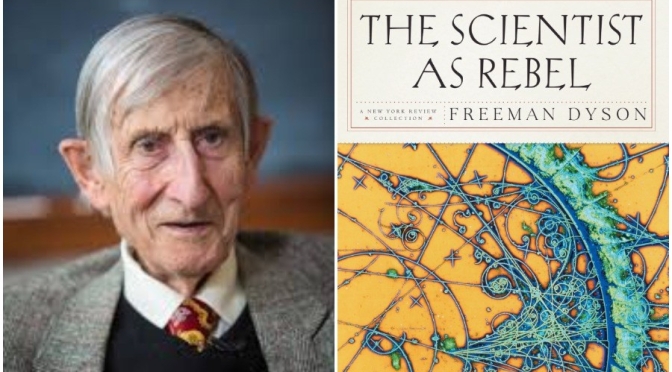
Tributes: “Maverick Genius” Freeman Dyson Dies At 96 (1923-2020); Said That “Life Begins At 55”
Excerpts from a New York Times article (Feb 28, 2020):
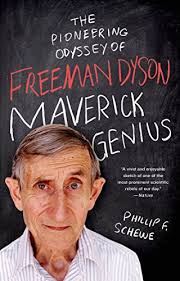 “Life begins at 55, the age at which I published my first book,” he wrote in “From Eros to Gaia,” one of the collections of his writings that appeared while he was a professor of physics at the Institute for Advanced Study — an august position for someone who finished school without a Ph.D. The lack of a doctorate was a badge of honor, he said. With his slew of honorary degrees and a fellowship in the Royal Society, people called him Dr. Dyson anyway.
Freeman J. Dyson, a mathematical prodigy who left his mark on subatomic physics before turning to messier subjects like Earth’s environmental future and the morality of war, died on Friday at a hospital near Princeton, N.J. He was 96.
As a young graduate student at Cornell University in 1949, Dr. Dyson wrote a landmark paper — worthy, some colleagues thought, of a Nobel Prize — that deepened the understanding of how light interacts with matter to produce the palpable world. The theory the paper advanced, called quantum electrodynamics, or QED, ranks among the great achievements of modern science.
Science Podcasts: Fruit Fly Neural Circuits, Fuzzy Moth Acoustics And Metallic Glass (Nature)
 This week, the brain pathways of egg laying in fruit flies, preventing fractures in metallic glass, moth’s fuzz as superior acoustic camouflage and a coronavirus update.
In this episode:
00:46 Working out the wiring behind fruit fly behaviour
Researchers have identified a neural circuit linking mating and egg laying in female fruit flies. Research Article: Wang et al.
06:01 Research Highlights
Ancient, cave-dwelling cockroaches, and hairy moths dampen sound. Research Highlight: Cockroaches preserved in amber are the world’s oldest cave dwellers; Research Highlight: Stealth flyers: moths’ fuzz is superior acoustic camouflage
07:57 Making better metallic glass
Metallic glasses have many desirable properties, but these materials are prone to fracturing. Now, a new manufacturing process may have overcome this issue. Research article: Pan et al.; News and Views: Metallic glasses rejuvenated to harden under strain
13:47 News Chat
Coronavirus outbreak updates, a survey shows Indian bird numbers are in decline, and the genomes of New York rats. News: Coronavirus: latest news on spreading infection; News: Hundreds of bird species in India are declining; News: Genomes reveal how New York City’s rats thrive in the urban jungle
 Boomers Daily