Tag Archives: Tech

World Economic Forum: Top Stories – Nov 16, 2024

World Economic Forum (November 16, 2024) – The top stories of the week include:

0:15 AI robot zaps weeds while saving crops – It’s called Concentrated Light Autonomous Weeding and Scouting or CLAWS for short. CLAWS uses AI-powered image processing to identify the crops, then targets weeds around the crop with blasts of concentrated light. This gets rid of unwanted intruders without damaging either crops or soil.

1:52 5 ways bioeconomy affects daily living – The bioeconomy uses renewable resources from land or sea to produce food, energy, and other resources. It focuses on leveraging nature’s processes and products to create sustainable economic outputs. The bioeconomy is already a part of our daily lives, influencing various sectors and industries.

6:08 Iceland sees benefit of a 4-day work week – The Nordic nation of 380,000 is rolling out a new way of working. Between 2020 and 2022, 51% of Iceland’s workers accepted an offer of shorter hours, such as a 4-day week for no loss of pay. The shift has had a positive impact on work-life balance and personal stress, new research shows.

8:17 Restored Amazon ecosystems beat logging – Amazon Sacred Headwaters Alliance is fighting to safeguard 35 million hectares of rainforest through a collaboration between 30 Indigenous nations of the Amazon basin. There’s an economic case for protecting the Amazon, says Atossa Soltani, Director of Global Strategy, Amazon Sacred Headwaters Alliance.

#WorldEconomicForum

World Economic Forum: Top Stories – Nov 9, 2024

World Economic Forum (November 9, 2024) – The top stories of the week include:

0:15 Finfluencer financial advice revolution – A finfluencer is a content creator on social media who shares information on budgeting, saving and financial investments, among other topics. Finfluencers use blogs, podcasts or videos to get their message out. They help widen financial access to groups who didn’t have it before.

3:49 These vegetables grow in-store without soil – Instead of soil, they use plugs of rockwool, irrigated with nutrient-rich water in a method called hydroponics. They come in different sizes producing from 2,000 to 15,000 plants monthly. These farms have a tiny environmental footprint. The largest models can grow as much as a 3-hectare farm.

5:44 Telehealth platform empowers millions – Altibbi offers 24/7 access to online doctors along with accessible, up-to-date medical information. It offers a cheaper, more accessible alternative to in-person consultations but it also aims to ‘change the narrative’ around the patient-doctor relationship.

8:43 ‘Underwater tractors’ replant seagrass – They were created by Reefgen, an UpLink Top Innovator. The robot scoots over the seabed, steadily and carefully restoring the ecosystem. Reefgen’s technology aims to aid conservation efforts by augmenting the efforts of human restorers.

#WorldEconomicForum

World Economic Forum: Top Stories – Oct. 5, 2024

World Economic Forum (October 5, 2024) – The top stories of the week include:

0:15 What’s next for urgent climate action? – At the Sustainable Development Impact Meetings in New York, leaders discussed how to curb carbon emissions while building an inclusive economy. Regulations can be a lever for systemic change but local innovation is crucial, too.

3:09 Solar stoves reduce air pollution deaths – It cooks food while emitting hardly any smoke. It uses a hybrid system, powered by energy from solar panels and from fuel such as small sticks or crop waste. The ACE One was created by African Clean Energy which is a part of the World Economic Forum’s Equitable Transition Initiative.

5:08 Chief economists’ outlook for the rest of 2024 – Many chief economists polled by the World Economic Forum are optimistic about 2025. In the United States, nearly nine in ten chief economists anticipate moderate or strong growth in the coming year. Similarly, in South Asia, 71% predict strong or very strong growth.

9:33 Earth exceeds 6 of 9 planetary boundaries – In 2009, a team of scientists identified the 9 natural processes that regulate Earth’s biosphere and keep it stable. These include climate change, biodiversity, ocean acidification and freshwater. The team also defined the safe planetary boundary for each process. A safe and sustainable future for humanity lies within these boundaries.

Analysis: ‘2021 iPhone 13’ – New Technology (Video)

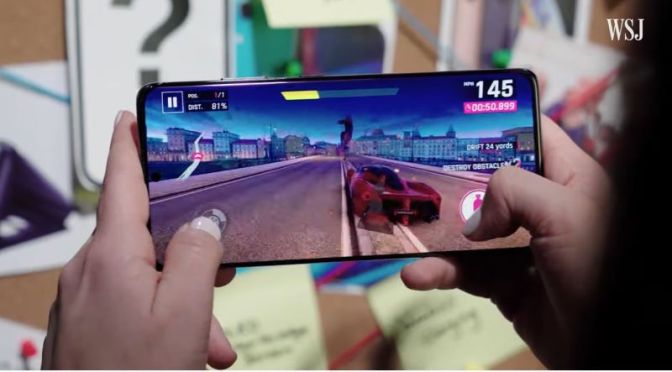
Clues to the Next iPhone Are in Samsung’s New Galaxy S21 Years of smartphone launches all plotted on one evidence board. A fingerprint sensor embedded in the screen? An ultra-zoom camera? A faster 120Hz display? Samsung’s latest tells us a lot about what might come from Apple this year in the iPhone 13. WSJ’s Joanna Stern sifts through years of Galaxy and iPhone evidence. Photo illustration: Preston Jessee for The Wall Street Journal Personal Technology With Joanna Stern

Covid Prevention: ‘Smart Technology At CES 2021’

At this year’s virtual tech megashow, gadgets to protect you from Covid-19 are all the rage. But do you need a connected mask and a personal air purifier? What about a doorbell that takes your temperature? WSJ’s Joanna Stern checks out this new gear—from her basement. Photo illustration: Preston Jessee for The Wall Street Journal

Consumers: ‘CES 2021’ – World’s Biggest Tech Show, Jan 10-14 (Video)

As CES goes online for the first time, we preview the most-anticipated products and trends (and what’s missing) at the world’s biggest tech show.

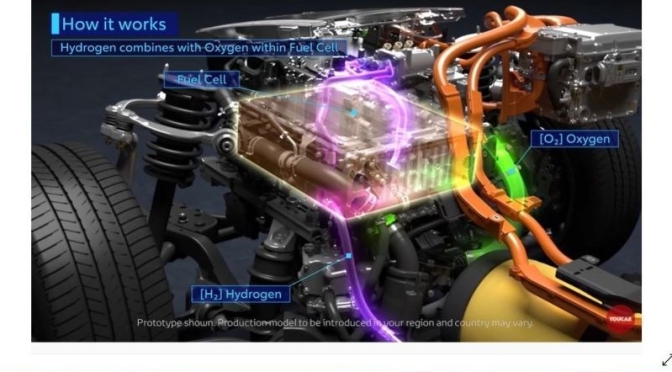
Tech: ‘2021 Toyota Mirai’ – Enhanced Hydrogen Fuel Cell Electric Car (Video)

The 2021 Toyota Mirai is the second generation of zero emission hydrogen fuel cell electric sedan.

One of the principal aims for the new 2021 Mirai has been to give the car a stronger emotional appeal, making it a car that people will be attracted to by its looks and the way it drives, as well its eco-performance. The new GA-L platform and Toyota’s advances in FCEV technologies have made this possible. Toyota’s new fuel cell stack and fuel cell power converter (FCPC) have been developed specifically for use with the GA-L platform.

The designers have been able to bring all the elements together in the stack frame (including the water pumps, intercooler, air conditioning and air compressors and the hydrogen recirculation pump) with each part made smaller and lighter, while at the same time improving performance. The stack case itself has been made smaller by using Friction Stir Welding, reducing the gap between the fuel cell and casing.

The new Mirai is equipped with lithium-ion high-voltage battery in place of the current model’s nickel-metal hydride unit. Although smaller in size, it is more energy-dense, giving higher output and superior environmental performance. Containing 84 cells, it has a 310.8 rated voltage compared to 244.8, and a 4.0 Ah capacity, versus 6.5 Ah. Overall weight has been reduced from 46.9 to 44.6 kg. The output has improved from 25.5 kW x 10 seconds to 31.5 kW x 10 seconds.

The battery’s smaller dimensions have allowed it to be positioned behind the rear seats, avoiding intrusion in the load compartment. An optimised air-cooling path has been designed, with discreet inlets either side of the rear seats. The environmental benefit of driving the Toyota Mirai go beyond zero emissions to “negative emissions” – the car effectively cleans the air as it moves. A Toyota innovation, a catalyst-type filter is incorporated in the air intake.

As air is drawn into the vehicle to supply the fuel cell, an electric charge on the non-woven fabric filter element captures microscopic particles of pollutants, including sulphur dioxide (SO2), nitrous oxides (NOx) and PM 2.5 particulates. The system is effective in removing 90 to 100% of particles between 0 and 2.5 microns in diameter from the air as it passes into the fuel cell system.

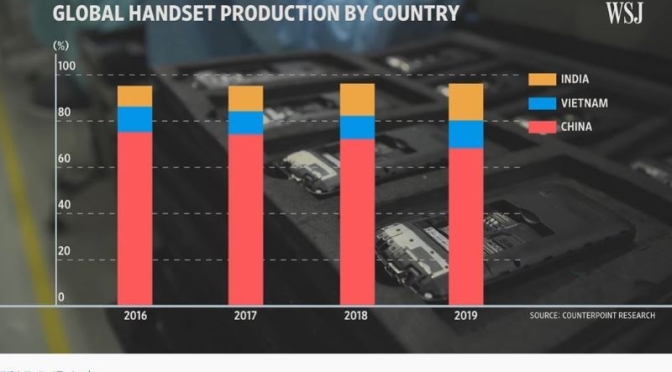
Technology Trends: India Quickly Becoming A Major Smartphone Producer

India is positioning itself as a smartphone-production hub amid a U.S.-China trade war that has disrupted global supply chains and left tech firms such as Apple and Samsung looking for alternatives to China to manufacture their products. Photo: Olivier Le Hellard for The Wall Street Journal

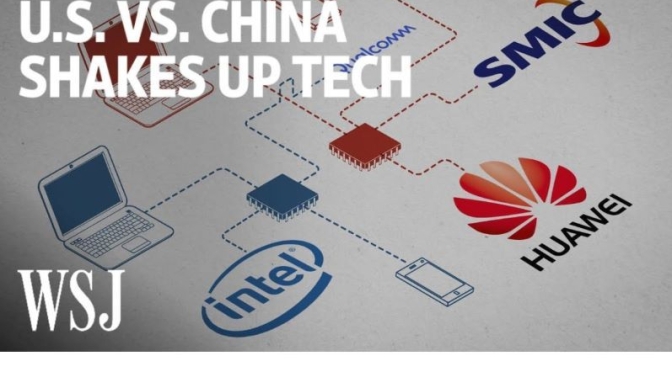
World Business: “The U.S. And China Battle Over Technology” (WSJ Video)

The tech battle between the U.S. and China has battered TikTok and Huawei and startled American companies that produce and sell in China. WSJ explains how Beijing is pouring money into high-tech chips as it wants to become self-sufficient.

Video/Illustration: George Downs/The Wall Street Journal

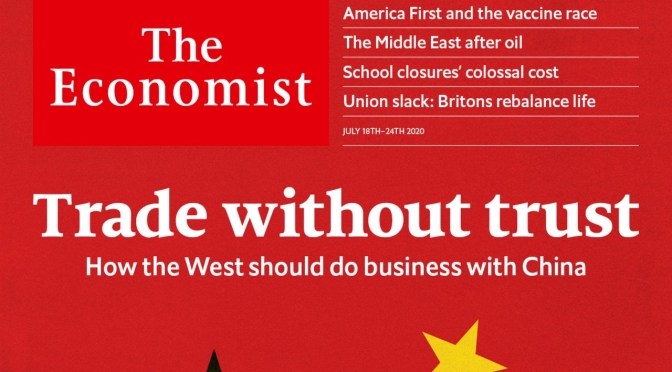
Global News: Huawei And The Tech Cold War, Young Minds & Tiny Transistors

The Economist Editor's PicksA selection of three essential articles read aloud from the latest issue of The Economist. This week, Huawei and the tech cold war; (8:55) millions of young minds are going to waste; (16:10) and a new material helps transistors become vanishingly small.