
Tag Archives: Studies

Health Studies: “Head and Neck Injuries Associated With Cell Phone Use”

From a JAMA Otolaryngol Head Neck Surgery article:

JAMA Otolaryngology Head & Neck Surgery JournalCell phone–related injuries to the head and neck have increased steeply over the recent 20-year period, with many cases resulting from distraction. Although the disposition of most cases is simple, some injuries bear a risk of long-term complications. Many of these injuries occurred among those aged 13 to 29 years and were associated with common activities, such as texting while walking. These findings suggest a need for patient education about injury prevention and the dangers of activity while using these devices.
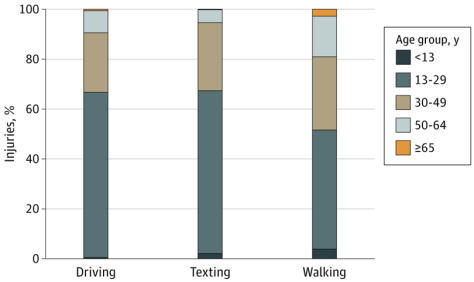
Activities During Cell Phone Use associated with Injury by age group JAMA Otolaryngol Head Neck Surg.

Since their invention, cell phones have played a major role in the daily lives of American adults. Approximately 96% of Americans own a cell phone, provoking interest in their role in causing injury. Given that head and neck traumas make up approximately 5% of emergency department (ED) visits in the United States, cell phone use in relation to such injuries could be of public health concern, in particular because of the psychological and financial burdens such injuries may entail. In addition, knowledge of the mechanism of injury is vital for patient risk stratification and trauma management,and understanding the mechanisms of common cell phone–related injuries can aid health care professionals in assessing patient needs. Health care professionals and public safety officials also must be aware of the epidemiologic nature of such injuries in order to provide adequate counseling and give input for legislation to protect the population.
Read article

New Study: “Five Healthy Habits” For Diet, Exercise, BMI, Smoking & Alcohol” Lower Chronic Disease, Raise Lifespan (Harvard)

From a BMJ online article:

We derived a healthy lifestyle score based on information on five lifestyle factors—diet, smoking, physical activity, alcohol consumption, and body mass index (BMI).

Harvard T.H. Chan School of Public Health LogoOur findings suggest that promotion of a healthy lifestyle would help to reduce the healthcare burdens through lowering the risk of developing multiple chronic diseases, including cancer, cardiovascular disease, and diabetes, and extending disease-free life expectancy. Public policies for improving food and the physical environment conducive to adopting a healthy diet and lifestyle, as well as relevant policies and regulations (for example, smoking ban in public places or trans-fat restrictions), are critical to improving life expectancy, especially life expectancy free of major chronic diseases.
The average life expectancy in the world has increased substantially in the past few decades. The aging of the population has led to a high prevalence of chronic diseases such as diabetes, cardiovascular disease, and cancer. Although people live longer, older individuals often live with disabilities and chronic diseases. People with chronic diseases including cancer, cardiovascular disease, and diabetes have a shorter life expectancy than do their peers without these chronic conditions. Estimates of the loss in life years due to these chronic conditions range from 7.5 to 20 years, depending on the methods used and the characteristics of the study population.

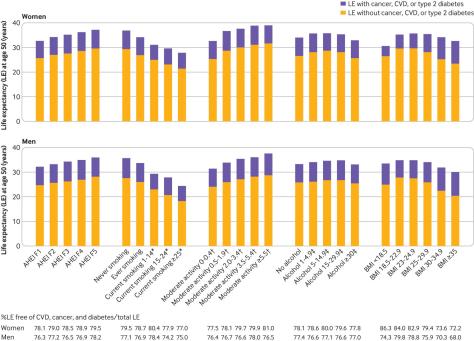
Life Expectancy In Men and Women with Five Healthy Habits BMJ Study Harvard Medical 2020
Estimated life expectancy at age 50 years with and without cancer, cardiovascular disease (CVD), and/or type 2 diabetes among participants of Nurses’ Health Study (women) and Health Professionals Follow-up Study (men) according to levels of individual lifestyle risk factors. Estimates of multivariate adjusted hazard ratios (sex specific) for morbidity and mortality associated with low risk lifestyles compared with people with zero low risk lifestyle factors adjusted for age, ethnicity, current multivitamin use, current aspirin use, family history of diabetes, myocardial infarction, or cancer, and menopausal status and hormone use (women only). AHEI=Alternate Healthy Eating Index; BMI=body mass index; F=fifth. *Cigarettes/day. †Hours/week. ‡Grams/day

Modifiable lifestyle factors including smoking, physical activity, alcohol intake, body weight, and diet quality affect both total life expectancy and incidence of chronic diseases. Studies have shown that smoking, inactivity, poor diet quality, and heavy alcohol consumption contribute up to 60% of premature deaths and 7.4-17.9 years’ loss in life expectancy. Nevertheless, little research has looked at how a combination of multiple lifestyle factors may relate to life expectancy free from the major diseases of diabetes, cardiovascular disease, and cancer.

Read full study

Aortic Stenosis: Early Aortic-Valve Replacement Surgery Lowers Mortality

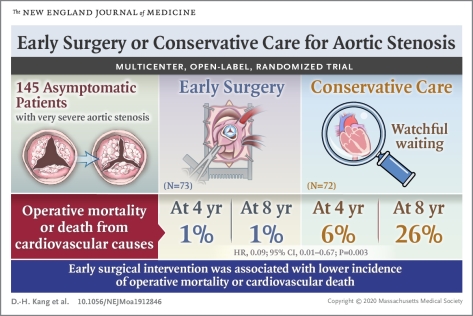
Early Surgery or Conservative Care for Aortic Stenosis New England Journal of Medicine January 8 2020 Infographic

CONCLUSIONS

Among asymptomatic patients with very severe aortic stenosis, the incidence of the composite of operative mortality or death from cardiovascular causes during the follow-up period was significantly lower among those who underwent early aortic-valve replacement surgery than among those who received conservative care.

Read study

Health Studies: Vigorous Daily Exercise Increases Neurotropins, Boosting Cognitive Function

From the Journal of Sport and Health Science:

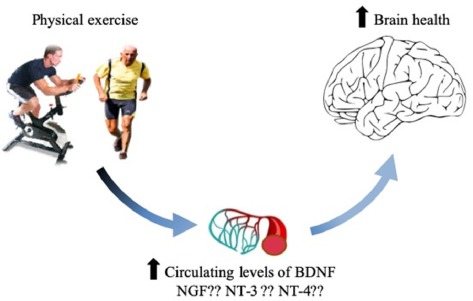
Therefore, promotion of adequate volumes and intensities of physical exercise (i.e., approximately 3 months of moderate-intensity aerobic exercise, with 2–3 sessions/week lasting not less than 30 min) represents an inexpensive and safe strategy for boosting BDNF (brain-derived neurotrophic factor) release that may preserve or restore cognitive function.

Updated overview on interplay between physical exercise, neurotrophins, and cognitive function in humans Journal Of Sport and Health Science Jan 2020

Taken together, the currently available data seemingly confirm the existence of a positive relationship between physical exercise and circulating BDNF levels, both in the short and long term, and also support the beneficial impact of training programs for amplifying the acute BDNF response.

Read full article PDF

Studies: Disrupted Sleep Cycles & Dopamine Linked; Craving “High-Calorie Food” & Obesity Are Result

From a NeuroscienceNews.com online release article (01/02/20):

During the years 1976 through 1980, 15% of U.S. adults were obese. Today, about 40%of adults are obese. Another 33% are overweight.

“But, of course, food is now abundant, and our next meal is as close as the kitchen, or the nearest fast-food drive-through, or right here on our desk. Often, these foods are high in fats, sugars, and therefore calories, and that’s why they taste good. It’s easy to overconsume, and, over time, this takes a toll on our health.”

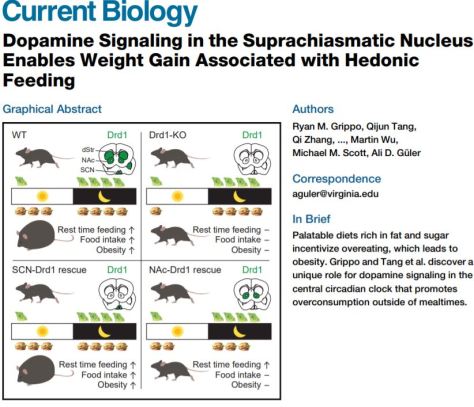
Current Biology Journal Dopamine Signaling and Weight Gain January 2 2020
Dopamine Signaling in the Suprachiasmatic Nucleus Enables Weight Gain Associated with Hedonic Feeding – Current Biology January 2, 2020

Read full study

In a study published Thursday in the journal Current Biology, Güler and his colleagues demonstrate that the pleasure center of the brain that produces the chemical dopamine, and the brain’s separate biological clock that regulates daily physiological rhythms, are linked, and that high-calorie foods – which bring pleasure – disrupt normal feeding schedules, resulting in overconsumption. Using mice as study models, the researchers mimicked the 24/7 availability of a high-fat diet, and showed that anytime snacking eventually results in obesity and related health problems.

Read more

Studies: New Protein Therapy Improves Cardiac Function, Scar Formation After Heart Attack

From a New Atlas online article (Jan 1, 2020):

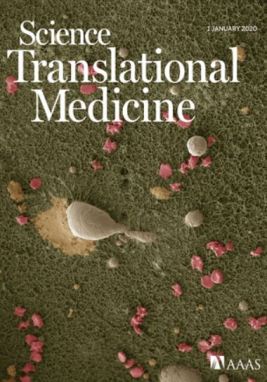
Science Translational Medicine January 1 2020 cover“This is an entirely new approach with no current treatments able to change scar in this way,” says Associate Professor James Chong who led the research. “By improving cardiac function and scar formation following heart attack, treatment with rhPDGF-AB led to an overall increase in survival rate in our study.”

The research centers on a protein therapy called recombinant human platelet-derived growth factor-AB (rhPDGF-AB), which had previously been shown to improve heart function in mice that had suffered a heart attack. In a new study aimed at bringing the treatment closer to human trials, a team set out to discover if it produced similar results in large animals, namely pigs.

The researchers from the Westmead Institute for Medical Research (WIMR) and the University of Sydney found that when pigs that had suffered a heart attack received an infusion of rhPDGF, it did indeed prompt the formation of new blood vessels in the heart and led to a reduction of potentially fatal heart arrhythmia.

Read study

Read article in New Atlas

Heart Studies: Alcohol Abstinence For Atrial Fibrillation Reduces Arrhythmia (NEJM)

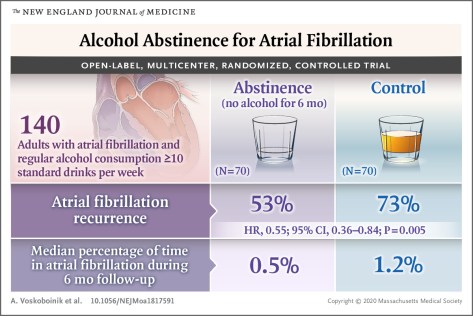
Alcohol Abstinence for Atrial Fibrillation New England Journal of Medicine January 1 2020

Abstinence from alcohol reduced arrhythmia recurrences in regular drinkers with atrial fibrillation. 

New England Journal of Medicine

January 2, 2020 Atrial fibrillation is the most common sustained arrhythmia,1 and alcohol is consumed by a majority of U.S. adults.2 The current study showed that among regular drinkers, a substantial reduction in alcohol consumption by patients with symptomatic atrial fibrillation was associated with a reduction in recurrence of atrial fibrillation and a reduced proportion of time spent in atrial fibrillation. Earlier meta-analyses showed that alcohol was associated with a dose-related increased risk of incident atrial fibrillation, with increased risk observed even among drinkers who consumed as few as 7 drinks per week.8 Current trends show a rise in alcohol consumption among adults older than 60 years of age,2coupled with greater prevalence of atrial fibrillation in this age group. The present study, with participants having an average intake of approximately 17 drinks per week at baseline, suggests that consumption at these levels may contribute to atrial fibrillation.

Read article

Dementia: Cognitive Loss Is Greatest At “Slightest Level Of Hearing Loss”

From a New York Times online article:

Hearing Loss…the researchers demonstrated that the biggest drop in cognitive ability occurs at the slightest level of hearing loss — a decline from zero to the “normal” level of 25 decibels, with smaller cognitive losses occurring when hearing deficits rise from 25 to 50 decibels.

Hearing loss is now known to be the largest modifiable risk factor for developing dementia, exceeding that of smoking, high blood pressure, lack of exercise and social isolation, according to an international analysis published in The Lancet in 2017.

the new findings on cognitive losses linked to subclinical hearing loss, gleaned from among 6,451 people age 50 or older, suggest that any degree of hearing loss can take a toll.

To read more

New Studies: Beneficial Effects Of “18-Hour Intermittent Fasting” On Health And Aging (NEJM)

From a New England Journal of Medicine online release:

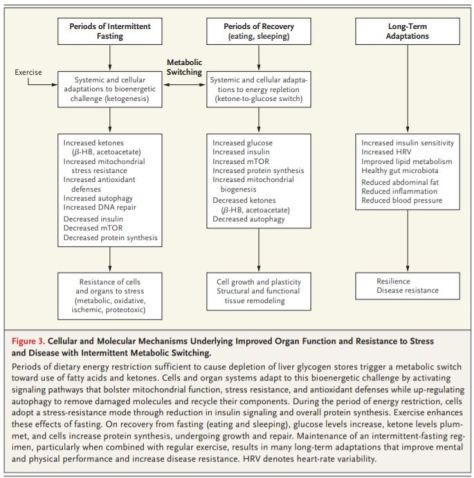
In humans, intermittent-fasting interventions ameliorate obesity, insulin resistance, dyslipidemia, hypertension, and inflammation. Intermittent fasting seems to confer health benefits to a greater extent than can be attributed just to a reduction in caloric intake.

Evidence is accumulating that eating in a 6-hour period and fasting for 18 hours can trigger a metabolic switch from glucose-based to ketone-based energy, with increased stress resistance, increased longevity, and a decreased incidence of diseases, including cancer and obesity.

The New England Journal of Medicine Logo

Preclinical studies and clinical trials have shown that intermittent fasting has broad-spectrum benefits for many health conditions, such as obesity, diabetes mellitus, cardiovascular disease, cancers, and neurologic disorders. Animal models show that intermittent fasting improves health throughout the life span, whereas clinical studies have mainly involved relatively short-term interventions, over a period of months.

Effects of Intermittent Fasting on Health, Aging, and Disease New England Journal of Medicine December 26 2019

BOOMERS-DAILY.COM “18-HOUR INTERMITTENT FASTING DIET” STUDY

How much of the benefit of intermittent fasting is due to metabolic switching and how much is due to weight loss? Many studies have indicated that several of the benefits of intermittent fasting are dissociated from its effects on weight loss. These benefits include improvements in glucose regulation, blood pressure, and heart rate; the efficacy of endurance training; and abdominal fat loss.

To read more

Inline image

Healthiest Adults: Early Risers With 7-8 Hours Of Sleep, No Insomnia Or Daytime Drowsiness

From a European Heart Journal study:

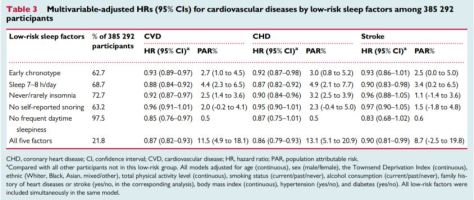
European Society of Cardiology logoWhen the five sleep factors were collapsed into binary categories of low risk vs. high risk (reference group), early chronotype, adequate sleep duration, free of insomnia, and no frequent daytime sleepiness were each independently associated with incident CVD, with a 7%, 12%, 8%, and 15% lower risk, respectively (Table 3). Early chronotype, adequate sleep duration, and free of insomnia were independently associated with a significantly reduced risk of CHD; while only adequate sleep duration was associated with stroke.European Society of Cardiology Sleep patterns, genetic susceptibity and incident cardiovascular disease a prospective study of 385,292 participants lowest risk factorsCardiovascular disease (CVD), including coronary heart disease (CHD) and stroke, is among the leading causes of mortality globally.1 In addition to traditional lifestyle behaviours, emerging evidence has implicated several unhealthy sleep behaviours were important risk factors for CVD.2,3 For example, short or long sleep duration,4–9 late chronotype,10,11 insomnia,12–17 snoring,18,19 and excessive daytime sleepiness20,21 were associated with a 10–40% increased CVD risk. European Society of Cardiology Sleep patterns, genetic susceptibity and incident cardiovascular disease a prospective study of 385,292 participants
 

To read more: https://academic.oup.com/eurheartj/advance-article/doi/10.1093/eurheartj/ehz849/5678714