





“Hubble tension” could be a signal of new physics. But deciphering it may not be simple
Cleft in fossil skull suggests solution to a long-standing mystery: shoulder tissue evolved from gill arches
Emotional memories are consolidated during REM sleep


New seamount maps could aid in studies of ecology, plate tectonics, and ocean mixing

Sleep is essential, but not all mammals live in environments where long periods of time asleep are possible. Marine mammals encounter especially challenging conditions for sleep when they are at sea.
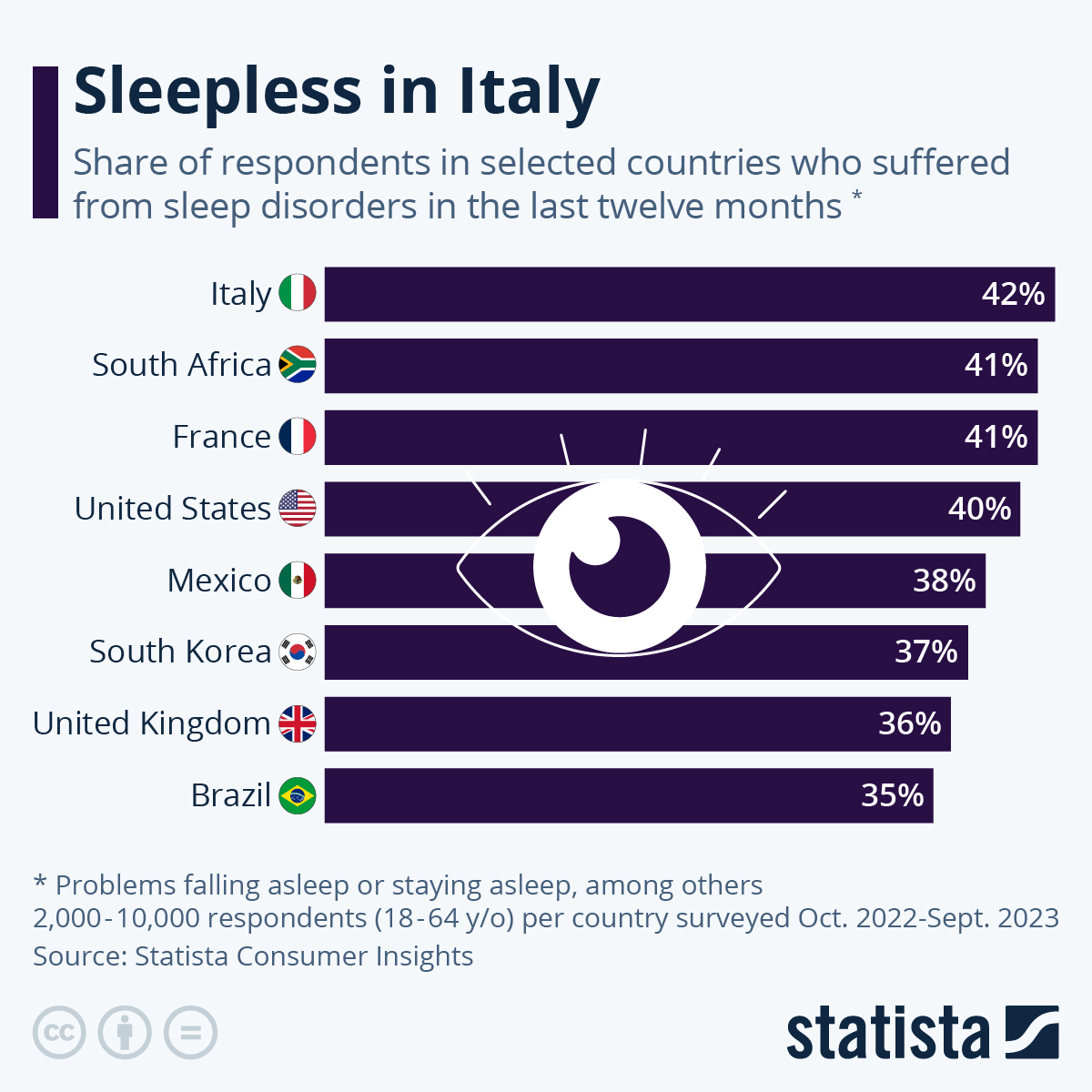
This Friday, March 17, is World Sleep Day, an annual event that aims to raise awareness of the importance of getting a good night’s sleep. This year’s campaign tagline is “Sleep is essential for health.” According to a study by the American College of Cardiology, up to 8 percent of deaths from any cause could be attributed to “poor sleep patterns”, while those with healthier sleep habits are less likely to die prematurely.
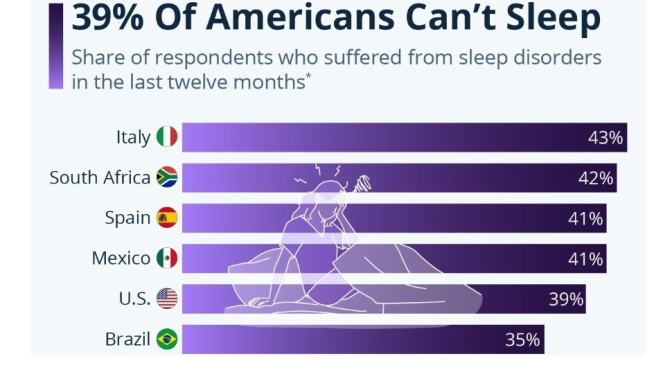
Data from Statista Consumer Insights shows that in the United States, 39 percent of respondents said they had suffered from a sleep disorder (problems falling asleep or staying asleep, insomnia, etc.) in the 12 months prior to the survey. Italians were among the worst sleepers in the survey at 48 percent reporting a sleep disorder, while India registered a higher share of good sleepers, with only 26 percent suffering from poor sleep.
For many older adults, a good night’s rest is elusive. The implications of chronically poor sleep can be far-reaching and include a decline in cognitive functioning and detrimental effects on health and general well-being. Fortunately, relief may be in sight.
A new study led by investigators at the Stanford University School of Medicine shows that neurons in the lateral hypothalamus, a brain region, play a pivotal role in sleep loss in old mice. More specifically, the arousal-promoting hypocretin neurons become hyperexcitable, driving sleep interruptions.
Read the full story: https://stan.md/3JQ7z77
Luis de Lecea, PhD, is a professor of psychiatry and behavioral sciences at Stanford Medicine. He is the study’s senior author and hopes the finding could pave the way to new drug treatments for age-related sleep problems in humans.
Shi-Bin Li, PhD, is an instructor in the Psychiatry and Behavioral Sciences department at Stanford Medicine. He is also a basic life research scientist in the de Lecea lab, and is the lead author of the study.
Did you know that not getting enough zzz’s can actually make you hungrier? According to sleep scientist Matt Walker, the relationship between what you eat and your sleep is a two-way street. Here’s why understanding it can help you improve your overall health.
Sleep — we spend one-third of our lives doing it, but what exactly do we get out of it? And how can we do it better? In this TED series, sleep scientist Matt Walker uncovers the facts and secrets behind our nightly slumber. (Made possible with the support of Oura) Check out more episodes on TED.com: https://go.ted.com/sleepingwithscience
Simple animals like jellyfish and hydra, even roundworms, sleep. Without brains. Why do they sleep? How can we tell a jellyfish is sleeping?
Staff Writer Liz Pennisi joins host Sarah Crespi to talk about what can be learned about sleep from these simple sleepers. The feature is part of a special issue on sleep this week in Science.
Next is a look at centuries of alien invasions—or rather, invasive insects moving from place to place as humans trade across continents. Sarah talks with Matthew MacLachlan, a research economist at the U.S. Department of Agriculture’s Economic Research Service, about his Science Advances paper on why insect invasions don’t always increase when trade does.
Finally, a book on racism and the search algorithms. Books host Angela Saini for our series of interviews on race and science talks with Safiya Umoja Noble, a professor in the African American Studies and Information Studies departments at the University of California, Los Angeles, about her book: Algorithms of Oppression: How Search Engines Reinforce Racism.






 Boomers Daily