
Tag Archives: Politics

Politics: The Guardian Weekly – January 19, 2024

Image

The Guardian Weekly (January 18, 2024) – The new issue features ‘State Of Emergency’ – How drug cartels upended Ecuador; Why Houthi anger could spread war; Are aliens already among us?…

Not long ago, Ecuador was chiefly known for its volcanoes, wildlife and eco-tourism. It’s an image that may now need some rehabilitation after chaos and bloodshed sparked by the prison escape last week of Adolfo Macías, the country’s most notorious gang leader and drug lord.

With cartels from Peru and Colombia routinely funnelling narcotics through Ecuador’s ports en route to Europe, Latin America correspondent Tom Phillips reports on a rising problem that threatens to tear apart the once-peaceful Andean state.

In the Middle East, Yemen’s Houthi rebels could stymie the increasingly slim chances of preventing a regional war. With the US and UK bombing Houthi bases in response to attacks on commercial shipping, diplomatic editor Patrick Wintour recounts the Houthis’ rise and why military strikes against them may not lead to the desired outcome.

London Review Of Books – January 25, 2024 Preview

Image

London Review of Books (LRB) – January 17, 2024: The latest issue features ‘Living With Keats’ – A Brief Life in Nine Poems and One Epitaph; Congress vs Harvard; The West’s Fight to Reverse the Russian Revolution, and more…

Hooted from the Stage

Keats: A Brief Life in Nine Poems and One Epitaph: 9780525655831: Miller,  Lucasta: Books - Amazon.com

Keats: A Brief Life in Nine Poems and One Epitaph 
by Lucasta Miller.

Keats’s Odes: A Lover’s Discourse 
by Anahid Nersessian.

By Susan Eilenberg

Looking​ back to September 1820, when things had gone badly wrong but not yet so grotesquely as to be visibly beyond repair, we can see how few and how poor Keats’s options were. Surely it was better that (in the absence of other volunteers) the young artist Joseph Severn agreed to travel with the dying poet to Rome that autumn than that he had refused.

Bertie Wooster in Murmansk

A Nasty Little War: The West’s Fight to Reverse the Russian Revolution 
by Anna Reid.

By Sheila Fitzpatrick

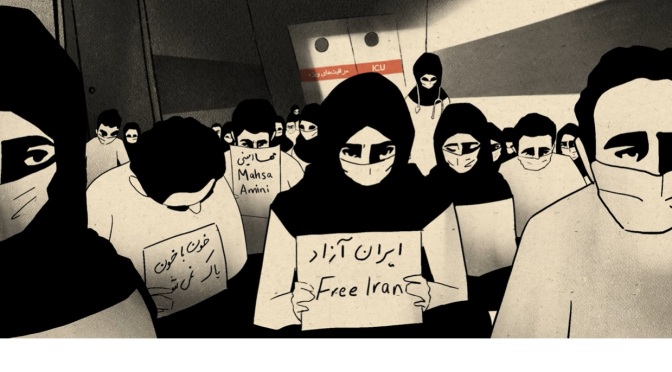
Views: Novelist Margaret Atwood On Democracy – “Is It Fragile Or Resilient?”

Financial Times (January 17, 2024) – In a year in which more than half the world goes to the polls, acclaimed novelist Margaret Atwood asks whether democracy is fragile and easily destroyed or flexible and resilient.

This animated monologue is the first of four films examining the state of government, representation, rights and freedom.

Read more at https://www.ft.com/democracy

Culture/Politics: Harper’s Magazine – February 2024

Image

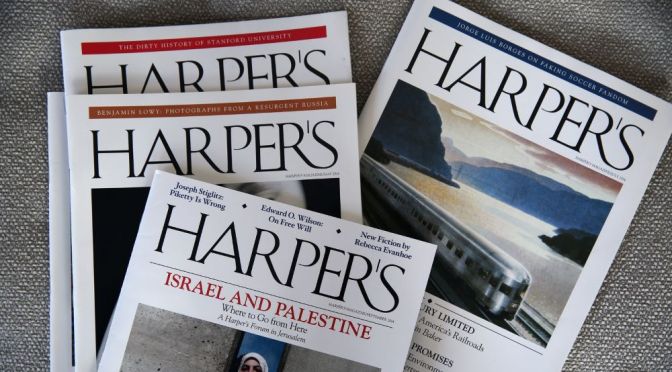
HARPER’S MAGAZINE – FEBRUARY 2024: This issue features ‘Israel’s War Within’ – The battle for a country’s soul; The Trials of Trucking School; Marilynne Robinson Reads Genesis…

Israel’s War Within

An Israeli paratrooper at the Western Wall, 1967 © Micha Bar-Am/Magnum Photos

On the ruinous history of Religious Zionism

by Bernard Avishai

In August 1975, I stood outside the Knesset, in Jerusalem, witnessing a fevered demonstration against Henry Kissinger, then the American secretary of state. Thousands of young men in knitted kippahs chanted and danced in circles, their arms wrapped around one another, their voices echoing off the stone building. They were mainly West Bank settlers, I was informed, part of a fledgling movement called Gush Emunim—in effect, the Young Guard of the National Religious Party (NRP).

Lost Highway

The trials of trucking school

by Emily Gogolak

“If you have to change friends, that’s what you gotta do,” our instructor, Johnny, told the twelve of us sitting in a makeshift classroom in a strip mall outside Austin. “They’re gonna be so jealous, because you’re gonna be bringing home so much money. Encourage them to get their CDL, too.”

A CDL is a commercial driver’s license, and if you pay attention, you’ll find variations on the phrase cdl drivers wanted everywhere: across interstate billboards, in small-town newspapers, on diner bulletin boards, on TV, and, most often, on the backs of semitrucks. Each of us had come to the Changing Lanes CDL School to answer that call.

Previews: The New Yorker Magazine- January 22, 2024

Sun shines through tree branches on a city street in winter.

The New Yorker – January 22, 2024 issue: The new issue‘s cover features Pascal Campion’s “Winter Sun” – The artist depicts the beams of sunlight that flicker during the coldest months of the year.

The Price of Netanyahu’s Ambition

A painted portrait of Netanyahu.

Amid war with Hamas, a hostage crisis, the devastation of Gaza, and Israel’s splintering identity, the Prime Minister seems unable to distinguish between his own interests and his country’s.

By David Remnick

To be vigilant—to live without illusions about the ever-present threat of annihilation—was a primary value at No. 4 Haportzim Street, once the Jerusalem address of the Netanyahu family. This wariness had ancient roots. In the Passover Haggadah, the passage beginning “Vehi Sheamda” reminds everyone at the Seder table that in each generation an enemy “rises up to destroy” the Jewish people. “But the Holy One, Blessed be He, delivers us from their hands,” the Haggadah continues. Benzion Netanyahu, the family patriarch and a historian of the Spanish Inquisition, was a secular man. For deliverance, he looked not to faith but to the renunciation of naïveté and the strength of arms. This creed became his middle son’s inheritance, the core of his self-conception as the uniquely unillusioned defender of the State of Israel.

A Drug-Decriminalization Fight Erupts in Oregon

The open back doors of the Stabbin Wagon van displays plastic pockets full of inventory.

An ambitious law set forth a more humane way to address addiction. Then came the backlash.

By E. Tammy Kim

In the early months of the pandemic, joggers on the Bear Creek Greenway, in southern Oregon, began to notice tents cropping up by the path. The Greenway, which connects towns and parks along a tributary of the Rogue River, was beloved for its wetlands and for stands of oaks that attracted migrating birds. Now, as jobs disappeared and services for the poor shut down, it was increasingly a last-ditch place to live. Tents accumulated in messy clusters, where people sometimes smoked fentanyl, and “the Greenway” became a byword for homelessness and drug use. On a popular local Facebook page, one typical comment read, “Though I feel sorry for some of the people in that situation, most of them are just pigs.” In Medford, the largest city along the trail, police demolished encampments and ticketed people for sleeping rough.

Saturday Morning: News And Stories From London

Monocle on Saturday, January 13, 2024: A discussion of the the Israel-Hamas conflict and the Iowa caucuses. And why are people upset at artificial intelligence finishing Keith Haring’s ‘Unfinished Painting’?

Join Georgina Godwin and communications consultant Simon Brooke for this and more from the week’s news and culture.

Politics: The Guardian Weekly – January 11, 2024

Image

The Guardian Weekly (January 10, 2024) – The new issue features ‘Middle East on the brink’ – The threat of a regional war. Also, Inside the Post Office Horizon IT scandal…

The assassination of a Hamas chief in Lebanon. A terror attack on mourners of an Iranian former general. Commercial shipping in the Red Sea targeted by Yemeni rebels, and a US airstrike in Iraq. All were separate events in the Middle East last week but all were linked, in one way or another, to the presence of autonomous but Iranian-backed militia forces in the region.

When asked to visualise the threat of war engulfing the Middle East, for this week’s cover, illustrator Carl Godfrey took a literal approach. “I wanted to convey the tense and unpredictable situation,” says Carl, “and there’s nothing more tense than looking down the barrel of a gun. Especially when those barrels are pointing in all directions, and the risk of war is expanding in all directions.”

The Economist Special Report: ‘Philanthropy’

Image

The Economist SPECIAL REPORTS (January 12, 2024): The latest issue is focused on ‘Philanthropy’ – Move fast and mend things. Charitable organizations are hoping to get money to the needy faster….

The super-rich are trying new approaches to philanthropy

Billionare on a rollercoaster doing a loop-de-loop, holding a spanner with money and tools falling out of the cart

They are hoping to get money to the needy faster, says Avantika Chilkoti

A nudge is not always enough to force change within an industry. Sometimes a series of forceful shoves is required. In the rarified world of Western philanthropy, the shoves began in 2020. The covid-19 pandemic, protests for racial justice across America that summer and the outflow of refugees from Ukraine starting in early 2022 created a new urgency around charitable giving and revealed failings in how it worked. Donors began to consider how they could disburse money faster and with more impact.

No-strings philanthropy is giving charities more decision-making power

Organizations on the ground know best how money should be spent

Give Directly does what it says on the tin

Cash hand-outs can transform communities

Previews: The New Yorker Magazine – Jan 15, 2024

Former President Donald Trump marching on pavement blocks that read “2023” and “2024.”

The New Yorker – January 15, 2024 issue: The new issue‘s cover features Barry Blitt’s “Back to the Future” – The artist depicts a goose-stepping Donald Trump, determined to march back into political relevance.

Has School Become Optional?

A silhouette of a kid sitting on a desk revealing two people walking.

In the past few years, chronic absenteeism has nearly doubled. The fight to get students back in classrooms has only just begun.

By Alec MacGillis

Absenteeism underlies much of what has beset young people, including falling school achievement, deteriorating mental health, and elevated youth violence.

What Frantz Fanon and Ian Fleming Agreed On

Portraits of men divided by photos of protest.

From opposite directions, the revolutionary intellectual and the creator of James Bond saw violence as essential—psychologically and strategically—to solving the crisis of colonialism.

By Daniel Immerwahr

More than fifty years later, Zohra Drif could still picture the Milk Bar in Algiers on September 30, 1956. It was white and shining, she recalled, awash in laughter, young voices, “summer colors, the smell of pastries, and even the distant twittering of birds.” Drif, a well-coiffed law student in a stylish lavender dress, ordered a peach-Melba ice cream and wedged her beach bag against the counter. She paid, tipped, and left without her bag. The bomb inside it exploded soon afterward.

Saturday Morning: News And Stories From London

Monocle on Saturday, January 6, 2024: What lasting effect has the Capitol Hill riot had on the US over the past three years? Monocle’s Christopher Chermak discusses how views and memories of that day have changed. How will Asia’s elections this month impact the rest of the world?

Monocle’s Naomi Xu Elegant looks ahead. And is ‘Saltburn’ a perfect satire or does it fall flat? Join journalist Vincent McAviney and Georgina Godwin for a review of the week’s news and culture.