
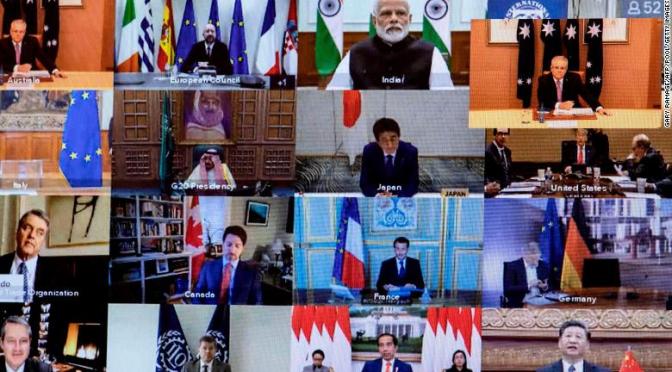
 Monocle 24’s Tyler Brûlé is joined by Benno Zogg and Juliet Linley for a look at how the global press is covering the pandemic and whether the tone of the discussion needs a rethink. Plus: Andrew Mueller’s look at what we learnt this week.
Tag Archives: Pandemics
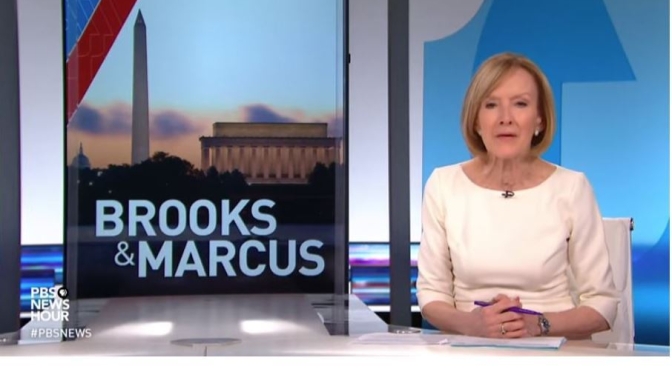
Political News: “Brooks & Marcus” On $2.2 Trillion Economic Relief Package, Coronavirus Crisis (PBS)
New York Times columnist David Brooks and Washington Post columnist Ruth Marcus join Judy Woodruff to discuss the week in politics, including whether Americans are ready for the mounting coronavirus crisis, why the U.S. government wasn’t better prepared for the pandemic, the significance of the $2.2 trillion economic relief package and the status of the 2020 Democratic presidential primary.
Hospitals & Coronavirus: Emergency Room Doctor Discusses Preparing For Cases In Miami Area (NEJM)
NEJM talks with Dr. Julian Flores, who works in a Broward County, Florida, emergency room.
 When he was interviewed, the count of Covid-19 cases stood at 412, less than 12 hours later, the new number was 505. He’s expecting the wave to hit hard there. Broward is home to Fort Lauderdale (think spring break) and Pompano Beach (think aging retirees). Couple those demographics with a lack of easy testing for the virus, and you’ve got a worrisome situation.
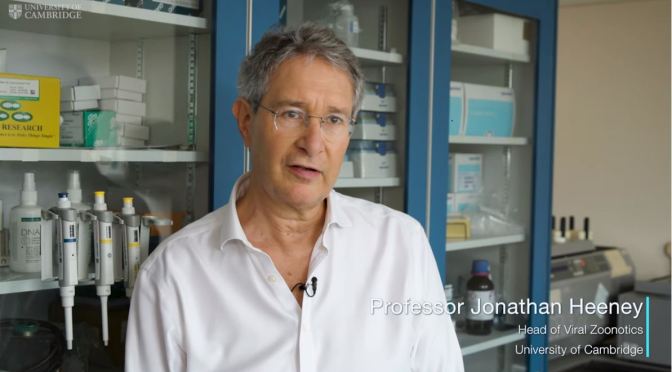
COVID-19 / Coronavirus: Cambridge Scientists Using Genomics To Create “Pandemic Flu Vaccines”
The race is on to find a vaccine against the new COVID-19 coronavirus. Professor Jonathan Heeney explains why a cautious approach is needed and how his team is using new technology developed for influenza and Ebola viruses to target the new infection.
It is hard now to conceive that two months ago, few people had heard of the new coronavirus. Now, the virus, which causes the disease COVID-19, has spread to every corner of the globe. The World Health Organization has officially declared the outbreak a pandemic.
With the threat of hundreds of thousands – possibly millions – of people being infected and healthcare systems becoming overwhelmed, the race is on to develop a vaccine that will protect individuals and slow the spread of the disease. But Professor Jonathan Heeney, Head of the Laboratory of Viral Zoonotics at the University of Cambridge, and one of the people working on a vaccine, says that coronaviruses present a particular challenge to vaccine developers.
Coronaviruses are named after their appearance: they are spherical objects, on the surface of which sit ‘spike’ proteins. The virus uses these spikes to attach to and invade cells in our body. Once inside, the virus uses the cell’s own machinery to help itself replicate and spread throughout the body, causing disease and allowing it to transmit onwards.
Traditionally, scientists would develop vaccines that programme the body to produce antibodies that recognise and block these spikes. But this strategy can misfire with coronaviruses due to a phenomenon known as ‘antibody-induced enhancement’ or ‘vaccine-induced enhancement’, says Heeney.
“If you make antibodies against the spike, they can end up binding to it and helping the virus invade important immune cells known as monocyte-macrophages. Rather than destroying the virus, these cells can then end up being reprogrammed by the viruses, exacerbating the immune response and making the disease much, much worse than it would otherwise be.”

New Aerial Travel Video: “Lockdown” In Frankfurt, Germany (March, 2020)
Downtown Frankfurt as most of Germany is turned into a ghost town. Eerie athmosphere in this normally busy city. Scary times.


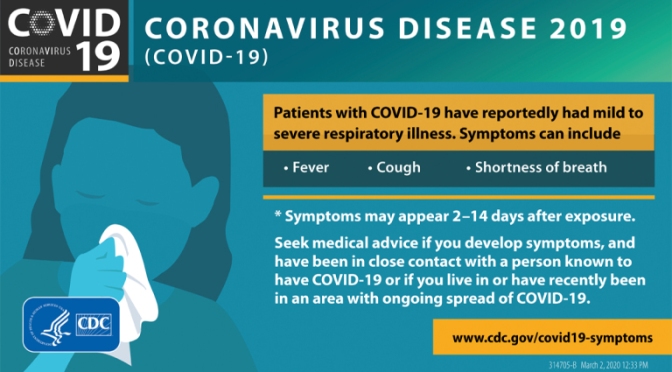
Health Update: Ibuprofen Results In “More Severe Illness” For “Coronavirus / Covid-19” Patients (BMJ)
From a BMJ online release (March 17, 2020):
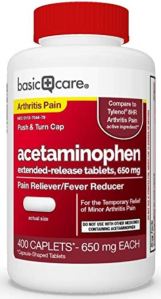 “The finding in two randomised trials that advice to use ibuprofen results in more severe illness or complications helps confirm that the association seen in observational studies is indeed likely to be causal. Advice to use paracetamol (acetaminophen) is also less likely to result in complications.”
Scientists and senior doctors have backed claims by France’s health minister that people showing symptoms of covid-19 should use paracetamol (acetaminophen) rather than ibuprofen, a drug they said might exacerbate the condition.
 Ian Jones, a professor of virology at the University of Reading, said that ibuprofen’s anti-inflammatory properties could “dampen down” the immune system, which could slow the recovery process. He added that it was likely, based on similarities between the new virus (SARS-CoV-2) and SARS I, that covid-19 reduces a key enzyme that part regulates the water and salt concentration in the blood and could contribute to the pneumonia seen in extreme cases. “Ibuprofen aggravates this, while paracetamol does not,” he said.
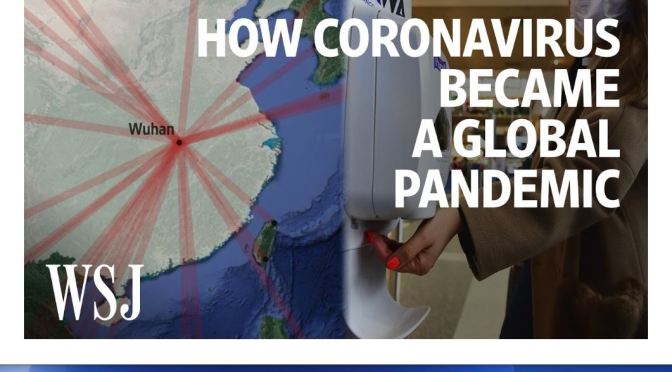
Health: “How Coronavirus / Covid-19 Became A Global Pandemic” (WSJ Video)
On Dec. 1, 2019, a patient in Wuhan, China, started showing symptoms of what doctors determined was a new coronavirus. Since then, the virus has spread to infect more than 100,000 people. Here’s how the virus grew to a global pandemic. Photo illustration: Carter McCall/WSJ
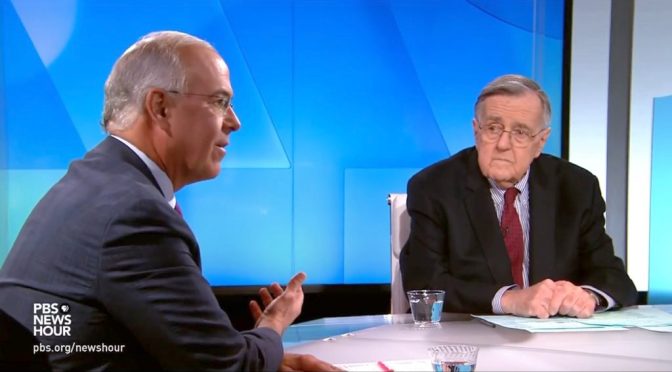
Political News: “Shields & Brooks” On Coronavirus Pandemic (PBS Newshour)
Syndicated columnist Mark Shields and New York Times columnist David Brooks join Judy Woodruff to discuss the week’s political news, including the unique magnitude of the novel coronavirus pandemic, how President Trump is handling the crisis, what the government should do to reassure fearful Americans, and how the outbreak might affect the 2020 Democratic presidential primary race.
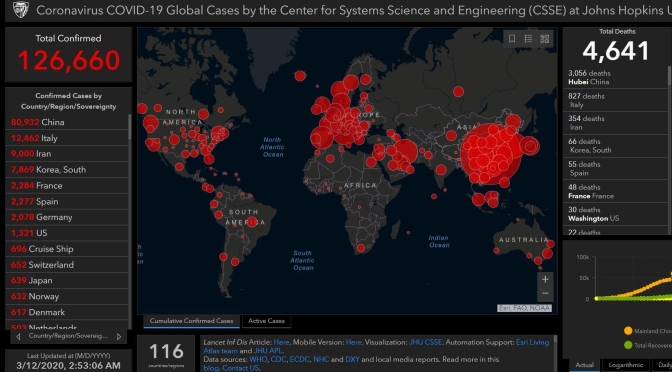
How China And South Korea Are Containing “Coronavirus / Covid-19”
Global health officials have praised China and South Korea for the success of their efforts to contain the coronavirus. What are those countries getting right — and what can everyone else learn from them?
Guest: Donald G. McNeil Jr., a science and health reporter for The New York Times. For more information on today’s episode, visit nytimes.com/thedaily.
Background reading:
- While world leaders are finally speaking out about the gravity of the pandemic, their response lacks unity with the United States absent from its traditional conductor role in managing global crises.
- Stocks tanked again as the outbreak was officially declared a pandemic and policies to address its impact proved lacking or ineffective.
- All flights to the U.S. have been suspended from Europe. Many schools announced they would close indefinitely, some nursing homes banned visitors, and workplaces across the country have urged their employees to work from home. Here are the latest updates.
 Boomers Daily