

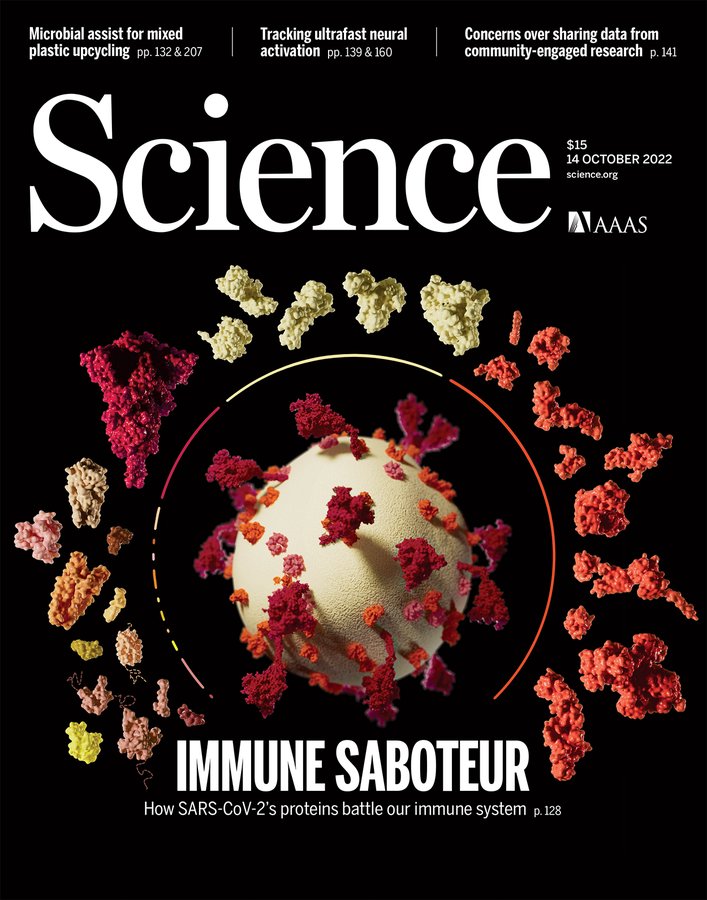
Meet the protein arsenal wielded by the pandemic virus
Authors were dropped from broader Lancet review
SARS-CoV-2 wields versatile proteins to foil our immune system’s counterattack
A fuel cell gains more power from ion-conducting, porous covalent organic frameworks
Batteries allowing, CubeSats will target lunar ice and more
Other methods still put the United States somewhat ahead
Measures to capture carbon in soil may be less effective than hoped, scientists say
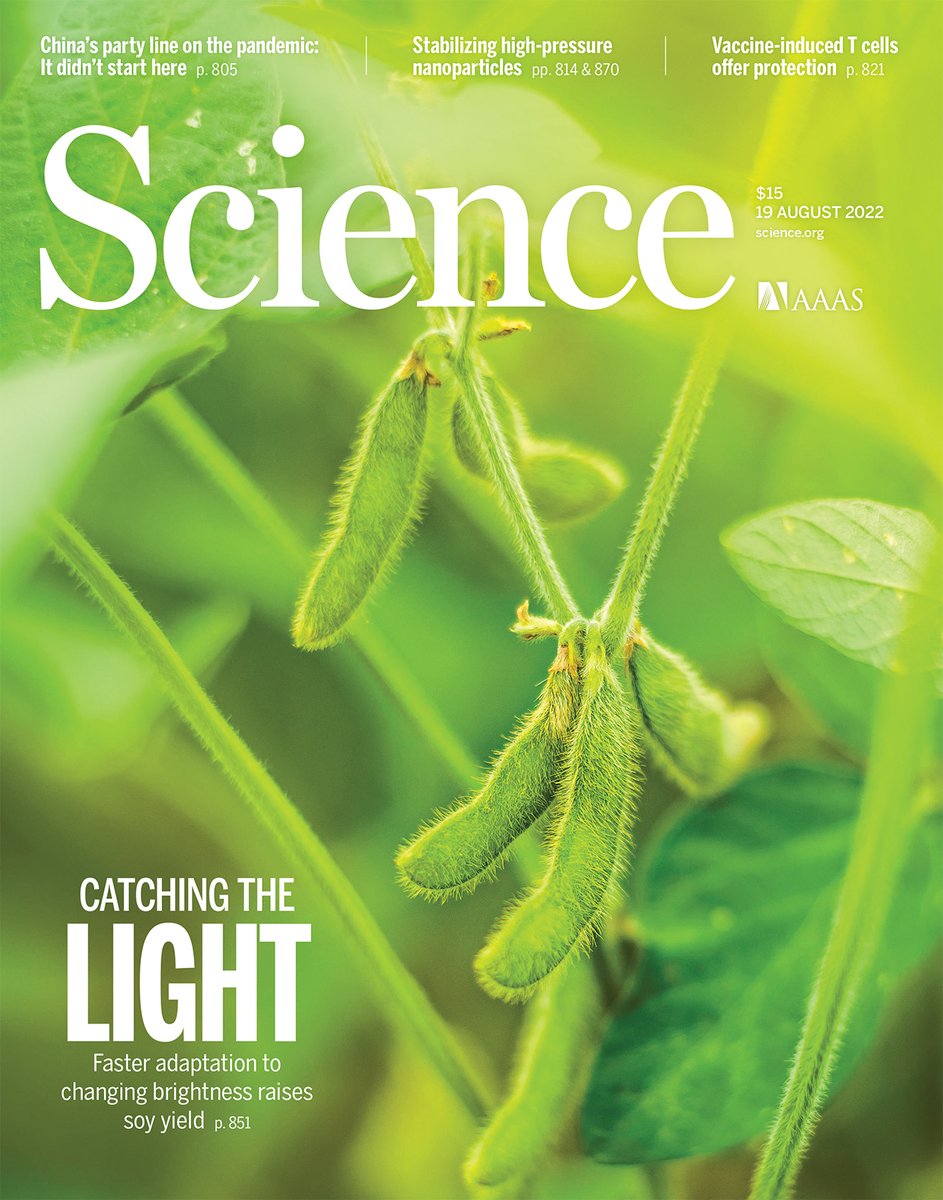
Bioengineering soybean plants to improve regulation of photoprotection—a natural process that enables plants to cope with excess absorbed light energy—improved soybean seed yield by up to 33% in field trials.
Read that study and more this week in Science: https://fcld.ly/r6g2kix
Will COVID controls keep controlling us?
In January 2022 I came down with mild symptoms of something or other. I was already triple-vaxxed, with a French vaccine passport (“pass vaccinal”) on my iPhone to prove it, and like a true pioneer I had already suffered through a bout of COVID-19 long before, in March 2020.
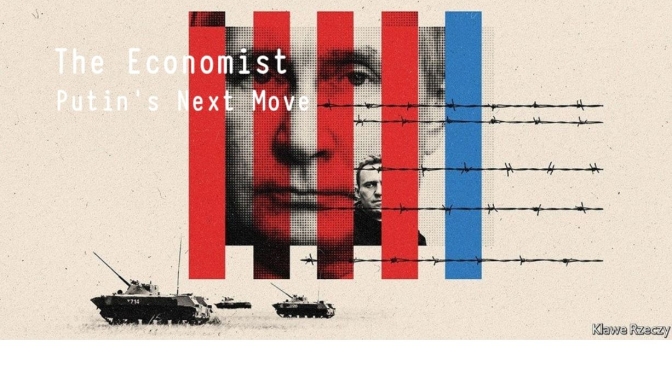
A selection of three essential articles read aloud from the latest issue of The Economist. This week, Putin’s next move, the pandemic in India (10:20) and the rise of the robot critic (18:35).
He identifies a cluster of non-medical drivers of deadly outbreaks—war, political instability, human migration, poverty, urbanization, anti-science and nationalist sentiment, and climate change—and maintains that advances in biomedicine must be accompanied by concerted action on these geopolitical matters.
War and Pestilence ride together as two of the Four Horsemen of the Apocalypse, and there is no shortage of historical precedent to demonstrate the aptness of the allegory. The great influenza pandemic that began in 1918 was propelled, in part, by troop movements and population shifts at the end of the First World War. Both the First and the Second World Wars produced typhus epidemics. Armed conflicts cause malnutrition, poor pest control, and sanitation problems; even the soil often becomes contaminated. Medical facilities are destroyed; doctors and nurses, diverted to combat duty, are unable to provide care, and vaccination and other mass-treatment programs usually falter.
Podcast Producer Meagan Cantwell talks with Pamela Soltis, a professor and curator with the Florida Museum of Natural History at the University of Florida and the director of the University of Florida Biodiversity Institute, about how natural collections at museums can be a valuable resource for understanding future disease outbreaks.
Read the National Academies of Sciences, Engineering, and Medicine report Biological Collections: Ensuring Critical Research and Education for the 21st Century. This segment is part of our coverage of the 2021 AAAS Annual Meeting.
Also on this week’s show, Katharina Schmack, a research associate at Cold Spring Harbor Laboratory, joins producer Joel Goldberg to talk about giving mice a quiz that makes them hallucinate. Observing the mice in this state helps researchers make connections between dopamine, hallucinations, and mental illness.
The unfortunate reality is that COVID-19 might not be the last pandemic. The threat of the next pandemic will always be hanging over our heads—unless the world takes steps to prevent it. You can learn more about this topic in our 2021 Annual Letter at http://gatesnot.es/3a5KOLU




 Boomers Daily