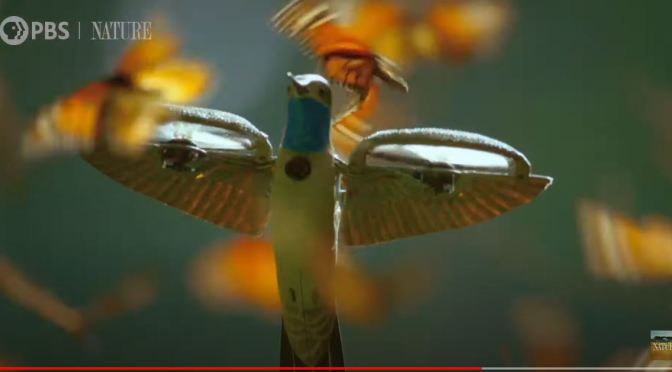
In the mountains of Mexico, a spy hummingbird ventures into the heart of a breathtaking monarch butterfly swarm.

In the mountains of Mexico, a spy hummingbird ventures into the heart of a breathtaking monarch butterfly swarm.
Filmed, Edited and Written by: Bob Krist
Narrated by: Fabiola Stevenson
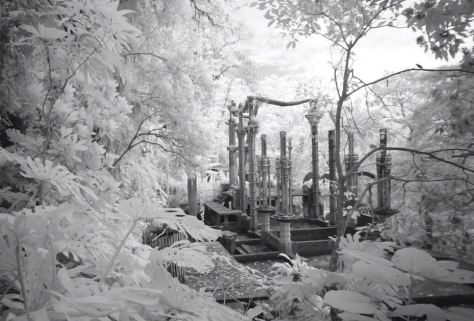
Edward James, a rich eccentric and patron of artists Salvador Dali and Rene Magritte, built a surreal sculpture park in the jungles of the Sierra Gorda in Xilitla, Mexico. The project took 35 years, spreads over 80 acres, and is accessible to the public. This piece is filmed in black & white infrared, a technique that reacts to heat as well as visible light.
 This week on the podcast, Contributing Correspondent Lizzie Wade joins host Sarah Crespi to discuss a turning point for one ancient Mesoamerican city: Tikal. On 16 January 378 C.E., the Maya city lost its leader and the replacement may have been a stranger. We know from writings that the new leader wore the garb of another culture—the Teotihuacan—who lived in a giant city 1000 kilometers away.
But was this new ruler of a Maya city really from a separate culture? New techniques being used at the Tikal and Teotihuacan sites have revealed conflicting evidence as to whether Teotihuacan really held sway over a much larger region than previously estimated.
Sarah also talks with Rashid Sumaila, professor and Canada research chair in interdisciplinary ocean and fisheries economics at the University of British Columbia, Vancouver’s Institute for the Oceans and Fisheries. You may have heard of illegal fishing being bad for the environment or bad for maintaining fisheries—but as Sumaila and colleagues report this week in Science Advances, the illegal fishing trade is also incredibly costly—with gross revenues of between $8.9 billion and $17.2 billion each year.
Healthy, delicious, always in season- it may seem like Avocados From Mexico have it all. But they don’t have a luxury yurt. Or a Tortilla Chip Floatie. Luckily, Molly Ringwald and the Avocados From Mexico Shopping Network has everything you need to give your avocado everything it deserves.
The Vulcan 2 3D printer can print a house in just 24 hours of print time. This technology is currently being put to the test in rural Mexico, where it’s being used to build the world’s first 3D-printed community, designed for residents living on less than $3 a day.
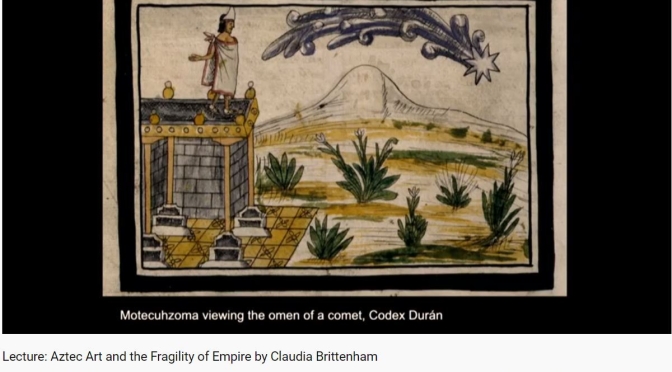
Aztec art drew on the Mesoamerican past, citing works from the ancient cities of Teotihuacan and Tula to lend authority and legitimacy to the new empire. But this engagement with the past also provoked reflection on the inevitable end of empire and the cyclicality of time, themes that resonate as the five hundredth anniversary of the Spanish invasion of Mexico unfolds this year. In this illustrated lecture, Claudia Brittenham, University of Chicago, discusses how Aztec art reflects this engagement with this historical past. This lecture delivered on October 31, 2019, was generously sponsored by the Boshell Foundation Lecture Fund.
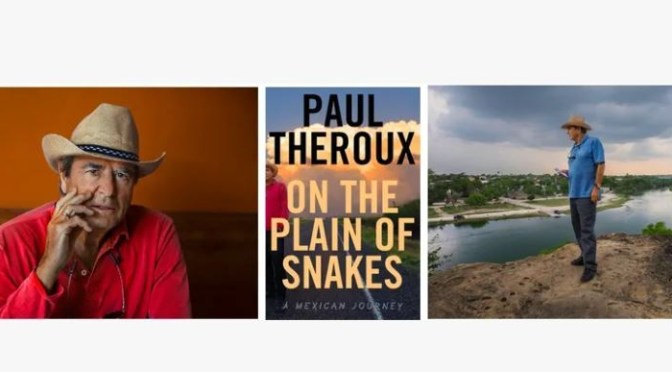
From a BBC Travel online article:
 I think of myself in the Mexican way, not as an old man but as most Mexicans regard a senior, an hombre de juicio, a man of judgment; not ruco, worn out, beneath notice, someone to be patronised, but owed the respect traditionally accorded to an elder, someone (in the Mexican euphemism) of La Tercera Edad, the Third Age, who might be called Don Pablo or tío (uncle) in deference. Mexican youths are required by custom to surrender their seat to anyone older. They know the saying: Más sabe el diablo por viejo, que por diablo – The devil is wise because he’s old, not because he’s the devil.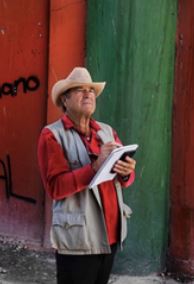
But “Stand aside, old man, and make way for the young” is the American way.
I was that old gringo. I was driving south in my own car in Mexican sunshine along the straight sloping road through the thinly populated valleys of the Sierra Madre Oriental – the whole craggy spine of Mexico is mountainous. Valleys, spacious and austere, were forested with thousands of single yucca trees, the so-called dragon yucca (Yucca filifera) that Mexicans call palma china. I pulled off the road to look closely at them and wrote in my notebook: I cannot explain why, on the empty miles of these roads, I feel young.
To read more: http://www.bbc.com/travel/story/20191203-is-travel-the-secret-to-a-long-life
Film and Edit: Matt Kleiner
Sound Design: Brennan Mercer
Music: 1900, Daniel Norgen, The Acid

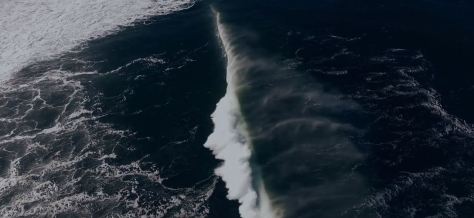
Ten years ago I uploaded my first video to Vimeo titled WAVE CLOUD SAND. The idea was loosely based on finding beauty in the in-between moments that surrounded my projects at the time. Ten years later that same sentiment holds true and these are those moments from more recent travel throughout Australia, Chile, Mexico, Norway, and Hawaii. The moments when no one is around, views are unobstructed, nature is in its natural state, and perfect waves are left untouched.

Website: https://www.mattkleiner.com/
From a Smithsonian Magazine online article:
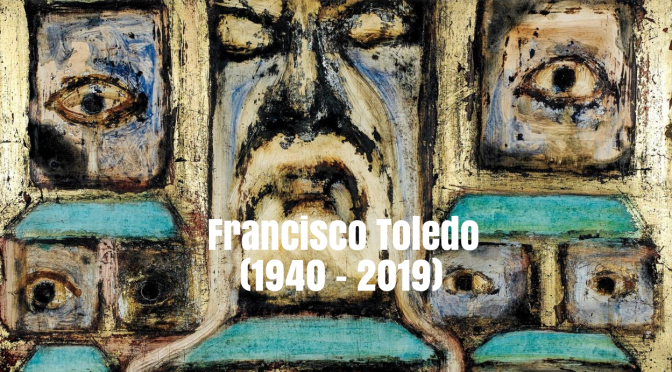
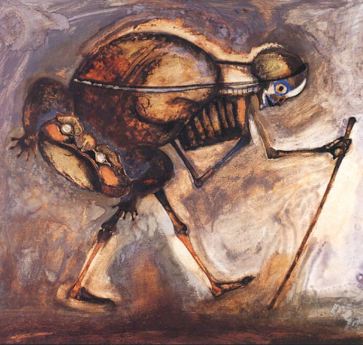 Though his paintings and sculptures sell all over the world for fabulous prices, he has not enriched himself. He lives simply, with his wife, Trine Ellitsgaard Lopez, an accomplished weaver, in a traditional house in the middle of Oaxaca, and has used his considerable profits to found art centers and museums, an ethnobotanical garden and at least three libraries.
 Toledo, whose origins were obscure and inauspicious, was the son of a leatherworker—shoemaker and tanner. He was born in Mexico City, but the family soon after moved to their ancestral village near Juchitán de Zaragoza in the Isthmus of Tehuantepec, nearer to Guatemala than to Mexico City—and being ethnically Zapotec, nearer culturally to the ancient pieties of the hinterland too.
His paintings became sought after for their singular beauty. His work resisted all classification and fashion. He was not attached to any movement, even when the art world was turbulent with abstraction and Minimalism and Color Field and Op Art. He elaborated his ancestral visions of masks and folk tales, haunted and highly colored landscapes, and eroticism that was both comic and gothic. “He intuits the timelessness of authenticity,” the Guatemalan art critic Luis Cardoza y Aragón wrote. In 1967, an enthusiastic Henry Miller—himself a watercolorist—wrote the text for a Toledo exhibition.
From a CityLab.com online article:
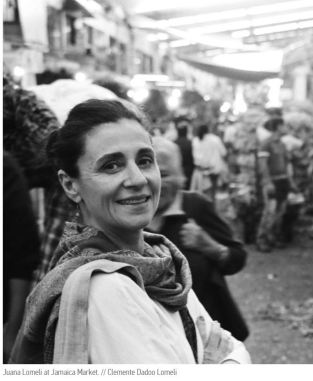 The city’s great unifier and appeal is its cuisine, especially the street-food: corner quesadillas, fast food tents outside of subway stops, stews served over hand-made tortillas, deep fried chicken tacos, tacos topped with rice served from street stands or a make-shift diner in the back of a van. In Mexico City, one can find great food everywhere at any price-point and at any time of day.
Among the hundreds of markets in Mexico, every person finds the one best attuned to their needs and desires. In 52 years, I have visited my markets hundreds, perhaps thousands of times. In that time, my father passed away, as did the fisherman from the now defunct El Barco in San Juan, and, recently, the woman, who sold me lush, grainy yellow morel mushrooms. When I told my daughter about her passing, she too felt a pang in her heart. She can crystalize her image from memory; the tight, white braids, the rebozo she used to lay out the mushrooms and the fact that if those mushrooms made their way into our supper, she knew exactly where they came from. I courteously called her “La señora” for so many years that I now question if I knew her name to begin with.





 Boomers Daily