From a JAMA Open Network online release:
 This cohort study included 146 152 individuals from the Prostate, Lung, Colorectal, and Ovarian Cancer Screening Trial and found that aspirin use 3 or more times per week was associated with reduced risk of all-cause, cancer, gastrointestinal cancer, and colorectal cancer mortality.
Importance Aspirin use has been associated with reduced risk of cancer mortality, particularly of the colorectum. However, aspirin efficacy may be influenced by biological characteristics, such as obesity and age. With the increasing prevalence of obesity and conflicting data regarding the effect of aspirin in older adults, understanding the potential association of aspirin use with cancer mortality according to body mass index (BMI) and age is imperative.
Objectives To investigate the association of aspirin use with risk of all-cause, any cancer, gastrointestinal (GI) cancer, and colorectal cancer (CRC) mortality among older adults and to perform an exploratory analysis of the association of aspirin use with mortality stratified by BMI.
Design, Setting, Participants This cohort study evaluated aspirin use among participants aged 65 years and older in the Prostate, Lung, Colorectal, and Ovarian (PLCO) Cancer Screening Trial at baseline (November 8, 1993, to July 2, 2001) and follow-up (2006-2008). Analysis began in late 2018 and was completed in September 2019.
To read more: https://jamanetwork.com/journals/jamanetworkopen/fullarticle/2756258

 Even limited hearing loss might be associated with cognitive decline. If true, early intervention with hearing aids might help people have better cognitive performance.
 Although coronavirus disease 2019 (COVID-19) dominates the news in early 2020, it affects few people in the US. In contrast, at the same time the US is experiencing a severe influenza epidemic, which has caused an estimated 250 000 hospitalizations and 14 000 deaths.
 There are many named diets that receive a great deal of attention. But what are they and do they work? David Heber, MD, PhD, from the UCLA Center for Human Nutrition explains these diets.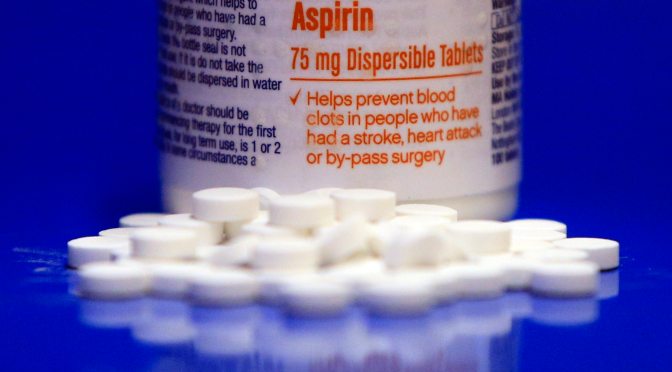
 This systematic review and meta-analysis of 11 studies involving 21 517 physicians demonstrated an association between physician depressive symptoms and an increased risk for perceived medical errors (RR, 1.95; 95% CI, 1.63-2.33). We also found that the magnitude of the associations of physician depressive symptoms and perceived medical errors were relatively consistent across studies that assessed training and practicing physicians, providing additional evidence that physician depression has implications for the quality of care delivered by physicians at different career stages.
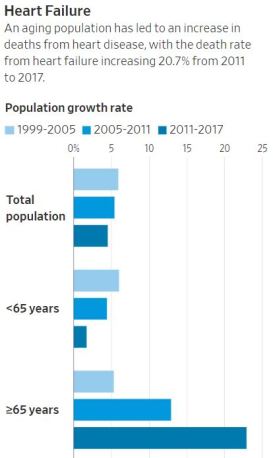 The findings help explain why a decadeslong decline in the death rate from cardiovascular disease has slowed substantially since 2011 and started rising in middle-aged people, helping
  Boomers Daily