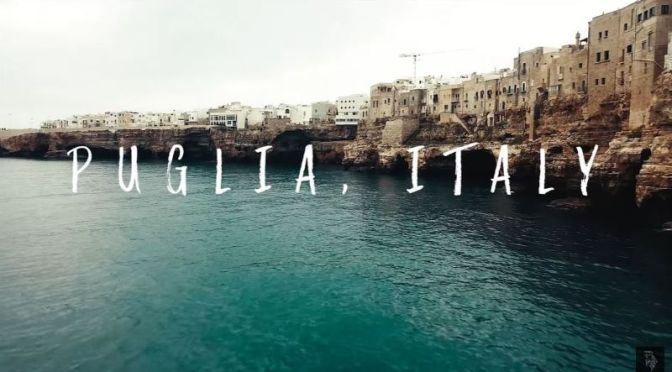
A journey through one of Italy’s best-kept secrets- the region of Puglia.
Puglia, a southern region forming the heel of Italy’s “boot,” is known for its whitewashed hill towns, centuries-old farmland and hundreds of kilometers of Mediterranean coastline. Capital Bari is a vibrant port and university town, while Lecce is known as “Florence of the South” for its baroque architecture. Alberobello and the Itria Valley are home to “trulli,” stone huts with distinctive conical roofs.
Early morning fog in Tuscany around Laterina and Pratomagno, Italy.
Laterina is a frazione of Laterina Pergine Valdarno in the Province of Arezzo in the Italian region Tuscany, located about 50 kilometres (31 mi) southeast of Florence and about 14 kilometres (9 mi) northwest of Arezzo.
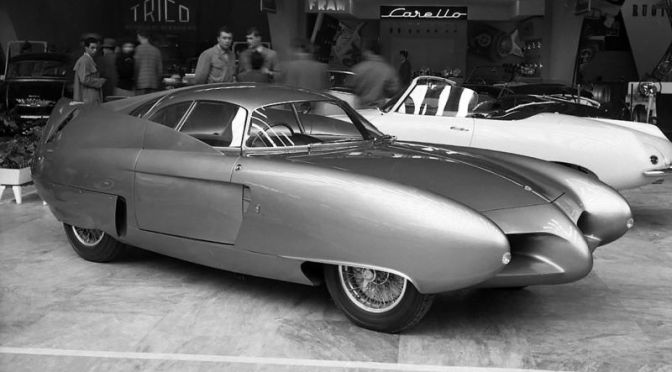
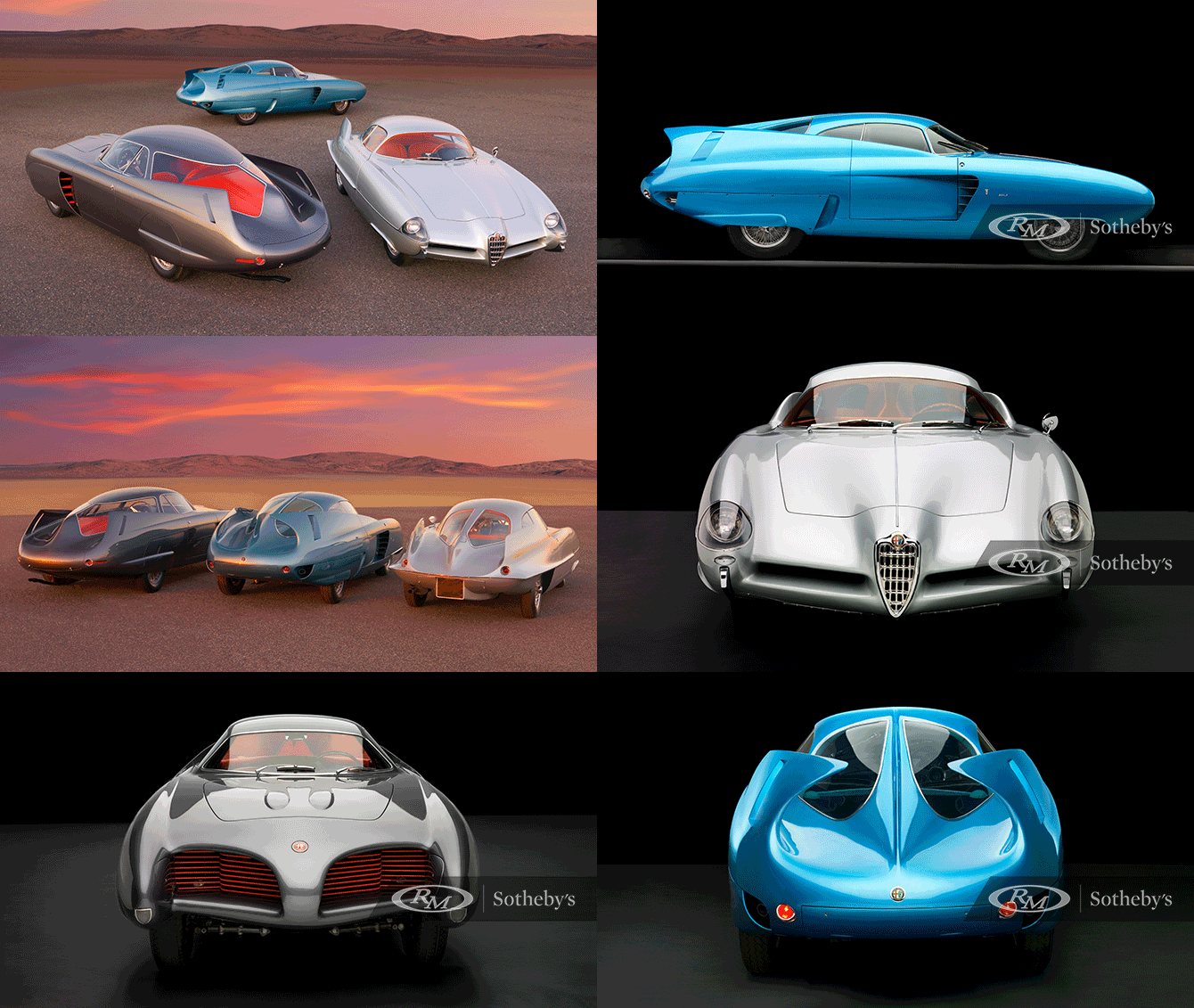
Perhaps the most incredible thing that could be said about the B.A.T. series is that the fantastical design is actually functional, with all three examples exhibiting drag coefficient figures that would still land them in the top ten most aerodynamic cars on sale today. Their extreme forms are, in fact, functional.
Predictably, the B.A.T. concepts made a huge splash on the international motor show circuit, leading to Scaglione’s two greatest hits in terms of production figures – the NSU Sport Prinz and Alfa Romeo Giulietta Sprint. Unfortunately, the B.A.T. concepts would also mark an inflection point for Bertone and Scaglione’s working relationship.
Scaglione’s daughter Giovanna describes it, “Bertone was a little bothered when it happened that in a magazine article they wrote about Franco Scaglione and not Bertone… For example, in an article speaking of one of his works [Scaglione’s] name was mentioned three times and the name of Bertone was mentioned only once…” Though Giovanna does not attribute her father’s sudden departure from the firm to this incident alone, it was clear that Scaglione wanted to strike out on his own, so that year, he handed over the title of chief stylist to Giorgetto Giugiaro and left Bertone for good.
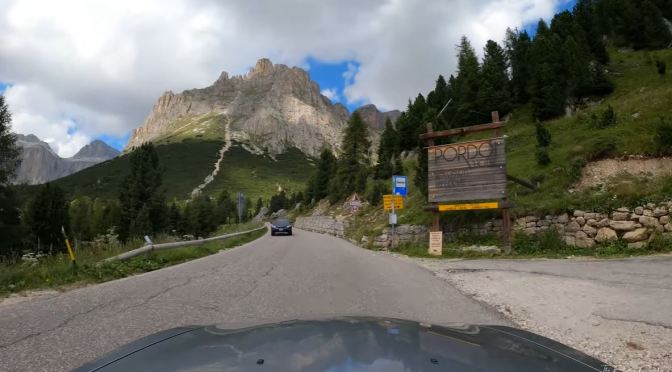
Framed between Sass Pordoi and Sass Becé, Pordoi Pass marks the border between the Province of Trento and the Province of Belluno. Located 12 km away from Canazei, it features as many as 28 hairpin bends. It is one of the 4 passes of the Strada delle Dolomiti (Dolomites Road), built in the beginning of the 20th century to link Bolzano with Cortina, and encourage the development of tourism in the Ladin valleys.
In summer, it is a perfect starting point for hiking, climbing and walking. Viel dal Pan deserves a special mention: it is an ancient road used by bread traders on their business travels between Trentino and Veneto. Piz Boè can be easily reached thanks to a super modern cable car that leads to the highest peak of Sass Pordoi (2,950 meters) in just a couple of minutes. From the top you can enjoy the stunning 360 degree view of the whole Alpine Range for as far as the eye can see.
Palazzo Serristori, a historical and prestigious palace currently under restoration is for sale by the river Arno, at a stone’s throw from Florence’s city centre, an internationally-renowned city for its history, art and culture.
The palace dates back to the 16th century and has changed a lot over the years, especially in the 19th century when the Demidoff family gave it its current looks. The property has four floors above ground, a basement and a mezzanine floor. The interiors are embellished with fine finishes and materials, such as walls and ceilings enriched with frescoes and decorations and inlays of great artistic importance. Of the original sixteenth-century palace, only the corner facade where the main entrance opens up is preserved.
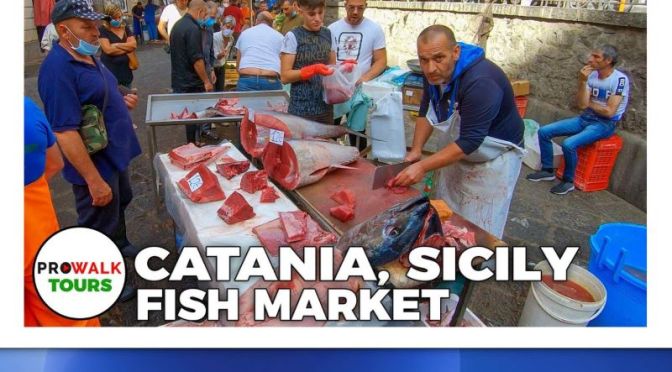
This walk was filmed on June 13th, 2020. It is part of a much longer 3 hour walk around Catania but I thought this clip of the fish market deserved its own video.
Catania is an ancient port city on Sicily’s east coast. It sits at the foot of Mt. Etna, an active volcano with trails leading up to the summit. The city’s wide central square, Piazza del Duomo, features the whimsical Fontana dell’Elefante statue and richly decorated Catania Cathedral. In the southwest corner of the square, La Pescheria weekday fish market is a rowdy spectacle surrounded by seafood restaurants.
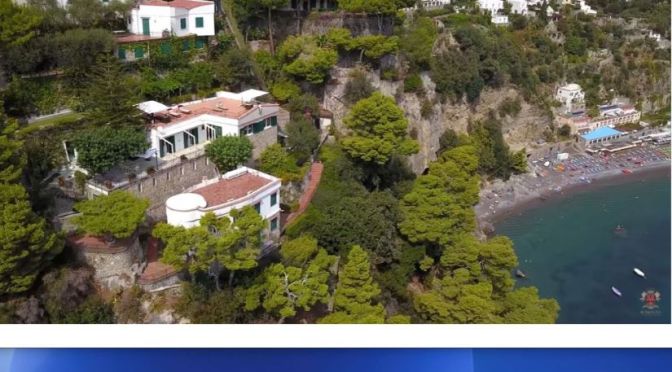
Nestled on the rocky cliffs of the Amalfi Coast, a short distance from the historic center of Positano, we find this beautiful 155-sqm villa with 5 bedrooms and 6 bathrooms. The building was recently restored and is currently rented out with excellent results. Outside, ample terraces (270 sqm) and a well-maintained garden (200 sqm) complete the property.
You can’t measure style with a tape measure, and that applies to people and collector cars alike. A true automotive style icon will be celebrated at the next Aste Bolaffi auction on 16 October. Firstly, the catalogue contains numerous rare variations of small Italian cars.
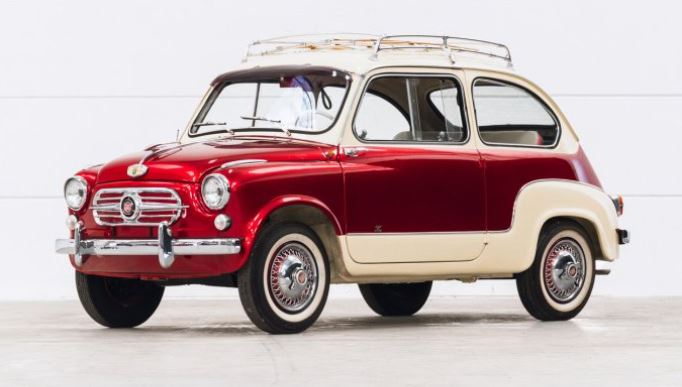
There is a Fiat 600 Zagato Tipo L from 1956 finished in metallic red and cream two-tone paintwork, a contemporary luxury version of the otherwise modest city runabout. The Fiat Abarth 595 and the two Jolly versions of the Fiat 500 built by Carrozzeria Ghia are also desirable.
It wasn’t only Fiat producing extremely charming microcars in the post-War period, however. The 49 lots in the auction also include a Bianchina Trasformabile, a Heinkel cabin scooter, a Gogomobil, a Mivalino, an Amica tricycle and a Ferves 50 Ranger, which can be considered the ancestor to the Fiat Panda 4×4 we so adore. You can find our favourites from the sale listed below or, alternatively, browse the entire catalogue in the Classic Driver Market.
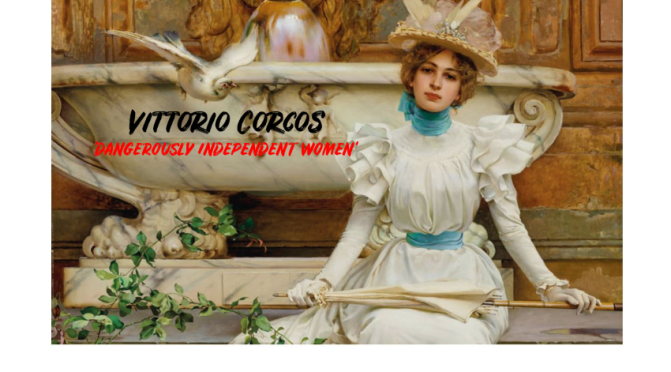
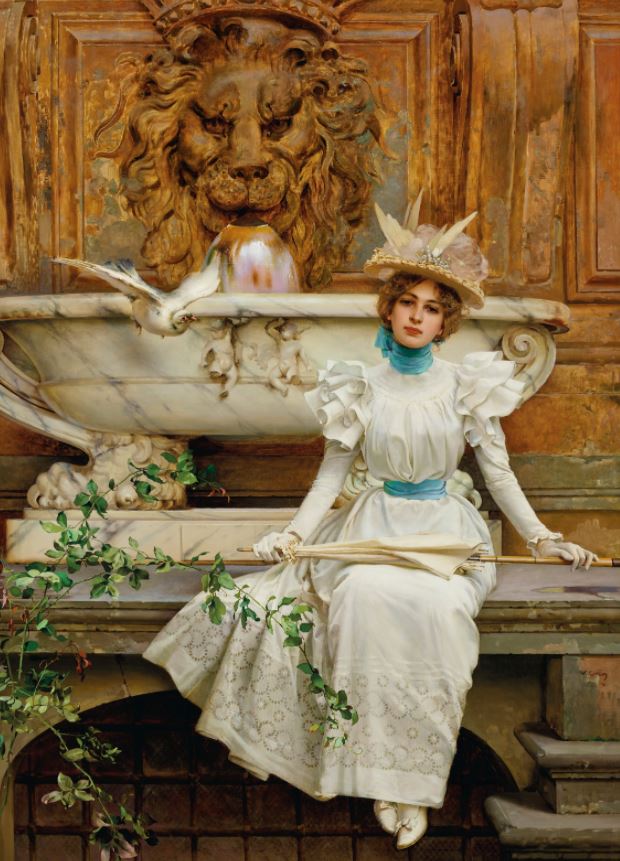
He went on to become a highly respected portraitist, counting Kaiser Wilhelm II of Germany, Benito Mussolini and opera star Lina Cavalieri among his subjects. In Coy’s view, however, his portraits were relatively conventional offerings — and Corcos’s ‘best work’ was his turn-of-the-century imagery of ‘dangerously independent women’.
Compare the biographies of Vittorio Corcos (1859-1933) and Amedeo Modigliani (1884-1920), and a remarkable number of similarities become apparent. Both were born into Jewish families in the Italian port city of Livorno in the second half of the 19th century; both would settle — and artistically come of age — in Paris. Both would even excel at the same type of paintings: their provocative depictions of women.
Their reputations, however, have suffered widely different fates. Modigliani, who struggled to sell much work before his death at the age of 35, is today regarded as a master of Modernism. Corcos, by contrast, who enjoyed a long and prosperous international career, posthumously became a rather forgotten figure.











 Boomers Daily