Tag Archives: Interviews

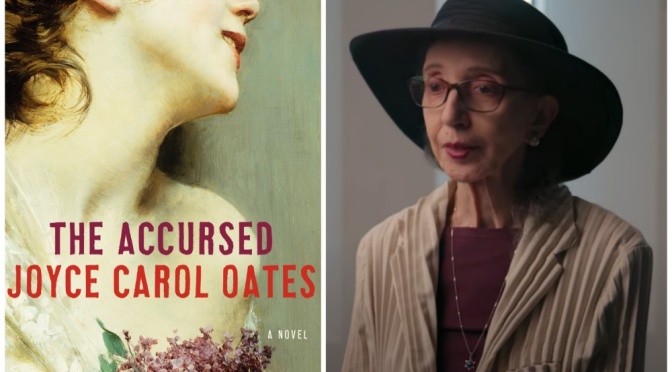
Interviews: Novelist Joyce Carol Oates ‘Storytelling’

Louisiana Channel (January 4, 2024) – When writing, Joyce Carol Oates writes about people, often about a family, because “the family unit to me is like the nexus of all emotion, and people derive their meaning from the position in families,” she says.

Video timeline: 0:00 On preferred subjects for writing 3:20 On Karen Blixen /Isak Dinesen 4:24 On families 6:54 On the mother figure 9:00 On the novel ‘Babysitter’ 17:27 On the novel ‘Night. Sleep. Death. And the Stars’ 22:48 How traveling resembles writing 28:47 On Donald Trump

“What is so exciting about the novel is that it mimics life and that you end up doing something you never thought you would do,” says Joyce Carol Oates, one of America’s greatest living novelists, when looking back on a life of writing.

It might be a violent event or something politically relevant, or it could be a racist experience that sets off a novel. In her storytelling, Oates finds it interesting to focus on girls at the beginning of puberty: “There’s a kind of wonderful neutrality of childhood that gets conditioned out when girls get to be 12 – 14 years old. And then, from that point on, when they’re so shaped by what we call the male gaze and the expectations of others that they grow into being someone who is this female image.”

But today, the family is very different and there are all kinds of families: “There are families of same-sex couples who got married and they may adopt a child or they may have a child of their own, but then there may be families that are like communes where people are living, sharing a house, but they are a family and they may have dogs and cats who know who they are. […] The so-called nuclear family – which is just a father, mother, and children – still exists, of course, but it’s not the only example of any longer, which is wonderful. It all begins with the emancipation of women”, Joyce Carol Oates concludes.

Oates feels attracted to writing because writing is storytelling and “what’s interesting about storytelling is that you have to have revelations. That you start off with a situation, and a little bit of a mystery evolves, and then you have to follow the tendrils and the roots of that mystery, like an investigator. And then there has to be a revelation.” This means that Oates focuses a lot in her writing on the pacing and the suspense and the movement, like “how long is a paragraph, how short is the dialogue, and how much dialogue is there in proportion to the exposition, and the craftsman side of writing is actually where many people write.“
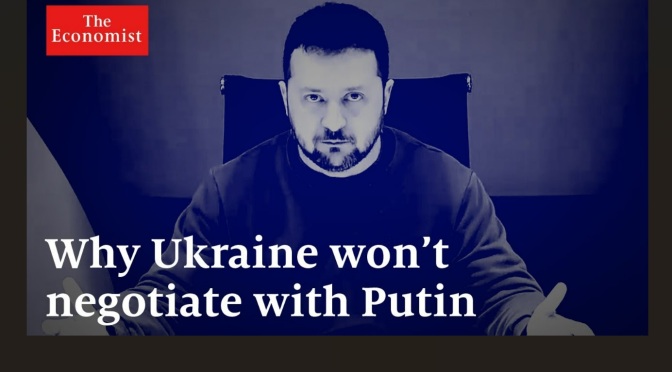
2024 Interview: President Zelensky’s Goals And Why No Comprising With Putin

The Economist (January 2, 2024) - As 2024 begins President Volodymyr Zelensky speaks to The Economist’s Editor-in-chief, Zanny Minton Beddoes, about his political and military goals for the coming year and why he won’t compromise with Vladimir Putin.

Video timeline: 00:00 – 2024 military goals 01:35 – Why he won’t negotiate

Volodymyr Zelensky is angry; not about the successes of his enemies (he sees none) nor even about his own army’s lack of progress on the battlefield. Instead, Ukraine’s president is exasperated by the wobbles of some of his allies as well as the detachment among some of his compatriots. And he wants you to know it.

Hardened by the pressures of war, a year of negative headlines and the failure of a counter-offensive that promised so much at the start of 2023, he has shed the lightness and humour that characterised our earlier meetings with him. Seated in his situation room and speaking to The Economist via Zoom (you can watch the video here), he punches out his message as if trying to break through the computer screen.

A New Year’s interview with Volodymyr Zelensky: https://econ.st/48A4Nim

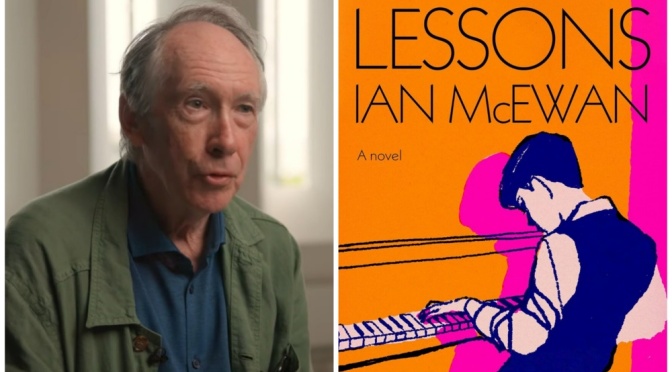
Interviews: British Writer Ian McEwan – ‘Life Stories’


Louisiana Channel (December 8, 2023) – “If I didn’t write, I’d go nuts because I wouldn’t have a single reason to exist. The pleasure of bringing something together is so intense,” says British Ian McEwan, who would love to live forever and discover how we’re doing in 10,000 years.

Ian McEwan is considered one of the most important British novelists alive today. When he writes, characters and plot are difficult to separate because “often characters arise out of plots, often plots drive characters into existence”, he says. What is crucial to McEwan when writing is that “circumstances make the character and the characters generate possibilities. That sense of possibility is always so important. So characters can create their own waves.” The novel Lessons (2022) is McEwan’s most personal novel. It was written in lockdown when he was entering his 70s and beginning to take a look back at his existence. People who know him well can always connect what he is writing with things in his own life, he says.

In Lessons, McEwan wanted to create “the emotional truth of certain rather sad, tragic, disturbing things that happened in my family”, he says. “And the reflective element was also the movement towards trying to understand the circumstances, not only of my life but my generation’s life.” Ian McEwan enjoys reading biographies, but “if you want to know everything it’s possible to know about a great poet, you’ll need to read three or four biographies written over maybe a century or two centuries”, he says. He admits that fiction does not influence him like it did when he was younger.

“We have very little sense of how to generate on the page an open-ended character until the writing of Jane Austen” and he adds that it was the great Russian writers who taught us how to write characters as if they were real people. By the turn of the 19th to the 20th century, there was a great artistic revolution; McEwan points out and emphasizes that it was especially James Joyce who taught us “to understand characters from the flow of consciousness, right from the very inside”.

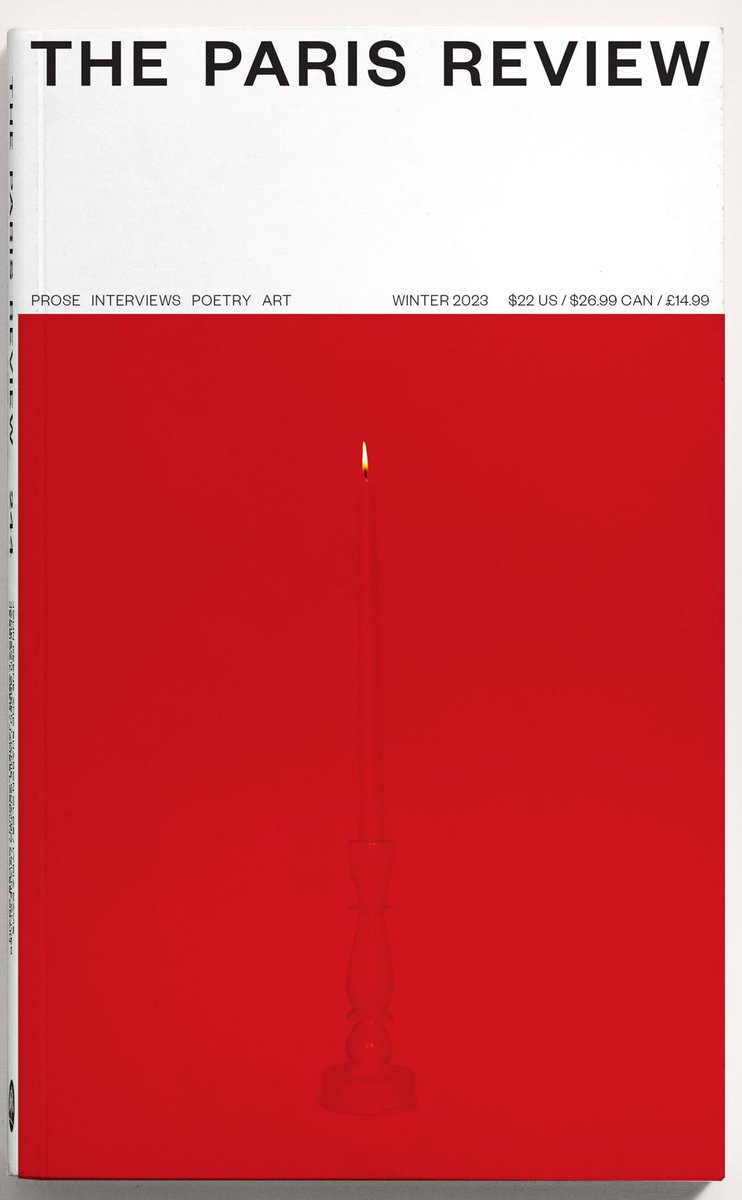
Literary Previews: The Paris Review – Winter 2023

Image

Paris Review Winter 2023 — The new issue features Louise Glück on the Art of Poetry – “You want a poem to register in every mind the way it did in yours. Then you discover this never happens.”; Yu Hua on the Art of Fiction: “If I’d taken another two or three years to start writing, I’d still be a dentist.”; Prose by Ananda Devi, Fiona McFarlane, and Sean Thor Conroe and more…

TABLE OF CONTENTS

Japan Views: Artist Mariko Mori – ‘Gods & The Future’

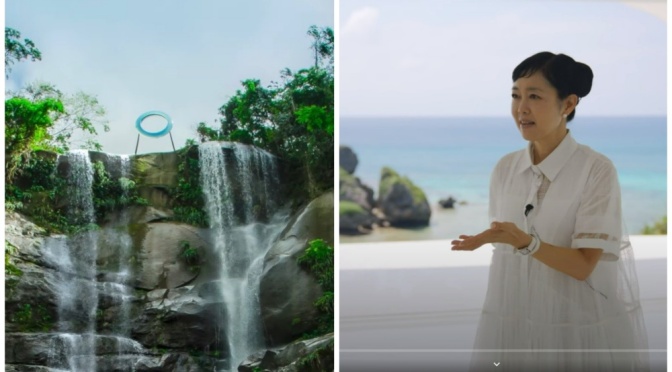
Louisiana Channel (November 7, 2023) – Japanese artist Mariko Mori shares a look into her studio and home as well as her own artistic practice. Mariko Mori was born in Tokyo, Japan, but has lived for several years in both New York and London. Her mother was an art historian, and the young Mori was introduced to art through her.

“It seems to me that a lot of our conceptual ideas are already carried out in the past. And we’re at a point to inherit those ideas to the future.”

“When I was nine years old, I was looking through her collection of postcards of all the Western art,” Mori remembers: “Somehow I found Jackson Pollock’s no. 13 painting. And I was so thrilled. I didn’t know what abstract painting was, but I really felt freedom.” Today, Mariko Mori works in various mediums, from photography and sculpture to installation and architecture. Her studio – and home – was the first architectural project she did. The house is located at Okinawa, a tropical island south of Japan.

Inspired by the surrounding nature Mori wanted “the house to be an extension of that. A part of nature.” The untraditional shape of the house is eye-catching: “Originally, I was thinking of just building an architecture building, but it became more like a sculpture or form,” she says and continues: “The shape tried to accommodate the wind coming from the north.” This explains why the building is smaller in one part and bigger in another.

Mariko Mori is a Japanese multidisciplinary artist. She is known for her photographs and videos of her hybridized future self, often presented in various guises and featuring traditional Japanese motifs. Her work often explores themes of technology, spirituality and transcendence.

Wildlife & Travel: ‘Hold Your Breath’ Moments Of Sir David Attenborough

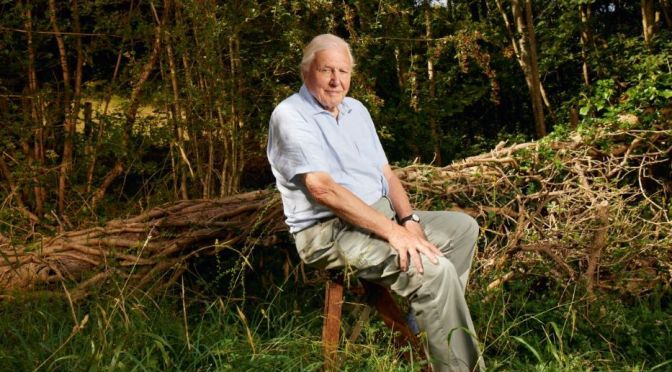
New Scientist (October 23, 2023) – Whilst writing narration for the latest Plant Earth series, David Attenborough had a moment that “made me hold my breath,” he says. In the scene, a leopard located high up in a tree attacks an antelope buck.

Wondering if the leopard could possibly survive falling from such a height, Attenborough says “suddenly you realise you haven’t written anything because, you know, you’re just completely held. And that may tell you that perhaps your words aren’t all that necessary”.

Literary Previews: The Paris Review – Fall 2023

Image

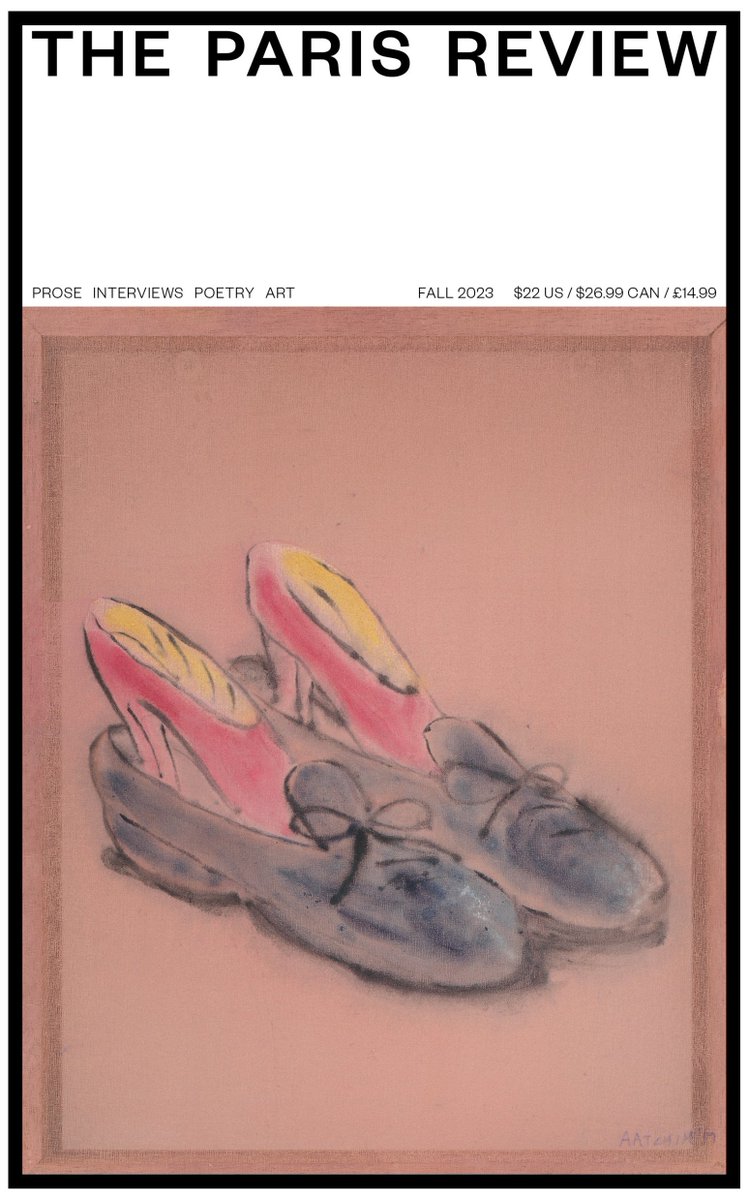
Paris Review Fall 2023 — The new issue features Robert Glück on the Art of Fiction: “When people would ask me—and sometimes they did—to write about them, I’d reply, ‘First, break my heart.’”; Lynn Nottage on the Art of Theater: “I embrace the fact that I write plays that are popular. Audiences make their own decisions.”

TABLE OF CONTENTS

Ukraine War: An Interview With President Zelensky

The Economist (September 11, 2023) – As the counter-offensive continues, Ukrainian forces are running out of time to make substantial gains. Diplomatic attempts to isolate Russia have failed and progress on the front lines is slowing. From the capital Kyiv, the president tells The Economist’s editor-in-chief how the country is bracing for a long war.
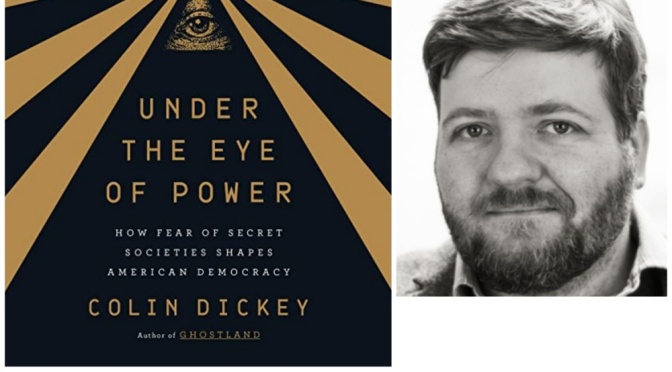
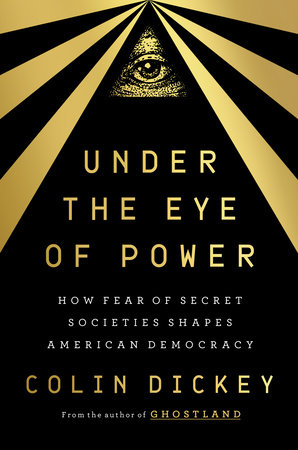
Interviews: ‘Under The Eye Of Power’ Author Colin Dickey – ‘Panic & Paranoia’

The American Scholar (July 14, 2023): In his new book, ‘Under the Eye of Power’, Colin Dickey asks, “What if paranoia, particularly a paranoia of secret, subversive societies, is not just peripheral to the functioning of democracy, but at its very heart?”

Under the Eye of Power by Colin Dickey: 9780593299456 |  PenguinRandomHouse.com: Books

The litany of contemporary conspiracy theories runs long: Pizzagate, QAnon, chemtrails, “jet fuel can’t melt steel beams,” “birds aren’t real.”

Some of these are funny—the rumor that Avril Lavigne and/or Paul McCartney have been replaced by doppelgängers—and some have deadly consequences, like the mass murders motivated by replacement theory or the Chronicles of the Elders of Zion.

We might like to think this is a recent phenomenon, but the first American president to espouse a conspiracy theory was actually George Washington, a freemason who believed that the Illuminati caused the French Revolution.

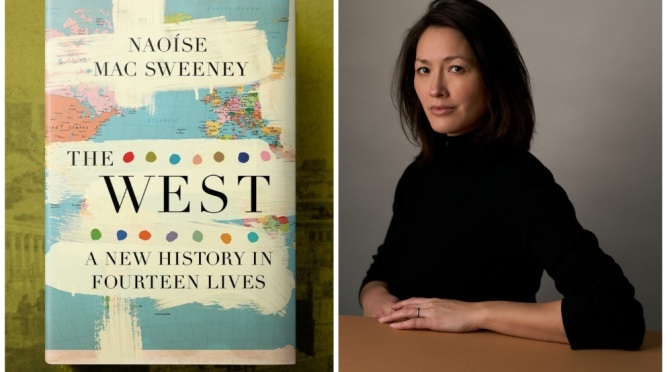
Reviews: “The West – A New History In Fourteen Lives” By Naoíse Mac Sweeney 

The American Scholar (June 9, 2023): The idea of “Western civilization” looms large in the popular imagination, but it’s no longer taken seriously in academia.

The West: A New History in Fourteen Lives: 9780593472170: Mac Sweeney,  Naoíse: Books - Amazon.com

In her new book, The West: A New History in Fourteen Lives, historian Naoíse Mac Sweeney examines why the West won’t die and, in the process, dismantles ahistorical concepts like the “clash of civilizations” and the notion of a linear progression from Greek and Roman ideals to those of our present day—“from Plato to NATO.”

Through biographical portraits of figures both well-known and forgotten—Herodotus and Francis Bacon, Livilla and Phyllis Wheatley, Tullia d’Aragona and Abu Yusuf Yaqub ibn Ishaq al-Kindi—Mac Sweeney assembles a history that resembles less of a grand narrative than a spiderweb of influence. Successive empires (whether Ottoman, Holy Roman, British, or American) built up self-mythologies in the service of their expansionist, patriarchal, or, later, racist ideologies.

Mac Sweeney joins the podcast to talk about why the West has been such a dominant idea and on what values we might base a new vision of contemporary “western” identity.Go beyond the episode:Naoíse Mac Sweeney’s The West: A New History in Fourteen LivesWe have covered Greece and Rome in previous episodes, as well as Njinga of AngolaIn our Summer 2023 issue, Sarah Ruden considers how modern biographers distort VergilTune in every week to catch interviews with the liveliest voices from literature, the arts, sciences, history, and public affairs; reports on cutting-edge works in progress; long-form narratives; and compelling excerpts from new books.