
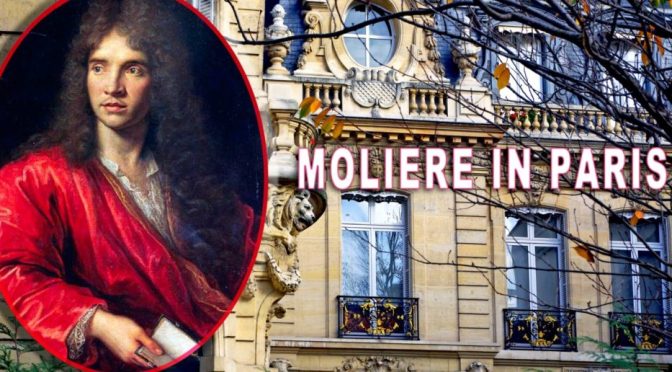
He’s known as the father of French #theatre, but the influence of #Molière goes well beyond France. His impact is still felt today all over the world. To mark the 400th #anniversary of the famed playwright’s birth, we speak to Georges Forestier, professor at the Sorbonne and a specialist in the works of Molière. We also take you on a tour of Molière’s Paris.
Tag Archives: History
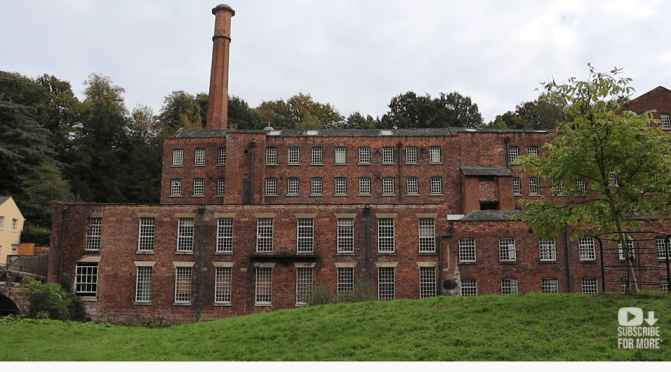
History: Quarry Bank Cotton Mill In Styal, UK
At the beginning of the Industrial Revolution Quarry Bank Mill became one of the most important Cotton Mills in England. Samual Greg embraced the Industrial Revolution to create a powerhouse of the Cotton Milling industry.
180 years after the end of the Industrial Revolution this Cotton Mill is still intact and in full working order. Maintained by the National Trust you can take a day tour of this fascinating Cotton Mill and find out about the Greg family, his workers, including children as young as 8 and the community he created in the village of Styal. You can see the machinery in operation and learn how the fluffy cotton plant is turned into a workable yarn as the volunteers run the machines and show you.
Greg built his family home on the grounds of Quarry Bank Mill, you can view the property or visit the darker side with the apprentice house, home to up to 90 children, working in the mill in return for food and board.
Timeline: 0:00 Intro 1:08 What to see at Quarry Bank 2:01 Cotton Industrial Revolution 2:25 Samual Greg builds Quarry Bank 3:32 The Great Wheel 4:09 Process to make cotton yarn 7:31 Quarry Bank House 10:26 Styal Village 11:53 Apprentice House (Child Labour) 16:44 Steam Power comes to Quarry Bank 19:02 The Gardens

Arizona Views: Chiricahua National Monument Tour
Join ranger Theresa Ferraro as she talks about the history, people, and geology of Chiricahua National Monument—located in one of Arizona’s seven sky islands.
Chiricahua National Monument is a unit of the National Park System located in the Chiricahua Mountains of southeastern Arizona. The monument was established on April 18, 1924, to protect its extensive hoodoos and balancing rocks.
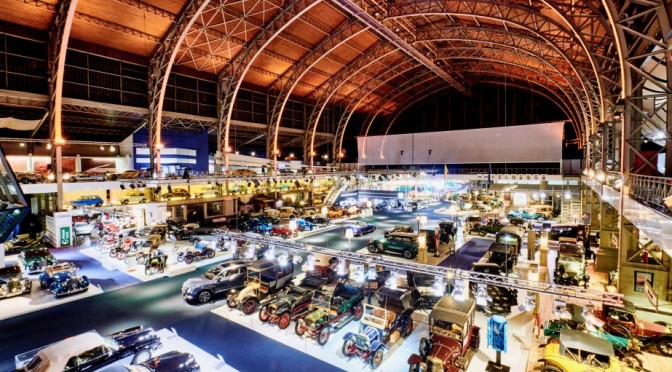
Classic Cars: ‘Autoworld – History Of Automobiles’ In Brussels, Belgium (Video)
Autoworld, “Treasury of the history of the automobile”
Autoworld is a private museum that rents its buildings from the community. Its passionate and experienced staff are committed to making Autoworld a leading location in both the automobile and events sector, that draws its legitimacy from its rich history.
The Mahy collection Autoworld was built on the extensive and well preserved car collection of the Mahy family, one of the largest in the world. Founder Ghislain Mahy (1907-1999) was a passionate mechanic from a young age and went on to restore dozens of cars throughout his life. Together with his sons Hans and Ivan, he built a collection of about 1000 vehicles, amongst which you can find many Belgian brands such as Minerva, Germain, FN, Imperia, Fondu, Vivinus, Nagant, Belga-Rise and Miesse. When the Autoworld museum was established in 1986, it incorporated 200 automobiles from the Mahy collection. The opening in 1986 While the passion and collection of the Mahy family forms the heart of the museum, it were the dedication and perseverance of late King Albert II, Minister Louis Olivier and Herman De Croo that ensured Autoworld officially came to life in 1986. The majestic esplanade, triumphal arch and colonnades of the Parc du Cinquantenaire proved to be the ideal location for the treasury of the automobile history. The main purpose of Autoworld was and remains to display decades of evolution in technology, comfort, safety and environment.
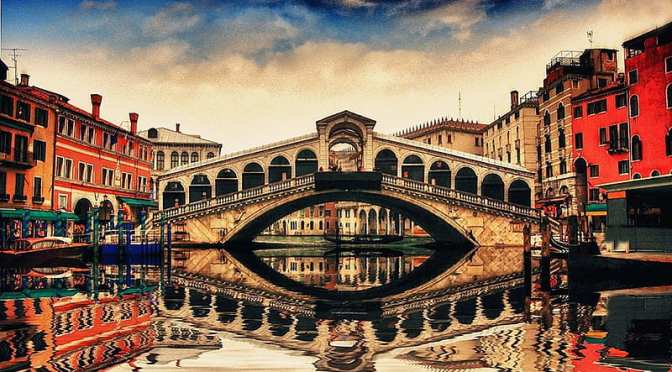
In-Depth Views: The Rialto Bridge In Venice, Italy (4K)
The Rialto bridge is one of the four bridges, together with the Accademia bridge, the Scalzi bridge and the Constitution bridge, that cross the Grand Canal, in the city of Venice. Of the four, the Rialto bridge is the oldest. According to the chronicles, the first passage on the Grand Canal consisted of a bridge of boats.
The growing importance of the Rialto market, on the eastern bank of the canal, increased the traffic on the floating bridge. Around 1250, it was replaced by a wooden bridge. In the first half of the 15th century, two rows of shops were built along the sides of the bridge; the proceeds from the rents, collected by the State Treasury, contributed to the maintenance of the bridge.
In 1310 the bridge was damaged during the retreat of the rioters led by Bajamonte Tiepolo. In 1444, however, it collapsed under the weight of the large crowd gathered to witness the passage of the procession of the bride of the Marquis of Ferrara. In 1503 the construction of a stone bridge was proposed for the first time.
In the following decades, several projects were evaluated. The work was completed in 1591, with the help of the architects Antonio and Tommaso Contin, who were his nephews, as sons of his son-in-law Bernardino Contin.

Art & Culture: History Of Indigo (National Gallery)
Our Conservation Fellow, Kendall Francis takes a closer look at indigo, a blue dye and pigment extracted from the leaves of plants, and how it is used and represented in paintings in our collection.
Kendall’s research reveals histories that are not explicitly portrayed in the paintings and highlights the important contributions from a wider range of people, including the enslaved people who cultivated the crops and extracted the indigo against their will. Supported using public funding by Arts Council England.

Road Trips: Car Museums & Design In Saxony, Germany
The city of Zwickau in eastern Germany has a long and varied history of car production and industrial design. Its story is told in the August Horch Museum – beginning with the production of Horch cars, to Audis, to the East German car, the Trabant.
On her trip to Zwickau, Hannah Hummel discovers the city’s car history, as well as its art and cultural history. Both the composer Robert Schumann and the expressionist painter and printmaker Max Pechstein were born in Zwickau. This episode of Destination Culture also takes viewers to Schneeberg – a creative hub in Saxony, where students from around the world study fashion and textile design.
Video timeline: 00:00 Intro 01:00 Car museum Zwickau 02:47 Recreating the Horch 14-17 04:49 Trabant – the GDR cult car 06:41 Hannah driving a Trabant 10:53 Composer Robert Schumann’s birthplace 11:49 Max Pechstein Museum 13:13 Werdau, meeting photographer Philipp Gladsome 16:18 Schneeberg, University of Applied Arts 18:46 Fashion design student Ridhima Wadhwa from Gujarat, India 22:05 Miner’s parade 23:45 Fashion designer Franziska Heinze
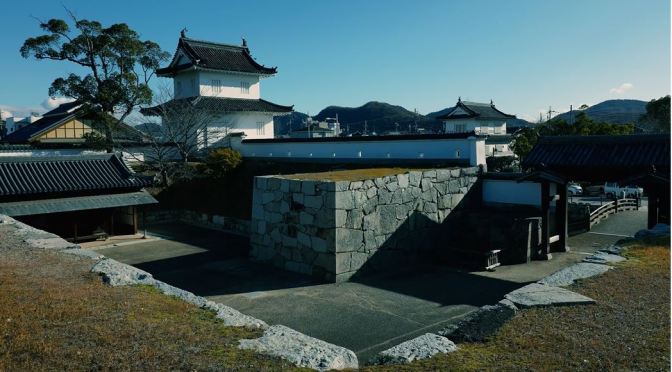
Japan Views: Akō Castle & Story Of The 47 Samurai
There is a very well-known story called “Chushingura” in Japan. It is the story of 47 samurai who gave their lives to avenge the honor of their lord. It inspired over 4,000 ukiyo-e woodblock prints. Performed on stage over 7,000 times in various genres. More than 300 years later, the story continues to inspire novelists and filmmakers. Ako Castle is where the story began. The 47 samurai were the retainers of the Ako clan. The video starts off with this side story, then focuses on the characteristics, the structure of the castle, and the financial support achieved by innovative salt production.
Film Director: Tadahiro Konoe
Film Producer: Tadahiro Konoe
Production Company: curioswitch Inc.
Client: Ako City (Hyogo prefecture, Japan)

Egyptian History: Saving The Temples On The Nile
A timeless treasure, nearly lost forever. Without the UNESCO‘s unprecedented rescue operation, future generations might have only seen the stunning temples of Ramses II and Cleopatra in the pages of history books. Majestic stone colossi rising from the desert sands, structures like these kept their secrets for generations.
For centuries, Abu Simbel, Dendur, Amada and other monuments faced threats from looters, earthquakes, and floods. Ultimately, it was the waters of the Aswan Dam that nearly sealed their fate. In 1960, then Egyptian President Nasser ordered the dam‘s construction. In order to save the temples of Ramses II and Cleopatra, among others, UNESCO reached out to over 50 countries, and raised $80 million.
After receiving multiple proposals to save the structure, it was one from Sweden that proved successful. The plan: dismantling the complex and rebuilding it on higher ground. Between November 1963 and September 1968, saws were used to cut the two temples into 1,036 blocks, each weighing between seven and 30 tons.
Their new location was 64 meters above the old site and 180 meters further inland. After five years of construction, this major undertaking was completed on September 22, 1968. The Nubian temples of Abu Simbel are now a UNESCO World Heritage Site.
International Art: Apollo Magazine – December 2021
FEATURES | Imogen Tedbury on Botticelli’s bling; Kirsten Tambling on Fabergé’s fabulous baubles; Susan Moore visits the dealer and decorator Robert Kime in London; Jo Lawson-Tancred asks whether machines can do art history.
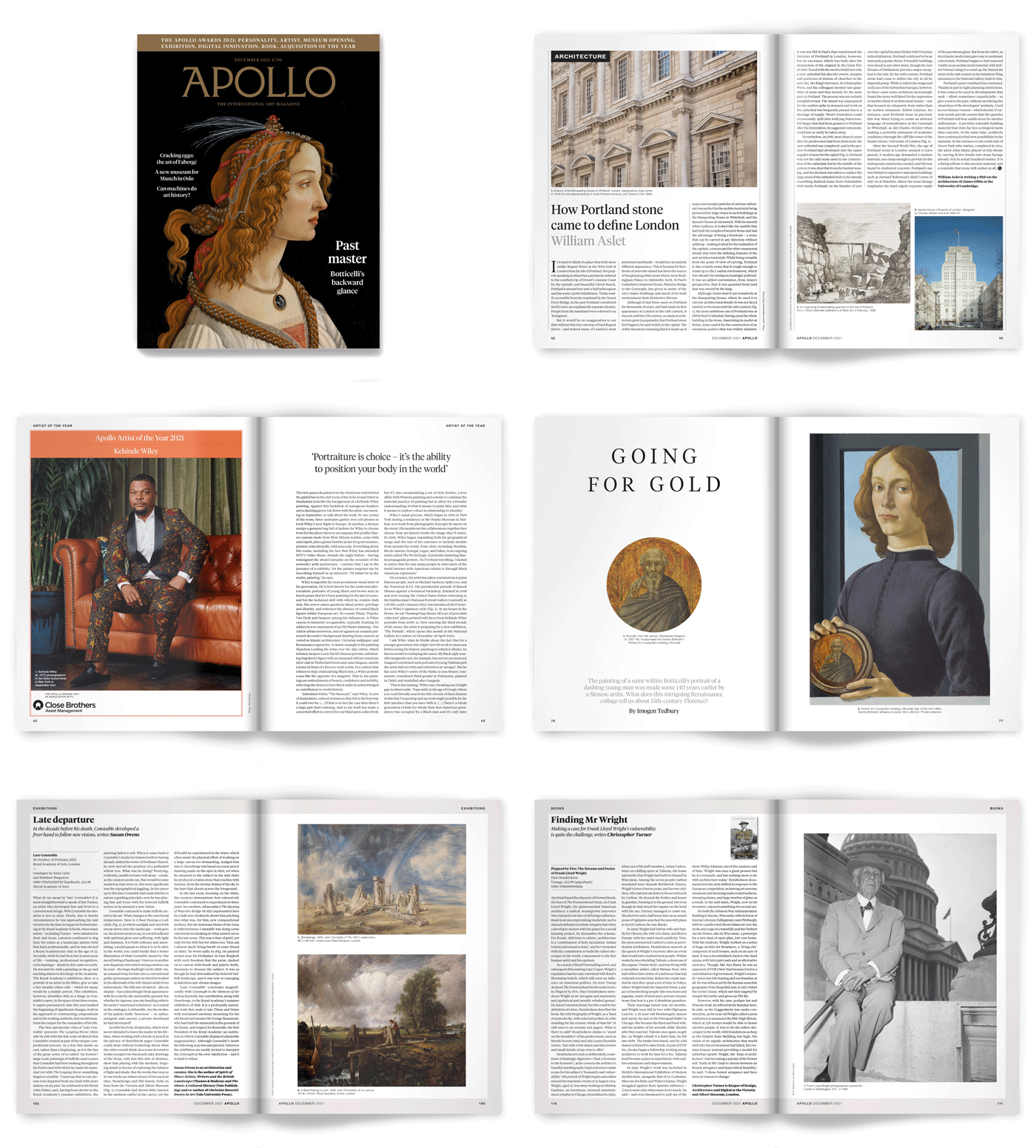
REVIEWS | Susan Owens on Constable’s late works in London; Kelly Presutti on 18th-century British glassware in Corning; Donal Cooper on Italian Renaissance altarpieces; Christopher Turner on Frank Lloyd Wright; Thomas Marks on Tiepolo’s gnocchi-munching Punchinellos.
 Boomers Daily