In the remote highlands of Uzbekistan, archaeologists are uncovering the remains of a vast metropolis that may rewrite the history of the fabled trading route’s origins By Andrew Lawler | Photographs by Simon Norfolk
After a 1902 train wreck in the heart of Manhattan, one self-taught engineer proposed an improbable urban transformation. His vision reshaped the face of American cities
The release last week of a tranche of Jeffrey Epstein’s private emails raised more questions about Donald Trump’s links to the disgraced financier.
The US president had spent much of this year trying to bat away questions about Epstein while rejecting pressure to release the bulk of the files. But in an abrupt reversal on Sunday – widely seen as an admission that he cannot control his Maga base on the issue – Trump urged House Republicans to back the release of the files after all.
That was duly passed this week and if the Senate also votes the same way, the justice department will be compelled to release all unclassified materials on Epstein, who died in jail in 2019 while awaiting trial on sex-trafficking charges.
So we may soon find out what Trump has tried for so long to keep buried. As David Smith writes for our big story, last week’s email release pointed less to a grand conspiracy and more to an elite world in which wealthy, powerful and privileged individuals operate above the law.
One thing’s for sure: despite Trump’s wishes, the Epstein scandal isn’t going away just yet.
Spotlight | Can methane cuts avert climate disaster? With temperatures breaching limits set out in the Paris Agreement, designed to mitigate climate change, experts say tackling the powerful gas could buy crucial time as the clean-energy shift stalls. Fiona Harvey reports
Spotlight | The US military’s plans for a divided Gaza A ‘green zone’ will be secured by international and Israeli troops, while almost all Palestinians have been displaced to a ‘red zone’ where no reconstruction is planned, reports Emma Graham-Harrison
Feature | What chance did one boy have to survive on Britain’s streets? When documentary film-maker Pamela Gordon first met Craig in Nottingham, he was 13 and homeless. She still thought his life might turn around, but she was tragically wrong
Opinion | Labour’s asylum plans are cruel, overspun and unachievable There is mounting disquiet among Labour MPs, while the vulnerable refugees at the heart of this story are living with a renewed sense of panic, writes Diane Taylor
Culture | Stranger Things reaches its upside down finale After a decade, the Netflix hit is bowing out. Ahead of its last episodes, the show’s creators and cast talk to Rebecca Nicholson about big 80s hair, recruiting a Terminator killer – and the birds Kate Bush sent them
The dust may have settled on Zohran Mamdani’s astounding, against-the-odds victory in the New York mayoral election. But a week on, the scale of his achievement looks no less impressive.
As Ed Pilkington outlines in this week’s big story, Mamdani swept away his establishment-backed heavyweight opponent Andrew Cuomo by mobilising an army of grassroots volunteers and donors, while also connecting deeply with the voters whose support he most needed on the issues that mattered most to them, namely affordability and economic justice.
It’s a ground-up approach to doing things that US Democrats – who also won governorships in Virginia and New Jersey on an encouraging night – can learn from as they reflect on a torrid year since Donald Trump swept to power.
Spotlight | The green monster of Cop30 Amid bombast, strife and competing interests, is the annual climate summit, which opened in Brazil this week, still the forum we need to save the planet? Fiona Harvey reports from the Amazonian city of Bélem
Spotlight | The extraordinary fall of the BBC’s top bosses A whirlwind that began with a report criticising the editing of a speech by Donald Trump is part of a wider political story, some say. Media editor Michael Savage charts the tale
Feature | Why not everyone is sad to see the end of USAID When Donald Trump set about dismantling USAID, many around the world were shocked. But on the ground in Sierra Leone, the latest betrayal was not unexpected. Mara Kardas-Nelson finds out why
Opinion | A president groped? Sadly it isn’t a shock After Claudia Sheinbaum was assaulted last week, her opponents claimed she staged it. From their own experiences, the women Mona Eltahawy met know she didn’t have to
Culture | Rosalía, the Catalan queen of pop With a towering new album about female saints in 13 languages, she’s pop’s boldest star – and one of its most controversial. She tells Laura Snapes why we need forgiveness instead of cancel culture
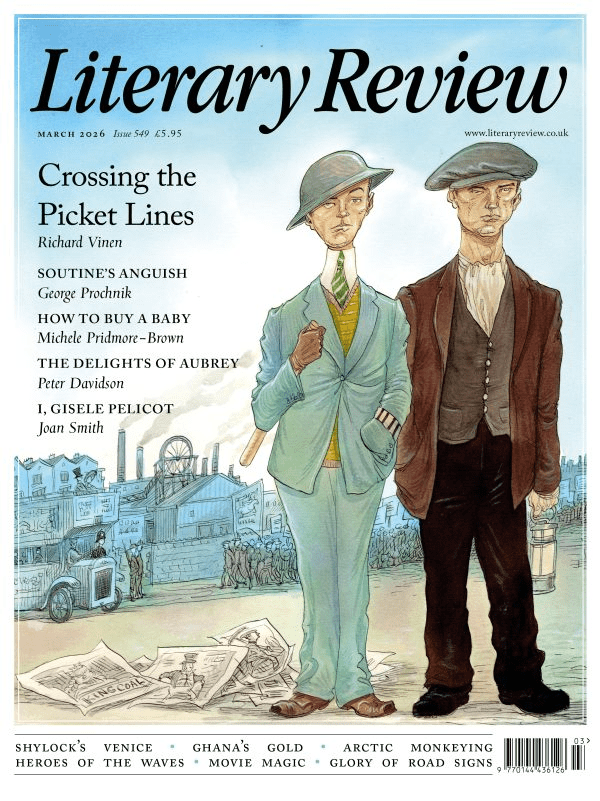
I’m starting to feel some pre-emptive nostalgia when I do a Google search. Yes, it’s true, search can sometimes take you to places you don’t want to go. But at least a ‘classical’ search engine like Google in the 2000s and 2010s took you outside itself, and perhaps implicitly prompted you to evaluate critically what you found there. by Donald MacKenzie
Slavery was accepted across most of the early modern world. No one wanted to be a slave, except when the alternative was being executed after a battle, or made a human sacrifice, but the institution was taken for granted until the growth of abolitionism in the later 18th century. Liverpool could hardly be an exception when the slave trade was so embedded in its economy. By John Kerrigan
We still live in the long shadow of Habsburg disintegration. In addition to the lingering legacy of 19th-century state formations, European and global politics are shaken by continuing reverberations in states that have disappeared from Europe since 1990: Yugoslavia, Czechoslovakia, the GDR and, above all, the Soviet Union. By Holly Case
For some time now, El Fasher in Sudan has been a city beyond the reach of journalists. But the haunting satellite image on our cover this week, of smoke billowing from fires near El Fasher’s airport, told its own story as starkly as anything that could be reported from the ground.
Other satellite images showed clusters of burned-out vehicles, and what appeared to be pools of blood beside piles of bodies on the ground. A massacre was under way that could be seen from space.
The last major city in Darfur to fall to the Rapid Support Forces (RSF) was already the scene of catastrophic levels of human suffering, but has “descended into an even darker hell”, senior UN officials warned last week. This key moment in the two-and-a-half-year-long civil war has unfolded in plain sight with minimal intervention from the international community, unless you count the United Arab Emirates, which has been arming the RSF paramilitaries.
Spotlight | The Andrew formerly known as a prince Stupidity and self-entitlement sank King Charles III’s disgraced younger brother – and the royal reckoning may not be over yet, writes Stephen Bates
Technology | What if the internet just … stopped working? Could everything suddenly go offline and if so, how? Aisha Down goes inside the fragile system holding the modern world together
Interview | Margaret Atwood puts the world to rights At 85, she’s a literary seer and saint – and queen of the Canadian resistance. So what does the writer make of our dystopian society? Lisa Allardice finds out
Opinion | World leaders: Cop30 could be your great legacy With the US backing away from the climate crisis, now is the moment when other nations must step up, says former British prime minister Gordon Brown
Culture | Back to black with Lynne Ramsay The Scottish film director burst on to the scene with Ratcatcher and terrified audiences with We Need to Talk About Kevin. Her latest film stars Hollywood darling Jennifer Lawrence, but it doesn’t flinch from the dark side of family life, finds Amy Raphael
The Poems of Seamus Heaney By Rosie Lavan, Bernard O’Donoghue and Matthew Hollis (edd.)
Vermeer: A Life Lost and Found By Andrew Graham-Dixon
A woman stands, oblivious to our gaze, absorbed entirely in her activity – reading, pouring, weighing, holding out her pearls. A window to the left admits a radiance, which falls variously on the common stuff the room contains. The light enters as an absolute blank, but infuses colour as it illuminates the scene.
Katherine Mansfield: A Hidden Life By Gerri Kimber
The rush to tell the story of Katherine Mansfield’s short, fascinating life began as soon as she died. Her husband, John Middleton Murry, a gifted editor, notoriously turned the publication of her writing into an industry.
Donald Trump’s sudden decision last week to sanction Russian oil producers suggested the US president has finally lost patience with Vladimir Putin after a series of fruitless talks over ending the war in Ukraine.
Could it break the deadlock? Oil sanctions have the potential to genuinely damage Moscow’s finances, as the Russian president himself admitted last week. It remains to be seen, though, whether economic pressure alone can bend Putin’s arm over a conflict he views as defining to his legacy.
In this week’s big story, Guardian Russia affairs reporter Pjotr Sauer asks whether sanctions could succeed where diplomacy has failed, while Christopher S Chivvis of the Carnegie Endowment for International Peace argues that a negotiated settlement remains the likeliest way to bring nearly four years of fighting to a halt.
In the frontline Ukrainian city of Kupiansk, senior reporter Peter Beaumont finds little hope of a quick resolution, with much of the population having left and the remaining soldiers stuck in a war they believe is “going nowhere for either side”.
Five essential reads in this week’s edition
Spotlight | The populist leaders’ economic playbook From Milei to Meloni,are the economics of populism always doomed to failure? This long read from economics editor Heather Stewart tries to bridge the gaps between populist aspiration and fiscal reality
Environment | The deadly migration routes of elephants Human-wildlife conflict has overtaken poaching as a cause of fatalities among elephants – and is deadly for people too. Now some villages are finding new ways to live alongside the mammals, reports Patrick Greenfield
Interview | Is Jimmy Wales the good guy of the internet? The Wikipedia founder stands out from his contemporaries for being driven by more than money. But can the people’s encyclopedia withstand attacks from AI and Elon Musk? ByDavid Shariatmadari
Opinion | Without genuine truth and justice, the war in Gaza cannot end A fragile ceasefire is in place, but what’s needed is an international tribunal for resolution and reparation.That’s the only route to lasting peace, argues Simon Tisdall
Culture | The electrifying genius of Gerhard Richter He has painted everything from a candle to 9/11, walked his naked wife through photographic mist, and turned Titian into a sacred jumble. A new Paris show reveals the German artist in all his contradictory brilliance, says Adrian Searle
News, Views and Reviews For The Intellectually Curious