Tag Archives: France

Cannes View: La Palme d’Or Chef Christian Sinicropi’s Brilliant Ceramic Dishes

Set right on the spectacular coast of Cannes, France, La Palme d’Or rests inside the Grand Hyatt Cannes Hotel Martinez. This restaurant has won two Michelin stars, and is most known for its Mediterranean-style dishes. However, the most notable thing about this restaurant is the head chef, who creates bespoke ceramic dishware to for the restaurant to best compliment his unique recipes.

2019+-10+Christian+Sinicropi+Cuisine+Palme+d%27Or+%C2%A9J.+Kelagopian%2830%29.jpg
CHEF CHRISTIAN SINICROPI

Some places you fall in love with at first sight and La Palme d’Or is one of them. In the fabulous Art Deco setting of the Hotel Martinez, diners look down on the famous promenade of La Croisette and the Bay of Cannes, while savouring the luxury and refinement so beautifully brought together here. Of course, all this would be worth nothing without high-calibre cuisine. No worries on that score: chef Christian Sinicropi, a local man, has matters entirely in hand. At each stage of the “Mouvements” set menu, he homes in on one ingredient, supporting it with elements from its own ecosystem. The result is coherent and sophisticated, right down to the remarkably precise desserts by Julien Ochando. Definitely worthy of a Golden Palm award.
France View: Argelès-sur-Mer – Capital Of Camping

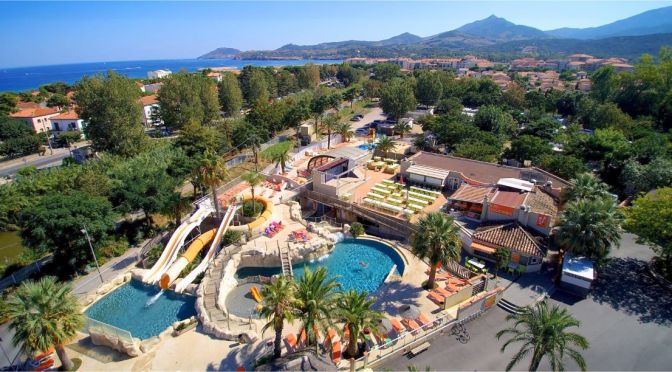
One of the most popular holiday destinations for French people is the campsite. Argelès-sur-Mer, in the eastern Pyrenees, is the town with the largest amount of camping accommodation in Europe. In the summer, this Western corner of the Mediterranean sees its population increase tenfold. We meet two brothers who run a campsite in Argelès.

Argelès-sur-Mer is a town on France’s Mediterranean coast. It’s known for the long Argelès Beach with its seafront promenade. In the Catalan-style old town, 14th-century Notre-Dame del Prat Church has views from its bell tower. Valmy Park to the south includes trails, a 19th-century castle and the Aigles de Valmy bird zoo. To the north, Mas Larrieu Natural Reserve is home to herons, gulls and bee-eaters.

2022 Village Walks: Saint-Paul De Vence, France (4K)

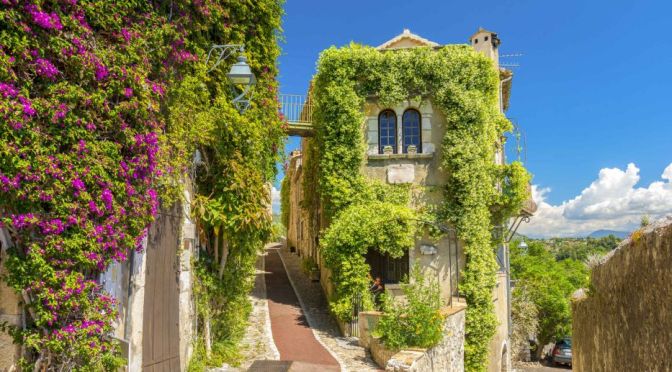
Medieval walls encircle narrow streets and capture the heritage of more than a thousand years. Picking out the marks of history, either alone or with a guide, is to enter into the soul of Saint-Paul de Vence.

The fountain at the heart of the village fills St-Paul’s medieval vaults with music. To quote the poet Verlaine: “The fountain’s silvery murmur plays on.”

Filmed in August 2022.

Cinematic Short Films: Bordeaux & Saint Emilion

Filmed and edited by: Matteo Bertoli

Bordeaux, city and port, capital of Gironde départementNouvelle-Aquitaine région, southwestern France. It lies along the Garonne River 15 miles (24 km) above its junction with the Dordogne and 60 miles (96 km) from its mouth, in a plain east of the wine-growing district of Médoc.

The dry soil of Médoc attracted settlement as early as the Bronze Age; and, at least since Roman times, Bordeaux has been a flourishing town and port, with connections particularly with Spain and Britain. As Burdigala, it was the chief town of the Bituriges Vivisci, a Celtic people. Under the Romans it was the capital of the province of Aquitania, which extended from the Pyrenees to the Loire. In the 4th century Burdigala, then the capital of Aquitania Secunda (one of the three parts into which the emperor Diocletian had divided Aquitania), was described by the writer Ausonius, a native of the city, as a square, walled town and one of the great educational centres of Gaul. During the decline of the Roman Empire, the region around Bordeaux entered a period of political instability from which it recovered only when the dukes of Aquitaine established themselves early in the 10th century.

Paris Exhibitions: ‘Claude Monet – Joan Mitchell’

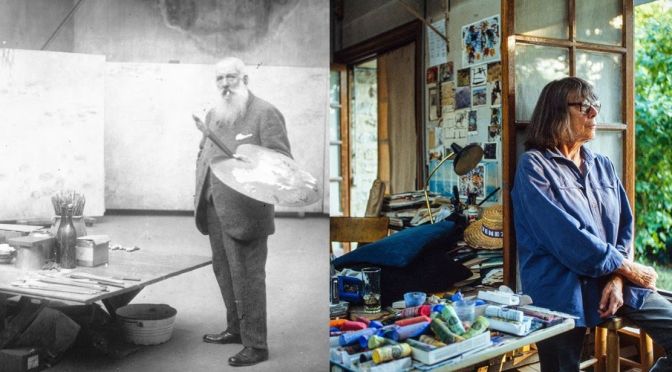
The exhibitions “Monet – Mitchell” create an unprecendented “dialogue” between the works of two exceptional artists, Claude Monet (1840-1926) and Joan Mitchell (1925-1992).

“The dialogue Claude Monet – Joan Mitchell” will be introduce by the “Joan Mitchell Retrospective”, enabling the public in France and Europe to discover her work.

The “Monet – Mitchell” exhibitions present each artist’s unique response to a shared landscape, which they illustrate in a particularly immersive and sensual manner. In his last paintings, the Water Lilies, Monet aimed to recreate in his studio the motifs he observed at length on the surface of his water lily pond in Giverny. Joan Mitchell, on the other hand, would explore a memory or a sense of the emotions she felt while in a particular place that was dear to her, perceptions that remained vivid beyond space and time. She would create these abstract compositions at La Tour, her studio in Vétheuil, a small French village.

Read and see more

MONET – MITCHELL

Exhibition – 05.10.2022 to 27.02.2023

Walks: Omaha Beach In Normandy, France (4K)

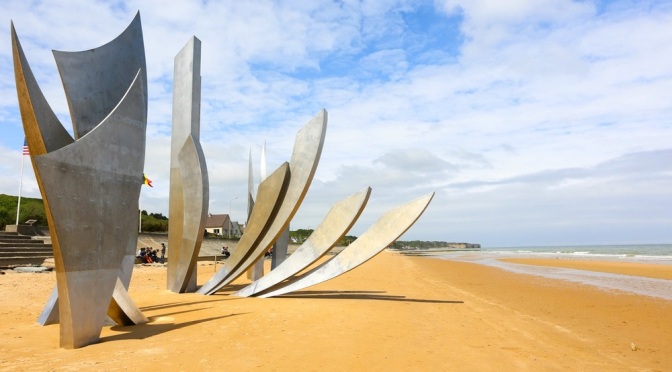
Omaha Beach is a landing area in Normandy, northern France, used by Allied forces in the WWII D-Day invasion. Today, the beach is dotted with the remains of German bunkers. On the shore, the stainless-steel sculpture Les Braves commemorates American soldiers. Behind the beach is the Musée Mémorial d’Omaha Beach, also documenting the invasion. Nearby, the Overlord Museum displays WWII tanks, artillery and dioramas.

Recording Date: August 2022

Island Views: Belle-Île-en-Mer Off Brittany, France

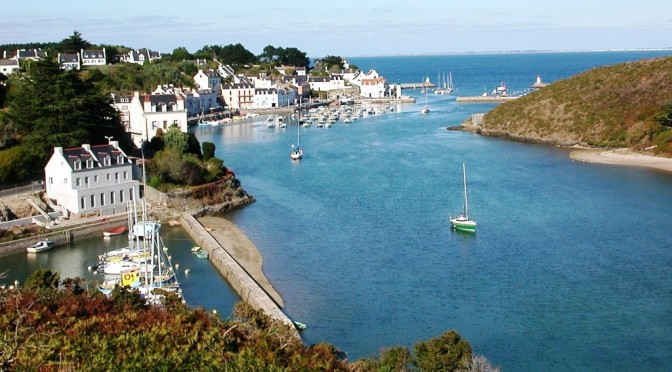
Off the coast of the French region of Brittany is a picturesque island for all those who want to disconnect. A 45-minute ferry ride separates the island of Belle-Île-en-Mer from the mainland, making it a world apart that attracts 100,000 visitors a year. Tourists also appreciate Belle-île’s food, especially its fish. We take a closer look at the island in summer.

Belle-Île is an island off the coast of Brittany in northwest France. In the main town La Palais, Citadelle Vauban is a star-shaped fortress. The fort at Pointe des Poulains, the island’s northern tip, houses a museum dedicated to 19th-century actress Sarah Bernhardt. Sandy Donnant Beach lies on the rugged west coast. Nearby, the Grand Phare lighthouse looks out over the needles rock formations of Port-Coton.

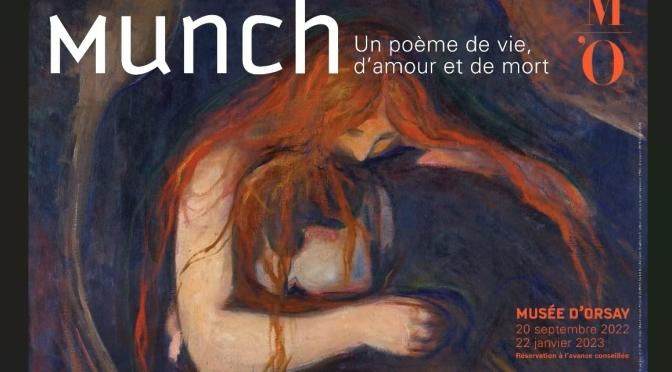
Exhibits: ‘Edvard Munch – A Poem of Life, Love and Death’ (Musée d’Orsay)

In collaboration with the Munch Museum in Oslo, the Musée d’Orsay is devoting an exhibition to the famous Norwegian painter Edvard Munch (1863-1944), whose work, in all its breadth – sixty years of creation – and complexity, remains partly unknown.

Munch’s work occupies a pivotal place in artistic modernity. It has its roots in the 19th century and would find its place firmly in the next one. Moreover, his entire work is permeated by a singular vision of the world, giving it a powerful symbolist dimension that is not limited to the few masterpieces he created in the 1890s. Moving beyond fin-de-siècle symbolism, Munch transcended this movement beyond its peak to make it the backbone of his work, giving it its great coherence.

Filmed on October 2, 2022.

Walking Tour: Caen In Normandy, France (4K)

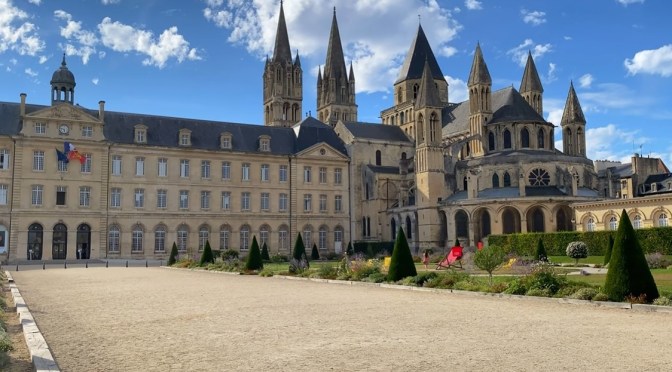
Caen is a port city and capital of Calvados department in northern France’s Normandy region. Its center features the Château de Caen, a circa-1060 castle built by William the Conqueror. It stands on a hill flanked by the Romanesque abbeys of Saint-Étienne and Sainte-Trinité, which both date from the same period. The multimedia Mémorial museum is devoted to World War II, the 1944 Battle of Normandy and the Cold War.

Walks: Mont Saint-Michel In Normandy, France (4K)

Mont-Saint-Michel, rocky islet and famous sanctuary in Manche départementNormandy régionFrance, off the coast of Normandy. It lies 41 miles (66 km) north of Rennes and 32 miles (52 km) east of Saint-Malo. Around its base are medieval walls and towers above which rise the clustered buildings of the village with the ancient abbey crowning the mount. One of the more popular tourist attractions in France, Mont-Saint-Michel was designated a UNESCO World Heritage site in 1979.

Mont-Saint-Michel is almost circular (about 3,000 feet [900 metres] in circumference) and consists of a granite outcrop rising sharply (to 256 feet [78 metres]) out of Mont-Saint-Michel Bay (between Brittany and Normandy). Most of the time it is surrounded by vast sandbanks and becomes an island only when the tides are very high. Before the construction of the 3,000-foot causeway that connects the island to land, it was particularly difficult to reach because of quicksand and very fast-rising tides. The causeway, however, has become a barrier to the removal of material by the tides, resulting in higher sandbanks between the islet and the coast.

Filmed in August 2022.