

A selection of three essential articles read aloud from the latest issue of The Economist. This week, how viruses shape the world, (10:25) African-American elites and Black Lives Matter, (18:22) and how misrule by algorithm is failing Britain.

A selection of three essential articles read aloud from the latest issue of The Economist. This week, how viruses shape the world, (10:25) African-American elites and Black Lives Matter, (18:22) and how misrule by algorithm is failing Britain.
Europe is home to some of the world’s most diverse and beautiful cities. From the streets of London to Monte Carlo’s billionaire playground, Europe’s cities have so much to offer!
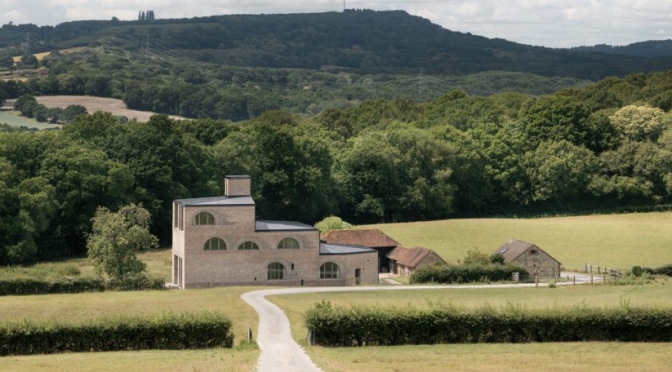
Last year, architect Adam Richards revealed Nithurst Farm, his self-designed family home in the South Downs National Park. We’re pleased to share a new film exploring the far-reaching ideas and references that informed the convention-defying design of the house, as well as the intimate realities of daily life in the space, one year on.
Head of his namesake practice, based in Sussex and London, Richards oversees his studio’s work on residential and cultural projects that have most notably included the Ditchling Museum of Art + Craft and the Gardens Learning Centre and Café at Walmer Castle. The handling of such buildings by ARA is one they define as an approach that seeks ‘to transform the deeper themes within its projects into engaging critical, spatial, social and structural propositions.’ This often translates to an engagement with the historical context of a site, so that an extension to a neo-classical Georgian townhouse in Notting Hill takes the form of an abstracted Greek temple, or a refurb to Arundel Lido is informed by a nearby Roman villa.
When it came to designing his own home, Richards had the freedom of a blank page. The brief was to create a new-build home for him and his family on a site at the bottom of a valley, surrounded by the woodlands and farmland of West Sussex. With creative freedom came the incorporation of seemingly disparate sources of inspiration, everything from the cinematic tactility of Andrei Tarkovsky’s 1979 Soviet art house hit, Stalker, to the classical plan of Andrea Palladio’s Renaissance masterpiece, Villa Barbaro, and Robert Mangold’s 1970s minimalist work of geometric abstractions. The resulting building is one that plays with time, style and detail in surprising and unexpected ways, to appear as a “Roman ruin wrapped around a modern concrete house,” according to Richards.
The UK is one of the most enchanting regions in the world. From the magical Isle of Skye to the white cliffs of the Jurassic Coast, the United Kingdom has so much to offer. I’ve traveled to the UK more than any other destination and I want to show you my favorite places!
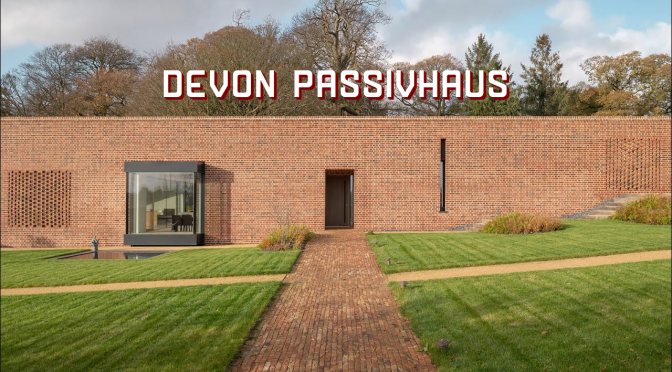
A linear red-brick wall obscures the textured interiors and art-filled courtyard hidden inside McLean Quinlan’s low-rise Passivhaus home in Devon, UK. The energy-efficient dwelling, aptly named Devon Passivhaus, nestles into a sloped walled garden that was once owned by an old English country house that fell into a state of disrepair.
The overall design is simple and clean. An elegant brick front complements the brickwork of the old garden wall and a discrete front door opening references the gate in the garden wall. Further down, an oriel window breaks through, hinting at what is behind. Elsewhere, external surfaces are dark render, designed to recede visually in deference to the surrounding garden.
Tucked within, the house has a glass roofed courtyard at its centre, a winter garden flooding light into the interior. Spaces are arranged around this central core so the building functions both as a home and a gallery for our clients, great collectors of pottery and art, with spaces to display and curate.
Comfortable and serene interior spaces are punctuated with tactile and textured materials: reclaimed terracotta, rough sawn oak and clay plaster, to ensure that internally the building feels connected to the garden that inspired it.
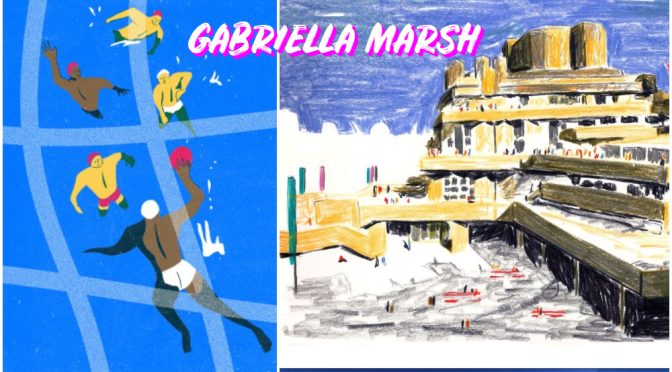
Gabriella Marsh is a freelance designer, illustrator and animator based in London. She loves drawing, painting and all things hand rendered so all work begins on paper before being set on the computer, tidied up and make to move. She is currently at the Royal College of Art doing an MA in experimental animation.
Country Life Magazine (July 26, 2020):
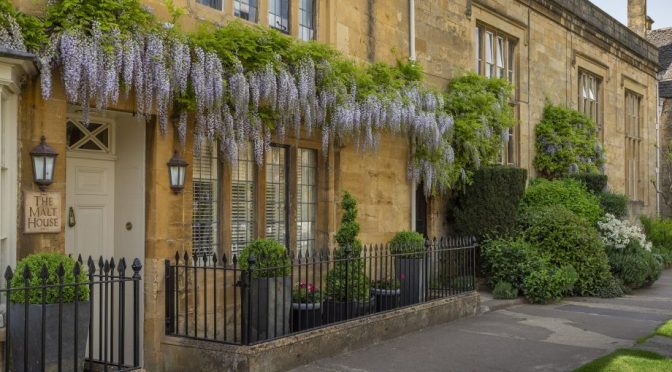
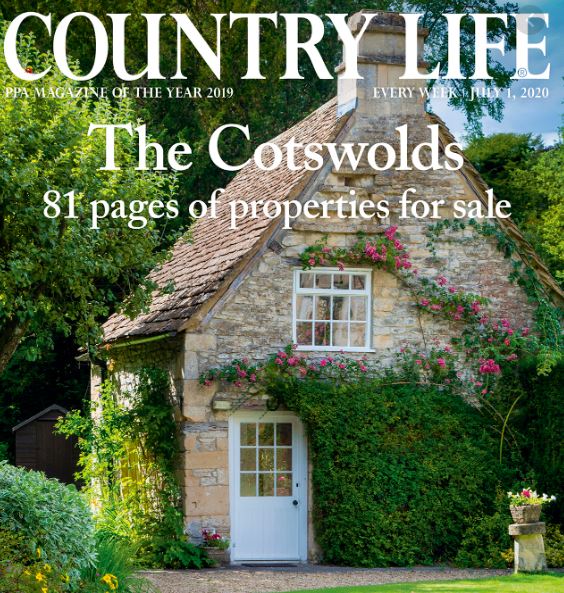 Chipping Campden is a town charmed by limestone. Its walls dance by the light of the dying day… Chipping Campden’s High Street is best viewed from the covered market of 1627, looking up towards the church tower. The houses are of a creamy local limestone. Walls are offset by grey-brown roof tiles and white woodwork, fronted by foxgloves, hydrangeas and a skirt of lawn.’
The High Street of Chipping Campden is described as ‘the best piece of townscape in Gloucestershire and arguably one of the best in England’, not by the agents, but by Nikolaus Pevsner himself.
The 18th-century, five-bedroom home is awash with period features, such as an oak staircase, fireplaces and exposed beams. The garden planted with hornbeam, yew and box hedging, as well as rose beds and herbaceous borders, leads through to the private parking area with three spaces.
The Cotswolds is a rural area of south central England covering parts of 6 counties, notably Gloucestershire and Oxfordshire. Its rolling hills and grassland harbour thatched medieval villages, churches and stately homes built of distinctive local yellow limestone. The 102-mile Cotswold Way walking trail follows the Cotswold Edge escarpment from Bath in the south to Chipping Campden in the north.
 Formally trained as a classic painter, British artist Hugo Wilson borrows images and techniques from Old Masters to create dramatic new works.
‘A lot of historical references are simply practical. Others are more considered’ he explains. We visited Hugo in his London studio where he showed us the 8 meter wide charcoal drawing he’s been working on during lockdown, blending styles from classic to contemporary art.
In this video, Hugo discusses the influence of Old Masters on his own practice through works offered in Remastered, a curated sale exploring the dialogue between centuries.
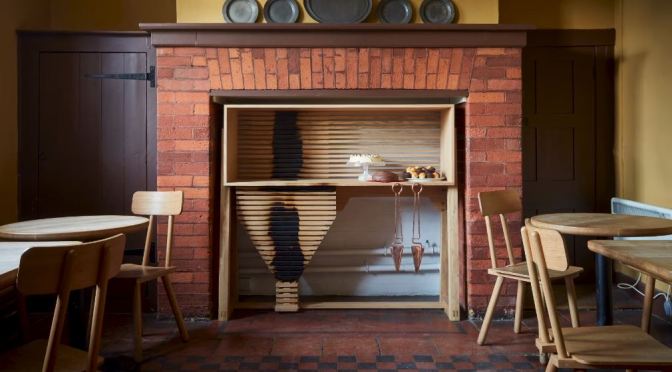
This film documents the story of furniture designer and builder Hugh Miller and the journey he embarked on, ending with his piece being inducted in to iconic Red House in Bexley Heath. Steeped in artistic history Red House was the only house designed and lived in by champion of the arts and craft movement William Morris. Today it stands as an example of the preservation of craft skills in the face of autonomy and is a lasting testament to celebrating art in it’s many forms. This documentary hopes to highlight how some of the lessons taught by Morris and his friends can be implemented in to the world of art and design today.
This film was made with the support of The Crafts Council and The National Trust.
 Sotheby’s upcoming cross-category Evening Auction ‘Rembrandt to Richter’ (28 July | London), features many of the key British avant-garde movers and shakers of their day.
In this video, discover titans of British Modernism such as Ben Nicholson and Barbara Hepworth; artists such as Christopher Wood and Marlow Moss who found their inspiration amongst the belle monde of Paris; Stanley Spencer and Cedric Morris whose inspiration remained resolutely closer to home; and a bold new generation of artists including Frank Auerbach who forged their careers in London in the aftermath of the Second World War.



 Boomers Daily