Tag Archives: Ecology

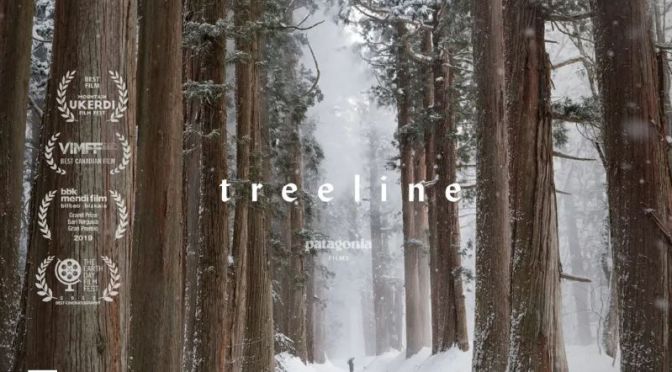
Top Short Films: ‘Treeline’

Directed by Jordan Manley

Patagonia Films presents: Treeline. Follow a group of skiers, snowboarders, scientists and healers to the birch forests of Japan, the red cedars of British Columbia and the bristlecones of Nevada, as they explore an ancient story written in rings.

Producers: Laura Yale, Monika McClure

Executive Producers: Alex Lowther, Jimmy Hopper, Josh Nielsen

Cinematography, editing, principal sound design: Jordan Manley

Additional Cinematography: Scott Secco

Associate Producers: Garrett Grove, Lisa Ida, Soichiro Uchino, Mie Sawatari

Editorial Advisors: Daniel Irvine, Chad Manley

Motion Graphics: Daniel Irvine

Additional Sound Design and Mix: Jeff Yellen / Ridgeline Sound

Cast & Athletes

Taro Tamai
Hidehiko Wajima
Kazushi “Orange Man” Yamauchi
Yuki Miyazaki
Alex Yoder
Leah Evans
Carston Oliver
Laura Yale
Connie Millar
Diane Delaney
Michael Cohen
Deb MacKillop
Suzanne Simard
Akihiko Tamaki
Konami Tsukamoto

Still Photographer: Garrett Grove

Additional Audio Recordings: Travis Rummel / Felt Soul Media

Science Podcast: Ecology Study Replication, Return Of The Tasmanian Devil

The field of psychology underwent a replication crisis and saw a sea change in scientific and publishing practices, could ecology be next? News Intern Cathleen O’Grady joins host Sarah Crespi to talk about the launch of a new society for ecologists looking to make the field more rigorous.

Sarah also talks with Andrew Storfer, a professor in the School of Biological Sciences at Washington State University, Pullman, about the fate of the Tasmanian devil. Since the end of the last century, these carnivorous marsupials have been decimated by a transmissible facial tumor. Now, it looks like—despite many predictions of extinction—the devils may be turning a corner. 

Ecology: Wildfires Kindle Natural Biodiversity

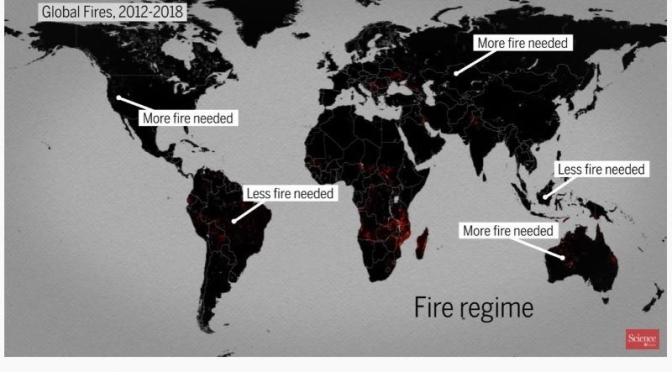
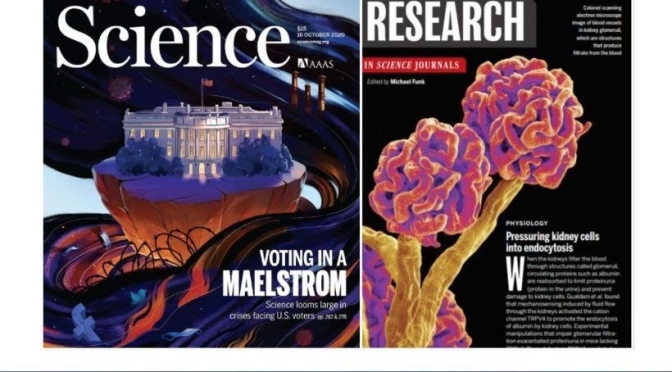
Raging fires throughout the U.S. and Australia over the past year have put vulnerable species at risk. But not all blazes are devastating—in fact, fire can promote biodiversity. In grasslands, fires prevent trees and roots from taking hold. This allows grazing animals the space and vegetation they need to thrive. As the pattern of wildfires changes, a new review in Science outlines effective ways to let natural fires burn, while preventing out-of-control blazes. Watch to learn how a few of these techniques have been applied around the world.

Read the research: https://scim.ag/3pIRjv7

Wildlife Video: ’24 Hours On Earth’ – In One Image

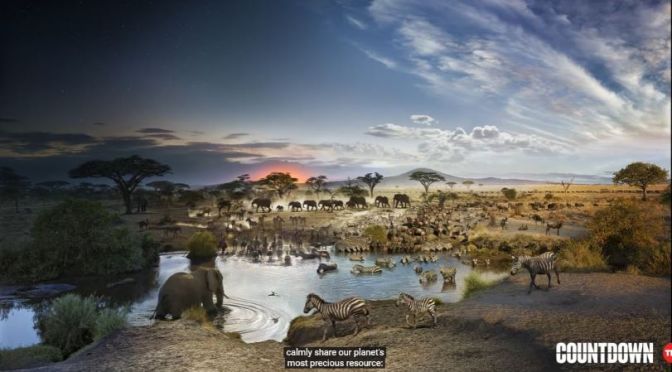
“Nature reveals itself to us in unique ways, if we stop and look at the world through a window of time,” says photographer Stephen Wilkes. Using a special photographic technique that reveals how a scene changes from day to night in a single image,

Wilkes exposes the Earth’s beautiful complexity and the impacts of climate change — from the disruption of flamingo migrations in Africa to the threat of melting ice — with unprecedented force. This performance was part of the Countdown Global Launch on 10.10.2020.

(Watch the full event here: https://youtu.be/5dVcn8NjbwY.)

Countdown is TED’s global initiative to accelerate solutions to the climate crisis. The goal: to build a better future by cutting greenhouse gas emissions in half by 2030, in the race to a zero-carbon world.

Ecology & Culture Video: ‘Forest Gardens’ Helping To End World Hunger

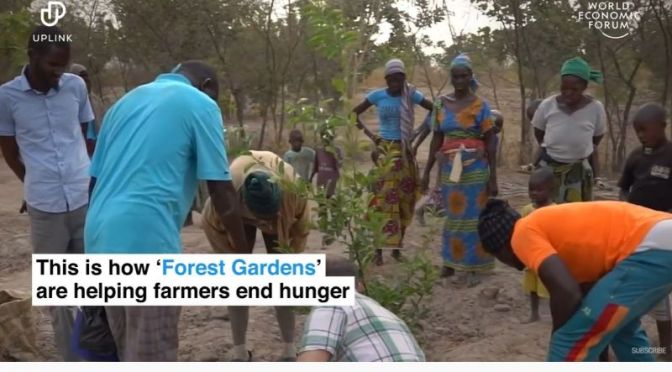
By planting fast-growing trees that nurture the soil and create a nutrient dense ground, local farmers are transforming exhausted lands into fertile and productive fields.

The World Economic Forum is the International Organization for Public-Private Cooperation. The Forum engages the foremost political, business, cultural and other leaders of society to shape global, regional and industry agendas. We believe that progress happens by bringing together people from all walks of life who have the drive and the influence to make positive change.

Future Of Ecotourism: ‘Cocoon Hotel & Resort’ – Tulum, Mexico (Video)

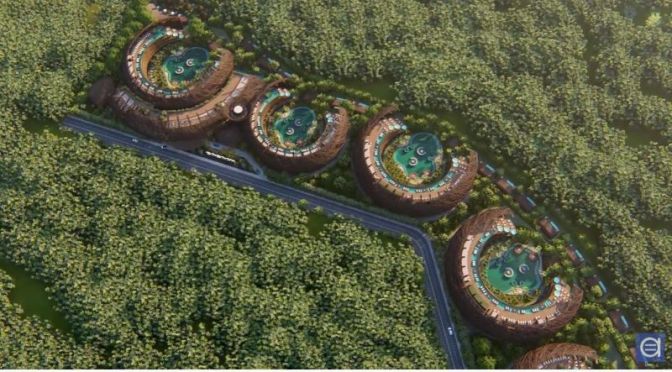
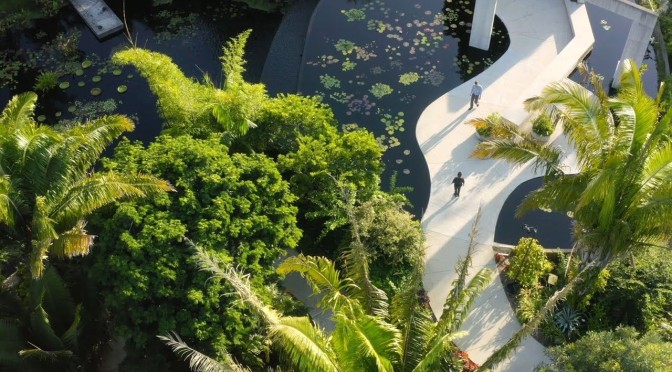
The “Cocoon Hotel & resort”, Tulum, Mexico– a new concept of eco-tourism, and a great opportunity of connection with Nature, Community, Ourselves, inspired by the sea and the exotic forest. The project consists of 46.181 m2 offering 3 residential and 2 hotel buildings “COCOON” with 204 apartments and 167 rooms as well as 16 private villas.Every feature serves to give a unique experience and create a magical place for the guest, at the same time making him identify what is Mexico.

The complex offers luxury community spaces integrated into nature such as jungle gardens, magical outdoor living spaces-villas, multipurpose pavilion, indoor community spaces, leisure areas, restaurant, and a panoramic Nest with unrestricted and breath-taking views. All to achieve a wide vocabulary of visual elements to mutate into designing language, in materials and shapes, for a bio-mimicry architecture.

The idea was to create “Cenotes”- natural freshwater ponds, to which the Mayans gave a sacred use, thus allowing to experience the real Mayan´s rituals. The project makes an emphasis on sustainability concept respecting ecosystem and biodiversity, contributing to the usage of natural materials that minimizes the impact of building and generation of waste. The water collection concept is also respected and represents a recovery of rainwater for sewage treatment. The solar panels are implemented to achieve sustainable electricity.

Finally, the “dry” construction system is used, meaning no wet binders, shorter execution time, and increased safety and sustainability. Source by dna Barcelona.

A As Architecture – Discover Architecture http://aasarchitecture.com/

Conservation Video: ‘How Farming Is Drying Up Arizona’s Water Supply’

With a lack of restrictions on water use, owners of some large-scale farms in the United States are drying up underground water tables. All they have to do is buy the land to have access to as much free water as they want. In Arizona, farm owners and ranchers are digging ever deeper to irrigate their land, leaving other residents with low water reserves. Meanwhile, parts of the land have caved in, collapsing as the water is pumped up from beneath. Our France 2 colleagues report, with FRANCE 24’s James Vasina.

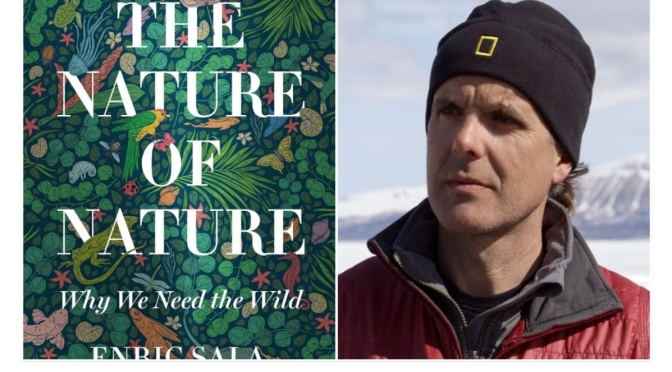
Nature Books: “The Nature Of Nature” By Enric Sala (National Geographic)

In this inspiring manifesto, an internationally renowned ecologist makes a clear case for why protecting nature is our best health insurance, and why it makes economic sense.

Enric Sala wants to change the world–and in this compelling book, he shows us how. Once we appreciate how nature works, he asserts, we will understand why conservation is economically wise and essential to our survival.

Here Sala, director of National Geographic’s Pristine Seas project (which has succeeded in protecting more than 5 million sq km of ocean), tells the story of his scientific awakening and his transition from academia to activism–as he puts it, he was tired of writing the obituary of the ocean. His revelations are surprising, sometimes counterintuitive: More sharks signal a healthier ocean; crop diversity, not intensive monoculture farming, is the key to feeding the planet.

Using fascinating examples from his expeditions and those of other scientists, Sala shows the economic wisdom of making room for nature, even as the population becomes more urbanized. In a sober epilogue, he shows how saving nature can save us all, by reversing conditions that led to the coronavirus pandemic and preventing other global catastrophes. With a foreword from Prince Charles and an introduction from E. O. Wilson, this powerful book will change the way you think about our world–and our future.

Read more or purchase