
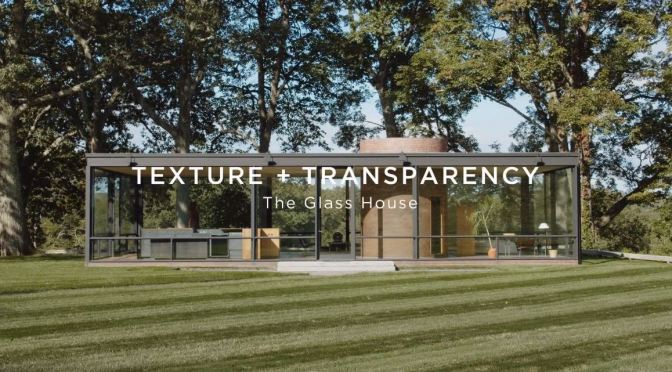
Produced and Directed by: Michael Biondo, Dallas Bennett, and Michael Robison
Edited by: Dallas Bennett
Cinematography by: Michael Biondo
Architectural photographer and filmmaker Michael Biondo and creative reality capture duo Michael Robison and Dallas Bennett (aka MYND Workshop) have collaborated to create an episodic series of short visual tours of the Glass House, a site of the National Trust for Historic Preservation.
This video series seeks to create an ambient and intimate tour of Philip Johnson’s Glass House property in New Canaan, CT. These films are unique in the sense that they combine film and the use of point cloud technology to allow for a tectonic and artistic examination of the buildings in order to better understand the architecture and site design.
“Point clouds are an exceptional visual tool for understanding a space in ways which the human eye doesn’t typically allow,” said Michael Robison, co-founder and CEO of MYND Workshop. “The Glass House site could not be a more perfect subject to be experienced as a point cloud, providing insight into the complex relationships between the various structures and their careful placement throughout the dramatic landscape which defines the Glass House property.”
These films focus on a dialogue between Biondo’s carefully composed videography and MYND’s spectral point cloud visuals. Each video presents one of the different structures which comprise the Glass House property.
Biondo’s breathtaking video manages to capture those visceral experiences which one may come across when visiting the 49-acre property. These scenes offer the textures and light which define the sensual and emotional nature of Johnson’s work. In contrast, MYND Workshop’s animations speak to the layers and transparencies which Johnson often referred to when speaking about the design of the various buildings on the site, allowing for a design perspective that has never been seen before.
MYND Workshop’s medium of choice, the Point Cloud, may be best described as a 3D photograph which adds a spatial dimension to an otherwise 2D scene. The Brooklyn-based studio recognized early on the inherent beauty of the point clouds, exploring their creative potential by using them to create ethereal animations like those in the series.
This project was made possible by the generosity of Joanne and Stanley Marder.
About MYND Workshop
MYND Workshop is a Brooklyn based reality capture studio founded by Michael Robison and Dallas Bennett. Since 2015, they continue to implement a combination of 3D laser scanning and photogrammetry processes to document architecture, historic sites, film sets and artwork. MYND pushes the boundaries of these technologies by merging utility and creativity. Past projects have included Waldorf Astoria Hotel New York, Trinity Church Wall Street, World Trade Center Plaza, 9/11 Museum & Memorial, New York Stock Exchange, The Ford Foundation, The Brooklyn Navy Yard among many others.
About Michael Biondo
Michael Biondo is a New York and Connecticut-based photographer / filmmaker specializing in architecture and design. He studied Photography, Graphic Design, and Art History at the Pratt Institute where he earned a BFA. Recently Biondo contributed photographs to Rizzoli’s 2014 monograph, Allan Greenberg: Classical Architect; Design Book’s 50 U.S. Architects, published in 2015; and Inventive Minimalism, Monacelli Press, 2017. He co-authored and photographed Mid-Century Houses Today, Monacelli, 2015. His photographs have appeared in Architectural Digest, the Wall Street Journal, Architizer, Dwell, a+u Magazine and other publications.
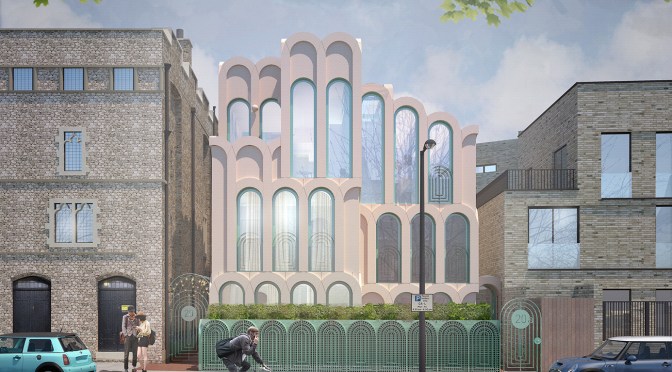
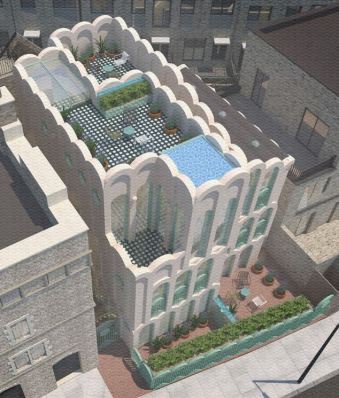
 Coated in a buff render, with a pale pink tone and duck egg blue metalwork, it brings some gentle colour to the street. As one neighbour has kindly put it: ‘The Cloud House introduces a valuable ‘softer’ element to the street’s dressing, with its hoops and curves and decorations. It is just what Vicars Road needs and will lighten and humanise the street’.
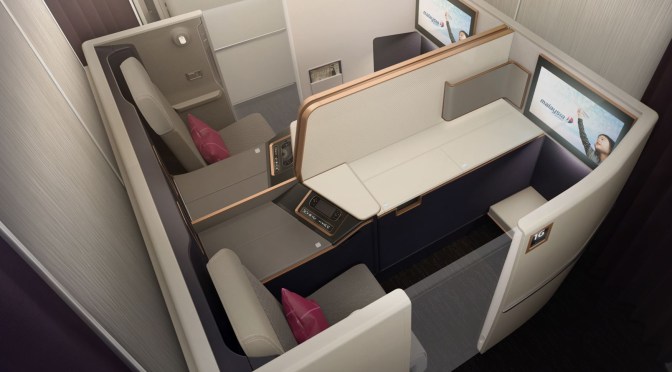
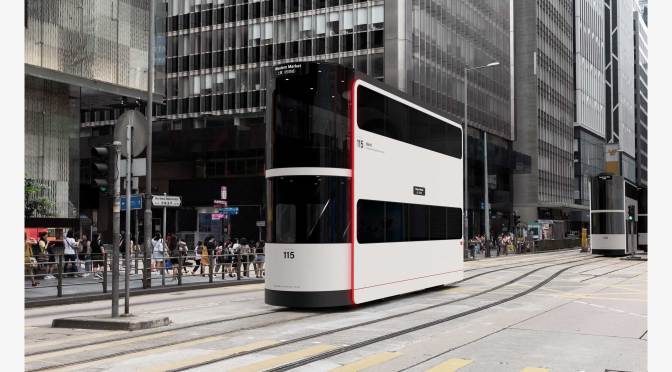
 Island is a double-decker driverless tram designed for the city of Hong Kong in the post-Covid era. This highly innovative design concept incorporates industrial design, transportation design, public design, urban mobility and sustainability.
 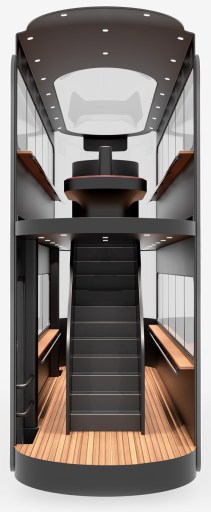 The project includes exterior, interior and tram stop design. With the Coronavirus pandemic, people are shunning public transport and relying much more on private transport.

 ‘Monocle On Design’ discusses the origins of tessellations in Islamic art and ask how architecture affects our work-life balance. Plus: author Shelley Klein recounts her childhood in a mid-century house in Scotland and we preview Monocle’s city-themed July/August issue.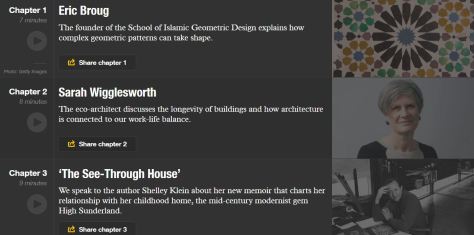
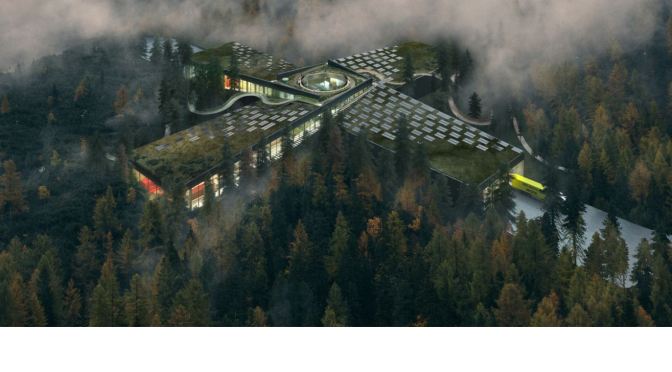
 PROJECT – VSTR – The Plus with Vestre, the Norwegian manufacturer of urban furniture, BIG unveils The Plus as the world’s most sustainable furniture factory tucked in the heart of the Norwegian forest. Envisioned as a village for a community dedicated to the cleanest, carbon neutral …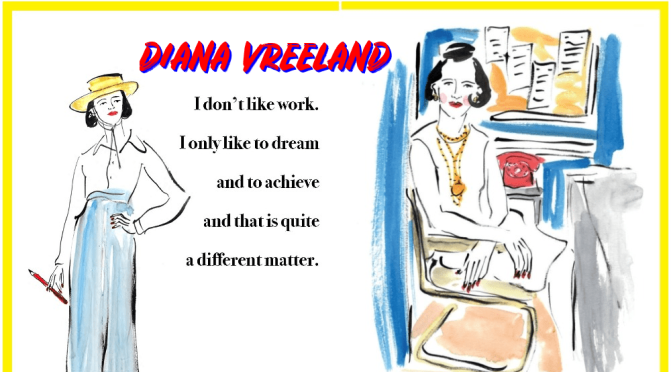
 Alexander Vreeland, grandson of fashion journalist Diana Vreeland, tells us about his new book, ‘Bon Mots: Words of Wisdom from the Empress of Fashion’.
 Diana Vreeland’s insightful edicts and evocative aphorisms remain her strongest legacy. She looked at life as a romantic and lived through dreams and imagination. Showing leadership, vision, and timeless wit, this book celebrates her visionary words that not only transformed the world of fashion, but also gave us sage advice to live by.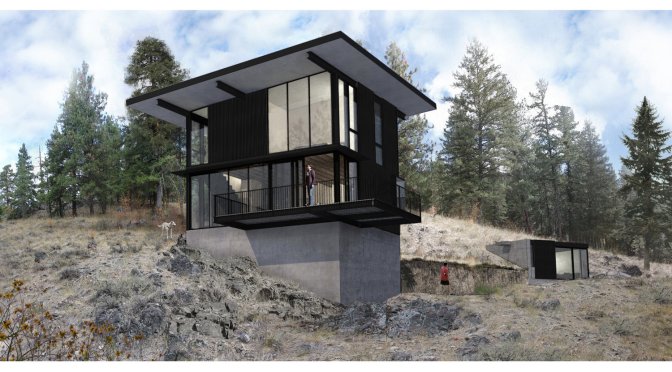
 Located just outside Winthrop in eastern Washington, the site for this small cabin lies in the Methow Valley. Nestled in the foothills of the North Cascade mountains, the dramatic views from the site and opportunity for year round recreation drew our client to this region. A strong relationship to the site topography and varying climate was key to the design.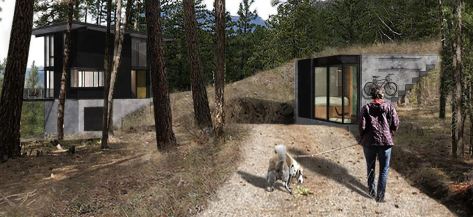
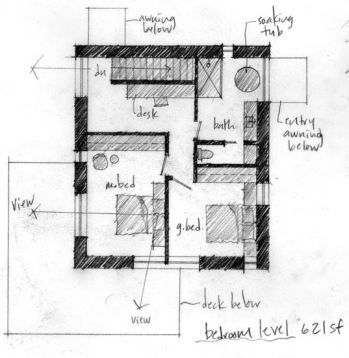 The program for the project was to design a two bedroom cabin which maximized the connection to the surrounding natural environment and outdoor living. This cabin would initially serve as a weekend retreat from the city, and later become a permanent home. Our client wanted to create an efficient floor plan for the house, with open interior/exterior living, bedrooms above, and garage below. It was important to use durable materials throughout the exterior of the cabin due to the extreme climate and fire hazard in the area. The upper levels of the cabin sit on a concrete plinth which forms the garage. Concrete is used to both ground the cabin and retain the natural slope of the site that the cabin sits in. Above, black corrugated metal sheets are used as an efficient and weather resistant siding material. A shed roof with large overhangs on all sides protects the cabin from the heavy winter snowload. A large cantilevered exterior deck opens out from the main level, vastly increasing the living space in the summer months. Views from the deck capture the surrounding mountain ranges and natural beauty of the site.
 Boomers Daily