

Khatuna Jakeli loves snowdrops. Not only because they’re pretty, but because they provide her with an income. Every year in April and May, she treks through the Caucasus mountains of Adjara and collects the wildflower bulbs. The bulbs are then sold to the Netherlands, from where they are shipped to flower stores throughout Europe.
The Caucasus delivers 22 million snowdrops to the Netherlands every year, including 15 million wild snowdrops. A lucrative business, from which little remains for Khatuna Jakeli. Yet it is her most important source of income. A report by Juri Rescheto.
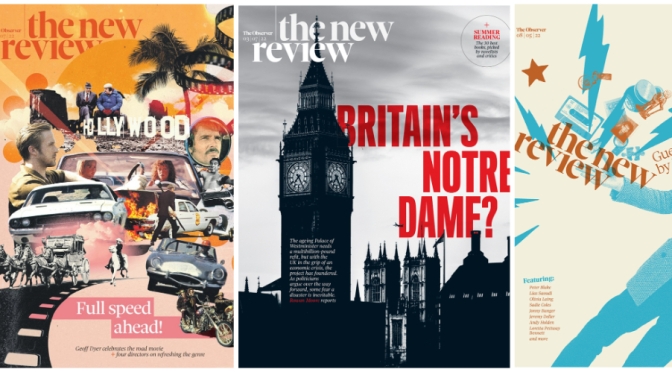
Your July/August 2022 issue of BRITAIN is here, and there's much excitement in the air as time is up on the five-year restoration of Big Ben…get your copy here: https://t.co/f2L16XheEO
Big Ben, the world’s most famous clock has been under wraps for four years, its iconic bell silenced. This year, restored to its former glory, Big Ben once again shows its face.
Between Richmond and Hampton Court is a storied stretch of the River Thames, whose banks are lined with grand houses, royal parks and Henry VIII’s favourite palace.
#NEWMAG Our June issue is out! Read about the struggle of France's overseas territories, the French community of Hawaii, the Francophile godmother of the @LegionOfHonor, the "Allied war against France," and @DisneylandParis at 30!
— France-Amérique Magazine (@FranceAmerique) June 1, 2022
France-Amérique – June 2022
French Lands Adrift in the Ocean
Some 3 million people live in French overseas territories – islands like Guadeloupe, Martinique, Polynesia, New Caledonia, Réunion, and Saint Pierre and Miquelon, remnants of France’s colonial empire. We explore these distant lands that are regularly pushing for independence. Also in this issue, meet the French community of Hawaii, read about Alma de Bretteville Spreckels – the “great-grandmother of San Francisco” and a friend of Rodin – and discover our interview with U.S. historian Stephen Bourque on the “the Allied war against France” during the Normandy landings. Lastly, we bring you the story of Disneyland Paris, which revived fears of Americanization in France when it opened 30 years ago.
Located in South Asia, India sits on a peninsula that extends between the Bay of Bengal and the Arabian Sea. The country, the birthplace of Hinduism and Buddhism, is the world’s second most-populous nation after China.
For many years of its long history, India faced incursions from the north by Turks, Arabs, Persians and others. By the 19th century, Great Britain became the dominant power on the subcontinent. After years of nonviolent struggle against British rule, India gained its independence in 1947.
Gabon’s soul lies hidden beneath a thick green mantle, the source of most of the Gabonese traditions, medicines, spirituality, and resources. A precious heritage that a small number of men and women protect.
We meet Kombo, a Babongo hunter, and Juste, who is in touch with the forest spirits. In human cultures in general, and perhaps particularly in Africa, the landscape is the first shrine of tradition.
From the sand dunes of Mauritania to the currents of River Senegal, to the Lions of the Beninese savannah to the spirits of the forests of Gabon, this series explores the origin, the nature and the survival of deep links between several populations in West Africa and their habitat.
Gavin Stamp retraces the route of the old Orient Express, from London, via Paris, Vienna, Budapest, Belgrade, Bucharest, to Istanbul, in search of the treasures of ‘Old Europe’. Stamp’s adventures on and off the train are punctuated by his candid, entertaining reflections on life, the world, and the strange and wonderful people he meets.
The Côte d’Azur stands for glamour and luxury, for film festivals and stars, for yachts and villas. The most famous personalities of the last century met here. The Côte owes its unique mythos to their loves and passions.
The Côte d’Azur boasts a breathtakingly gorgeous landscape. But its mythos is more than the sum of it beautiful parts. The whole world associates the narrow coastal strip on the French Mediterranean coast with sun, stars and scandals. In Saint Tropez, a former fishing town, a new and newly sensual art of living was popularized thanks to the young Brigitte Bardot.
On the eastern part of the coast, Oscar winner Grace Kelly conquered the principality of Monaco with her marriage to Prince Rainier. The matchmaker? The Greek shipowner Aristotle Onassis, who wanted to burnish the dwarf state’s image. One of the most glamorous film festivals in the world was established in Cannes. After that, it seemed everyone came to the Côte. At the Hôtel du Cap-Eden-Roc in Antibes, the paths of the famous crossed again and again.
For 150 years the hotel has been home to artists, queens and kings, divas and stars. Since 1969, the hotel has been owned by the German industrialist family Oetker. Maja Oetker describes her personal memories of the past 50 years. To this day, the Côte d’Azur has lost none of its appeal. It is more than just a place: it is an entire mythos.
The Ponte Vecchio is one of the most iconic bridges in Florence, Italy. It is the oldest bridge in the city (Ponte Vecchio literally translates to “old bridge”), and one of the oldest segmental arch bridges in the world. Since the Middle Ages, the base of the Ponte Vecchio has consisted of three stone arches and two piers.
The stone structure was completed in 1345, and was built over the course of twelve years. It replaced an earlier wooden structure that collapsed in a flood in 1333. Originally, the buildings on the Ponte Vecchio housed apartments and workshops, as well as butcher shops. Later, the business premises were given to goldsmiths and silversmiths, who added several structural changes to the buildings, such as bay windows and balconies.
Bangladesh, which means the land of the Bengals, is one of the most populated countries in the world with an estimated 170 million people. In the past, Buddhists ruled for centuries, but by the 10th century, Bengal was primarily Hindu.
In 1576, Bengal became part of the Mogul Empire, and the majority of East Bengalis converted to Islam. Bengal was ruled by British India from 1757 until Britain withdrew in 1947. At this time, the province of Bengal was partitioned into East Bengal and West Bengal.
In 1971, Bangladesh fought Pakistan for independence and became the independent country Bangladesh that it is today. The country is home to the world’s largest river delta, and the longest natural uninterrupted sea beach in Asia, which is 120 km long. The villages appear to be buried in groves of mango, jackfruit, bamboo, betel nut, coconut, and date palm. However, only a small portion of the country’s land surface is covered with forests.
The most significant feature of the Bangladesh landscape is provided by the rivers. None of the major rivers of Bangladesh originates within the country’s territory. Thus, Bangladesh lacks full control over the flow of any of the streams that irrigate it. In addition, there are many severe storms during the rainy season. Each year between June and October, the rivers overflow their banks and inundate the countryside.
The inundations are both a blessing and a disaster. Without them, the fertile silt deposits would not be replenished, but severe floods regularly damage crops and sometimes take a heavy toll on human and animal populations. The typical household in Bangladesh, particularly in the villages, includes several generations of extended family. Most marriages are arranged by parents or other relatives, but increasing numbers of educated men and women choose their own partners.
The best time to discover Bangladesh is from October to March. The easiest and cheapest way to get around is by rickshaw. The rickshaws in Bangladesh are unique and colorful. Bangladesh is covered by more than 700 rivers, producing a deliciously lush landscape with more shades of green than you ever imagined. Traveling by boat is a way of life here, and provides a fabulous opportunity to see the country from a more unusual angle. As an un-touristed destination, Bangladesh also lacks much infrastructure, and traveling around can be hard work. So don’t try to pack too much into your itinerary. It’s a place to relax, meet people and discover new ideas and ways of life.
For over sixty years, Sayed Al-Mataany has been using thousand-year-old, Ancient Egyptian methods to carve hieroglyphs into vases and sculptures — but major blows to Egypt’s tourism industry have caused a steady decline in the number of tourists coming to Luxor to buy his ornaments. We went to Luxor in Egypt to see how his business is still standing. Sayed does not have a website. He sells his work locally in Luxor.
News, Views and Reviews For The Intellectually Curious