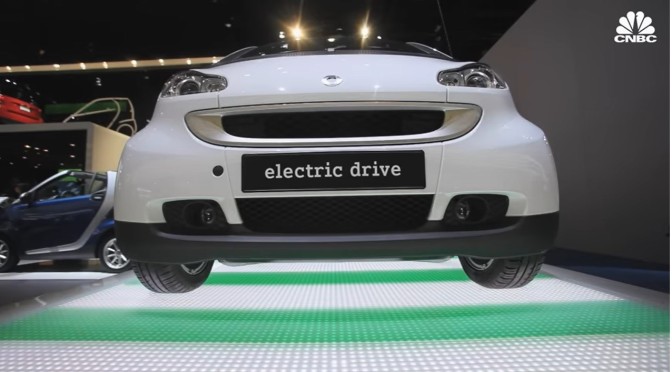
CNBC Marathon revisits General Motors’ shift into the electric vehicle market. GM is one of the largest automakers in the world with a range of models falling under its four brands, Chevy, Buick, Cadillac, and GMC.
Chapters: 00:00 Why GM’s all-electric future is a big gamble (Published September 2021) 15:17 The rise of electric boats (Published April 2022) 27:13 Why GM says its Ultium platform will drive EV dominance (Published May 2022)
The automaker made its name selling gas burning cars but in January 2021, it made a stunning announcement. The company said it “aspires to eliminate tailpipe emissions from new light-duty vehicles by 2035.” This means that GM intends to stop selling gas-burning cars. General Motors says it wants to lead electric vehicle sales in North America by 2025, and vows that its new Ultium battery platform will drive that dominance.
Not only are cars going electric but so are boats. General Motors recently invested $150 million in one start-up, Pure Watercraft, to build an electric pontoon boat. And several others are working to bring their own battery-powered offerings to market. CNBC Marathon brings together the best of CNBC on YouTube.
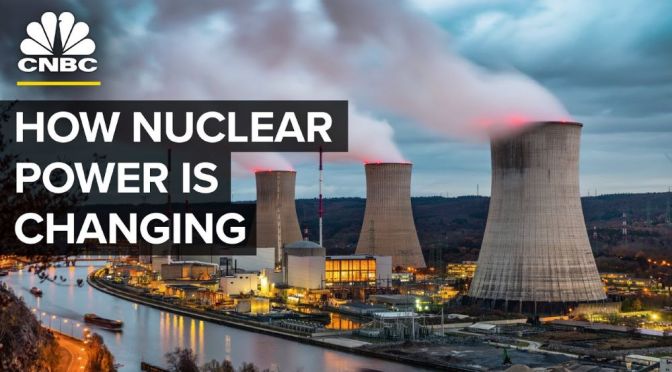
For some, nuclear power may conjure images of mushroom clouds or bring back memories of disturbing nuclear disasters like Chernobyle and Fukushima. But despite public fear around nuclear power, the technology has proved to be an emission-free, reliable way to produce large amounts of electricity on a small footprint.
As a result, sentiments about the technology are beginning to change. Both the U.S. government and private companies including X Energy, NuScale and, Bill Gates-backed, TerraPower are pouring money into developing, what they say will be smaller, safer nuclear reactors. CNBC visited Idaho National Laboratory to see the Marvel microreactor firsthand and learn what such developments could mean for the future of nuclear power.
After humankind discovered nuclear fission, the first applied use was the atomic bomb. The study of fission for electricity production came later. In December 1953, President Dwight D. Eisenhower gave his fateful Atoms for Peace speech, an impassioned plea to reconstitute the power of the atomic bombs dropped in World War II for a more noble cause.
“Against the dark background of the atomic bomb, the United States does not wish merely to present strength, but also the desire and the hope for peace,” Eisenhower told the United Nations. Almost 70 years later, the tension between those end uses still underlies the space today. From the 1950s through the 1970s, the United States dramatically increased its nuclear energy generation.
But the Three Mile Island accident in 1979 and Chornobyl meltdown in 1986 changed the landscape, spurring fear that nuclear energy could not be controlled safely. Since the 1980s, nuclear energy capacity and generation in the U.S. has largely stayed flat. Today, the country’s fleet of nuclear power reactors produces only 19% of the country’s electricity, according to the government’s Energy Information Administration.
In more recent times, the Fukushima Daiichi accident in Japan in 2011 — and earlier this year the capture of nuclear power plants in Ukraine by invading Russian forces — have added to public concerns. But despite its fraught origin story and the psychological effect of high-profile accidents, nuclear energy is getting a second look. That’s largely because nuclear energy is clean energy, releasing no greenhouse gasses.
Meanwhile, the world is seeing more of the effects of climate change, including rising global temperatures, increased pollution, wildfires, and more intense and deadly storms. “We need to change course — now — and end our senseless and suicidal war against nature,” Antonio Guterres, the secretary-general of the United Nations, said in Stockholm on Thursday. “There is one thing that threatens all our progress. The climate crisis. Unless we act now, we will not have a livable planet,” Guterres said. “Scientists recently reported that there is a 50-50 chance that we could temporarily breach the Paris Agreement limit of 1.5 degrees Celsius in the next five years.”
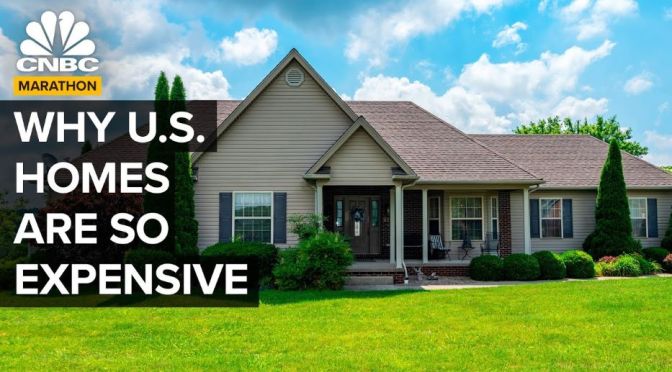
Prices for the American dream home have skyrocketed. The U.S. housing market has been an unlikely beneficiary from Covid-19. The pandemic encouraged city dwellers to move to the suburbs as families looked for home offices and bigger yards.
Segments: 00:00 – Why the U.S. is facing a housing shortage (May 2021) 12:37 – How suburban sprawl shapes the U.S. economy (February 2022) 25:49 – How did rent become so unaffordable in the U.S. (December 2021) 34:46 – Is the U.S. in a housing bubble? (September 2021)
“Everybody expected housing to really sort of dry up with the rest of the economy,” said National Association of Home Builders CEO Jerry Howard. “And in fact, the opposite has happened. People who have been sort of scared out of the cities by the pandemic.”
With homeowners unwilling to sell, a record low supply of homes for sale has forced buyers into intense bidding wars. According to the National Association of Realtors, the U.S. has under built its housing needs by at least 5.5 million units over the past 20 years. That’s a stark comparison to the previous housing bubble in 2008 when overbuilding was the issue. Higher costs for land, labor and building materials including lumber have also impacted homebuilders.
However, according to most experts, the market is shaping up to look more like a boom rather than a bubble. “We say bubble because we can’t believe how much prices have gone up,” CNBC real estate correspondent Diana Olick said. “A bubble tends to be something that’s inflated that could burst at any minute and change and that’s not really the case here.” And America’s suburbs are sprawling again.
Over the 20th century, real estate developers built large tracts of single-family homes outside of major cities. The builders were following mortgage underwriting standards first introduced by the Federal Housing Administration in the 1930s. Over the century, those guidelines created housing market conditions that explicitly shut out many minorities. Experts say it is possible to update these old building codes to create equity while fixing some, but not all of the problems of American suburbia.
In 2021, single family housing starts rose to 1.123 million, the highest since 2006, according to the National Association of Home Builders, however, options for prospective homebuyers remain lean. Experts say the problems of America’s housing market relate to past policy decisions. In particular, they say restrictive zoning codes are limiting housing supply.
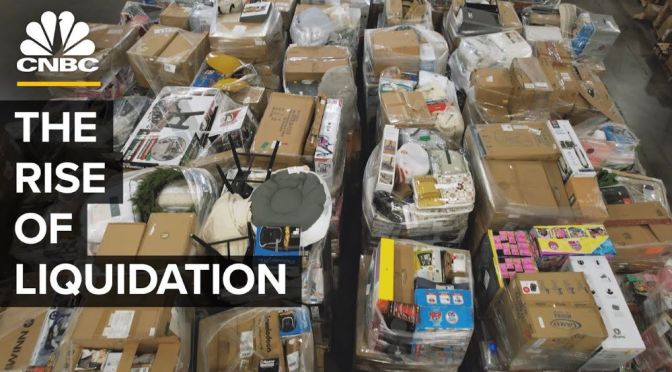
A record number of online returns has created a booming $644 billion liquidation market. As supply chain backlogs cause shortages of new goods and Gen Z shoppers demand more sustainable retail options, pain points for one sector of retail are big business for another. The nation’s only major public liquidator, Liquidity Services, resells unclaimed mail, items left at TSA checkpoints, and outdated military vehicles. It also refurbishes highly sought after electronics, from noise-canceling headphones to the machines that make microchips.
CNBC takes you on an exclusive tour inside a Liquidity Services returns warehouse outside Dallas, Texas, where unwanted goods from Amazon and Target are stacked to the ceiling before being resold on Liquidation.com or a variety of other marketplaces. Inside Liquidity Services’ 130,000-square-foot warehouse in Garland, Texas, the aisles aren’t lined with typical merchandise. Instead, they’re stacked with returns from Amazon, Target, Sony, Home Depot, Wayfair and more, all in the process of being liquidated.
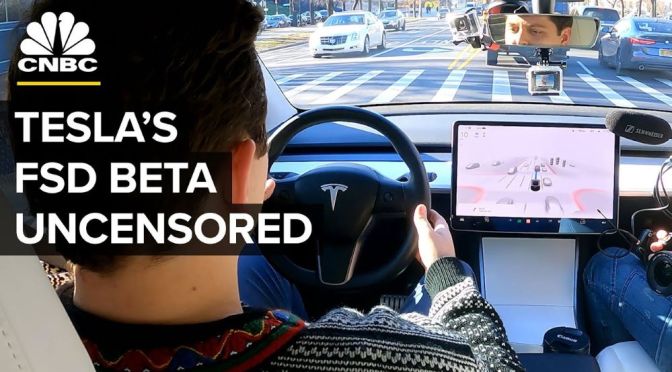
Tesla’s FSD Beta, which stands for ‘full-self driving’ beta, can best be summarized as a host of new driver assistant features that are not yet debugged. Chief among them is “autosteer on city streets,” which enables drivers to automatically navigate around complex urban environments without moving the steering wheel with their own hands.
Elon Musk has promised driverless cars since 2016, but FSD is not even close to a fully autonomous vehicle yet. The beta program is heavily scrutinized by regulators and has earned Tesla side-eye from competitors, who usually have professionally trained drivers, not customers, test driver assist features in their vehicles.
But for now, FSD Beta still available for thousands of Tesla owners to access, without the knowledge of drivers and pedestrians around them. CNBC went for a ride with three FSD Beta testers in different parts of the country to see how the system performs in the real world and explore what this program could mean for the future of vehicle automation.
Plastic surgery has been booming in the past decade. But it was the Covid-19 pandemic that catapulted the industry to new heights. Americans working from home spent hours watching themselves on camera, endlessly scrolling on social media and experiencing downtime from social events. This all but benefitted the plastic surgery industry, which saw a record number of patients as pandemic restrictions were lifted.
Chick-fil-A has long dominated the chicken sandwich category in fast food. After Popeyes Louisiana Kitchen launched its own version of the chicken sandwich, other fast food chains like Wendy’s, McDonalds and Shake Shack got into the battle. Here’s how chicken took over America.
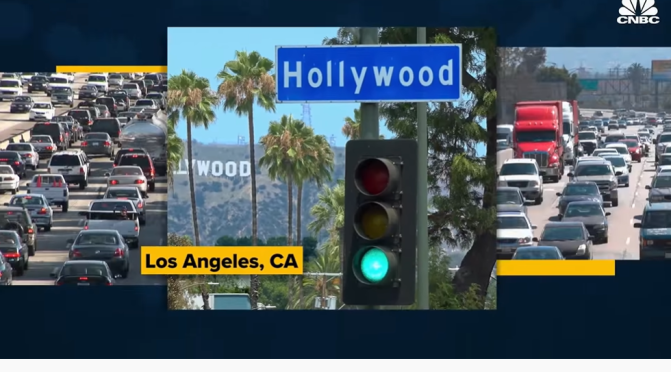
Los Angeles consistently ranks among the most traffic-clogged cities in America. The county has been trying to reduce its traffic for decades and nothing has worked. Many researchers and economists suggest charging people for using the road in a system called congestion pricing
A number of four-legged robot dogs made by companies like Boston Dynamics, Anybotics and Ghost Robotics have been deployed in the workforce already for applications like inspections, security and public safety among others. At their core, these four-legged robots are mobility platforms that can be equipped with different payloads depending on the type of information that companies want to gather.
Experts predict the insurance industry alone will spend $1.7 billion on robotics systems in 2025. And other industries may follow suit. Amid the pandemic, a tight job market is forcing many companies to turn to automation. A survey done in December of 2020 by McKinsey, showed that 51 percent of respondents in North America and Europe said they had increased investment in new technologies during 2020, not including remote-work technologies.
Fresh numbers from the fall of 2021 suggest that rents will increase at a rapid pace in the coming years. That’s a problem for Americans; many spend 30% or more of their income on rent. A decade-long slowdown in house building is coming to a close, which could help renters.
But the new developments in construction are generally for high-end and luxury apartment units. Experts say the market conditions are pushing people further away from their jobs and weighing on the economy writ large. Market indicators suggest that rent hikes are coming in 2022.
Average rents for a one-bedroom apartment in the booming suburbs of Phoenix, Arizona, have more than doubled year over year, according to data from Apartment Guide. Meanwhile, rents in Manhattan have reached fresh records as life returns to the cities, according to Zumper.
The problems aren’t confined to the usual suspects, however. Rents for single-family homes across the country jumped more than 9% on average in August 2021 from the prior year, according to a report from the analytics firm CoreLogic.
Rents are moving fastest in the buzzy enclaves across the South and West. For Maria Arredondo, a teacher based in Austin, Texas, a sudden rent hike of nearly $400 forced her to make a move. “If I had signed the lease … it would be taking a lot of my savings. And so I decided to move to a new building, losing about 150 square feet,” she told CNBC. Mark Zandi of Moody’s Analytics said the strains on the housing construction market were building well before the pandemic took hold in the states.
“There’s a lot of evidence that the lack of housing closer to where the demand is and urban cores is having a meaningful negative consequence on long-term economic growth.“ Generous monetary and fiscal policies have juiced demand for goods and services coming out of the pandemic. All that extra money sloshing around the economy is bubbling up into the rent. The fresh demand is giving investors a reason to jump into the market.
Experts say that’s boosting desperately needed supply. But there’s a catch: The homes being built are priced into the high end of the market. As a result, the evidence suggests that renters will be paying more for shelter this decade.
News, Views and Reviews For The Intellectually Curious




 Boomers Daily