

March 2020 began on a high note for American business and ended with the economy in tatters This WSJ documentary goes behind-the-scenes to reveal how the coronavirus pandemic ripped through American business during the month of March 2020 — told through the firsthand accounts of 12 prominent executives. When the coronavirus tore through industry, commerce and society in March 2020, the U.S. economy came to a screeching halt. Top executives relive the tough decisions they made as they scrambled to weather the storm. Photo Illustration: Adele Morgan/The Wall Street Journal
Tag Archives: Business

Technology: ‘How SpaceX Makes Money’ (Video)
As side hustles go, Elon Musk’s rocket company SpaceX is really quite something. Entirely separate from the humdrum day job at Tesla, where his only real challenge is weaning humanity off the internal combustion engine, Musk’s multi-billion dollar SpaceX operation sets itself no less a target than bringing down the cost of space travel and ultimately helping mankind colonise Mars.
Spoiler alert – firing gigantic rockets into space every other week is not a cheap undertaking. And while there’s no question Elon Musk has a few bucks to his name, his pockets aren’t bottomless. Somehow, all those dazzling launches – and landings – need to pay for themselves. So strap in and get ready for ignition sequence, while we investigate today’s burning question – how does SpaceX make money?
In October this year, influential investment bank Morgan Stanley went on record saying it believed SpaceX would very soon be worth a cool 100 billion dollars.

Social Media: ‘Tik Tok As A Platform For Business’
TikTok is becoming a popular forum for Gen-Z and Millennials to learn about entrepreneurship and making money. To find out more, WSJ spoke with three TikTokers who are attracting large audiences that support their thriving online businesses.

The Future Of Work: ‘Is Working From Home A Long-Term Trend?’ (Video)
The white-collar world has been forced by Covid-19 into a “work from home” experiment, and the results are in. It turns out we can be just as productive at home, if not more so, and many don’t want to go back to the office — at least not full time. So what will happen to the office? Will we see workers coming in only when they have to? And if so, what does that mean to the multibillion- dollar commercial real estate industry?

Health: ‘Travel Bubbles’- Can They Revive Air Travel?
Travel bubbles are under development in some places in an effort to revive air travel, which has plummeted during the pandemic. WSJ explains how reopening the skies without quarantine requirements at both ends of a trip could help reboot the global economy.
Illustration: Crystal Tai

Enterainment: Will AMC Theaters Survive Covid-19 Closures During 2020?
The coronavirus pandemic shuttered every single AMC theater for months. But the pandemic isn’t the only thing pushing the company onto financially shaky ground. Photo Illustration: Jacob Reynolds/WSJ
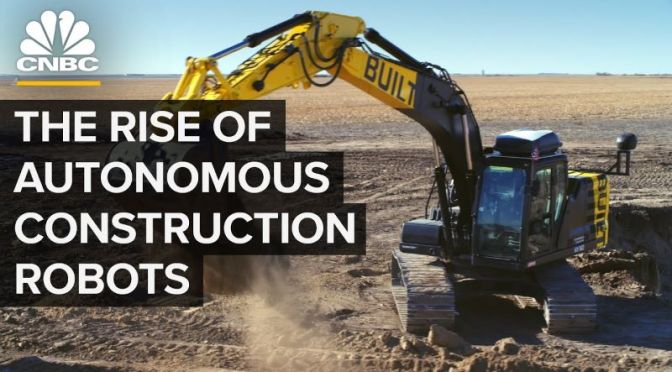
Building Industry: ‘The Rise Of Autonomous Construction Robots’
There’s a lot of buzz around self-driving cars, but autonomous-driving technology could revolutionize a different industry first — construction. That industry hasn’t changed much over the last several decades, according to some experts, making it an ideal candidate for automation.
“The way we build today is largely unchanged from the way we used to build 50 years ago,” said Gaurav Kikani, vice president of Built Robotics. “Within two years, I think we’re really going to turn the corner, and you’re going to see an explosion of robotics being used on construction sites.”
The industry is also faced with a labor shortage that the Covid-19 pandemic has further complicated. “Covid is making people step back and say, ‘hey, the way we’ve been doing things for a long time is just not sustainable,’” said Kevin Albert, founder and CEO of Canvas. “It is just a wake-up call for the industry.”
Canvas is one of several companies working on autonomous construction technology. Big players like Caterpillar and Komatsu, and start-ups like SafeAI and Built Robotics, see value in using autonomous machines to accelerate construction projects. The mining industry was one of the first to employ the use of self-driving tech.
Caterpillar began its first autonomy program more than 30 years ago. The company now has the largest fleet of autonomous haul trucks. Caterpillar says it’s hauled 2 billion metric tons in just over six years. Built Robotics is a San Francisco-based start-up founded by an ex-Google engineer that already has machinery out in the field. It’s automated several pieces of equipment, such as bulldozers and excavators.
“You can now collapse your construction timeline so you can knock out work overnight so that it’s ready for your human workers in the morning to speed them along,” Kikani said. SafeAI is another Silicon Valley start-up. It recently teamed up with Obayashi for a pilot program. It’s been retrofitting equipment like dump trucks, bulldozers and loaders. Robots are also helping inside.
San Francisco-based Canvas created an autonomous machine for finishing drywall and has worked on projects like the San Francisco International Airport and Chase Arena. Humans work alongside its robotic system. “Drywall is very hard work on the body,” Albert said. “And we’ve seen that 1 out of every 4 workers has to end their career early because of injuries. This will create longer careers for people and also enable people to join the trades that haven’t had access before.”
The construction industry is one of the largest sectors in the global economy, with about $10 trillion spent each year. That spending accounts for 13% of the world’s GDP, even though the sector’s annual productivity growth has only increased 1% over the past 20 years. According to McKinsey & Co., $1.6 trillion of additional value could be created through higher productivity, and autonomy would help the industry achieve that.
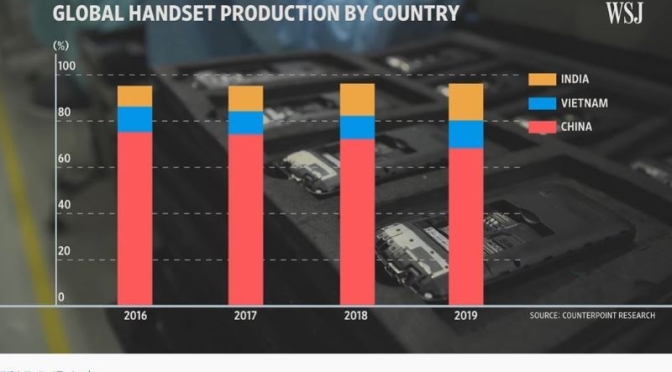
Technology Trends: India Quickly Becoming A Major Smartphone Producer
India is positioning itself as a smartphone-production hub amid a U.S.-China trade war that has disrupted global supply chains and left tech firms such as Apple and Samsung looking for alternatives to China to manufacture their products. Photo: Olivier Le Hellard for The Wall Street Journal
Clothing: ‘The Rise Of Patagonia’ (CNBC Video)
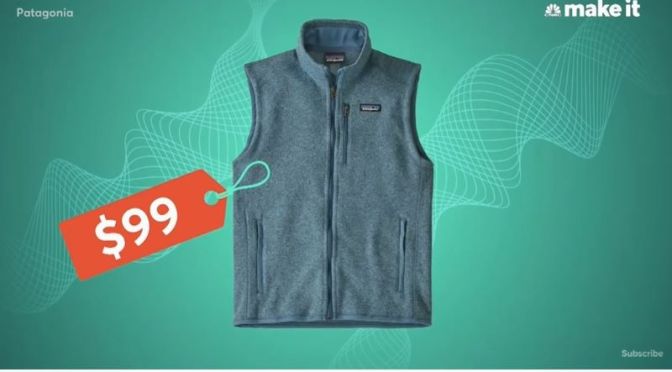
The Patagonia Better Sweater Fleece Vest is by far one of the brand’s most popular products. It’s also one of its most divisive. Over the last five years, the vest became a must-have accessory for Wall Street workers in Manhattan’s financial district to tech bros in Silicon Valley.
The company says at its height, it was fielding 60 requests for co branded vests, a day. But Patagonia, a private company that values environmental and political activism, never sought out to become the go-to status symbol for some of the biggest and richest corporations in the world.
The combination of hefty price tags and a professional-class of super fans earned it the nickname “Patagucci” prompting it to reevaluate which companies it allowed to put a moniker on the vest as a way to ensure their partners align with their progressive culture.
Patagonia even discouraged consumers from partaking in Black Friday sales and snuck political messages into the tags of its clothing. Here’s how Patagonia’s anti consumption philosophy helped it build a billion dollar outdoor brand.
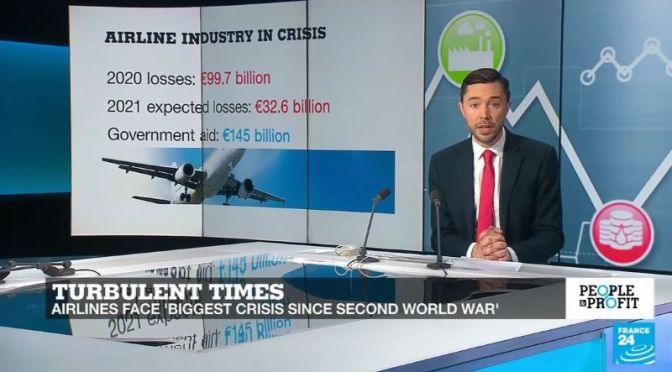
Travel: Can Airlines Recover In 2021? (Video)
After losses of €100 billion in 2020, will next year see air travel take off again? We speak to Alexandre de Juniac, the head of industry body IATA.
 Boomers Daily