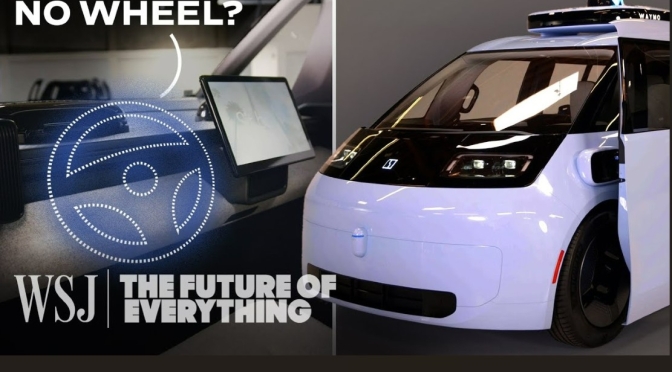
The Wall Street Journal (December 14, 2023) – As autonomous driving technology becomes more mainstream, automakers like Waymo and Geely are beginning to make crucial decisions about what their next generation of vehicles will look like.
Video timeline:0:00 The future of the car 0:51 Car seats and safety 3:51 Wheel and trust 5:11 Screens and sickness 7:15 Trusting autonomous cars
So could future driverless cars have no steering wheels? And what could the touchscreen dashboards look like? WSJ’s George Downs explores how the car could evolve when you don’t need to be behind the wheel. #Autonomous#Cars#WSJ
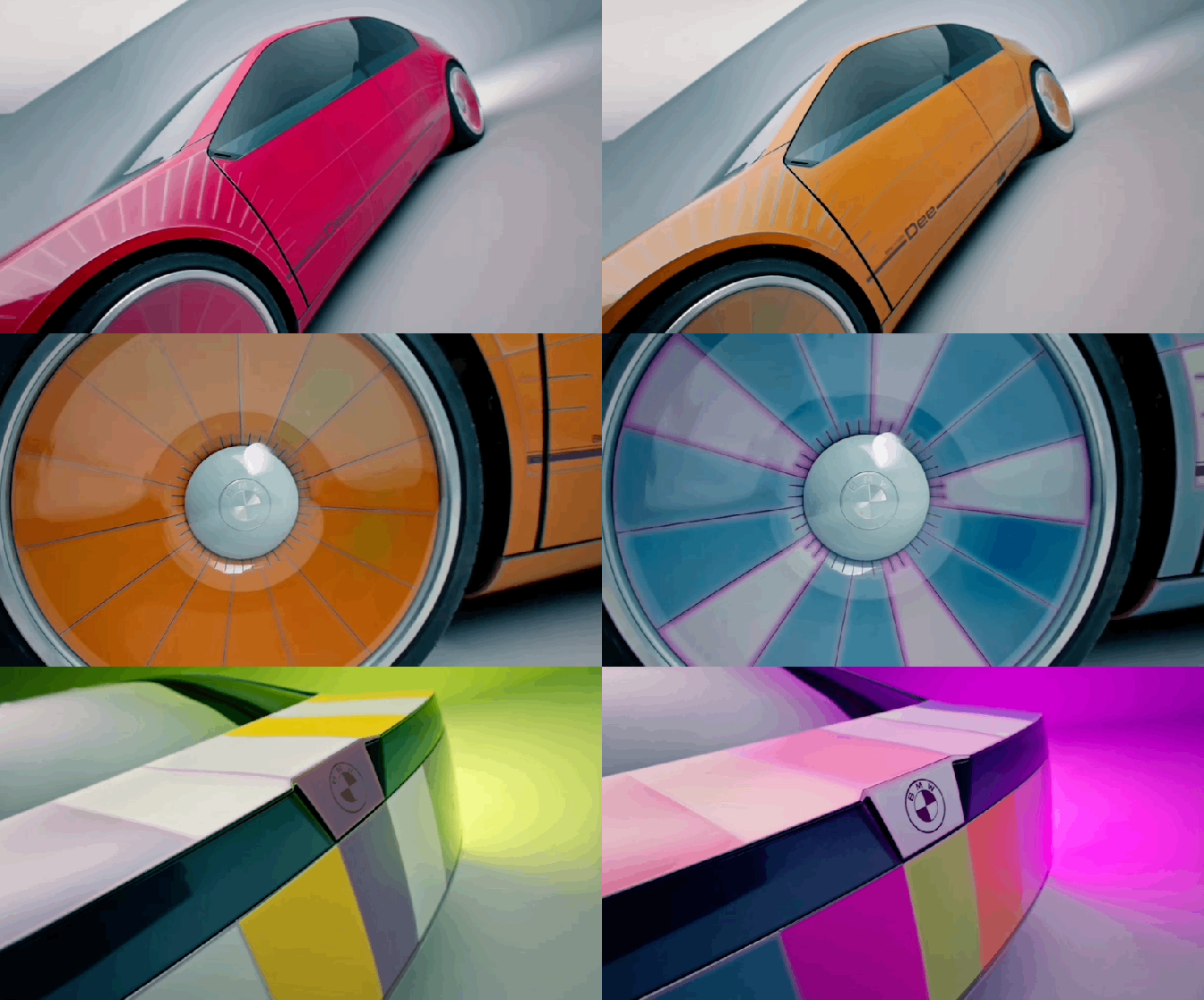
CNET (January 5, 2023) – BMW i Vision Dee is the futuristic mid-size sedan with a new and pared-down design language. The name “Dee” stands for Digital Emotional Experience – and that is precisely its aim: to create an even stronger bond between people and their cars going forward. Future digital functions will go far beyond the level of voice control and driver assistance systems we are familiar with today.
The BMW Head-Up-Display extends across the full width of the windscreen, providing a glimpse of the next vehicle generation. From 2025 onwards, this innovation will be available in the models of the NEUE KLASSE. The BMW Group has also refined its use of colour-change technology. Having unveiled the BMW iX Flow Featuring E Ink, with the ability to change from black to white, at the last CES, BMW i Vision Dee can now curate its exterior in up to 32 colours.
“I think most electric vehicles will have a solar roof in the future,” he told Dezeen. “It’s a topic that all big car manufacturers are working on.”
Integrated solar panels could help electric cars rival their fossil-fuel counterparts by making them less reliant on charging points and potentially free to run, says Lightyear‘s Emanuele Cornagliotti in this interview as part of our Solar Revolution series.
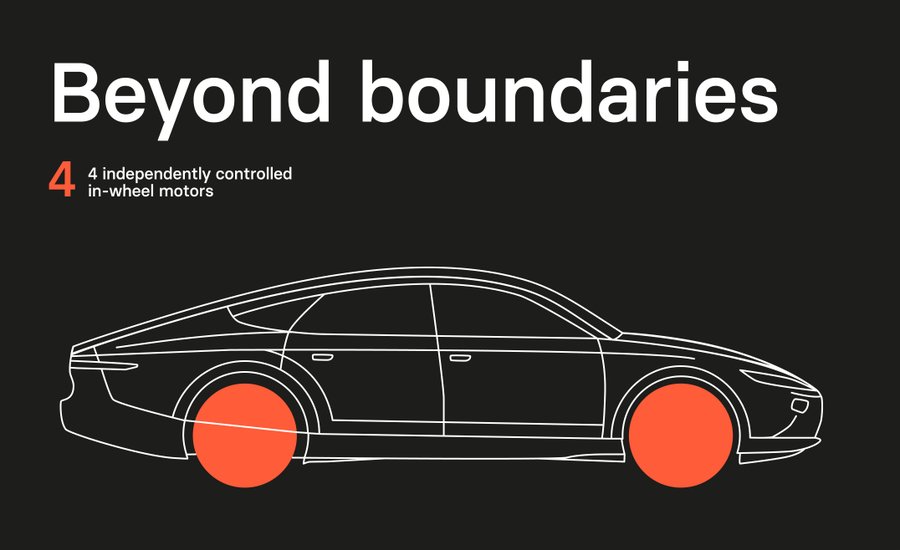
Lightyear 0’s in-wheel motor technology sets new industry standards and offers greater control on tricky terrains. Not only is our drivetrain in pole position for the highest efficiency, but it also reduces the number of rotating components, meaning much lower maintenance!
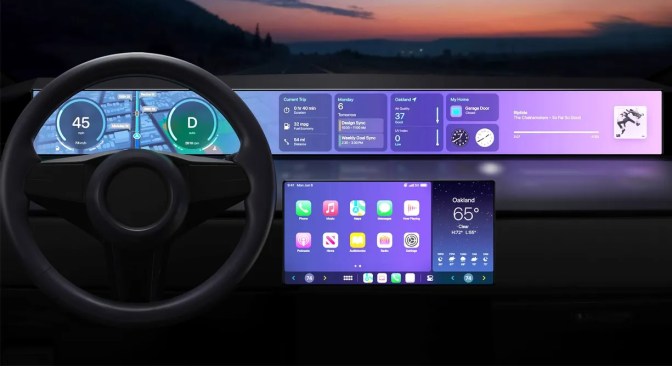
Most cars now have touch screens in the middle of the dashboard. Some tech heavy cars – such as those by companies like Tesla and Rivian – rely nearly entirely on them. They’re also cheaper to make and maintain. But some people hate them. They say they are less safe, confusing, unnecessary, and take longer than a simple button or switch.
But touch screens in cars aren’t going away. Some innovations, such as those by suppliers such as Harman and Continental, may blend some of the best of the old with entirely new possibilities, while managing risks.
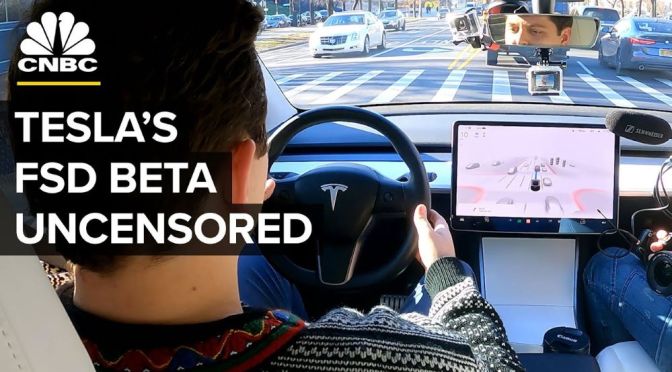
Tesla’s FSD Beta, which stands for ‘full-self driving’ beta, can best be summarized as a host of new driver assistant features that are not yet debugged. Chief among them is “autosteer on city streets,” which enables drivers to automatically navigate around complex urban environments without moving the steering wheel with their own hands.
Elon Musk has promised driverless cars since 2016, but FSD is not even close to a fully autonomous vehicle yet. The beta program is heavily scrutinized by regulators and has earned Tesla side-eye from competitors, who usually have professionally trained drivers, not customers, test driver assist features in their vehicles.
But for now, FSD Beta still available for thousands of Tesla owners to access, without the knowledge of drivers and pedestrians around them. CNBC went for a ride with three FSD Beta testers in different parts of the country to see how the system performs in the real world and explore what this program could mean for the future of vehicle automation.
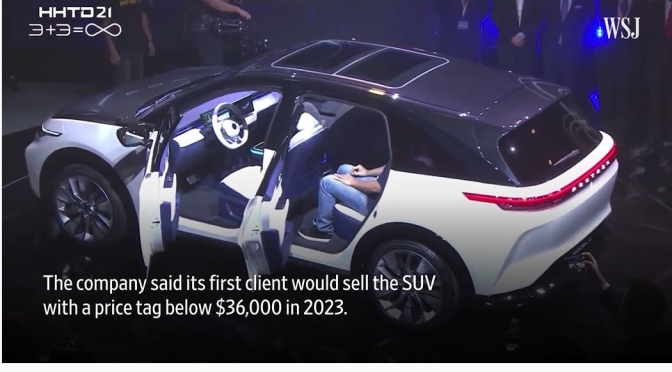
Foxconn, the Taiwanese company known for assembling Apple products, has unveiled three electric-vehicle prototypes. WSJ’s Stephanie Yang attended the launch event to see how the company is diversifying its business to gain a foothold in the auto industry. Photo: I-Hwa Cheng/Bloomberg News
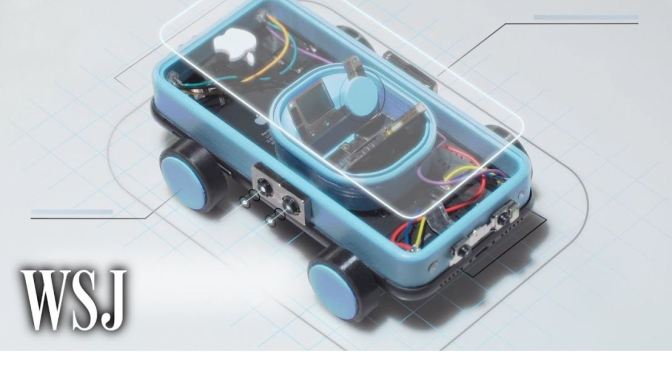
As tech companies become a key part of the auto industry, cars are looking more like giant computers on wheels. To understand why a tech giant like Apple might want to make a car, we built one out of iPhone parts. Photo illustration: Alex Kuzoian/WSJ
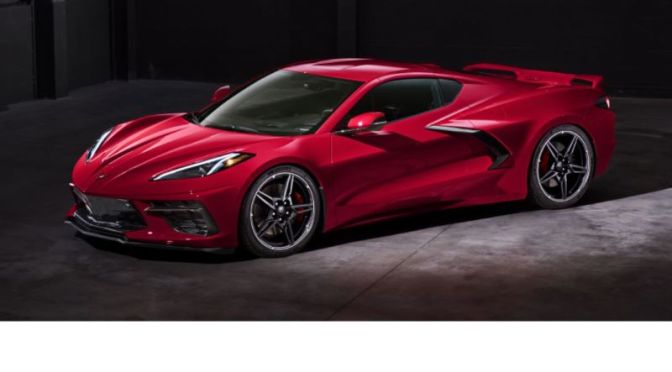
Learn how our team of engineers took the mid-engine Corvette to the next level. From the development at Nürburgring to brand new architecture and technology.
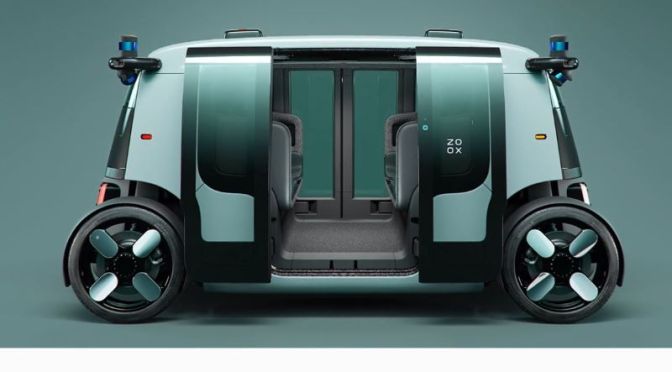
Testing and AR After getting acquired by Amazon in the middle of this year, Zoox unveils its first fully functional, electric autonomous vehicle. The company, which is an independent subsidiary under Amazon, said that this driverless taxi is designed for dense and urban environments.
According to the release, Zoox was founded in 2014 and used a combination of artificial intelligence, robotics, vehicle design, and sustainable energy to reinvent personal transportation. They envision a safer, cleaner, and more enjoyable future for everyone. Zoox robotaxi has a carriage design and can accommodate up to four passengers seated face-to-face. Yes, there isn’t any steering wheel as the taxi is completely driverless. Apart from that, it can reach speeds of up to 75 miles per hour (121 kilometers per hour), as well as offers bidirectional capabilities and four-wheel steering. At only 3.63 meters (12 feet) long, it is compact enough to fit tight spaces and can change directions without the need to reverse. Power comes from a 133 kWh battery, which allows Zoox’s robotaxi to operate for 16 straight hours on a single charge. This battery capacity is one of the biggest available in the market as of date.
Apart from those, the Zoox autonomous taxi is claimed to bear 100 safety features that aren’t found on normal vehicles with drivers. These tech toys include an envelope airbag for carriage seating, touted as an equivalent to a five-star crash safety rating for all four seats. The vehicle also uses a combination of cameras, radar, and LIDAR to have a 270-degree field of view on all four corners of the vehicle, virtually eliminating all blind spots. The Zoox driverless taxi is currently in its testing phase in Las Vegas, San Francisco, and Foster City.
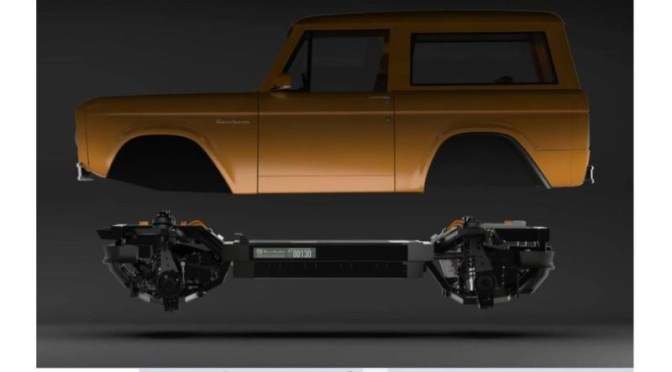
After more than 5 years of engineering and testing and use in all 2020/2021 full vehicle rebuilds, we are now proud to offer electric platforms which are designed to transform four gasoline and diesel vehicle formats each with numerous makes, models and size configurations. Final specifications and full list of available model sizes will be available prior to manufacturing.




 Boomers Daily