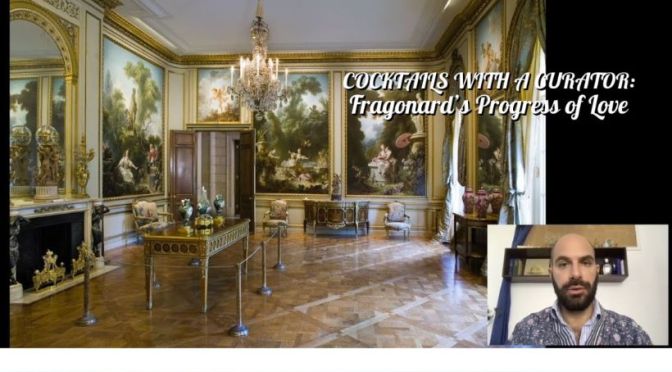
In this week’s episode of “Cocktails with a Curator,” join Deputy Director and Peter Jay Sharp Chief Curator Xavier F. Salomon as he discusses Jean-Honoré Fragonard’s Progress of Love paintings and the capricious countess who commissioned the series, Madame du Barry, mistress of Louis XV. Delve into the tumultuous life of Du Barry, who was born in poverty and clashed with Marie-Antoinette at Versailles. Tune in next week to discover how the Progress of Love series made its way from eighteenth-century France to the Frick’s beloved Fragonard Room.
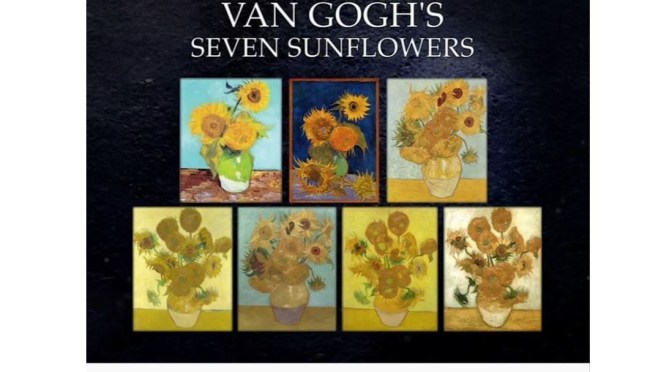
The eventful history of Vincent van Gogh’s Sunflowers, which have changed hands many times since they were painted for Paul Gauguin’s arrival in Arles.
Van Gogh’s paintings of Sunflowers are among his most famous. He did them in Arles, in the south of France, in 1888 and 1889. Vincent painted a total of five large canvases with sunflowers in a vase, with three shades of yellow ‘and nothing else’.
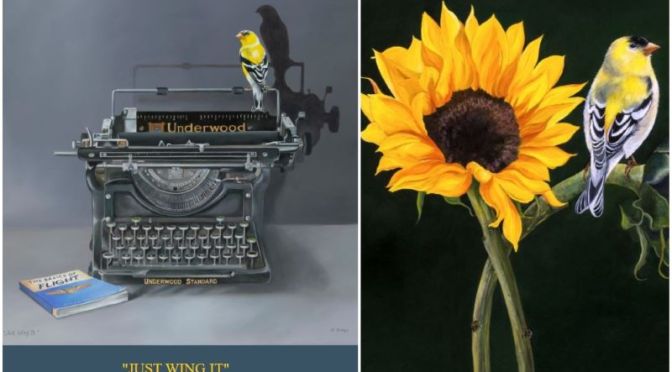
Barbara Rudolph is an Arizona artist specializing in realism oil paintings that most often include a bird. Her painting backgrounds can be either realistic, or contemporary with design elements, but always to showcase the finest of details in her main subject. She will paint many layers, allowing each layer of oil paint to dry in between.
Barbara’s work is often sprinkled with an element of humor, She takes time to photograph and place each object within the scene she paints. “I enjoy getting absorbed in a new painting and letting it gradually reveal its own story”, she says. “The messages and symbolism in my work help to connect viewers to my subjects. I’m always thrilled when someone steps in for a closer look and responds with a laugh or smile.”
Barbara’s appreciation and desire to create art began at an early age. She later earned her Bachelor of Arts degree in 1990 from her home school of Arizona State University. She first entered the professional world of art through graphic design, which then led her to paint for a variety of fine art publishers for many years to come. She eventually opened her independent home studio where she now works full time.
For more than twenty five years, Barbara’s paintings have been on display in various galleries and also in private collections across the United States and Canada. She is a long standing member of the “International Guild of Realism.” Some of her recent works have been chosen as finalists in the prestigious “Art Renewal Center” Salon competition,” which is the leading revival of realism art.
“Art is such an integral part of my life. It brings me joy to be able to create paintings that bring happiness into people’s lives.”
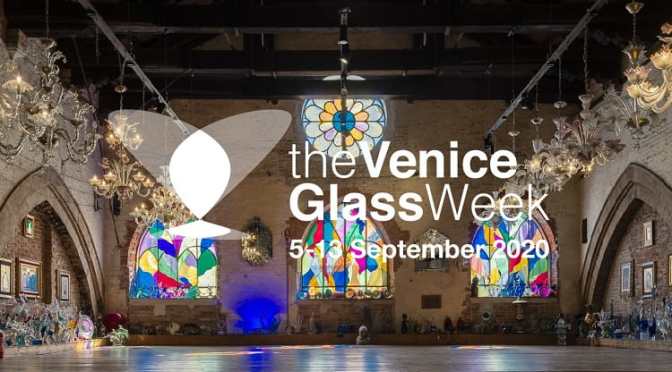
Monocle On Design: Looking for a crystal-clear take on Venice Glass Week? Monocle’s Ed Stocker checks in with WonderGlass, the brand that bonds traditional Italian craftsmanship with contemporary design.
WonderGlass bonds traditional craftsmanship with contemporary design, providing tailor-made solutions to the worlds of architecture, art and fashion – telling a story through our creations we aim to bring individuals into a delightful WonderLand. A surrealistic and dreamlike atmosphere which creates a seamless landscape of lighting, subtle colours and visual elements forming a world that captures people’s imagination.
Founded in 2013, Christian and Maurizio Mussati built their brand through bespoke glass lighting and installations handcrafted in Murano, working with renowned creative minds including Zaha Hadid, Jaime Hayon, India Mahdavi, John Pawson, Nao Tamura, Marcel Wanders, Dan Yeffet and Hideki Yoshimoto.
Now working with their team of WonderLab artisans in the Venetian region and collaborating with leading names in design and architecture such as Ronan & Erwan Bouroullec, nendo, RML (Ana Meier & Hervé Descottes) and WOHA architects – WonderGlass offers architects, artists, developers, hotel designers and museums the opportunity to incorporate artisanal creations into projects of any scale.
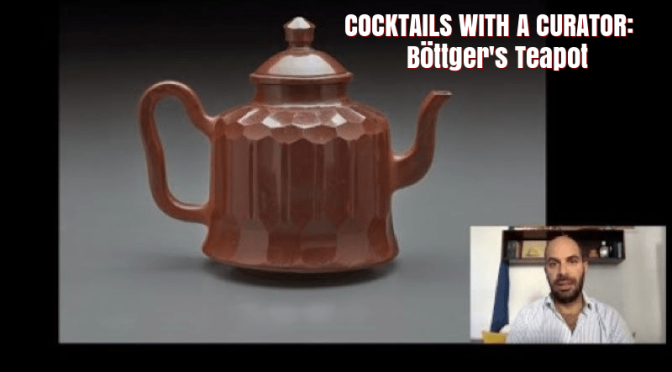
In this week’s episode of “Cocktails with a Curator,” Deputy Director and Peter Jay Sharp Chief Curator Xavier F. Salomon delves into the significance of a deceptively simple teapot designed by Johann Friedrich Böttger and given to the Frick by the great German-born collector Henry H. Arnhold (1921–2018). Enjoy a Saxon cocktail while exploring the complicated history behind Böttger’s quest to discover the formula for porcelain in a clifftop fortress outside Dresden in the early 18th century.
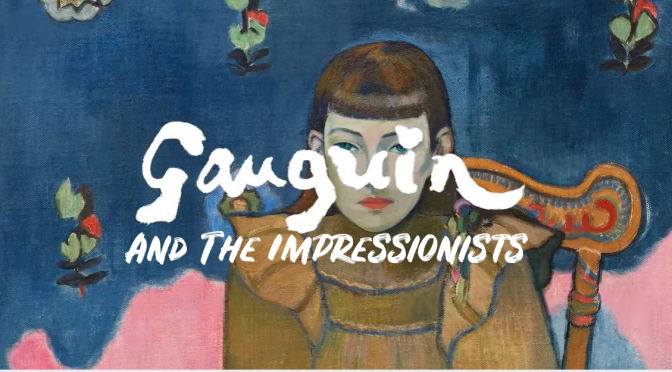
Step into our galleries to experience ‘Gauguin and the Impressionists: Masterpieces from the Ordrupgaard Collection’. Explore the carefully curated collection of Wilhelm and Henny Hansen, who utilised their exceptional eye for quality to assemble works by Renoir, Monet, Degas, Morisot, Manet and Pissarro among many others.
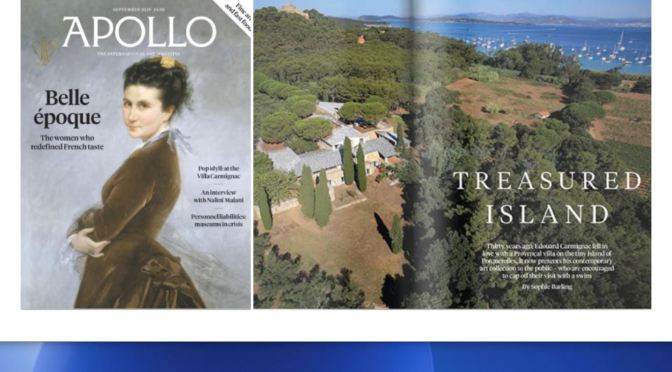
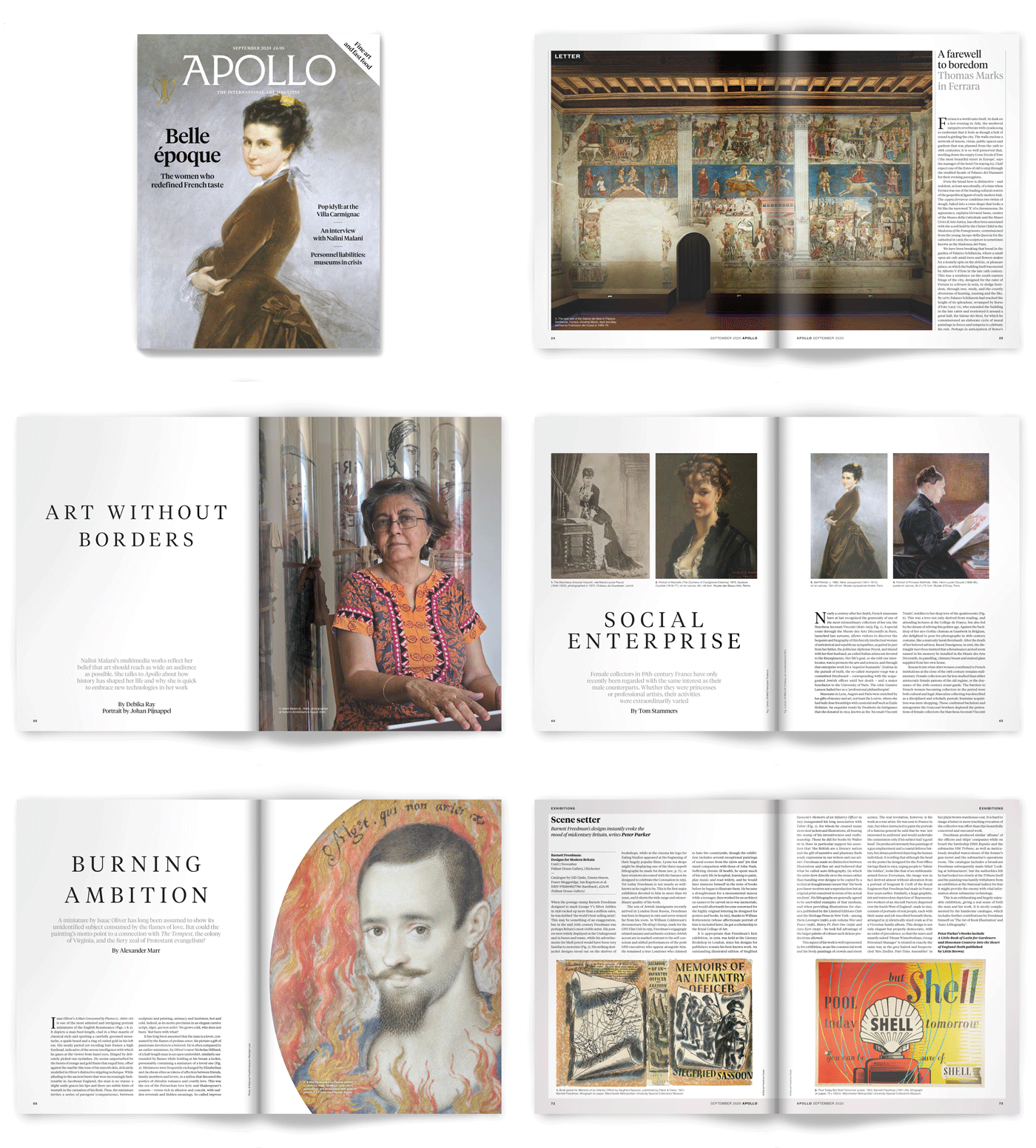
FEATURES | Tom Stammers on women collectors in 19th-century France; Nalini Malani interviewed by Debika Ray; Alexander Marr puzzles over Isaac Oliver’s most mysterious portrait; Sophie Barling visits the Villa Carmignac; Thomas Marks on fast food and fine art
REVIEWS | Peter Parker on Barnett Freedman at Pallant House;Caroline Bugler on Cranach at Compton Verney; Tom Fleming on Bill Brandt and Henry Moore at Hepworth Wakefield; Michael Hall on Edwardian houses; Clare Bucknell on visual traces of the English Civil War; Cora Gilroy-Ware on neoclassical style
MARKET | Jo Lawson-Tancred on museums and online shopping; and the latest art market columns from Emma Crichton-Miller, Susan Moore and Samuel Reilly
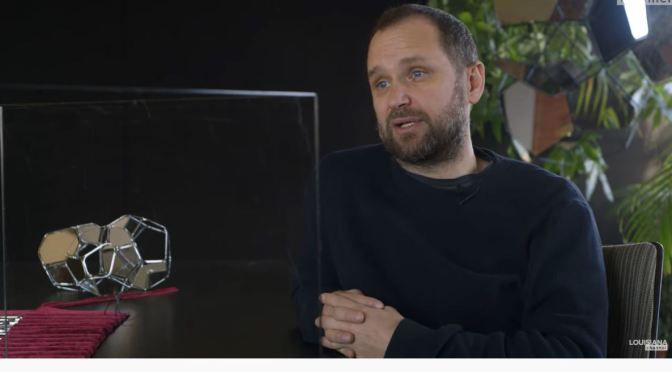
Join us – if you dare – as we follow the acclaimed Argentinian artist Tomás Saraceno into his installations of intricate spider webs inhabited by solitary, social and semi-social spiders, bridging the architectures of each other’s webs.
In the video, Saraceno talks about how spiders mirror human beings and help us understand ourselves and the way we live. “Every day, I try to enter territories, or thoughts, or ways of working, which might challenge ourselves and might challenge how we see the world.”
Observing a spider in its web for more than twenty minutes, Saraceno argues, can completely change your life and way of noticing things, revealing an unseen world. In connection to this, he feels that art and science – as well as other forms of knowledge – combined, can help us “form new alliances between disciplines and lose our comfort zone of operating and seeing and perceiving and being in the world. To try to find new ways to work and to be.”
Tomás Saraceno (b. 1973) is an Argentinian artist. Saraceno is particularly known for his large-scale, interactive installations and floating sculptures, as well as his interdisciplinary approach to art. With his practice, he explores new sustainable ways of inhabiting the environment.
His work has been exhibited at prominent venues all over the world, including the 58th La Biennale di Venezia in Venice, Palais de Tokyo in Paris, and Museo de Arte Moderno in Buenos Aires. Saraceno’s work is also part of international collection such as Bauhaus Museum in Weimar, Walker Art Center in Minneapolis, and SFMoMA in San Francisco.
In 2015, he launched the Aerocene Foundation – an open-source community project for artistic and scientific exploration of environmental issues. Relating to arachnology research, Saraceno is the first person to have scanned, reconstructed and re-imagined spiders’ woven spatial habitats.
For more see: https://studiotomassaraceno.org/about/ Tomás Saraceno was interviewed by Helle Fagralid at his studio in Berlin in November 2019. Camera: Rasmus Quistgaard Edited by Klaus Elmer Produced by Helle Fagralid Cover photo: Tomás Saraceno. ‘Social… Quasi Social… Solitary… Spiders… On Hybrid Cosmic Webs’, 2013. Installation view. Detail. Courtesy of the artist and Esther Schipper Gallery, Berlin Copyright: Louisiana Channel, Louisiana Museum of Modern Art, 2020
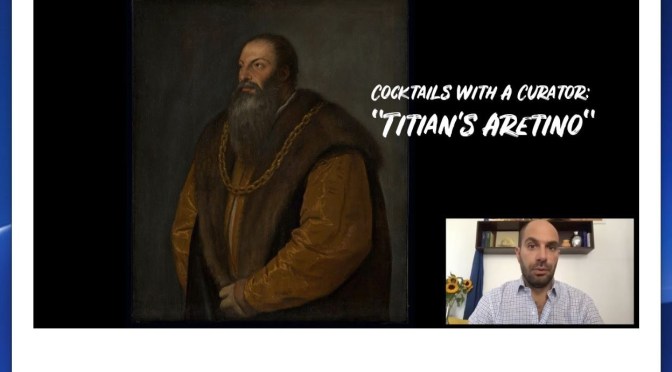
In this week’s episode of “Cocktails with a Curator,” celebrate the 444th anniversary of Titian’s death by delving into the tumultuous life of Pietro Aretino, one of the most celebrated—and reviled—literary figures of the Italian Renaissance. Deputy Director and Peter Jay Sharp Chief Curator Xavier F. Salomon examines Titian’s portrait of Aretino at the Frick and the friendship between the Venetian painter and the acid-tongued writer, known to his contemporaries as the “scourge of princes.” This week’s complementary cocktail is the Bellini, a mixture of Prosecco and white-peach puree created by the Cipriani family in Venice and named for Titian’s teacher, Giovanni Bellini.
Tiziano Vecelli or Vecellio, known in English as Titian, was an Italian painter during the Renaissance, considered the most important member of the 16th-century Venetian school. He was born in Pieve di Cadore, near Belluno. During his lifetime he was often called da Cadore, ‘from Cadore’, taken from his native region.
Michelangelo is among the most influential and impressive artists of the Italian High Renaissance. His lifelike sculptures and powerful paintings are some of the most recognizable works in Western art history. He also drew prolifically, making sketch after sketch of figures in slightly varying poses, focusing on form and gesture.
However, remarkably few of these drawings remain today, many of them burned by the artist himself, others lost or damaged over the centuries.
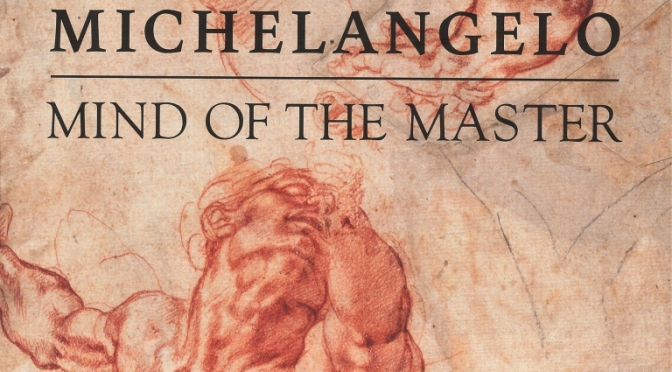
A recent exhibition at the J. Paul Getty Museum, Michelangelo: Mind of the Master, brought together more than two dozen of Michelangelo’s surviving drawings—including designs for the Sistine Chapel ceiling and The Last Judgment—to shed light on the artist’s creativity and working method. In this episode, co-curators of this exhibition, Julian Brooks and Edina Adam, discuss the master and what we can learn from his works on paper.







 Boomers Daily