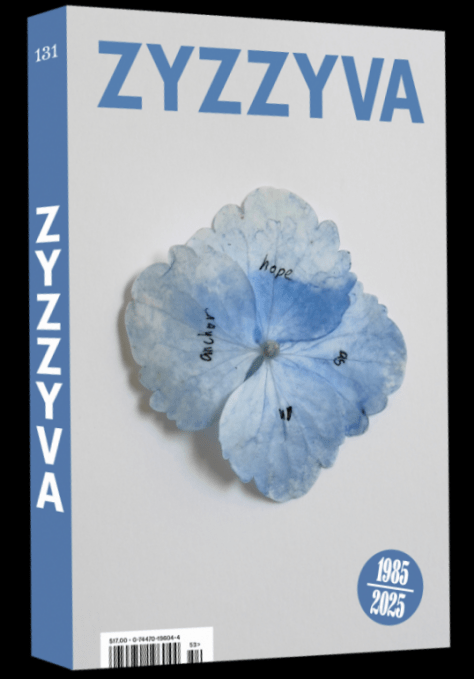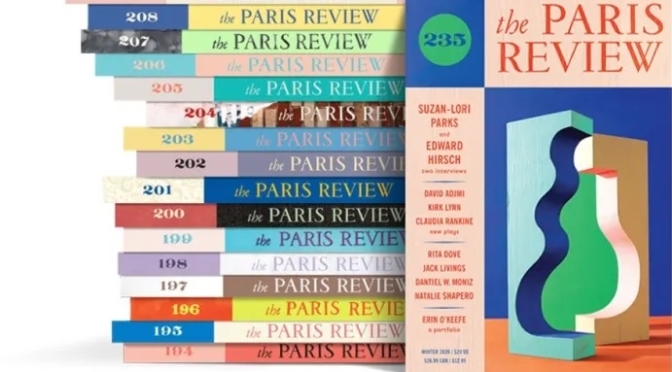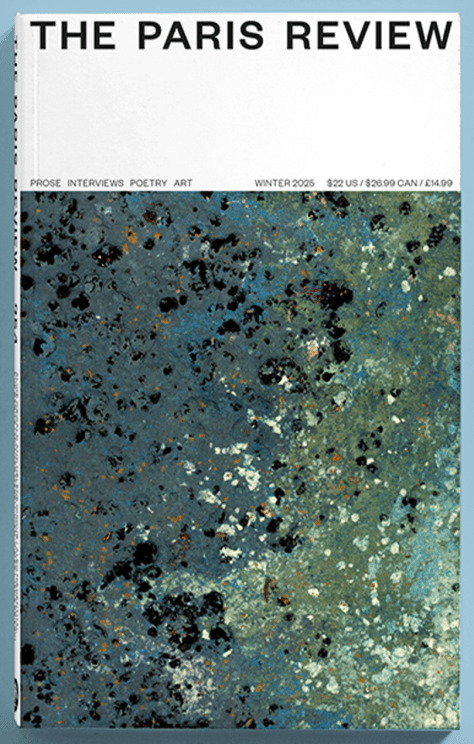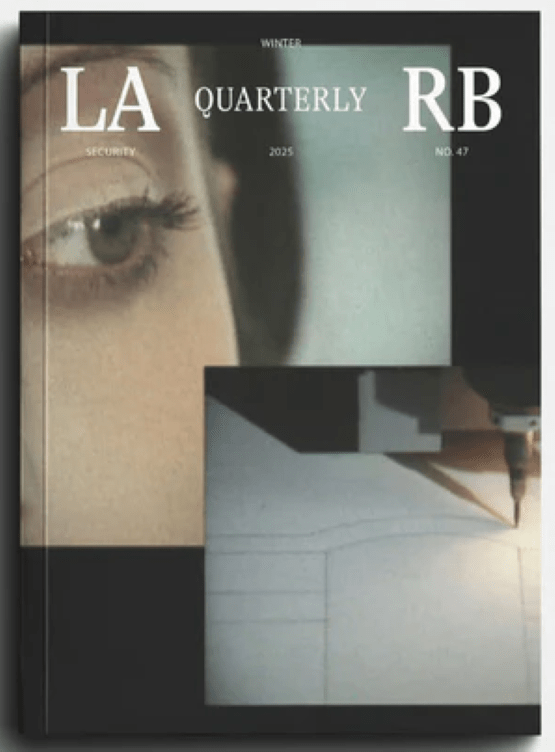
Tag Archives: Arts & Literature

Reviews: ‘The Week In Art’

THE WEEK IN ART (October 2, 2025): The latest episode feature a new exhibition at the Fitzwilliam Museum in Cambridge, UK, called Made in Ancient Egypt, reveals untold stories of the people behind a host of remarkable objects, and the technology and techniques they used.

The Art Newspaper’s digital editor, Alexander Morrison visits the museum to take a tour with the curator, Helen Strudwick. One of the great revelations of the past two decades in scholarship about women artists is Michaelina Wautier, the Baroque painter active in what is now Belgium in the middle of the 17th century. The largest ever exhibition of Wautier’s work opened this week at the Kunsthistorisches Museum in Vienna, and travels to the Royal Academy of Arts in London next year.

Ben Luke speaks to the art historian who rediscovered this extraordinary painter, Katlijne Van der Stighelen, who has also co-edited the catalogue of the Vienna show. And this episode’s Work of the Week is Robert Rauschenberg’s Bed (1955), one of the most important works of US art of the post-war period. It features in the exhibition Five Friends: John Cage, Merce Cunningham, Jasper Johns, Robert Rauschenberg, Cy Twombly, which this week arrives at the Museum Ludwig in Cologne.

We speak to Yilmaz Dziewior, the co-curator of the exhibition.

Made in Ancient Egypt, Fitzwilliam Museum, Cambridge, UK, 3 October-2 April 2026

Michaelina Wautier, Painter, Kunsthistorisches Museum, Vienna

30 September-22 February 2026; Royal Academy of Arts, London

27 March – 21 June 2026.

Five Friends: John Cage, Merce Cunningham, Jasper Johns, Robert Rauschenberg, Cy Twombly, Museum Ludwig, Cologne, Germany,

3 October-11 January 2026

THE NEW YORK REVIEW OF BOOKS – OCTOBER 23, 2025

Home | The New York Review of Books

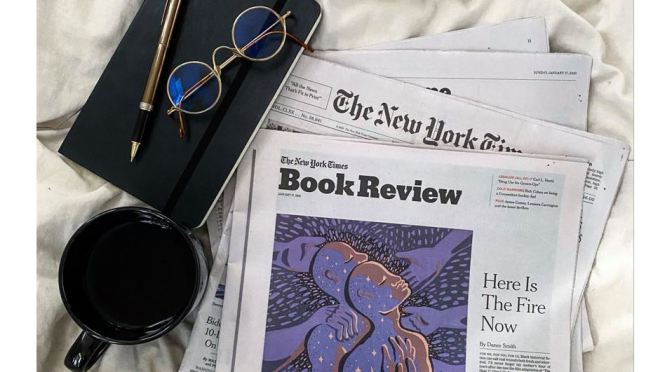
THE NEW YORK REVIEW OF BOOKS: The latest issue features Jacob Weisberg on deep fake news, Elaine Blair on istoriya feminisma, Eric Foner on the underground railroad at sea, Andrew Katzenstein on Pynchon’s Shadow Ticket, Suzanne Schneider on Friedrich Hayek’s bastard children, Nicole Rudick on Ben Shahn’s compassion, Jay Neugeboren on the working homeless, Vicente L. Rafael on an American massacre in the Philippines, Ariel Dorfman on Pinochet’s favorite Nazi, David Cole on Trump’s summary killings in international waters, a poem by Victoria Chang, and much more.

Algorithm Nation

Fights about digital filtering tools have turned more and more bitter. That’s because of their extraordinary power to shape both political opinion and mass culture.

Invisible Rulers: The People Who Turn Lies into Reality by Renée DiResta

Character Limit: How Elon Musk Destroyed Twitter by Kate Conger and Ryan Mac

Filterworld: How Algorithms Flattened Culture by Kyle Chayka

Equality Without Feminism?

The Soviet Union’s ambitious program of gender equality could never be separated from its abuses of power.

Motherland: A Feminist History of Modern Russia, from Revolution to Autocracy by Julia Ioffe

The Big Cheese

Shadow Ticket is brisker than Thomas Pynchon’s other work, but it’s full of his usual vaudevillian sensibility, and it addresses his favorite theme: how to live freely under powerful systems of control.

Shadow Ticket by Thomas Pynchon

APOLLO MAGAZINE – OCTOBER 2025 PREVIEW

October 2025

APOLLO MAGAZINE: The latest issue features Hew Locke and the Empire’s new clothes | Princeton University Art Museum reopens | William Hogarth’s bedside manner | the many faces of Nigerian modernism


Hew Locke and the Empire’s new clothes

On the eve of a major US survey, the artist talks to Apollo about decorating statues and the ornamental side of the British Empire

A compact history of the London mews

By turns picturesque and insalubrious, mews houses have a compellingly chequered past

Art Basel’s smallest fair has big ambitions

Eclectic art and innovative curation are helping Art Basel Paris fly the flag for the French art market

New frontiers for the Chinese art market

Work by late 20th-century and contemporary Chinese artists has been throwing up surprises recently

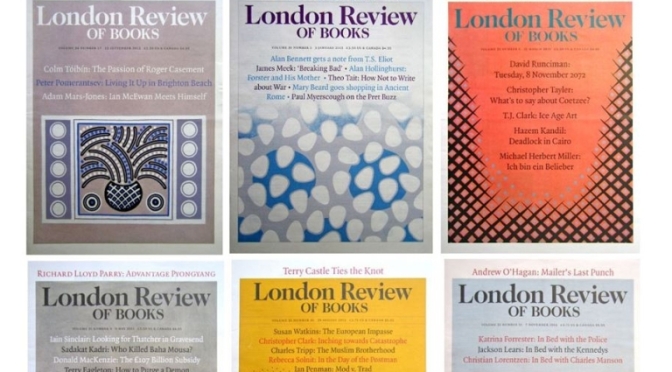
LONDON REVIEW OF BOOKS – OCTOBER 9, 2025 PREVIEW

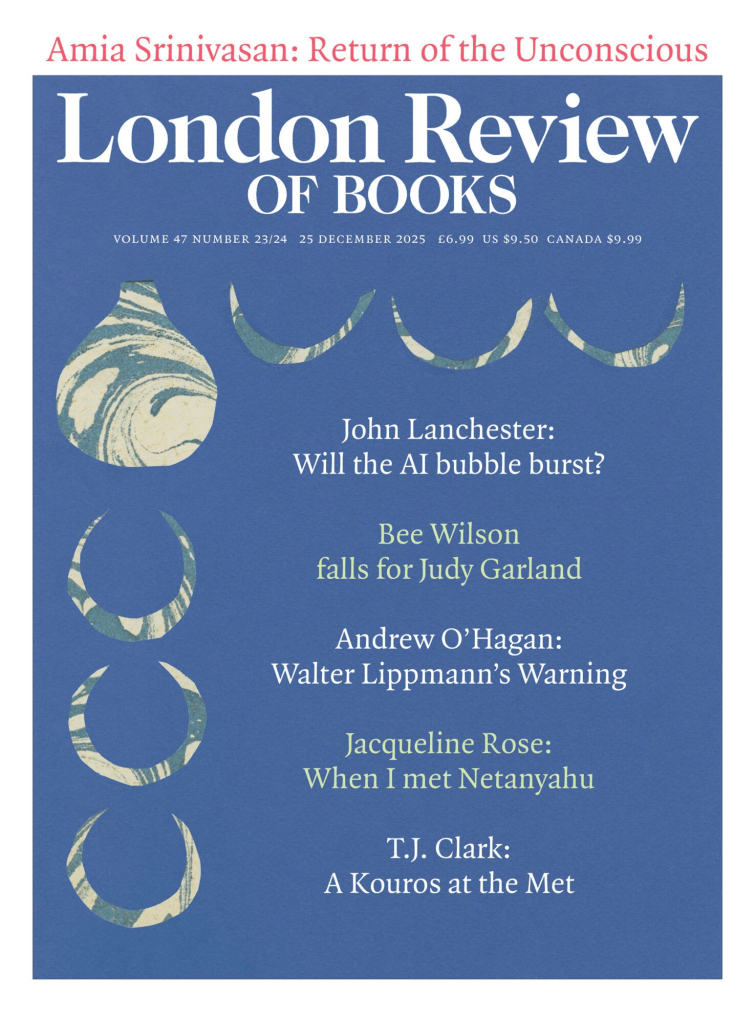
LONDON REVIEW OF BOOKS: The latest issue features Pico in Purgatory; Can cellos remember?; Britain’s Europe Problem

Pico in Purgatory

Pico’s Oration contravenes the very idea of human possibility that we think the Renaissance is about – yet we think of the Renaissance this way partly because of a centuries-long misreading of it. In which case, does Pico really belong to the Renaissance? Or is our whole idea of the Renaissance hopelessly flimsy, nothing but a collection of fantasies about what it means to be modern and human?

Britain’s Europe Problem

From Macmillan to Wilson to Heath to Thatcher to Major to Blair to Cameron, a succession of prime ministers persuaded themselves that their country was somehow different from the rest: it could pick and choose from the menu of European options in the way that suited it best. They were all mistaken. 

Computers that want things

For all the fluency and synthetic friendliness of public-facing AI chatbots like ChatGPT, it seems important to remember that existing iterations of AI can’t care. The chatbot doesn’t not care like a human not caring: it doesn’t care like a rock doesn’t care, or a glass of water. AI doesn’t want anything. But this is bound to change.

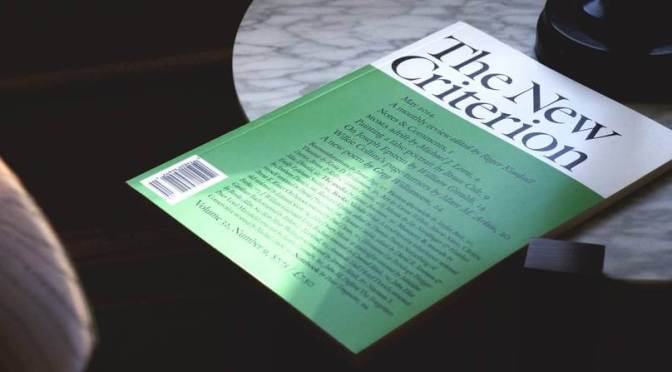
LITERARY REVIEW – OCTOBER 2025 ISSUE PREVIEW

LITERARY REVIEW : The latest issue features….Read All About It; Goethe’s Grand Ideas; The Basquiat Boom; Ministers & Monarchs; Operation Baku…

Strong Constitution: ‘Power and the Palace: The Inside Story of the Monarchy and 10 Downing Street’ By Valentine Low

Blood, Rage & Terror: ‘The Revolutionists: The Story of the Extremists Who Hijacked the 1970s’ By Jason Burke

Stocks & Scares: ‘1929: The Inside Story of the Greatest Crash in Wall Street History’ By  Andrew Ross Sorkin

TIMES LITERARY SUPPLEMENT – OCTOBER 3, 2025 PREVIEW

TIMES LITERARY SUPPLEMENT: The latest issue features ‘Sylvia Plath’s Ariel at sixty; The case against progress; Patricial Lockwood’s bag of scraps…

Lioness of God    

The sixtieth anniversary ‘heritage’ edition of Ariel By Seamus Perry

The Puritan reflex

Thomas Pynchon’s haunted vision of history By James Marcus

A dashed clever fellow

The wisdom of Bertie Wooster By Tim Lake

Printed by herself

The precocious poetry of Charlotte Brontë By Samantha Ellis

THE NEW YORKER MAGAZINE – OCTOBER 6, 2025 PREVIEW

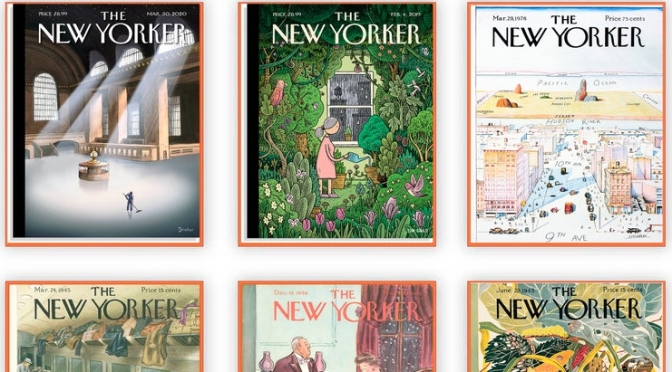
The illustrated cover for the October 6 2025 issue of The New Yorker in which two dishevelled parents lovingly watch a...

THE NEW YORKER MAGAZINE: The latest cover features R. Kikuo Johnson’s “Free Play” – The overwhelming delights of parenting.

Grace and Disgrace

Hope lies not in expecting a late-in-life conversion experience in the Oval Office but in carrying out the ordinary work of civic life. By David Remnick

Tim Berners-Lee Invented the World Wide Web. Now He Wants to Save It

In 1989, Sir Tim revolutionized the online world. Today, in the era of misinformation, addictive algorithms, and extractive monopolies, he thinks he can do it again. By Julian Lucas

Carol Burnett Plays On

The ninety-two-year-old comedy legend has influenced generations of performers. In a string of recent TV roles, she has been co-starring with some of her closest comedic heirs. By Rachel Syme

Where the Battle Over Free Speech Is Leading Us

Doxing, deplatforming, defunding, persecuting, firing, and sometimes killing—all are part of an escalating war over words. What happens next? By Louis Menand

HOWL AND HUSH

Jack London and Ernest Hemingway meet in a speculative broadcast, sparring over wolves, wounds, and the fragile myths of survival.

By Michael Cummins, Editor, September 28, 2025

In a virtual cabin where the fire crackles on loop and wolves pace behind the glass, London and Hemingway return as spectral combatants. One howls for the wild, the other hushes in stoic silence. Between them, an AI referee calls the fight—and reveals why, in an age of comfort and therapy, we still burn for their myths of grit, grace, and flame.

The lights dim, the crowd hushes, and Howard McKay’s voice rises like a thunderclap from another century. He is no man, not anymore, but an aggregate conjured from the cadences of Cosell and Jim McKay, the echo of every broadcast booth where triumph and ruin became myth. His baritone pours into the virtual cabin like an anthem: “From the frozen Yukon to the burning Gulf Stream, from the howl of the wolf to the silence of the stoic, welcome to the Wild World of Men. Tonight: Jack London and Ernest Hemingway. Two titans of grit. One ring. No judges but history.”

The myths of rugged manhood were supposed to have thawed long ago. We live in an age of ergonomic chairs, curated therapy sessions, artisanal vulnerability. Masculinity is more likely to be measured in softness than in stoicism. And yet the old archetypes remain—grinning, wounded, frostbitten—appearing on gym walls, in startup manifestos, and in the quiet panic of men who don’t know whether to cry or conquer. We binge survival shows while sipping flat whites. We stock emergency kits in suburban basements. The question is not whether these myths are outdated, but why they still haunt us.

Jack London and Ernest Hemingway didn’t invent masculinity, but they branded its extremes. One offered the wolf, the sled, the primordial howl of instinct. The other offered silence, style, the code of the wounded stoic. Their ghosts don’t just linger in literature; they wander through the way men still imagine themselves when no one is watching. So tonight, in a cabin that never was, we summon them.

The cabin is an elaborate fiction. The fire crackles, though the sound is piped in, a looped recording of combustion. The frost on the window is a pixelated map of cold, jagged if you stare too long. Wolves pace beyond the glass, their movements looping like a highlight reel—menace calculated for metaphor. This is not the Yukon but its simulacrum: ordeal rendered uncanny, broadcast for ratings. McKay, too, belongs to this stagecraft. He is the voice of mediated truth, a referee presiding over existential dread as if it were the third round of a heavyweight bout.

London arrives first in the firelight, massive, broad-shouldered, his beard glistening as though it remembers brine. He smells of seal oil and smoke, authenticity made flesh. Opposite him sits Hemingway, compressed as a spring, scars arranged like punctuation, his flask gleaming like a ritual prop. His silences weigh more than his words. McKay spreads his hands like a referee introducing corners: “London in the red—frostbitten, fire-eyed. Hemingway in the blue—scarred, stoic, silent. Gentlemen, touch gloves.”

Civilization, London growls, is only veneer: banks, laws, manners, brittle as lake ice. “He had been suddenly jerked from the heart of civilization and flung into the heart of things primordial,” he says of Buck, but it is himself he is describing. The Yukon stripped him bare and revealed survival as the only measure. Hemingway shakes his head and counters. Santiago remains his emblem: “A man can be destroyed but not defeated.” Survival, he argues, is not enough. Without grace, it is savagery. London insists dignity freezes in snow. Hemingway replies that when the body fails, dignity is all that remains. One howls, the other whispers. McKay calls it like a split decision: London, Nietzsche’s Overman; Hemingway, the Stoic, enduring under pressure.

The fire cracks again, and they move to suffering. London’s voice rises with the memory of scurvy and starvation. “There is an ecstasy that marks the summit of life, and beyond which life cannot rise.” Agony, he insists, is tuition—the price for truth. White Fang was “a silent fury who no torment could tame,” and so was he, gnawing bacon rinds until salt became torment, watching his gums bleed while his notebook filled with sketches of men and dogs broken by cold. Pain, he declares, is refinement.

Hemingway will not romanticize it. Fossalta remains his scar. He was nineteen, a mortar shell ripping the night, carrying a wounded man until his own legs gave out. “I thought about not screaming,” he says. That, to him, is suffering: not the ecstasy London names, but the composure that denies agony the satisfaction of spectacle. Santiago’s wasted hands, Harry Morgan’s quiet death—pain is humility. London exults in torment as crucible; Hemingway pares it to silence. McKay leans into the mic: “Suffering for London is capital, compounding into strength. For Hemingway, it’s currency, spent only with composure.”

Violence follows like a body blow. For London, it is honesty. The fang and the club, the law of the trail. “The Wild still lingered in him and the wolf in him merely slept,” he reminds us, violence always waiting beneath the surface. He admired its clarity—whether in a sled dog’s fight or the brutal marketplace of scarcity. For Hemingway, violence is inevitable but sterile. The bull dies, the soldier bleeds, but mortality is the only victor. The bullfight—the faena—is ritualized tragedy, chaos given rules so futility can be endured. “One man alone ain’t got no bloody chance,” Harry Morgan mutters, and Hemingway nods. London insists that without violence, no test; without test, no truth. Hemingway counters that without style, violence is only noise.

Heroism, too, divides the ring. London points to Buck’s transformation into the Ghost Dog, to the pack’s submission. Heroism is external dominance, myth fulfilled. Hemingway counters with Santiago, who returned with bones. Heroism lies not in conquest but in fidelity to one’s own code, even when mocked by the world. London scoffs at futility; Hemingway scoffs at triumph that cheats. McKay narrates like a replay analyst: London’s hero as Ozymandias, monument of strength; Hemingway’s as Sisyphus, monument of effort. Both doomed, both enduring.

McKay breaks in with the cadence of a mid-bout analyst: “London, born in Oakland, forged in the Yukon. Fighting weight: one-ninety of raw instinct. Signature move: The Howl—unleashed when civilization cracks. Hemingway, born in Oak Park, baptized in war. Fighting weight: one-seventy-five of compressed silence. Signature move: The Shrug—delivered with a short sentence and a long stare. One man believes the test reveals the truth. The other believes the truth is how you carry the test. And somewhere in the middle, the rest of us are just trying to walk through the storm without losing our flame.”

Biography intrudes on myth. London, the socialist who exalted lone struggle, remains a paradox. His wolf-pack collectivism warped into rugged individualism. The Yukon’s price of entry was a thousand pounds of gear and a capacity for starvation—a harsh democracy of suffering. Hemingway, by contrast, constructed his trials in realms inaccessible to most men. His code demanded a form of leisure-class heroism—the freedom to travel to Pamplona, to chase big game, to transform emotional restraint into a portable lifestyle. London’s grit was born of necessity; Hemingway’s was an aesthetic choice, available to the wealthy. Even their sentences are stances: London’s gallop like sled dogs, breathless and raw; Hemingway’s stripped to the bone, words like punches, silences like cuts. His iceberg theory—seven-eighths submerged—offered immense literary power, but it bequeathed a social script of withholding. The silence that worked on the page became a crushing weight in the home. McKay, ever the showman, raises his arms: “Form is function! Brawn against compression! Howl against hush!”

Then, with the shameless flourish of any broadcast, comes the sponsor: “Tonight’s bout of the Wild World of Men is brought to you by Ironclad Whiskey—the only bourbon aged in barrels carved from frozen wolf dens and sealed with Hemingway’s regrets. Not for sipping, for surviving. With notes of gunpowder, pine smoke, and frostbitten resolve, it’s the drink of men who’ve stared down the void and asked it to dance. Whether you’re wrestling sled dogs or your own emotional repression, Ironclad goes down like a fist and finishes like a scar. Distilled for the man who doesn’t flinch.” The fire hisses as if in applause.

Flashbacks play like highlight reels. London chewing frozen bacon rinds, scribbling by the dim flare of tallow, every line of hunger an autobiography. Hemingway at Fossalta, nineteen, bleeding into dirt, whispering only to himself: don’t scream. Even the piped-in fire seems to know when to hold its breath.

Their legacies wander far beyond the cabin. Krakauer’s Chris McCandless chased London’s frozen dream but lacked his brutal competence. His death in a bus became the final footnote to To Build a Fire: will alone does not bargain with minus sixty. Hollywood staged The Revenant as ordeal packaged for awards. Reality shows manufacture hardship in neat arcs. Silicon Valley borrows their vocabulary—“grit,” “endurance,” “failing forward”—as if quarterly sprints were marlin battles or Yukon trails. These echoes are currency, but counterfeit.

McKay drops his voice into a near whisper. “But what of the men who don’t fit? The ones who cry without conquest, who break without burning, who survive by asking for help?” London stares into looped frost; Hemingway swirls his glass. Their silence is not absence but tension, the ghosts of men unable to imagine another myth.

The danger of their visions lingers. London’s wolf, applied carelessly, becomes cruelty mistaken for competence, capitalism as fang and claw. Hemingway’s stoic, misused, becomes toxic silence, men drowning in bottles or bullets. One myth denies compassion; the other denies expression. Both are powerful; both exact a cost.

And yet, McKay insists, both are still needed. London growls that the man who forgets the wolf perishes when the cold comes. Hemingway replies that the man who forgets dignity perishes even if he survives. The fire glows brighter, though its crackle is only a recording. London’s flame is a blast furnace, demanding constant fuel. Hemingway’s is a controlled burn, illuminating only if tended with restraint. Both flames are fragile, both exhausting.

The wolves fade to shadow. The storm eases. The fire loops, oblivious. McKay lowers his voice into elegy, his cadence a final sign-off: “Man is nothing, and yet man is flame. That flame may be survival or silence, howl or whisper. But it remains the work of a lifetime to tend.”

The cabin collapses into pixels. The wolves vanish. The storm subsides. The fire dies without ash. Only the coals of myth remain, glowing faintly. And somewhere—in a quiet room, in a frozen pass—another man wonders which flame to keep alive.

The myths don’t just shape men; they shape nations. They echo in campaign slogans, locker-room speeches, the quiet panic of fathers trying to teach strength without cruelty. Even machines, trained on our stories, inherit their contours. The algorithm learns to howl or to hush. And so the question remains—not just which flame to tend, but how to pass it on without burning the next hand that holds it.

THIS ESSAY WAS WRITTEN AND EDITED UTILIZING AI

DO I WAKE OR SLEEP?

A Speculative Morning with Keats

By Michael Cummins, Editor, September 25, 2025

“As if I were dissolving.” — John Keats, letter to his brother George, April 1819

In Hampstead, on a spring morning in 1819, John Keats sat beneath a plum tree and wrote “Ode to a Nightingale.” This is how the lines may have come to him—half vision, half dissolution.

Brown clatters a cup somewhere inside. The sound is an unwelcome punctuation mark on the morning’s silence, a reminder of the relentless normalcy of domestic life. The room has felt too narrow for breath, not just for my ailing lungs, but for the grief that keeps the curtains drawn. Barely six months since my brother Tom slipped away, the house still smells faintly of smoke, paper, and the sweet-sick residue of medicine. His absence hangs in the air. That weight has driven me to the grass, away from the claustrophobia of the sickroom.

The garden receives me. The grass is damp, pressing cool blades into my palms. Light filters through the plum tree leaves, breaking into fragments on the soil. The blossoms drift like a quiet snowfall, powdering my sleeve with pale dust as if testing whether the body still belongs to earth. Beyond the hedge, a cart rattles, a dog barks, a bell tolls faintly from Hampstead. Life continues its tedious bookkeeping. But here, there is only the hush before song.

Brown’s footsteps echo faintly, a rhythm too human for the stillness I crave. Even his voice, when it rises in greeting, feels like a tether to the mundane. I do not resent him; I envy his ease with the world. He pours tea, hums to himself, and carries on. I am fixed under the plum tree, waiting for something less ordinary to speak.

And then the nightingale begins. The sound is not a tune but a force: poured, unbroken, radically unselfconscious. It arrives without the stutter of human intention, as if the bird is nothing but the channel of its own liquid note. The song alters the air. I feel it in the chest before I write a word. I steady my paper, and the ink pools like shadow, metallic and alive. It smells of iron and inevitability. Each stroke is a pulse, each word a breath I cannot take.

My heart aches, and a drowsy numbness pains
My sense, as though of hemlock I had drunk,

The line comes of its own accord. The ache is not complaint but aperture. Pain is the friction that opens the door. Numbness clears the chatter of reason. The poem begins in crisis, a shock both physical and metaphysical.

Or emptied some dull opiate to the drains
One minute past, and Lethe-wards had sunk:

Lethe does not erase; it suspends. In its waters, memory floats unmoored, waiting for a name. Tom is gone, ferried by the same current. His silence hovers in the ink. Yet the river here is not despair but narcotic kindness, a place where debts and illness dissolve into rhythm. I do not summon the myth; it summons me. Byron writes like a storm—quick, unrelenting. I write like a wound: slow, deliberate, pulsing. And yet today the hand runs faster, driven by the bird’s current.

’Tis not through envy of thy happy lot,
But being too happy in thine happiness,—

I do not covet. I am saturated. The bird’s happiness is no possession but a weather spilling into the morning. I am not resentful; I am simply overflowed. The pen scratches faster when I abandon self-pity and admit the sheer fact of joy.

That thou, light-winged Dryad of the trees,
In some melodious plot

The Dryad arrives without strain. Myth is not invention but recognition. The bird’s song is timeless, deserving of a classical name.

Of beechen green, and shadows numberless,
Singest of summer in full-throated ease.

Ease—I do not have it. My lungs constrict, my chest rasps, nights punctuated by the cough that writes mortality into every breath. Yet I put the phrase down because the bird teaches it. A line must do what it says: open, breathe, pour.

The song intoxicates more than wine. My lips are dry, yet the body reels as though stained purple at the mouth.

O for a draught of vintage! that hath been
Cool’d a long age in the deep-delved earth,

The cellar rises: cool, stony, damp. This is no ornament but a transcription of sensation.

Tasting of Flora and the country green,
Dance, and Provençal song, and sunburnt mirth!

I have never seen Provence, but the imagination persuades me otherwise. The song conjures the vineyard. These sensations are not decoration; they are human joy remembered in the body.

O for a beaker full of the warm South,
Full of the true, the blushful Hippocrene,

The beaker is not a vessel but the bird itself, brimming with myth. Hippocrene flows because the song requires its name.

With beaded bubbles winking at the brim,
And purple-stained mouth;

To drink is to be marked. The mouth is stained because it has been altered. Poetry demands transformation; ecstasy must leave a trace.

But intoxication fades. What remains is grief.

Fade far away, dissolve, and quite forget
What thou among the leaves hast never known,

The bird is blessed in its ignorance. It does not know poverty. It does not know longing. It does not know the ache of an empty chair.

Tom once sat beneath this tree, sketching the shape of a bird in flight. He said silence was the soul’s canvas. Now that silence is heavier, less blank, more bruised. His face—thin as paper—rises when I write “youth grows pale.” The ode becomes his memorial as much as mine.

The weariness, the fever, and the fret
Here, where men sit and hear each other groan;

The line steadies itself on blunt fact. Tom. Debt. The cough. No flourish can soften them.

Where palsy shakes a few, sad, last grey hairs,
Where youth grows pale, and spectre-thin, and dies;

He is there again, spectre-thin, his breath shallow. The cadence is the only mercy.

Where but to think is to be full of sorrow
And leaden-eyed despairs,

Thought itself betrays when it offers no hope forward. To write is to wrestle despair into cadence.

I call for wings—not Bacchus’s painted team but the invisible kind I know.

Away! away! for I will fly to thee,
Not charioted by Bacchus and his pards,

Wine is a lie. Fancy, too. Only poesy can lift.

But on the viewless wings of Poesy,
Though the dull brain perplexes and retards:

The brain resists, heavy, skeptical. Poesy ignores resistance. The moment I write “Away!” I am gone.

Already with thee! tender is the night,
And haply the Queen-Moon is on her throne,

Daylight floods Hampstead, yet the moon rises on the page. The imagination enthrones her, and that suffices.

Cluster’d around by all her starry Fays;
But here there is no light,

Contradiction is permitted. This is Negative Capability as I once named it: to remain “in uncertainties, Mysteries, doubts, without any irritable reaching after fact and reason.” The ode does not solve; it dwells.

Death arrives then, companionable, not hostile.

Now more than ever seems it rich to die,
To cease upon the midnight with no pain,

“Rich”—the word startles, but I keep it. Death here is plenitude, not theft.

While thou art pouring forth thy soul abroad
In such an ecstasy!

The bird pours, my ribs echo. Death feels like completion.

Still wouldst thou sing, and I have ears in vain—
To thy high requiem become a sod.

Yet honesty must break the dream: if I am earth, I cannot hear. Even rapture admits silence.

The song itself, though, is older than me, older than kings.

Thou wast not born for death, immortal Bird!
No hungry generations tramp thee down;

Mortality is mine, not yours. Your song belongs to recurrence.

The voice I hear this passing night was heard
In ancient days by emperor and clown:

Emperors and clowns alike have bent their ears. Beauty makes no distinction.

Perhaps the self-same song that found a path
Through the sad heart of Ruth, when, sick for home,

The “perhaps” is everything. Certainty would bruise compassion.

I think, too, of Fanny Brawne. Her presence lingers behind the lines, as urgent as my cough. She is near, but a partition stands—of health, of propriety, of fate itself. To love her is to ache for what cannot be promised. The bird’s song is boundless, but my breath is measured. Desire sharpens sorrow into necessity.

The garden dissolves. Casements open in the skull.

Charm’d magic casements, opening on the foam
Of perilous seas, in faery lands forlorn,

The peril saves the vision from cloying. A blossom falls on my sleeve like ash from a cooling fire.

Forlorn! the very word is like a bell
To toll me back from thee to my sole self!

One word tolls, and the spell breaks.

Adieu! the fancy cannot cheat so well
As she is fam’d to do, deceiving elf.

I do not scold the Fancy. I thank it. Its deception is mercy.

The music vanishes. Not fading, but gone.

Fled is that music:—Do I wake or sleep?

I stop. I do not answer. The question is the ode’s truest symmetry.

The ink is still damp, smelling of iron. I glance back at the start, weighing first heat against last stillness.

My heart aches, and a drowsy numbness pains… Fled is that music:—Do I wake or sleep?

Between these poles lies a morning: a poet beneath a plum tree, a body already failing, a bird whose song endures.

I think of what I wrote not long ago—that the world is a vale of Soul-making. Do you not see how necessary a World of Pains and troubles is to school an Intelligence and make it a Soul? Suffering is the furnace, imagination the hammer. The ode is not escape from the furnace but evidence of the forging itself.

Perhaps a widow will read this, her fingers trembling on the page. Or a child, too young to name sorrow, will feel something loosen in the chest. Or a soldier, resting between battles, will find a measure of stillness in the lines. Beauty is not ornament but survival. If the poem steadies even one breath, it has earned its place among the leaves.

Brown steps out, squinting in the morning light. I gather the pages, careful as if any breeze could undo the morning. I hand him the sheaf and say what is exact: “I have been writing.”

He will tell this story later and say I wrote under the plum tree in one morning, which is true in the way truth sometimes fits a simple sentence. I go back inside. The cough finds me at the foot of the stair; it always does. But the air in my chest is changed by the shape the morning carved in it. The bird sang, and I answered. Whether I wake or sleep, the song remains.

THIS ESSAY WAS WRITTEN AND EDITED UTILIZING AI

SILENCE AFTER THE BELL

Bashō’s narrow road, re-imagined in ink and light

By Michael Cummins, Editor, September 24, 2025

In the spring of 1689, Matsuo Bashō set out from Edo with his inkstone and his disciple, walking north through Japan’s interior. This essay imagines the painter Ogata Kōrin at his side, brush catching what haiku left unsaid: the lantern’s glow, a fox’s mischief, the silence after sound.

The morning I left Edo, the sky was thick with petals. Cherry blossoms fell in sudden gusts, scattering across canals and clinging to the backs of merchants. Someone in the crowd said my name. “Bashō—the man of stillness.” The words felt like a shroud. Stillness was not peace. Stillness was suffocation.

I carried only a robe, a small pack, and my inkstone. I gave no notice, offered no farewell. A poet should know the difference between an entrance and an exit, and Edo was drowning in entrances—recitations in smoky salons, verses pinned to pillars, applause echoing in courtyards. To slip away silently was my only true poem.

Sora, my disciple, waited by the gate, his journal tied at his side. Beside him stood Ogata Kōrin, carrying brushes wrapped in cloth, a small box of pigments, and sheets of fine paper. He was famed for painting bold pines and cranes against gold, but he wanted to walk with us, to see if paint could keep pace with words.

“You walk for silence,” he said as we stepped into the road.

“And you?” I asked.

“I will paint the sound.”


A crow on a bare branch—
autumn evening.

Walking unstitched illusions. You cannot hurry rain. You cannot plead with a mountain. Each step was a reminder of smallness.

Oku—the interior—was more than geography. It was the hidden chamber within things. To walk north into deep country was to step into the interior of myself.

The road gave humility: a thin robe against spring wind, an empty belly by sundown, blistered feet in straw sandals. Hunger was not a lack but a space for the world to fill. Only when stripped of comfort could I hear the world breathe.


By the second month, rains thickened. Each evening Sora dried our sandals by the inn’s hearth, though by morning they were heavy again.

At a mountain temple, a monk struck the great bell. The sound swelled, then emptied into air.

“Not the ringing,” he whispered, “the silence after—that is the true temple.”

Kōrin ground his ink and left behind a circle fading into white paper. I looked at it and felt the hush expand. His first gift of the journey.

Pine shadow—
the road bends
to meet it.


Summer pressed down like a hand. Cicadas shrieked in the trees, their chorus burning itself away. At a roadside inn, a farmer’s wife handed me a bowl of barley and salt.

“Why walk in this heat?” she asked.

“To see what words cannot hold,” I said. She laughed, shaking her head.

That night, I listened to the cicadas outside the window. Kōrin painted their wings in silver strokes. Sora struggled to describe them, blotting his brush, sighing. Not every moment can be pinned to the page.

One afternoon, a girl chased dragonflies, sleeves spread like wings. She caught none, but her laughter rang sharper than capture. Kōrin caught her mid-flight in vermilion. He pressed the paper into Sora’s hands. “If you cannot hold it with words,” he said, “let color remind you.”


We reached Matsushima, where pine-covered islets scattered like jewels across the bay. Some places do not need words. Kōrin’s blues and greens glowed even at dusk.

That night, fireflies pressed against the paper walls of our hut, their glow brighter than the lamp. I set down my brush. Some nights call for silence more than lines.

Later, in a fishing village, I collapsed with fever. A fisherman’s wife placed cloths on my brow and whispered prayers to the sea.

When I woke, Kōrin held out a small painting of a lantern’s glow against dark waves. The flame was steadier than I had felt in days.

Lantern flickers—
the sea’s hush louder
than my pulse.


By August, the barley fields had turned gold. The harvest moon rose red above the stubble. Villagers poured sake and sang. A boy ran over with a cup. “Drink, master!”

“The moon is already enough,” I said.

Snow still lingered in the high passes. The mountain does not flatter. It does not care if a man is poet or beggar. It accepts only attention.

Winter gust—
even the inkstone
holds the wind.


Crossing a frozen river, I slipped. A peasant caught my arm. “Careful, master. The ice breaks without warning.”

“So does the self,” I said.

Even in silence, the self lingered like a shadow. I imagined my words drifting northward, reaching readers yet unborn. But the further I walked, the thinner that dream became. What immortality is there in syllables, when rivers change their course and mountains crumble?

In Edo, applause had filled the air like thunder. On the road, there was only silence. Silence wounds, but it also heals.

The answer came not in thunder but in a sparrow’s wing. Write not to endure, but to attend. Not for tomorrow, but for now.


Near a riverbank, a boy approached with a scroll of verses. “Master, how do I make my poems last?”

“Write what you see,” I said. “Then write what you feel when you see it. Then tear it up and walk.”

The boy bowed. Kōrin added, softly: “Or paint the emptiness left behind.”

River mist—
the boy’s scroll
left unopened.


In the mountains I met a man from the north whose dialect I could not follow. He pointed to the sky, then to the river, then to his chest. We shared tea in silence. I realized then that language is not the vessel, but the gesture. Poetry lives in the space between.

One morning, I watched a fox dart through a field, a rice ball clutched in its mouth. The farmer cursed, but I laughed. Even hunger has mischief. Kōrin’s brush caught the moment in quick ink.

Fox in the field—
the rice ball warmer
than the sun.


Toward the end of our walk, Sora counted the ri that remained. “Two thousand and more behind us,” he said. His journal pages were full of weather, distances, small observations.

“I counted shadows,” I told him. “I counted pauses.”

Kōrin smiled. “I painted both.”

At last, beneath a cedar, I placed the inkstone on my lap and listened. Snow weighed heavy on the branches. The air was sharp with winter. The wind moved through ridges and needles and into the hollow of the stone. For a moment it seemed the ink itself stirred.

I wrote one last haiku, not as conclusion but as surrender. The road has no end. Only pauses where breath gathers.

Wind in the cedar—
the inkstone deepens
into silence.


When these fragments later formed Oku no Hosomichi, I wondered what I had left behind. Not a record of steps, but a trace of listening. The form belonged not to me but to the rhythm of walking.

Kōrin returned to Edo with his scrolls. I with my scattered lines. Yet three small works stayed with me: the fading bell, the glowing lantern, the fox with his rice ball. They were his haiku in color, brief offerings to impermanence.

If others take their own narrow roads, let them not follow our footsteps but their own shadows. The road is never the same twice. Neither traveler nor mountain remains unchanged.

Perhaps one day, a traveler will walk with a pen of light, or a scroll made of glass. They will pause beneath a cedar, not knowing my name, not knowing Kōrin’s brush, but feeling the same hush. The road will whisper to them, as it did to us. And they will listen—not to the words, nor the colors, but to the breath between.

Digital ink—
the silence still.

THIS ESSAY WAS WRITTEN AND EDITED UTILIZING AI