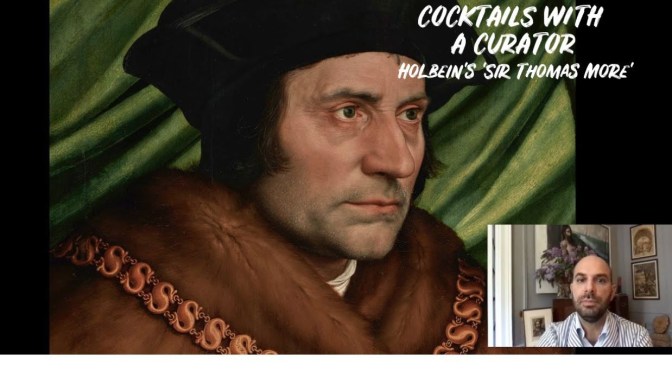
In this week’s episode of “Cocktails with a Curator,” Xavier F. Salomon, Deputy Director and Peter Jay Sharp Chief Curator, examines one of the Frick’s most beloved paintings, Hans Holbein’s “Sir Thomas More.” Xavier considers More’s relationship to humanist circles and the role of “friendship portraits” in making the absent present. In the words of More’s devoted friend, Desiderius Erasmus, “life without a friend is no life.” As a nod to the turbulent times of Tudor England, Xavier pairs this episode with a Bloody Mary cocktail.
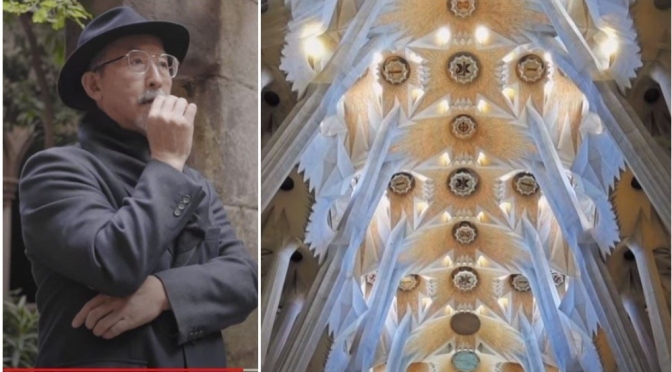
An architectural marvel has sat incomplete in a residential corner of Barcelona since its architect, Antoni Gaudí, died during construction in 1926. For decades, La Sagrada Familia has been an example of Christian fealty and Catalan ingenuity wrought in granite and sandstone; but little could anyone have guessed that ninety-four years after Gaudí’s death a Japanese sculptor would dedicate his life to completing the architect’s colossal work…
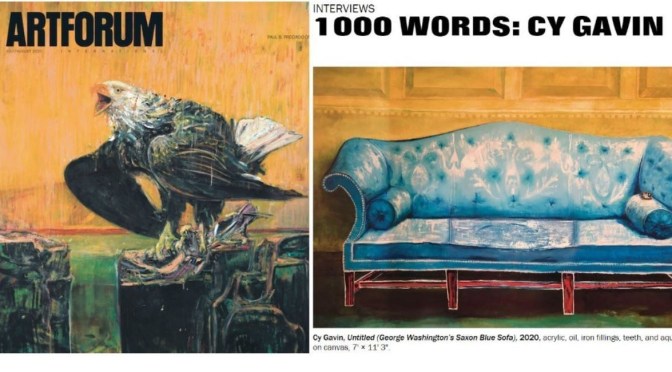
I WAS A COMPETITIVE BIRDER in high school. My family drove all around the countryside, so I spent a lot of time in the car, and I had to keep myself busy and project my brain somewhere. I would bring sketchbooks and field guides that I got from the library. I had started an Envirothon team at my school, to compete in the national decathlon pitting nerdy teens against each other in their knowledge of soil surveys, forestry, wildlife, and aquatic ecology.
Artist Cy Gavin
I was the birding specialist. I learned more than two hundred birdsongs and birdcalls from CDs and from the field. I participated in other competitions where I would win binoculars and forty-pound bags of birdseed. I didn’t even have a bird feeder—I’d just become obsessed.
Unlike bird-watchers, birders often rely first on auditory cues to identify a species. You immediately know so much about the bird—its seasonal plumage, age, sex, if it’s making a courtship call or a warning call—from listening. The second thing you cultivate is an idea of where the call is coming from, so you can zero in on it. You develop a spatial awareness, so even with your eyes closed the woods become a vivid visual experience.
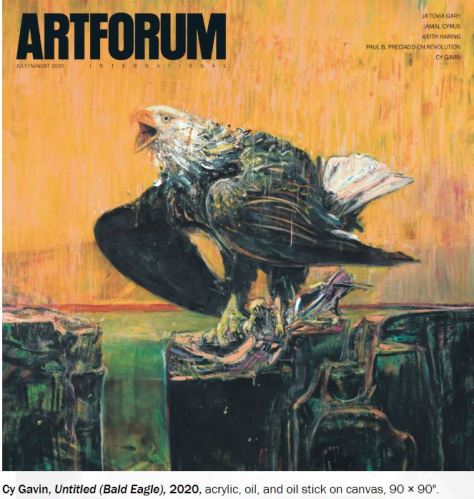
A steward of the Susquehanna River in Pennsylvania once took me out in a canoe to this extremely remote location to see a bald eagle’s ten-foot nest. Eagle populations had been devastated by the use of DDT. At the time, all nest sites had to be reported to the government and kept secret. In 2007, the bald eagle was removed from the list of threatened and endangered species, and ever since, I would catch myself looking out for them whenever I’d pass a lake or river. Where I work, in upstate New York, I see bald eagles all the time. Two years ago, I found a nesting pair in Poughkeepsie near a waste-treatment plant on the Hudson River. I just spent time watching and drawing them. It was very unglamorous. They eat garbage. They’re like pigeons. The river freezes in the winter, and I have a vivid memory of watching this wet, bedraggled eagle on a chunk of ice.
Cy Gavin is an American artist that lives and works in New York. Gavin often incorporates unusual materials in his paintings such as tattoo ink, pink sand, diamonds, staples, Bermudiana seeds, and cremains. Gavin also works in sculpture, performance and video.
In this week’s episode of “Travels with a Curator,” Xavier F. Salomon, Deputy Director and Peter Jay Sharp Chief Curator, transports us to the Japanisches Palais (Japanese Palace) in Dresden, the original home of the Meissen “Great Bustard.” Augustus II rebuilt and enlarged the Japanese Palace to showcase his extraordinary collection of porcelain, but he died before the project was completed. This exquisite porcelain masterpiece became part of the Frick’s collection through the generosity of the late collector Henry H. Arnhold (1921–2018).
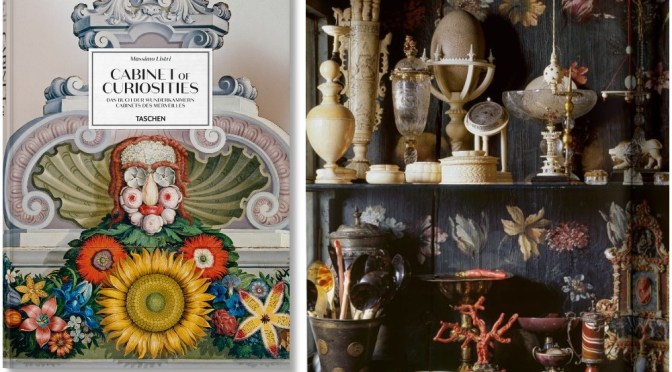
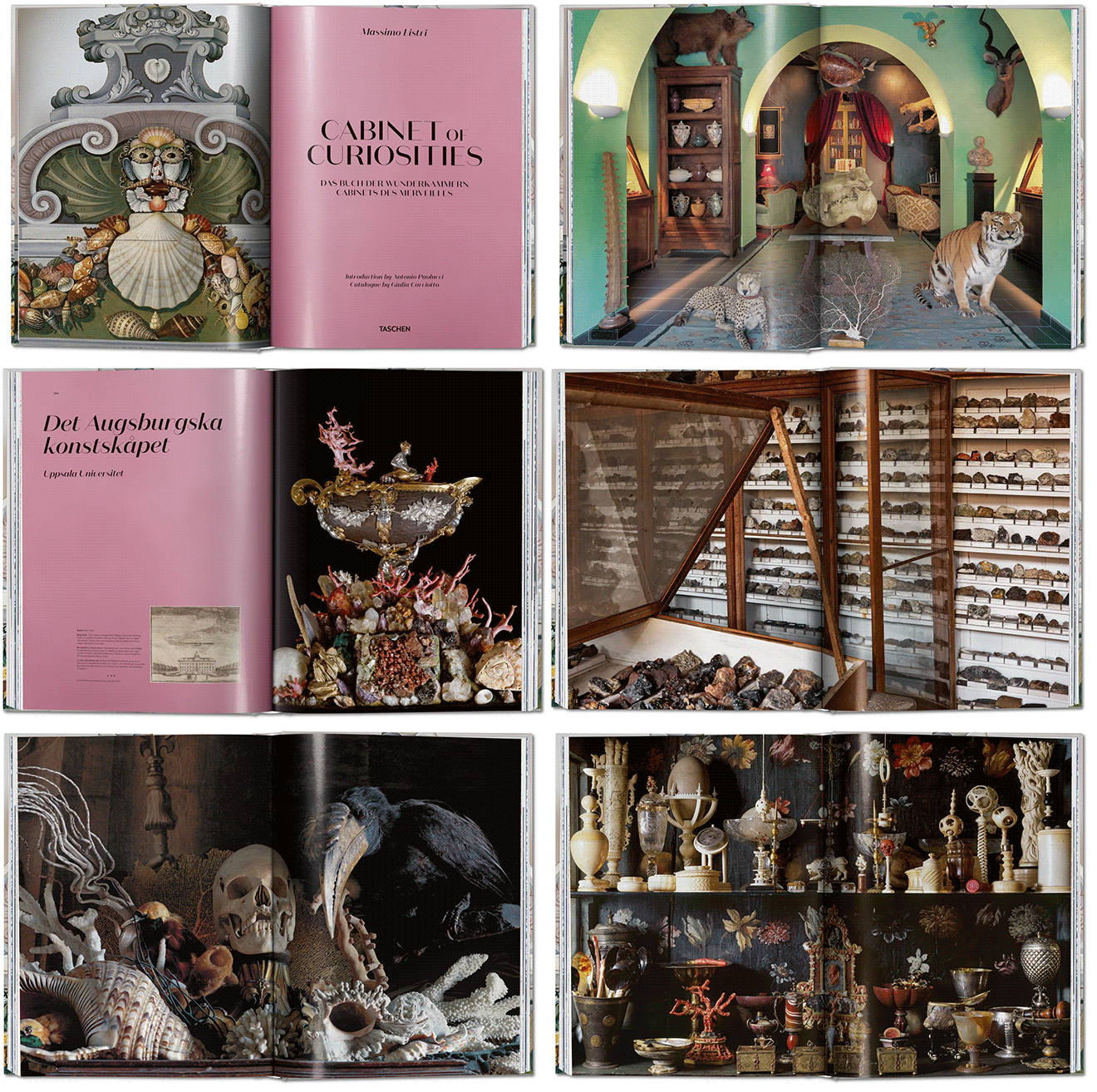
From the Grand Duke Francesco I de’ Medici and Holy Roman Emperor Rudolf II to Archduke Ferdinand II of Habsburg, these aristocratic virtuosos acquired, selected, and displayed the objects in real-life catalogues that represented the entire world—spanning architecture, interior design, painting, sculpture, gemology, geology, botany, biology and taxonomy, astrology, alchemy, anthropology, ethnography, and history.
The Wunderkammer, or “cabinet of curiosities,” saw collectors gathering objects from many strands of artistic, scientific, and intellectual endeavor, in an ambitious attempt to encompass all of humankind’s knowledge in a single room.
Marvel at the unicorn horns (narwhal tusks), gems, rare coral growths, Murano glasswork, paintings and peculiar mechanical automata. Browse through illustrations of exotic and mythical creatures and discover the famed “Coburg ivories,” an astounding collection of crafted artifacts. These collections are nothing short of a journey through time, from the Renaissance and Age of Discovery, the Mannerist and Baroque periods, up to the present day. Although many of these cabinets of curiosities no longer exist, others have been meticulously reconstructed, and new ones born.
These marvelous cabinets of curiosities can now be explored by all in this XXL collection. To realize this mammoth undertaking, Massimo Listri traveled to seven European countries over several decades; the result is a set of gorgeousphotographs, an authoritative yet accessible introduction, and detailed commentary on each of the 19 chambers highlighting the most remarkable items in each collection. Discover how these timeless treasures both describe and defined civilization, the modern concept of the museum, and our very knowledge of the universe.
The authors
Giulia ML Carciotto graduated in art history from the Sapienza University in Rome. She was a Research Fellow at the Warburg Institute in London, where she also worked for Christie’s. She was editor-in-chief of the art publisher Franco Maria Ricci Editore in Milan, and now teaches at the Academy of Fine Arts in Palermo and at the Abadir Academy in Catania.
Antonio Paolucci studied art history under Roberto Longhi in Florence and began his career in the management of cultural heritage. He was the Superintendent of Cultural Heritage in Venice, Verona, and Mantua. He later became Director of the Opificio delle Pietre Dure in Florence and, for almost twenty years, the Superintendent for the Polo Museale Fiorentino. Most recently, Paolucci was the Director of the Vatican Museums from 2007 to 2016. A specialist in Italian Renaissance art, he is the author of museum and exhibition catalogues, as well as publications on Donatello, Piero della Francesca, Michelangelo, Raphael, and Benvenuto Cellini, among others.
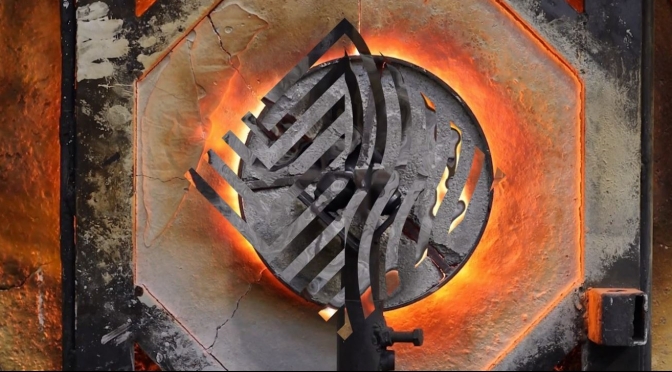
The intertwining of the four classical elements—fire, water, earth and air—is a constant source of inspiration to the design and philosophies of John Pomp. Be it a ripple on the ocean or the swelling of a bubble, his sculptural pieces mimic the wondrous geometry that exists, often unnoticed, in the natural world.
By capturing the fluidity of glass in its liquid state with gestural experimentations of technique, John transforms “perfectly imperfect” into signatures of his creations. Fragile and ethereal, yet purposeful and confident, every Pomp piece is a unique confluence of light, liquid and fire, which he brings together to alchemic effect.
Between 13 December 1954 and 14 February 1955, Picasso painted a series of fifteen canvases based on Eugène Delacroix’s masterwork Les femmes d’Alger, each of which he assigned an identifying letter from A to O. Together, these paintings constitute Picasso’s single greatest achievement in the decades following the end of the Second World War. They represent his first comprehensive appropriation and thoroughgoing exploration of an important painting by an earlier artist, as well as the most focused analysis he had done since the war years of the female figure set within a specific spatial environment.
Picasso painted the present Femmes d’Alger, Version F on 17 January 1955, around the halfway point in the cycle. It is the culminating, most fully resolved canvas from the first phase of the series, when Picasso favored medium-sized formats for his protean explorations.
One of the largest canvases from Thiebaud’s groundbreaking early period, it depicts a row of arcade machines, decorated in a vibrant mix of oranges and yellows…With their foreshortened bodies, the machines press towards the picture plane like the cakes and hot dogs in Thiebaud’s other works, inviting the viewer to reach in and taste.
It’s a classic of Pop art, a masterful reflection of the post-war boom in consumerism.
In November 2020, Wayne Thiebaud — the American artist best-known for his still lifes of pies, pastries and other tempting treats — turns 100.
Thiebaud also had a lot of fun with the backglasses: instead of cartoons and flashing lights, he decorated them with the ghostly, geometric forms of Frank Stella’s Concentric Squares, Jasper Johns’ Targets and Ellsworth Kelly’s Colors for a Large Wall.
In this week’s episode of “Cocktails with a Curator,” join Deputy Director and Peter Jay Sharp Chief Curator Xavier F. Salomon as he considers the life of statesman Warren Hastings, who is depicted in a small watercolor from about 1791 by the prominent British artist George Stubbs. Explore the tumultuous career of Hastings, from his tenure as governor-general of India to a decade-long trial in Westminster Hall upon his return to England. This week’s complementary cocktail is a gin and tonic garnished with a slice of lime.
As a child, Marc Chagall would marvel at the traveling acrobatic troupes that passed through his Village. The animals, dancers and musicians of the circus seemed to conjure a distinct joy that would consistently manifest itself throughout the artist’s career. In this episode of Expert Voices, discover how Chagall was able to uniquely translate this fascination to canvas as Edith Eustis delves into the deep greens and brilliant reds of Marc Chagall’s Le Cirque Vert. Painted in 1973, this work captures the magical allure of the spectacle and incorporates many of the artist’s most iconic motifs. Le Cirque Vert will be offered as a highlight of Sotheby’s Impressionist & Modern Art Evening Sale in New York.
Marc Chagall (1887 – 1985) was a Russian-French artist of Belarusian Jewish origin. An early modernist, he was associated with several major artistic styles and created works in a wide range of artistic formats, including painting, drawings, book illustrations, stained glass, stage sets, ceramic tapestries and fine art prints.
News, Views and Reviews For The Intellectually Curious



 By capturing the fluidity of glass in its liquid state with gestural experimentations of technique, John transforms “perfectly imperfect” into signatures of his creations. Fragile and ethereal, yet purposeful and confident, every Pomp piece is a unique confluence of light, liquid and fire, which he brings together to alchemic effect.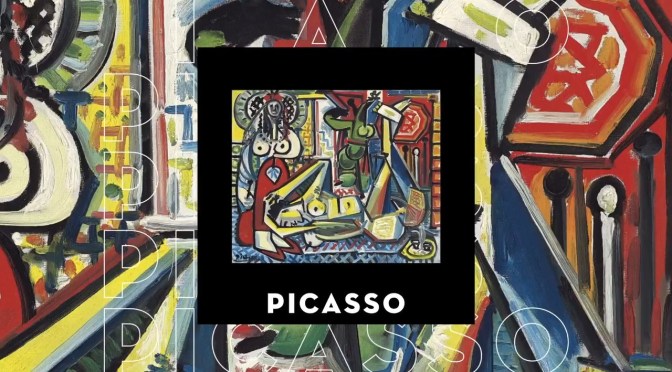
 Between 13 December 1954 and 14 February 1955, Picasso painted a series of fifteen canvases based on Eugène Delacroix’s masterwork Les femmes d’Alger, each of which he assigned an identifying letter from A to O. Together, these paintings constitute Picasso’s single greatest achievement in the decades following the end of the Second World War. They represent his first comprehensive appropriation and thoroughgoing exploration of an important painting by an earlier artist, as well as the most focused analysis he had done since the war years of the female figure set within a specific spatial environment.
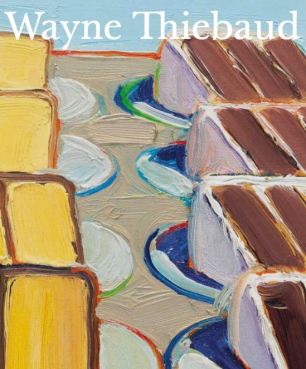 One of the largest canvases from Thiebaud’s groundbreaking early period, it depicts a row of arcade machines, decorated in a vibrant mix of oranges and yellows…With their foreshortened bodies, the machines press towards the picture plane like the cakes and hot dogs in Thiebaud’s other works, inviting the viewer to reach in and taste.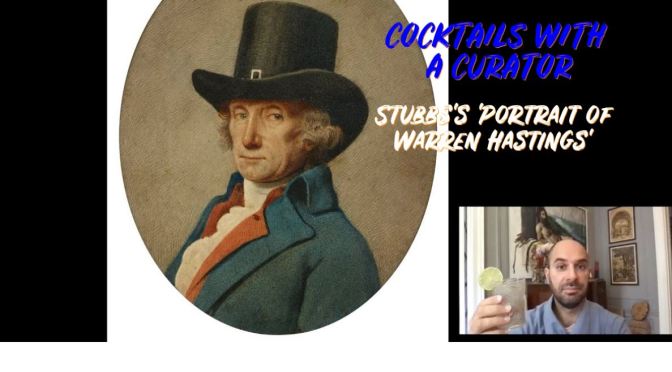
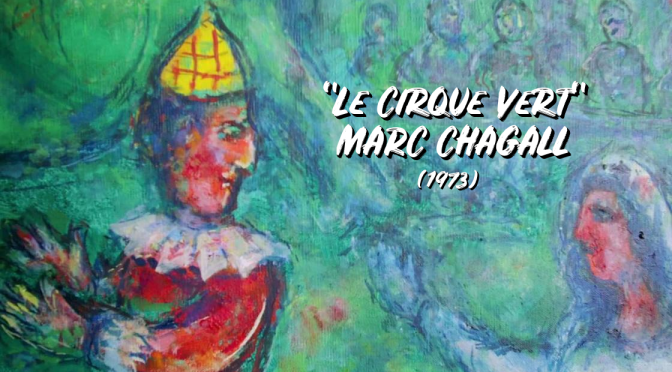
 As a child, Marc Chagall would marvel at the traveling acrobatic troupes that passed through his Village. The animals, dancers and musicians of the circus seemed to conjure a distinct joy that would consistently manifest itself throughout the artist’s career. In this episode of Expert Voices, discover how Chagall was able to uniquely translate this fascination to canvas as Edith Eustis delves into the deep greens and brilliant reds of Marc Chagall’s Le Cirque Vert. Painted in 1973, this work captures the magical allure of the spectacle and incorporates many of the artist’s most iconic motifs. Le Cirque Vert will be offered as a highlight of Sotheby’s Impressionist & Modern Art Evening Sale in New York.
 Boomers Daily