Joining an already impressive collection of Scandinavian art, one of the first French paintings Hansen acquired was Woman with a Fan, Portrait of Madame Marie Hubbard (1874) by Berthe Morisot. This gently ironic work set the tone for his perceptive and adventurous collecting style.
Drawn from the remarkable Ordrupgaard Collection of the Danish insurance broker and art lover Wilhelm Hansen, the masterpieces of 19th-century French painting in this volume represent the very best of French impressionism.
A burst of acquisitions from 1916 to 1918, during which he took advice from the influential critic Théodore Duret, saw his collection grow to include works by Cézanne, Courbet, Gauguin, Manet, Matisse, Monet, Renoir and Sisley.
With stunning reproductions of 60 works, the authors explore the history of the collection and provide detailed analysis of the works themselves.
TEFAF (The European Fine Art Fair) brings together the world’s leading experts across a multitude of disciplines to implement and adhere to TEFAF’s vetting procedures and regulations. This allows TEFAF to create a standard that applies across all of its fairs.
Established in 1988, TEFAF is widely regarded as the world’s pre-eminent organization for fine art, antiques, and design. TEFAF runs three Fairs internationally – TEFAF Maastricht, which covers 7,000 years of art history; TEFAF New York Spring, focused on modern and contemporary art & design; and TEFAF New York Fall, covering fine and decorative art from antiquity to 1920. TEFAF gives international dealers the platform to present museum-quality works of all eras and genres to a broad base of collectors and connoisseurs.
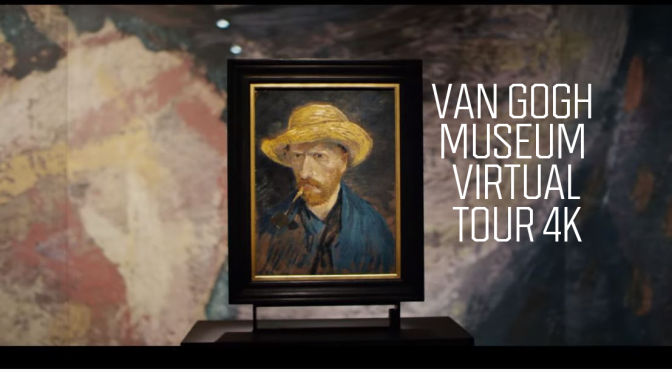
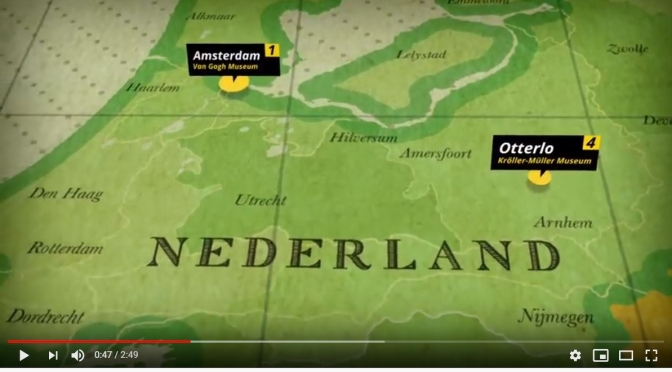
Van Gogh Museum Tour in 4K. Have you always wanted to be alone in the Van Gogh Museum? Step into Vincent’s world and enjoy the private video tour. Episode 3: Van Gogh Museum Amsterdam
Can you imagine a world full of art, instead of adverts? It’s been nearly a month since we took over Piccadilly Circus with nothing but Picasso for a whole half hour, to celebrate our current exhibition ‘Picasso and Paper’. Our friends at Chocolate Films captured it all in this amazing film. Picasso and Paper will be on view at the RA until April 13th, 2020.
In the final years of Georgia O’Keeffe’s nearly century-long life, she employed and befriended the young sculptor Juan Hamilton. The two would become inseparable, and upon her death in 1986, Hamilton inherited fine art and personal affects from the artist’s estate, including rarely seen pieces from the estate of O’Keeffe’s late husband, Joseph Stieglitz.
This March, Sotheby’s is honored to present these works in Alfred Stieglitz, Georgia O’Keeffe, Juan Hamilton: Passage, a dedicated auction in New York on 5 March 2020. In this episode of Expert Voices, Head of American Art Kayla Carlsen explores the stories behind this remarkable collection while highlighting exceptional works, including O’Keeffe’s Nature Forms – Gaspé, Stieglitz’s Hand and Wheel and Hamilton’s Untitled (Red Form).
The British Museum has been collecting artworks made by Japanese Living National Treasures since 2007, but what is a Living National treasure and why are they so important to Japanese Cultural Heritage? In this film Nicole Rousmaniere, research director of SISJAC and Hayashida Hiyaki of the Japan Kōgei Association talk all about the Living National treasures programme and highlight some of the most beautiful pieces of Japanese craftsmanship collected by the Museum.
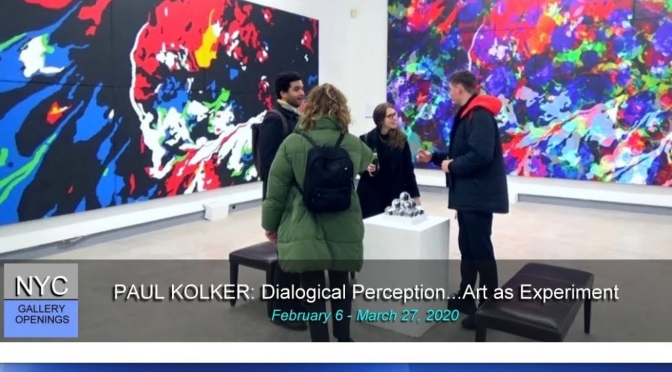
Paul Kolker is pleased to present his seventy-third solo exhibition, Dialogical Perception… Art as Experiment at his studio, the PAUL KOLKER collection, 511 West 25th Street from February 6 through March 27, 2020.
Paul Kolker (b. 1935) is a New York-based artist with doctorate degrees in medicine and law. He began his career of painting and sculpture in the 1960s, illustrating his peer review medical journal articles and life-casting anatomical models. In the 1970s he treated his art production as a post-minimalist experiment questioning experience and using the viewer as the measuring instrument as well as the interpreter of the experiment’s results. Many of his early works are sculptures, each painted in an elemental color, black or white.
In 1975 Kolker developed a keen and hands on understanding of light optics when he purchased a first generation three tube front end television projector with an alignment grid. That grid became the infrastructure for his works, which involved fractionation of a photographic image and the use of modular panels and canvases to create large scale works. In the 1980s Kolker began making light sculptures using one-way mirror and LED message screens, reflecting ad infinitum. In 2001, when he moved into his studio in Chelsea, he created an algorithm for a process of painting minimal shapes, such as a dot or square, in elemental colors (never mixed with each other, but sometimes mixed with black and/or white to form tints and shades). This process is called ‘fracolor’ in attribution to Benoit Mandelbrot’s fractal geometry, wherein minimal shapes and forms are serially replicated, like branches on a tree, rectangles on a grid, or pixels and dots on a television display screen.
As a result, Kolker’s works have become reminiscent of our pixelated world of digital information transfer, as we see it up close as grids of colored dots on our television, computer and cell phone screens; and how more highly defined that screen becomes when viewed from afar. His works are observational experiments which cry out to us, “Because of biases of color, shapes, parallax and perspective relative to where we stand as the observer, a dot may be a universe; and a universe may be a dot.”
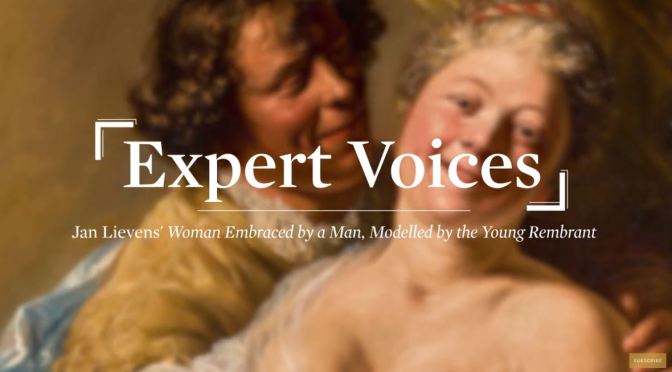
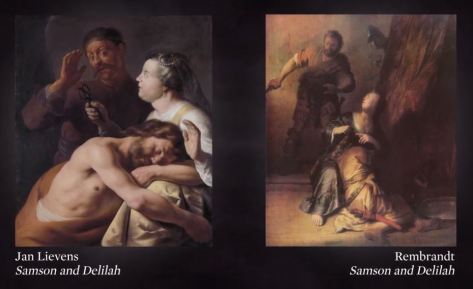
In this episode of Expert Voices, Otto Naumann explores their friendship and budding rivalry through Lievens’ masterwork Woman Embraced by a Man, Modelled by the Young Rembrandt. From the outset of his career, Lievens was at times bolder than Rembrandt, and the two constantly learned from one another during this critical period in their development.
In early 17th century Holland, a young Rembrandt spent his days studying and working with fellow artist Jan Lievens. After apprenticing together in Amsterdam, the two likely shared a studio in their hometown of Leiden and even depicted each other in their compositions.
This signature audacity is on full display in in Woman Embraced by a Man, which will be offered as a highlight of Sotheby’s Master Painting Evening Sale. (29 January | New York)
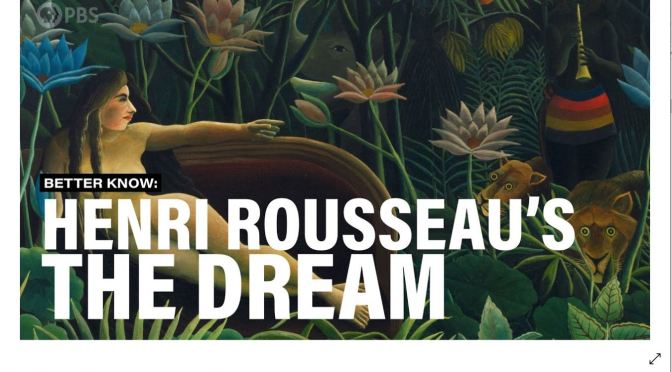
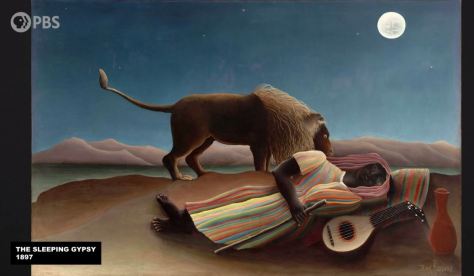
Artist Henri Rousseau painted The Dream in 1910, and it’s imagery of a woman lounging on a sofa in the middle of a jungle was as surreal then as it is today. What is it about this artwork that captivated audiences then and now?
The Sleeping Gypsy 1897 Henri Rousseau
Thanks to our Grandmasters of the Arts Tyler Calvert-Thompson, Divide by Zero Collection, David Golden, and Ernest Wolfe, and all of our patrons, especially Rich Clarey, Iain Eudaily, Frame Monster Design Laboratory, Patrick Hanna, Nichole Hicks, Andrew Huynh, Eve Leonard, David Moore, Gabriel Civita Ramirez, Constance Urist, Nicholas Xu, and Roberta Zaphiriou.
Vincent van Gogh (1853-1890) is one of the world’s most loved artists. His paintings, drawings and letters inspire people of all ages. His work can be admired in numerous museums around the world. Many places where the artist lived and worked can be visited, from the Netherlands to the South of France. About 25 organisations and museums in the Netherlands, Belgium and France have joined forces under the name Van Gogh Europe. Together they are actively engaged in maintaining and promoting Van Gogh’s heritage.

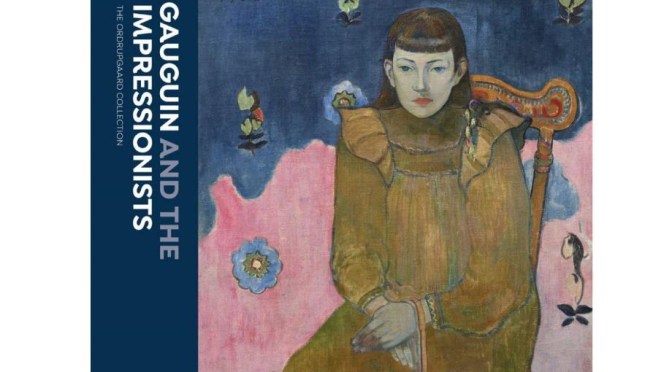
 art lover Wilhelm Hansen, the masterpieces of 19th-century French painting in this volume represent the very best of French impressionism.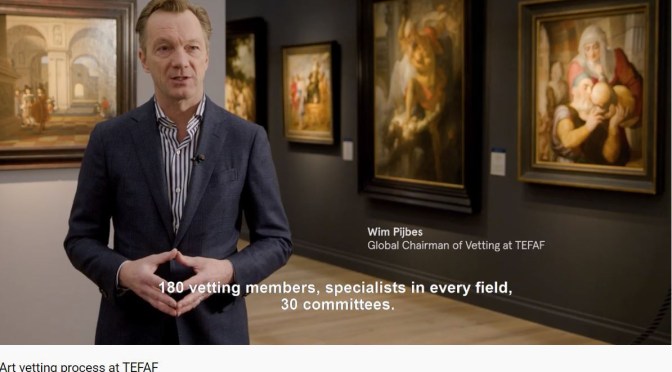

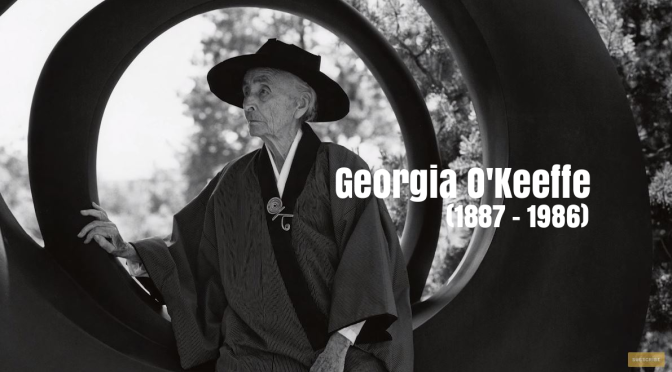
 In the final years of Georgia O’Keeffe’s nearly century-long life, she employed and befriended the young sculptor Juan Hamilton. The two would become inseparable, and upon her death in 1986, Hamilton inherited fine art and personal affects from the artist’s estate, including rarely seen pieces from the estate of O’Keeffe’s late husband, Joseph Stieglitz.
 Vincent van Gogh (1853-1890) is one of the world’s most loved artists. His paintings, drawings and letters inspire people of all ages. His work can be admired in numerous museums around the world. Many places where the artist lived and worked can be visited, from the Netherlands to the South of France. About 25 organisations and museums in the Netherlands, Belgium and France have joined forces under the name Van Gogh Europe. Together they are actively engaged in maintaining and promoting Van Gogh’s heritage.
 Boomers Daily