
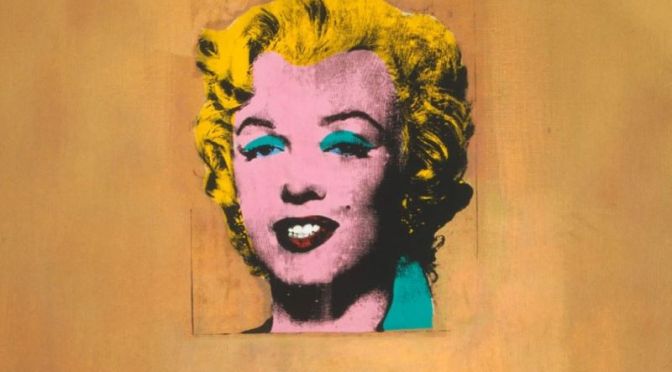
In 1967, Warhol established a print-publishing business, Factory Additions, through which he published a series of screenprint portfolios on his signature subjects. Marilyn Monroe was the first one. He used the same publicity still of the actress that he had previously used for dozens of paintings. Each image here was printed from five screens: one that carried the photographic image and four for different areas of color, sometimes printed off-register. About repetitions Warhol said, “The more you look at the same exact thing, the more the meaning goes away, and the better and emptier you feel.”
Tag Archives: Art History
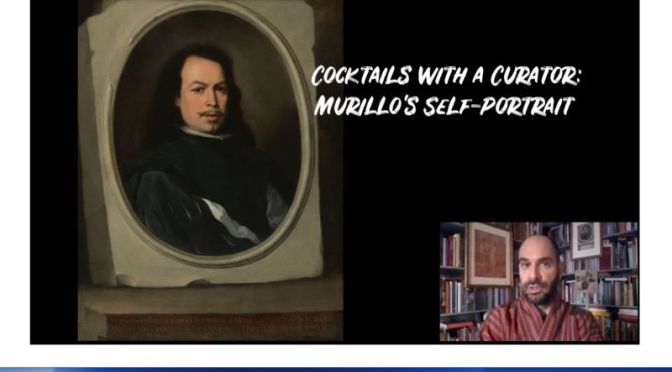
Cocktails With A Curator: ‘Murillo’s Self-Portrait’
In this week’s episode of “Cocktails with a Curator,” delve into the life and times of Bartolomé Esteban Murillo, one of the most celebrated painters of seventeenth-century Spain. Look closely at his self-portrait for clues about the Seville-born artist—a trompe l’oeil stone frame points to his fascination with the antiquities excavated in his hometown, and the sitter seems to be looking forward, into the future, after surviving a traumatic period when Seville was ravaged by plague. Acquired by Henry Clay Frick in 1904, the painting stayed with the family until 2014, when it was gifted to the museum by Dr. and Mrs. Henry Clay Frick II. This week’s complementary cocktail, the Rebujito, conjures the warm spring days of Seville’s Feria de Abril (April Fair) and goes well with Thanksgiving leftovers.
To view this painting in detail, please visit our website: https://www.frick.org/murilloportrait
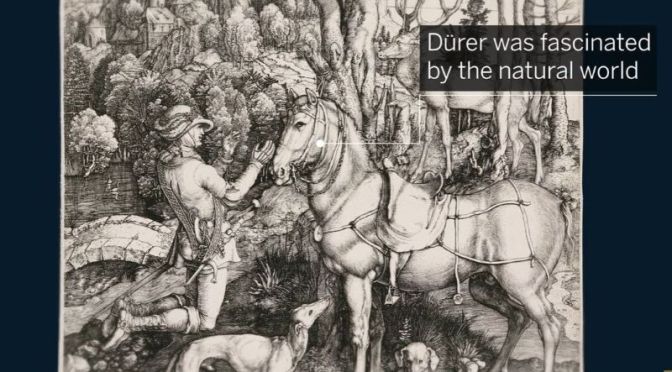
Profile: German Painter & Engraver Albrecht Dürer
‘Saint Eustace’ by Albrecht Dürer depicts the popular medieval legend of a Roman General becoming a saint. In this episode of Anatomy of an Artwork, discover how Dürer captured the intricate detail of the story through the arduous medium of engraving.
Albrecht Dürer (1471 -1528), sometimes spelt in English as Durer or Duerer, was a German painter, printmaker, and theorist of the German Renaissance. Born in Nuremberg, Dürer established his reputation and influence across Europe when he was in his twenties due to his high-quality woodcut prints.
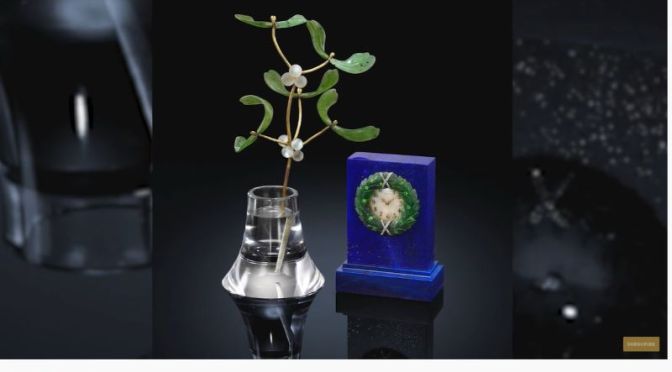
Art & Jewelry: A Brief History Of The ‘House Of FABERGÉ’ (Sotheby’s Video)
Family firm Fabergé was the most powerful and largest jewelry company of its era. In this video, find out how the brand captured the attention of Royal families in Russia and across Europe, and discover works with true imperial provenance, including the Balletta Vase, which is offered as part of Sotheby’s upcoming sale Fabergé and Vertu: Property from the Brooklyn Museum (2 December | London). Other highlights include Fabergé special singular commissions, including a nephrite and moonstone study of mistletoe, a nephrite and diamond dandelion, and intricately carved agate models of a dog, a billy goat and a diamond-eyed cat.
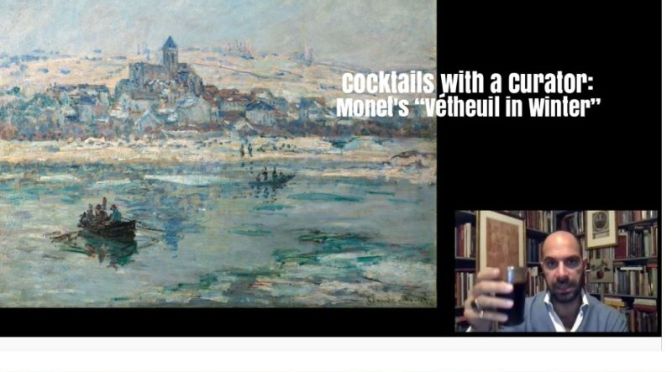
Cocktails With A Curator: Claude Monet’s “Vétheuil in Winter” (Frick Video)
In this week’s episode of “Cocktails with a Curator,” Deputy Director and Peter Jay Sharp Chief Curator Xavier F. Salomon takes viewers through Claude Monet’s journey as an artist, focusing on “Vétheuil in Winter,” one of only four Impressionist paintings at The Frick Collection. Monet created this work during a particularly difficult period in his life, which included his wife’s passing and the bankruptcy of his biggest patron. For Xavier, this canvas signifies the importance of hope, as Monet persevered and went on to complete some of his greatest works in the wake of these challenges. The wintry landscape is paired with a complementary beverage of mulled wine. To view this painting in detail, please visit our website: https://www.frick.org/vetheuilwinter
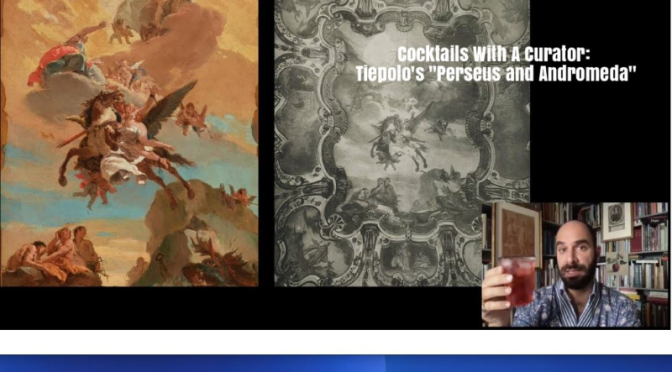
Cocktails With A Curator: Tiepolo’s “Perseus and Andromeda” (Frick Video)
In this week’s episode of “Cocktails with a Curator,” Deputy Director and Peter Jay Sharp Chief Curator Xavier F. Salomon considers the fragility of art in the context of the Frick’s “Perseus and Andromeda” by Giambattista Tiepolo. This depiction of the Greek demigod saving Andromeda from a sea-monster is a preparatory sketch for a series of ceiling frescoes at Palazzo Archinto in Milan that were destroyed during an Allied bombing in 1943. The painting was featured in an acclaimed 2019 exhibition at the Frick that brought together the surviving preparatory works and pre-war photography to tell the story of these lost masterpieces. This week’s complementary cocktail is a Milanese Gin and Tonic.
To view this painting (or object) in detail, please visit our website: https://www.frick.org/perseusandromedaSHOW LESS

Artwork: Claude Monet’s ‘Japanese Footbridge And Water Lily Pool, Giverny’
Often called the Father of Impressionism, Claude Monet inspired the term that defined this movement. Born in Paris, Monet would later live in Giverny, where he purchased a property, planted sprawling gardens, and painted his famous water lilies. https://www.philamuseum.org/collectio…
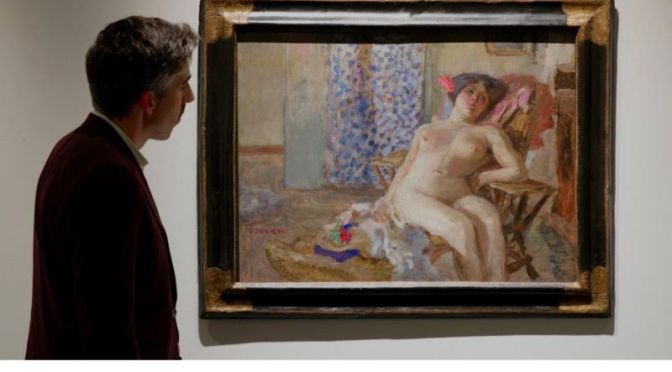
Artist Profile Video: French Painter Pierre Bonnard (1867-1947)
In this episode of Expert Voices, Scott Niichel examines three captivating works by Pierre Bonnard. Bonnard explores variations in colors and light in a way no other artist can; in effect, the artist builds a bridge between Impressionism and Modernism.
Pierre Bonnard was a French painter, illustrator, and printmaker, known especially for the stylized decorative qualities of his paintings and his bold use of color.

Ancient Arts: ‘Lost-Wax Bronze Casting’ (Video)
See the process involved in casting a bronze figure – from the creation of a wax model through to the final sculpture. Find out more about sculpture: https://www.vam.ac.uk/collections/scu…
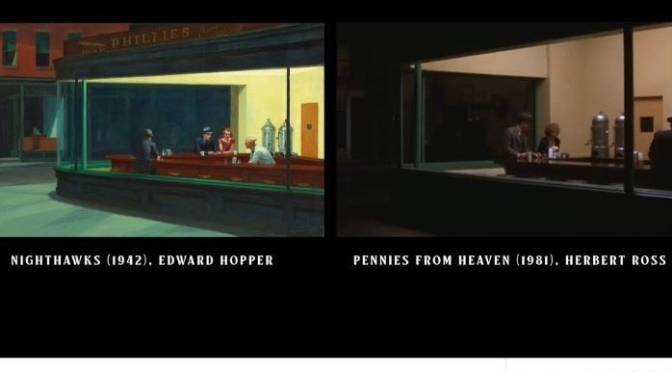
Art & The Movies: Paintings That Inspired Great Films
This video is a visual representation on how film directors create movies or movie scenes influenced by famous paintings.
 Boomers Daily