
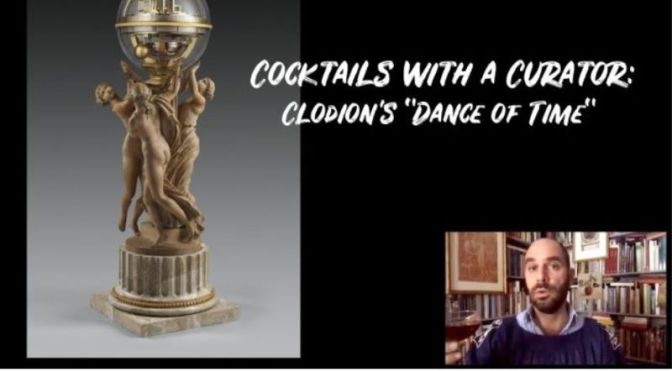
In this week’s episode of “Cocktails with a Curator,” toast the new year with Deputy Director and Peter Jay Sharp Chief Curator Xavier F. Salomon as he examines a masterpiece of both sculpture and clockmaking: “The Dance of Time,” by Clodion (Claude Michel) and Jean-Baptiste Lepaute. In this 18th-century timepiece, three terracotta nymphs or Hours dance in a circle around an exquisite mechanism enclosed in a glass globe. The Frick has one of the country’s most important collections of clocks, many of which came to the museum through a gift from Winthrop Kellogg Edey. Welcome 2021 by raising a Metropolitan cocktail—Happy New Year!
Tag Archives: Art History
Cocktails With A Curator: Bastiani’s “Adoration of the Magi” (The Frick Video)
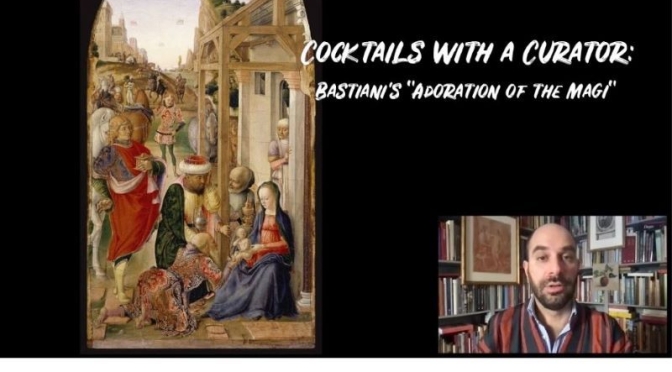
In this week’s episode of “Cocktails with a Curator,” celebrate the Yuletide with Deputy Director and Peter Jay Sharp Chief Curator Xavier F. Salomon as he takes a closer look at Lazzaro Bastiani’s “Adoration of the Magi.” Acquired from Pierpont Morgan’s heirs in 1935—the year The Frick Collection opened to the public—this fascinating picture shows the gift-toting kings on different stages of their journey from Jerusalem to Bethlehem. A contemporary of Giovanni Bellini, Bastiani was considered the artist’s equal at the time and commanded similar prices for his pictures. Explore the work of this magnificent but under-appreciated artist while enjoying a festive Cranberry Bourbon cocktail—Merry Christmas!
Lazzaro Bastiani was an Italian painter of the Renaissance, active mainly in Venice. He was born in Padua. He is first recorded as a painter in Venice by 1460 in a payment for an altarpiece of San Samuele, for the Procuratori di San Marco. In 1462 he was paid at the same rate as Giovanni Bellini.

Art History Video: 1st C. BC Roman Sculpture ‘Boy With Thorn – The Spinario’
Spinario (Boy with Thorn), c. 1st century B.C.E., bronze, 73 cm high (Capitoline Museums, Rome), a conversation with Dr. Steven Zucker and Dr. Beth Harris

Artwork: ‘The Orange Chair, 1944’ By British Painter Cedric Morris
Sir Cedric Lockwood Morris, 9th Baronet was a British artist, art teacher and plantsman. He was born in Swansea in South Wales, but worked mainly in East Anglia. As an artist he is best known for his portraits, flower paintings and landscapes
Art: ‘Beyond The Surface’ – Monet’s “Changing Light”
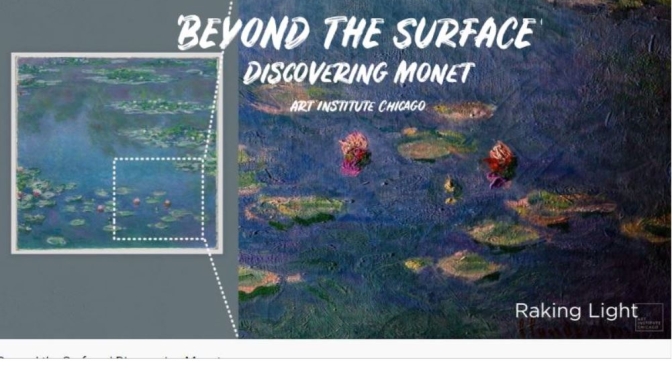
This video takes an in-depth look at Monet’s approach to painting in series, an approach that consumed his later years. From stacks of wheat in the French countryside to sites of foggy London to water lilies at his home garden in Giverny, Monet painted beloved subjects again and again, depicting changing light and atmospheric conditions in works that captivate us still today. New scientific discoveries, however, reveal that Monet’s genius goes well beyond what we see on the surface.
Cocktails With A Curator: Vermeer’s “Mistress And Maid” (The Frick Video)
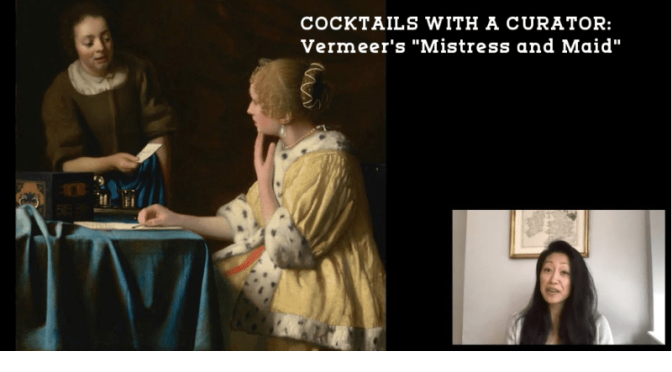
In this week’s episode of “Cocktails with a Curator,” Curator Aimee Ng pulls back the curtain on hidden details in “Mistress and Maid,” the largest of the Frick’s three Vermeer paintings and Henry Clay Frick’s final acquisition for his collection. Take a closer look at the rumpled tablecloth, the lady’s wispy curls, and the dark background to understand how this mysterious work has changed since Vermeer applied paint to canvas in the mid-17th century. For this week’s complementary cocktail, the Genever Brûlée, Aimee has dipped into the bottle of genever she featured in her summer episode on Vermeer’s “Officer and Laughing Girl.”
To view this painting in detail, please visit our website: https://www.frick.org/mistressmaid

Art History: Jacqueline Roque – “Picasso’s Great Love, Wife & Muse” (Video)
In this episode of Expert Voices, Brooke Lampley describes Pablo Picasso’s remarkable love affair with Jacqueline Roque. A classically beautiful portrayal, Picasso married Rocque in 1961 – leading her to be an omnipresent constant in his life.
Painting: Buste de femme assise

Art: Michelangelo’s Sculpture ‘David’ & The Republic Of Florence
Michelangelo, David, 1501–04, marble, 17 feet high (The Galleria dell’Accademia, Florence), a conversation with Dr. Steven Zucker and Dr. Beth Harris.
This astonishing Renaissance sculpture was created between 1501 and 1504. It is a 14.0 ft marble statue depicting the Biblical hero David, represented as a standing male nude. Originally commissioned by the Opera del Duomo for the Cathedral of Florence, it was meant to be one of a series of large statues to be positioned in the niches of the cathedral’s tribunes, way up at about 80mt from the ground. Michelangelo was asked by the consuls of the Board to complete an unfinished project begun in 1464 by Agostino di Duccio and later carried on by Antonio Rossellino in 1475. Both sculptors had in the end rejected an enormous block of marble due to the presence of too many “taroli”, or imperfections, which may have threatened the stability of such a huge statue. This block of marble of exceptional dimensions remained therefore neglected for 25 years, lying within the courtyard of the Opera del Duomo (Vestry Board).
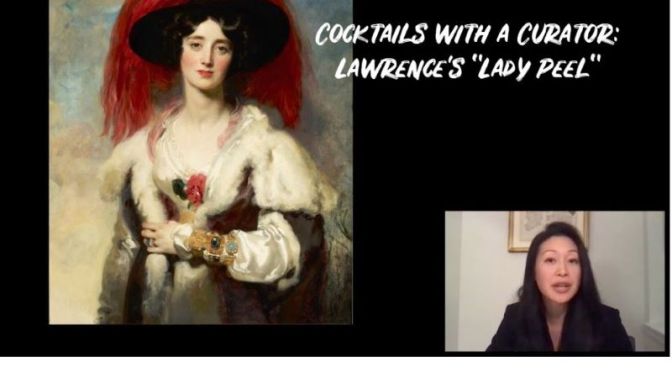
Cocktails With A Curator: Lawrence’s ‘Lady Peel’
In this week’s episode of “Cocktails with a Curator,” Curator Aimee Ng explores the history behind Sir Thomas Lawrence’s celebrated portrait of Julia, Lady Peel. When it was shown at the Royal Academy, in 1827, this painting was hailed as Sir Thomas’s greatest portrait—and one of the great works of modern art at the time.
It’s easy to see why: the sitter projects authority, confidence, and ease despite her flamboyant, over-the-top outfit. Sir Thomas’s depiction of Lady Peel is closely related to Peter Paul Rubens’s famous “Chapeau de Paille,” which had recently entered the collection of her husband, Sir Robert Peel. In recognition of the lavish bracelets and rings worn by the sitter, this week’s complementary cocktail is the Bijou (French for “jewel”).
To view this painting in detail, please visit our website: https://www.frick.org/ladypeel
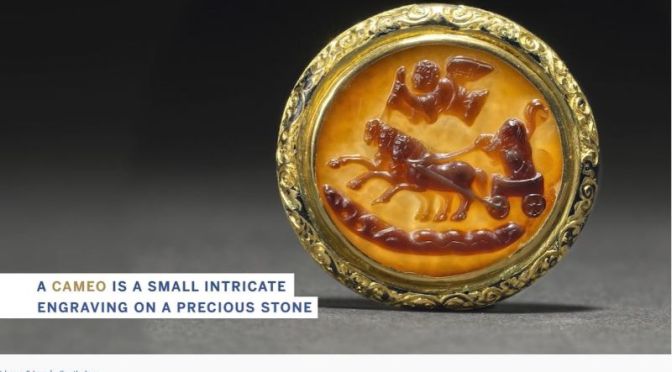
Art & Jewelry: The Ancient Engraving Of The ‘Cameo’
This intricately delicate cameo features a very detailed story of the prophet Elijah ascending to heaven. In this episode of Sotheby’s Stories, discover how this delightful miniature work of art is part of a very small group of rare cameos which feature Hebrew inscriptions. Learn how it was crafted by Jewish artisans in the court of a 13th century Holy Roman Emperor.
 Boomers Daily