“A Mind Sang” is a Cinematic Visual Poem Animated Short Film Directed by Vier Nev.
Directed and animated by Vier Nev
ORIGINAL MUSIC | Yanis El-Masri
SOUND EFFECTS | Francisca Dores, Henrik Ferrara
SOUND TEAM MANAGER | Francisca Dores
RECORDING / SOUND PRODUCTION | Guilherme Correia
MUSIC ASSISTANT/RECORDING ASSISTANT | Miguel Serrão
A short film about perception, rebirth and transformation.
“A Mind Sang” is the winner of the Vimeo Staff Pick Award at the 2020 Annecy International Animation Film Festival.
Monocle Films and LG Signature are featuring a five-part “The art of hosting” series.
Setting the mood for an evening of drinks and dinner is best achieved through the careful lighting of one’s surroundings. Javier Marset – co-owner of Catalan lighting company, Marset – favours the low glow of directional illumination and a casual atmosphere to put guests at ease when visiting his modern retreat in the mountains.
The first step in hosting is putting together a guest list: a delicate operation that requires diplomacy and some social engineering. Daphné Hézard, founder and editor in chief of Regain magazine – a French journal about countryside, agriculture and farming – takes an editorial approach by drawing up a large list and whittling it down to an ideal collection of diverse personalities.
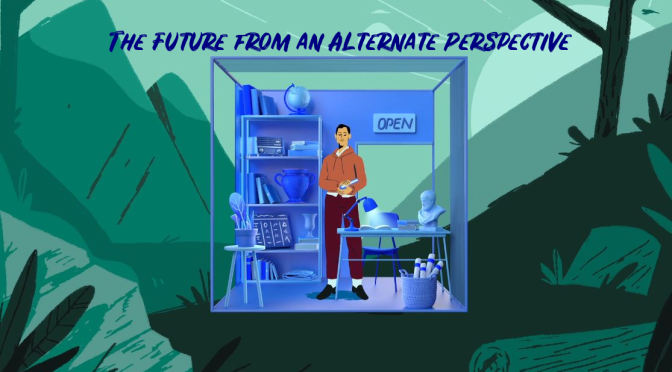
The story follows our main character Luis as he tries to clearly explain the complexities and nuances of ‘language’, and the challenges of teaching AI to thoroughly understand it.
A massive project, an incredibly talented team, and a little bit of luck to get to the finish line. So thankful to my fellow artists and friends who helped pull this off.
Client: Microsoft
Agency: Trifilm
Creative Director: Mia Vyzis
Producer: Corey Lovett
Animation Director: Reece Parker
Art Director: Reece Parker
Illustration: Tom Goyon, Millie Woodcock, Reece Parker
Character Animation Lead: Khylin Woodrow
Cel: Khylin Woodrow, TJ Peters, Mathijs Luijten, Adam Henderson, Reece Parker, Salvador Padilla, Nata Metlukh
2D Animation: Matt Jameson, TJ Peters, Mathijs Luijten, Manuel Neto, Reece Parker
3D modeling/Animation: Billy Chitkin, Nocky Dinh
Editing/composite: Bruce Stead, Matt Jameson, Mathijs Luitjen, Manuel Neto, Tj Peters
Sound design: Ambrose Yu
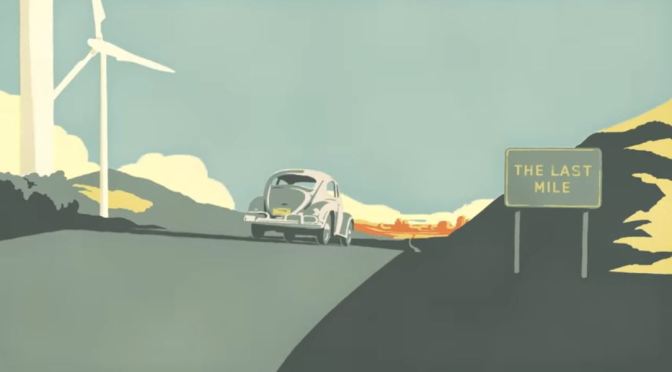
After 70 years, the Volkswagen Beetle is retiring. Say g(o\!/o)dbye with Ren McCormack, Kevin Bacon, Andy Warhol, and Andy Cohen as the little bug drives its last mile. #TheLastMile
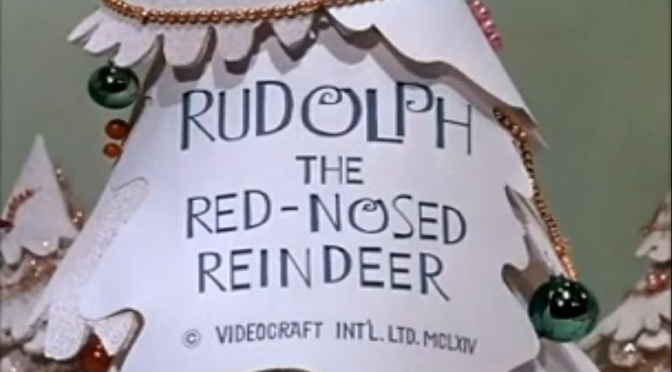
Reindeer and dentists, puppets and LED light bulbs, Gene Autry and General Electric—these odd pairings might not seem to have much in common. But each played an important role in the making of Rudolph the Red-Nosed Reindeer, a classic Christmas special currently celebrating its 55th straight year of annual reruns. Before Rudolph lit up the small screen, a series of tragedies, twists of fortune and lucky coincidences allowed his tale to endure through decades—eventually ensuring a place in holiday tradition.
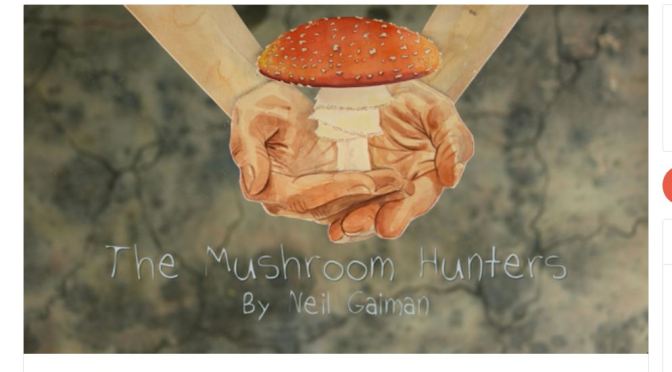
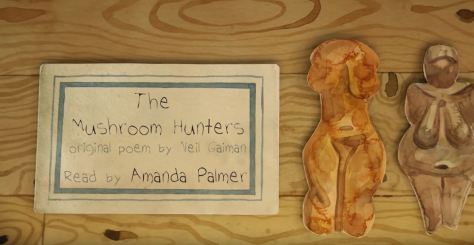
“The Mushroom Hunters” is a Cinematic Poem Short Film With Original Poem Written By Neil Gaiman, Directed By Caroline Rudge.
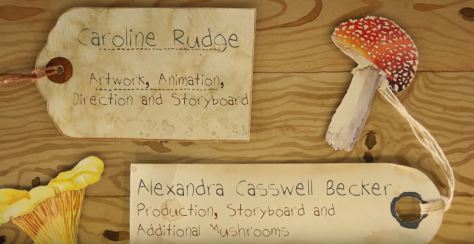
Artwork, Animation, Direction and Storyboard by: Caroline Rudge
Production, Storyboard and Additional Mushrooms: Alexandra Casswell Becker
Editing and Special Effects: Dann Casswell
The Mushroom Hunters Original Poem by: Neil Gaiman
Read by: Amanda Palmer
Bass, Percussion, Vibraphone, Piano and Original Score by: Jherek Bischoff
Cello: Aniela Marie Perry
Violin: Paris Hurley
Viola: Marta Sofia Honer
Recorded, Mixed and Mastered by Jherek Bischoff at Sweethaven
THE MUSHROOM HUNTERS by Neil Gaiman
Science, as you know, my little one, is the study of the nature and behaviour of the universe. It’s based on observation, on experiment, and measurement, and the formulation of laws to describe the facts revealed.
In the old times, they say, the men came already fitted with brains designed to follow flesh-beasts at a run, to hurdle blindly into the unknown, and then to find their way back home when lost with a slain antelope to carry between them. Or, on bad hunting days, nothing.
The women, who did not need to run down prey, had brains that spotted landmarks and made paths between them left at the thorn bush and across the scree and look down in the bole of the half-fallen tree, because sometimes there are mushrooms.
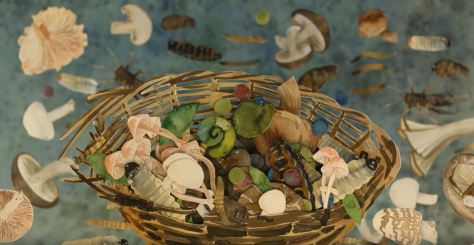
Before the flint club, or flint butcher’s tools, The first tool of all was a sling for the baby to keep our hands free and something to put the berries and the mushrooms in, the roots and the good leaves, the seeds and the crawlers. Then a flint pestle to smash, to crush, to grind or break.
And sometimes men chased the beasts into the deep woods, and never came back.
Some mushrooms will kill you, while some will show you gods and some will feed the hunger in our bellies. Identify. Others will kill us if we eat them raw, and kill us again if we cook them once, but if we boil them up in spring water, and pour the water away, and then boil them once more, and pour the water away, only then can we eat them safely. Observe.
Observe childbirth, measure the swell of bellies and the shape of breasts, and through experience discover how to bring babies safely into the world.
Observe everything.
And the mushroom hunters walk the ways they walk and watch the world, and see what they observe. And some of them would thrive and lick their lips, While others clutched their stomachs and expired. So laws are made and handed down on what is safe. Formulate.
The tools we make to build our lives: our clothes, our food, our path home… all these things we base on observation, on experiment, on measurement, on truth.
And science, you remember, is the study of the nature and behaviour of the universe, based on observation, experiment, and measurement, and the formulation of laws to describe these facts.
The race continues. An early scientist drew beasts upon the walls of caves to show her children, now all fat on mushrooms and on berries, what would be safe to hunt.
The men go running on after beasts.
The scientists walk more slowly, over to the brow of the hill and down to the water’s edge and past the place where the red clay runs. They are carrying their babies in the slings they made, freeing their hands to pick the mushrooms.
This poem was written by Neil Gaiman and read by Amanda Palmer for Maria Popova’s “The Universe In Verse” event in 2017 (you can read about that here: https://www.brainpickings.org/2017/04…).
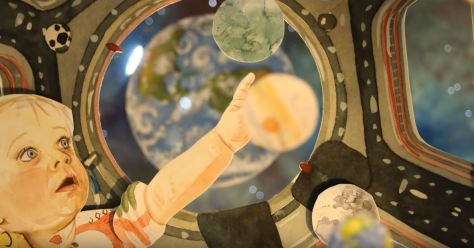
The brilliant team at creative connection in the UK hand-drew this animated video to accompany the poem, and the music was composed and recorded by jherek bischoff. read about the making of this whole film on patreon: https://www.patreon.com/posts/31517040
Producers – Nicolas de Rosanbo and Carole Lambert
Scriptwriter – Julien Lilti
Editer – Benjamin Massoubre and Vincent Tricon
Sound designer – Xavier Dreyfuss
Line Producer – Céline Vanlint
Original score by Ali Helnwein
With the voices of :
John Fitch – Nathan Willcocks
Alfred Neubauer – Joe Sheridan
Pierre Levegh – Nicholas Mead
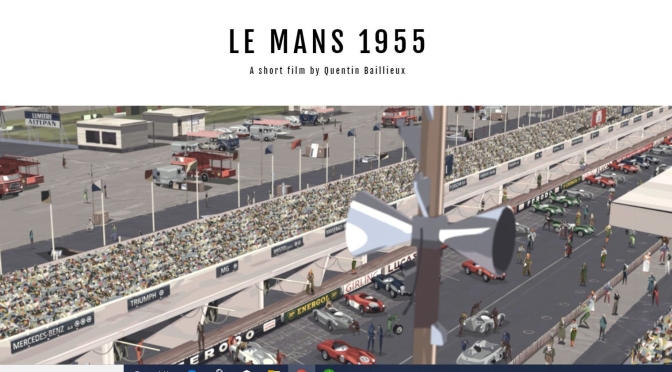
This film was inspired by a 1950s racing car exhibition I visited at the Louvre. I was struck by the beauty of the exhibited sports cars, especially a Jaguar which had competed in 1955 at Le Mans. I began researching the that event and two very contradictory photos appeared next to one another on my screen.
On one side, the image of a tragedy : people in a panic, a blazing inferno behind them. Bodies were sprawled across the stadium. The photo beside it depicted delighted drivers celebrating their victory with champagne.
Original Music and Sound Design: Ambrose Yu
Executive Producer: Soo-Jeong Kang
Senior Producer: Yara Bishara
Senior Editor: Brian Redondo
Producer: Sara Joe Wolansky
Audio Engineer: Jill Du Boff
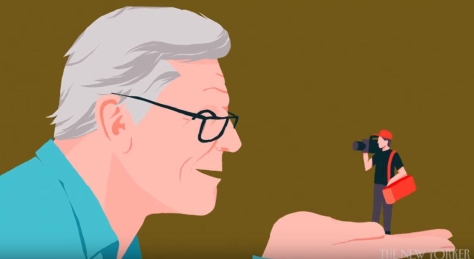
“I was recently commissioned by The New Yorker to direct, design, and animate a pilot series of three animated visual essays.
“I know there’s a spiritual aspect to everybody’s life, whether they want to cop to it or not,” he said at one point. “It’s there, you can feel it in people—there’s some recognition that there is a reality that they cannot penetrate but which influences their mood and activity. So that’s operating. . . . Sometimes it’s just, like, ‘You are losing too much weight, Leonard. You’re dying, but you don’t have to coöperate enthusiastically with the process.’ Force yourself to have a sandwich.”
Leonard Cohen (1934 – 2016)
The first film features the great Leonard Cohen as he reflects on death and preparing for the end. The initial interview, by David Remnick, was recorded at Cohen’s home in Los Angeles a month before he passed away.”






 Boomers Daily