
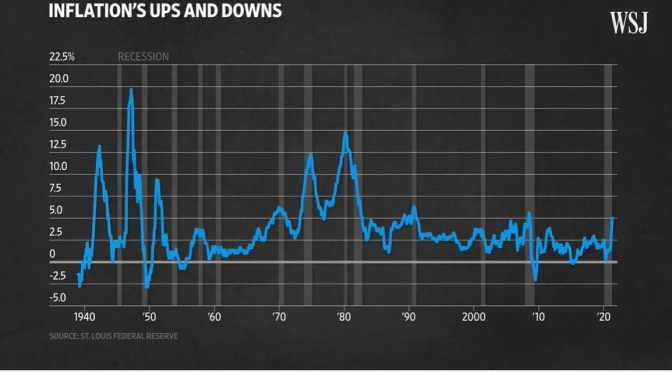
Recently, the U.S. inflation rate reached a 13-year high, triggering a debate about whether the country is entering an inflationary period similar to the 1970s. WSJ’s Jon Hilsenrath looks at what consumers can expect next. Photo: Alexander Hotz
Tag Archives: Analysis
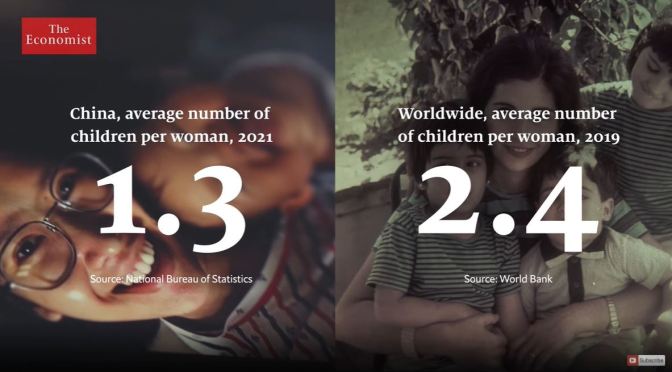
Analysis: China’s Shrinking Working-Age Population
The number of working-age people in China is shrinking. Could this threaten the country’s rise as an economic superpower? Read more here: https://econ.st/3dgzqz0

Tech View: Microsoft CEO Nadella On Windows 11
Windows 11, due out later this year, is full of new features, including a new Start menu that’s been moved to the center and a Microsoft Store with Android apps. In an exclusive interview, WSJ’s Joanna Stern spoke with Microsoft CEO Satya Nadella about the software, the influence of the pandemic and his strategy of competing with Google and Apple. Photo illustration: Alex Kuzoian/The Wall Street Journal

Sports Business: The High Cost Of Hosting Olympics
In 2018, the Rio games were estimated to have a total cost of $20 billion, far beyond the Rio organizing committee’s initial estimate of $2.8 billion. The city of Rio shelled out $8.2 billion on legacy builds, or builds intended to live well beyond the Olympic’s three-week life-cycle. Cities incurring overrun costs when hosting the Olympics is not just unique to just Rio; according to the Council on Foreign Relations, since 1960, every Olympics saw high overrun costs. As overrun costs become a growing concern, several cities withdrew their 2022 winter Olympic bids in 2014, citing the potential costs. The International Olympic Committee (IOC) enacted the Olympic Agenda 2020 in 2014; the agenda provided new regulations specifically to mitigate cost concerns. However, the IOC was faced with another challenge: hosting the Tokyo Olympics amid the Covid-19 pandemic.

Political Analysis: How To Stop Ransomware, U.S. -Russia & Working At Home
A selection of three essential articles read aloud from the latest issue of The Economist. This week: how to stop the ransomware pandemic, America and Russia return to traditional great-power diplomacy (10:15) and picking the best days to work from home (19:20).
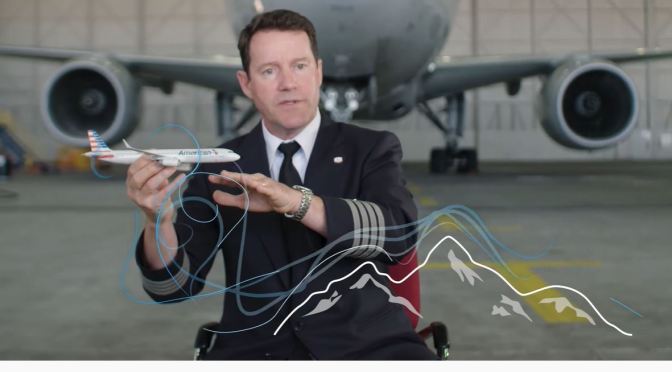
Air Travel: A Veteran Pilot Explains Turbulence (WSJ)
After decades of flying, pilot Stuart Walker says turbulence isn’t entirely predictable. But there are different types of turbulence pilots watch for. Walker explains each one and what pilots do to avoid a bumpy ride. Illustration: Alex Kuzoian for The Wall Street Journal

Dining: Opening Up New Restaurants In London
The coronavirus pandemic has been catastrophic for the hospitality industry and the delay to the June 21 unlocking has led to more uncertainty. The FT’s Daniel Garrahan and food critic Tim Hayward meet Harts Group, the business behind Soho institution Quo Vadis and tapas chain Barrafina, as it opens a new Soho branch of its El Pastor taquerias
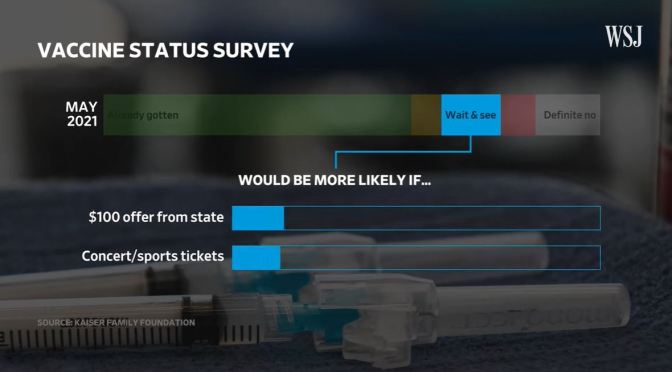
Covid-19: Are Vaccine Incentives Paying Off?
Across the country, states are shelling out incentives ranging from free beer to $1 million lotteries to encourage residents to get their Covid-19 shots. But is the effort to boost vaccination rates working? And is it worth the cost? Photo composite: Adam Falk/The Wall Street Journal
VW: Engine Factories Turn Into EV Battery Plants
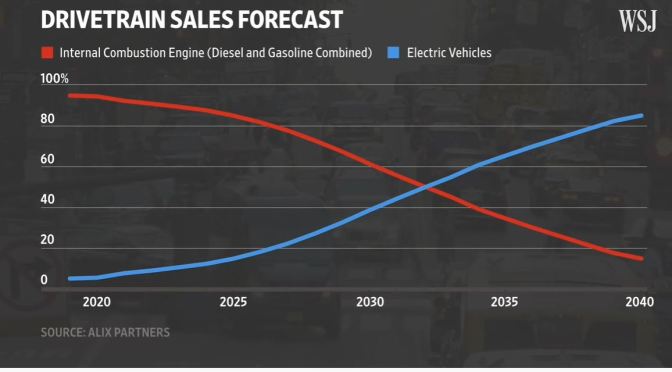
Volkswagen is investing in electric vehicles more than other legacy car makers in the U.S. WSJ goes inside an engine factory that is being transformed into a battery plant as the German giant looks to change its image and become a rival to Tesla. Photo illustration: George Downs
Analysis: U.S. Newspapers Owned By Hedge Funds
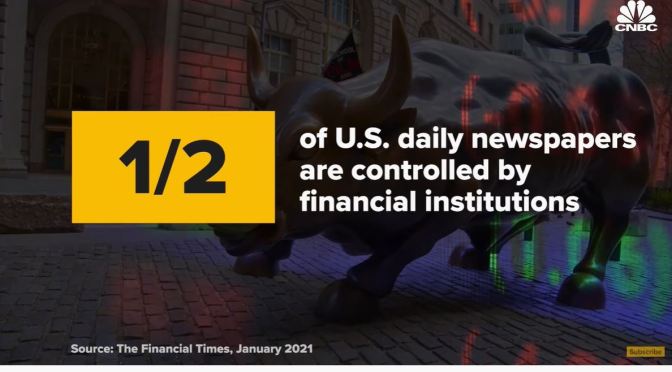
As Covid-19 ran rampant across the United States in 2020, local newsrooms across the country cut back—even as they covered the biggest story in decades. “As far as readers, we saw that skyrocket during the pandemic,” Emma Way, editor at Axios Charlotte, told CNBC. “So at the same time that revenue was falling, readers were spiking. It was kind of this dilemma that I’m sure a lot of news organizations faced.” Reporters were laid off and furloughed. Some who stayed were offered buyouts. It was a catastrophic and uncertain time for American newsrooms. During the pandemic, more than 70 local newsrooms closed across the country. This includes newspapers that have served their communities for decades. Often, these papers are shut with little notice. But the problem existed long before the pandemic. Since 2004, about 1,800 U.S. newspapers have closed. Newspapers have struggled to make money with the collapse of print advertising as readership moved online. Then, the digital advertising market quickly became dominated by tech companies like Google and Facebook. Today, some of the largest newspaper groups in the country —such as Tribune, McClatchy and Media News Group — are owned, controlled by or in debt to hedge funds or private equity groups. In fact, hedge funds and other financial firms control half of the daily newspapers in the United States, according to a recent analysis by the Financial Times.
 Boomers Daily