Tag Archives: Africa

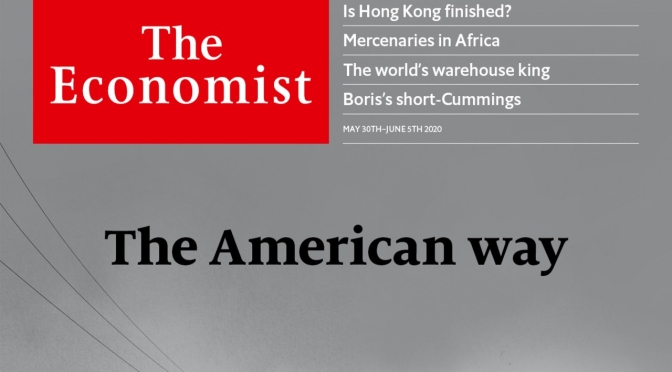
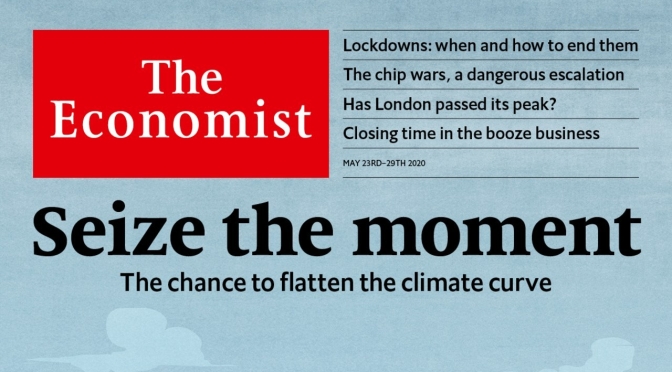
Podcasts: How Foreign Governments Are Facing Covid-19 (The Economist)

A selection of essential articles read aloud from the latest issue of The Economist. This week, the role of big government in the time of covid-19, (10:20) assessing the havoc the pandemic is causing in emerging countries, (17:45).

In just a few weeks a virus a ten-thousandth of a millimetre in diameter has transformed Western democracies. States have shut down businesses and sealed people indoors. They have promised trillions of dollars to keep the economy on life support. If South Korea and Singapore are a guide, medical and electronic privacy are about to be cast aside. It is the most dramatic extension of state power since the second world war.

Read article

Book Interviews: “Out Of Darkness, Shining Light” Author Petina Gappah

BBC Radio 4 Books and AuthorsBBC Radio 4 speaks to Petina Gappah on her new book, “Out of Darkness, Shining Light”.


“This is how we carried out of Africa the poor broken body of Bwana Daudi, the Doctor, David Livingstone, so that he could be borne across the sea and buried in his own land.” 

Petina Gappah Author
Author Petina Gappah

So begins Petina Gappah’s powerful novel of exploration and adventure in nineteenth-century Africa—the captivating story of the loyal men and women who carried explorer and missionary Dr. Livingstone’s body, his papers and maps, fifteen hundred miles across the continent of Africa, so his remains could be returned home to England and his work preserved there.

Narrated by Halima, the doctor’s sharp-tongued cook, and Jacob Wainwright, a rigidly pious freed slave, this is a story that encompasses all of the hypocrisy of slavery and colonization—the hypocrisy at the core of the human heart—while celebrating resilience, loyalty, and love.

Purchase book

Archaeology: “Blombos Cave”, South Africa – First Human “Technological Innovations” (Video)

See the first laboratory on Earth – Blombos Cave. Here our ancestors conducted the first chemistry experiments.

Blombos Cave is an archaeological site located in Blomboschfontein Nature Reserve, about 300 km east of Cape Town on the Southern Cape coastline, South Africa. The cave contains Middle Stone Age (MSA) deposits currently dated at between c. 100,000 and 70,000 years Before Present (BP), and a Late Stone Age sequence dated at between 2000 and 300 years BP. The cave site was first excavated in 1991 and field work has been conducted there on a regular basis since 1997, and is ongoing.

The excavations at Blombos Cave have yielded important new information on the behavioural evolution of anatomically modern humans. The archaeological record from this cave site has been central in the ongoing debate on the cognitive and cultural origin of early humans and to the current understanding of when and where key behavioural innovations emerged among Homo sapiens in southern Africa during the Late Pleistocene. Archaeological material and faunal remains recovered from the Middle Stone Age phase in Blombos Cave – dated to ca. 100,000–70,000 years BP – are considered to represent greater ecological niche adaptation, a more diverse set of subsistence and procurements strategies, adoption of multi-step technology and manufacture of composite tools, stylistic elaboration, increased economic and social organisation and occurrence of symbolically mediated behaviour.

The most informative archaeological material from Blombos Cave includes engraved ochre, engraved bone ochre processing kits, marine shell beads, refined bone and stone tools and a broad range of terrestrial and marine faunal remains, including shellfish, birds, tortoise and ostrich egg shell and mammals of various sizes.[20][21][22] These findings, together with subsequent re-analysis and excavation of other Middle Stone Age sites in southern Africa, have resulted in a paradigm shift with regard to the understanding of the timing and location of the development of modern human behaviour.

From Wikipedia

New Wildlife Videos: “The World Without Giraffes” – Can We Save Them?

Since time immemorial, giraffes have captivated the human imagination. Yet the total giraffe population has fallen 30 percent in the past few decades, and very few people have seemed to notice. “Giraffes are all over the place in popular culture,” says the Atlantic staff writer Ed Yong. “I think because of that, we forget that, actually, they are endangered.” In a new episode of The Idea File, Yong explains why it’s crucial to channel our reverence for these beloved animals into tangible conservation efforts.


Travel Videos: “Namibia” By Marcello Ercole (2020)

Directed, Filmed, Edited by: Marcello Ercole

Produced by Ercole / Ricci
Music by Ryan Taubert

Namibia, a suggestive country. Eroded cliffs by the wind, very deep canyons, boundless deserts, the cold ocean and wild animals makes Namibia an inhospitable and sublime land. A fragile ecosystem that we must preserve.

Website

Namibia officially the Republic of Namibia, is a country in Southern Africa. Its western border is the Atlantic Ocean; it shares land borders with Zambia and Angola to the north, Botswana to the east and South Africa to the south and east. Although it does not border Zimbabwe, less than 200 metres of the Zambezi River separates the two countries. Namibia gained independence from South Africa on 21 March 1990, following the Namibian War of Independence. Its capital and largest city is Windhoek, and it is a member state of the United Nations (UN), the Southern African Development Community (SADC), the African Union (AU), and the Commonwealth of Nations.

Namibia, the driest country in Sub-Saharan Africa, was inhabited since early times by the San, Damara and Nama people. Around the 14th century, immigrating Bantu peoples arrived as part of the Bantu expansion. Since then, the Bantu groups, the largest being the Ovambo, have dominated the population of the country; since the late 19th century, they have constituted a majority.

From Wikipedia

Great Scenes In Cinema: “Soaring Over Kenya” From “Out Of Africa” (1985)

Denys Finch (Robert Redford) takes Karen Blixen (Meryl Streep) flying over Kenya’s Great Rift Valley in his Gipsy Moth biplane in this breathtaking sequence from Out of Africa, winner of seven Academy Awards including Best Picture.

The most acclaimed motion picture of 1985 stars Robert Redford and Meryl Streep in one of the screen’s great epic romances. Directed by Oscar® winner Sydney Pollack, Out of Africa is the fascinating true story of Karen Blixen, a strong-willed woman who, with her philandering husband (Klaus Maria Brandauer), runs a coffee plantation in Kenya, circa 1914. To her astonishment, she soon discovers herself falling in love with the land, its people and a mysterious white hunter (Redford). The masterfully crafted, breathtakingly produced story of love and loss earned Oscars® for Best Picture, Director, Screenplay (based on material from another medium), Cinematography, Original Score, Art Direction (Set Decoration) and Sound.

Cast: Meryl Streep, Robert Redford, Klaus Maria Brandauer, Michael Kitchen, Malick Bowens, Michael Gough, Suzanna Hamilton, Rachel Kempson, Graham Crowden, Leslie Phillips, Shane Rimmer

Produced By: Kim Jorgensen, Sydney Pollack

Directed By: Sydney Pollack

Science Podcasts: Low-Cost Cryo-Electron Microscopes & Genetic Roots Of Schizophrenia

Science Magazine PodcastsStructural biologists rejoiced when cryo–electron microscopy, a technique to generate highly detailed models of biomolecules, emerged. But years after its release, researchers still face long queues to access these machines. Science’s European News Editor Eric Hand walks host Meagan Cantwell through the journey of a group of researchers to create a cheaper, more accessible alternative.

Cryo-Electron Microscopes

Also this week, host Joel Goldberg speaks with psychiatrist and researcher Goodman Sibeko, who worked with the Xhosa people of South Africa to help illuminate genetic details of schizophrenia. Though scientists have examined this subject among Western populations, much less is known about the underlying genetics of people native to Africa.

Website

History: “Discovering Ancient Nubia: Kings and Pyramids in the Sudan”

Take a close look at the tombs of the Napatan kings who conquered and ruled Egypt from the late 8th century to 666 BCE, using objects that the MFA excavated from 1913 to 1932 with archeologist George Reisner.

MFA Museum of Fine Arts Boston logoNapatan kings later held sway over the kingdom of Kush in the northern Sudan, and built pyramids for themselves and their wives in cemeteries at Kurru and Napata. Studying these lavishly decorated pyramids, and the mortuary rites that took place in the attached chapels, makes clear some of the differences between ancient Egyptian and Napatan beliefs and priorities.

Susan K. Doll, Nubian scholar

Wednesday, October 30, 2019

Top New Travel Videos: “SESEL SA – These Are The Seychelles” (2020)

Filmed and Edited by: Dennis Schmelz

Mother Nature was unbelievably generous with the Seychelles, a fabled paradise whose islands lie scattered across the Indian Ocean. Spellbinding beaches are the main attraction, and what beaches. Exquisite ribbons of sand lapped by turquoise waters and backed by lush hills, palm trees and Dali-esque boulders.

SESEL SA - These are the Seychelles travel video by Dennis Schmelz January 20 2020

Beyond the beach, diving and snorkelling are brilliant in the warm waters amid abundant marine life, while few places on the planet do ocean-side luxury quite like the Seychelles. Mahé is the largest island and entry point to the Seychelles, with some fabulous resorts, restaurants and beaches, not to mention the small capital city of Victoria. But it’s also the busiest island, with glorious Praslin and La Digue a short boat ride away. Even further out, there are real lost-world islands to be found.

SESEL SA - These are the Seychelles travel video by Dennis Schmelz January 20 2020

2nd Camera & Timelapses: Gloria Regonesi & Lau Fong Sung
Editing, Grading & Sounddesign: Dennis Schmelz

Music: Pioneers by Spencer Wilson & Jamie Elder

Website