

Dundurn Castle is a historic neoclassical mansion on York Boulevard in Hamilton, Ontario, Canada. This Canada historic and beautiful castle was completed in 1835. The forty room castle featured the latest conveniences of gas lighting and running water. It is currently owned by the City of Hamilton. The rooms have been restored to the year 1855 when its owner Sir Allan Napier MacNab, 1st Baronet, was at the height of his career.
Tag Archives: 19th Century
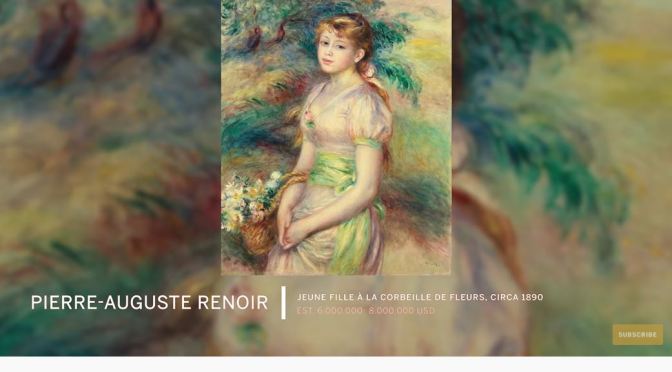
Art History: Auguste Renoir’s ‘Jeune Fille’
In this video, join Thomas Boyd-Bowman in an exploration of Pierre-Auguste Renoir’s Jeune fille à la corbeille de fleurs, a highlight of Sotheby’s Modern Art Evening Auction in November. Painted at one of the finest moments in Renoir’s career, Jeune fille à la corbeille de fleurs radiates with color and embodies the masterful portraiture for which he is best remembered. It was first acquired by the legendary art dealer Paul Durand-Ruel and later purchased by Dr. Albert Barnes of the esteemed Barnes Foundation, only to be returned to Durand-Ruel a few years later. With this extraordinary provenance, this painting exemplifies the triumph of impressionism from the perspective of artist, dealer and collector.
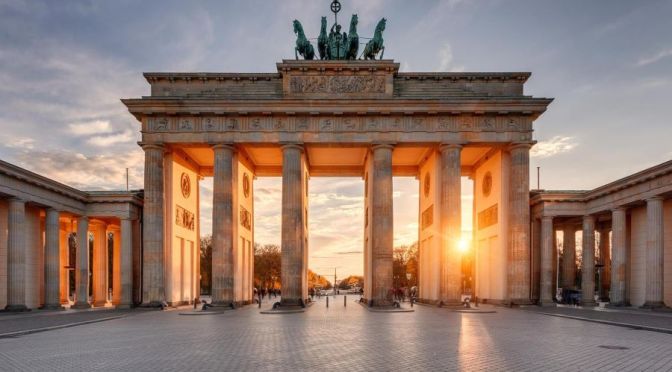
History Of Berlin: The Brandenburg Gate (1790)
The Brandenburg Gate is an 18th-century neoclassical monument in Berlin, built on the orders of Prussian king Frederick William II after the temporary restoration of order during the Batavian Revolution.
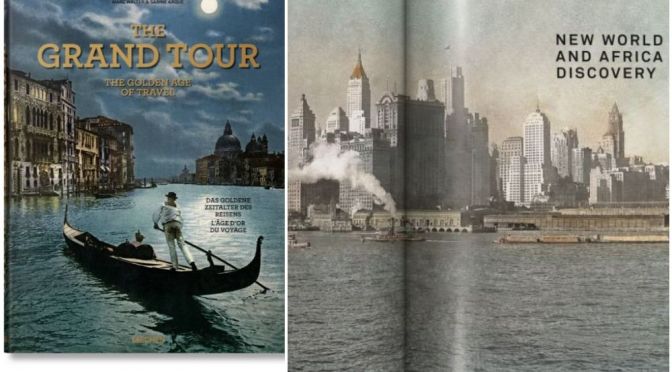
Books: “The Grand Tour – The Golden Age Of Travel”
This richly illustrated volume charts the travel heyday of 1869 to 1939. Bedecked with ephemera and precious turn-of-the-century photochroms, it follows six classic tours favored by Western adventurers in the prewar era, including such famous traveler-writers as Charles Dickens, Jules Verne, F. Scott Fitzgerald, Mark Twain, and Goethe.
The Grand Tour
Rediscover the golden age of adventure
Global travel can be a wearying business: mass tourism, overcrowded planes, chaotic airports, heightened security, cookie-cutter hotel chains, well-worn tourist trails. Finding even a sliver of adventure can sometimes feel impossible. But take heart: for all of us with an unfulfilled spirit of wanderlust, The Golden Age of Travel evokes an era when traveling the world was a thrilling new possibility for those with the resources, time, imagination, and daring.
From the Grand Tour of Europe, a traditional rite of passage for young English aristocrats, to the Far East, barely touched by Western influence, to the famous Trans-Siberian Railway, we follow each journey through its itinerant stops and various modes of transport: trains, boats, cars, planes, horses, donkeys, and camels.
With pages brimming with archival travel posters, guides, tickets, leaflets, brochures, menus, and luggage stickers, the book evokes all the romance, elegance, not to mention the sheer sense of novelty, that enthralled these golden-age passengers. Through decadent new cities, or wild, rugged terrains, this is your passport to a long-lost epoch of adventure and wide-eyed wonder at the world.
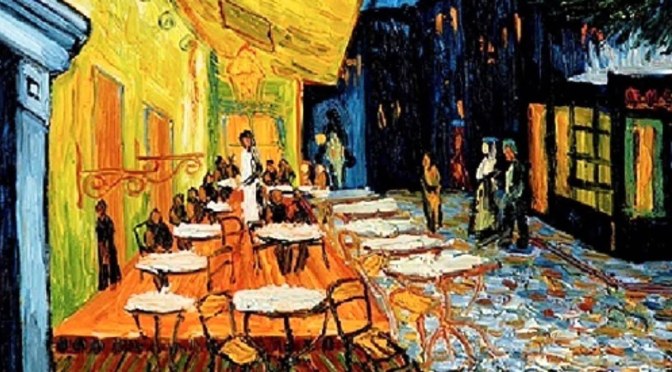
Van Gogh Views: ‘Terrace of a Café at Night’ (1888)
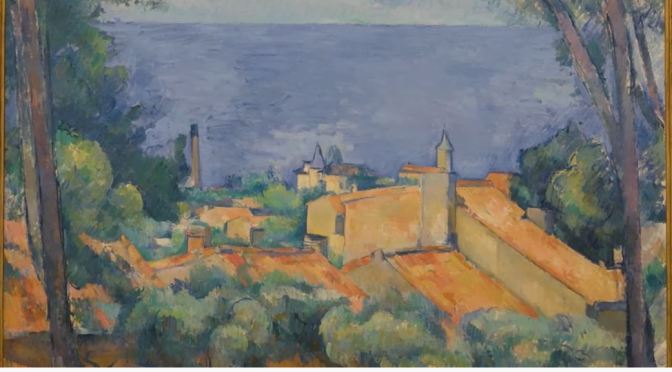
Views: “L’Estaque Aux Toits Rouges” by Paul Cézanne
L’Estaque aux toits rouges by Paul Cézanne is one of the finest views of L’Estaque, the Provençal fishing village where the artist forged a radical new way of depicting the world around him.
Exhibited in 1936 and hidden away ever since, this remarkable piece will finally come back on view as part of The Cox Collection: The Story of Impressionism, taking place at Christie’s New York on 11 November.
While Cézanne is primarily associated with Aix-en-Provence, the village of L’Estaque near Marseille was a place that he returned to again and again when he sought sanctuary. His relationship with the village began when he holidayed there as a child with his mother. Then, in 1870, when Cézanne left Paris to avoid conscription into the army following the start of the Franco-Prussian War, he escaped to L’Estaque.
Learn More: https://www.christies.com/features/ce…

Art Insider: Van Gogh’s Creative Spark In Paris
Vincent Van Gogh was a master of creating sumptuous still lifes. In this latest Expert Voices, Sotheby’s specialist Simon Stock describes how his painting “Nature Morte: Vase Aux Glaïeuls”, offered in Sotheby’s upcoming Modern Art Evening Sale (9 October | Hong Kong), perfectly captured the essence of the artist’s first summer in Paris in 1886. Discover how the artist infused his inspiration of Japanese wood block prints into his paintings, and how he painstakingly captured the joy of living in his still lifes, but also the transience of life.
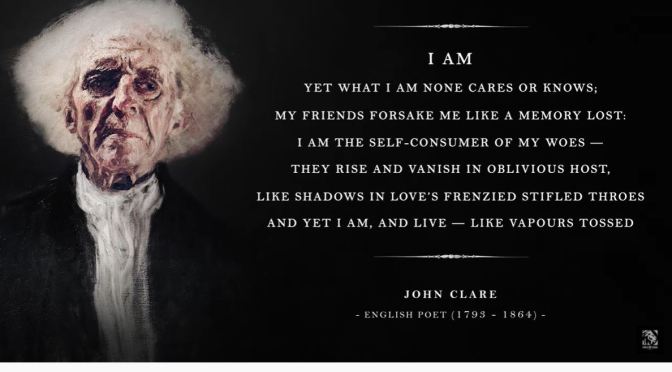
Poetry Readings: “I Am!” – By John Clare (1793 – 1864)
Read by John Davies
John Clare was an English poet who lived most of his life in abject poverty. His life was marred by bouts of mania and depression, and for the final 23 years of his life, Clare was locked in an insane asylum. It was here he began to write poetry; ‘I Am’ was Clare’s final elegy before his passing.
I Am!
BY JOHN CLARE
I am—yet what I am none cares or knows;
My friends forsake me like a memory lost:
I am the self-consumer of my woes—
They rise and vanish in oblivious host,
Like shadows in love’s frenzied stifled throes
And yet I am, and live—like vapours tossed
Into the nothingness of scorn and noise,
Into the living sea of waking dreams,
Where there is neither sense of life or joys,
But the vast shipwreck of my life’s esteems;
Even the dearest that I loved the best
Are strange—nay, rather, stranger than the rest.
I long for scenes where man hath never trod
A place where woman never smiled or wept
There to abide with my Creator, God,
And sleep as I in childhood sweetly slept,
Untroubling and untroubled where I lie
The grass below—above the vaulted sky.
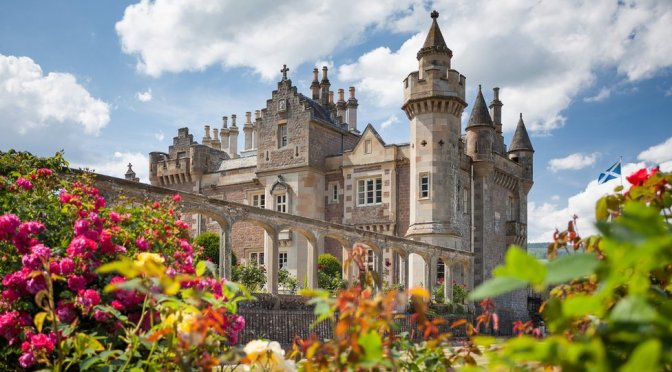
Scottish Baronial Estates: Abbotsford House – Built By Sir Walter Scott (1820’s)
Damian Barr explores Sir Walter Scott’s impressive home, Abbotsford, which is full of a fascinating mix of items owned by the famed Scottish novelist, poet, playwright, and historian.
Abbotsford House was built by Sir Walter Scott as his grand home in the Scottish Borders. The property, set on the banks of the River Tweed, was bought in 1811 and then modified to the tastes of Sir Walter Scott. The writer died here in 1832, and the house was opened to the public just five months after his death.
The rooms that you visit today have been left virtually untouched since his death and a visit to Abbotsford House gives you an intimate insight into the personality and interests of this great man. Some of the most interesting aspects of the house are the personal collections of Sir Walter Scott which include unusual items such as the weapons of Rob Roy, the case book of Napoleon, and even a bullet and piece of oatcake taken from the site of Culloden Battlefield.
Visitors can see Sir Walter Scott’s Study, Library, Drawing Room, Entrance Hall, small Armoury, and the Dining Room where he died on 21st September 1832. The dining room contains paintings of several generations of the Scott family. Unfortunately, the last of his bloodline died in 2004 and the care of the house has now been taken over by the Abbotsford Trust.
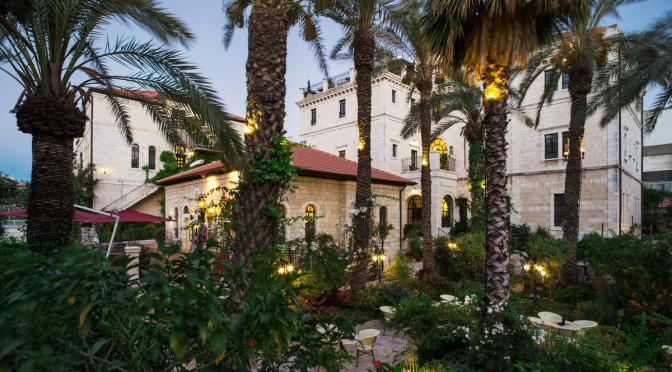
History: The Legendary ‘American Colony Hotel’ – Jerusalem (DW Video)
The elegant “American Colony Hotel” in Jerusalem is an island of tranquility in a troubled city. The grand hotel has lived through all of Jerusalem’s serious crises. Everyone is welcome here, no matter where they come from or what they believe. The name “American Colony Hotel” goes back to a group of 19th Century American pilgrims. In its early days, the grand hotel was located among olive groves outside Jerusalem’s city walls. For over a hundred years, many parties to the Palestinian-Israeli conflict have shaken hands, eaten and drunk here together. People mingle here in a way they would never do elsewhere. Behind it all is the fascinating story of Anna and Horatio Spafford, who, after several tragic events, moved from the US to the Holy Land with a community of devout Christians. With diligence, skill, and an insistence on neutrality and tolerance despite political difficulties, they created a hotel in a truly special location. Its atmosphere continues to attract illustrious guests from the worlds of politics, diplomacy, literature, art and entertainment.
 Boomers Daily