Octavian Report “Rostrum” spoke with him about a major theme in Shakespeare’s work and life: disease. Specifically, pandemic plagues, which ravaged London repeatedly throughout Shakespeare’s career, shuttering the theaters, and which appear (obliquely and otherwise) in some of his greatest plays.
The latest episode of the Rostrum’s coronavirus series features James Shapiro, the Larry Miller professor of English and comparative literature at Columbia University, and a leading expert on Shakespeare. Shapiro has published widely on this subject, most recently Shakespeare in a Divided America. He is also an advisor to the Royal Shakespeare Company and to the Public Theater.
James S. Shapiro (born 1955) is Professor of English and Comparative Literature at Columbia University who specialises in Shakespeare and the Early Modern period. Shapiro has served on the faculty at Columbia University since 1985, teaching Shakespeare and other topics, and he has published widely on Shakespeare and Elizabethan culture.
Peer through the lens of flourishing 17th-century Dutch technological innovation to witness wondrous advancements in science, including astronomy and medicine.
Harold J. Cook, John F. Nickoll Professor of History, Brown University
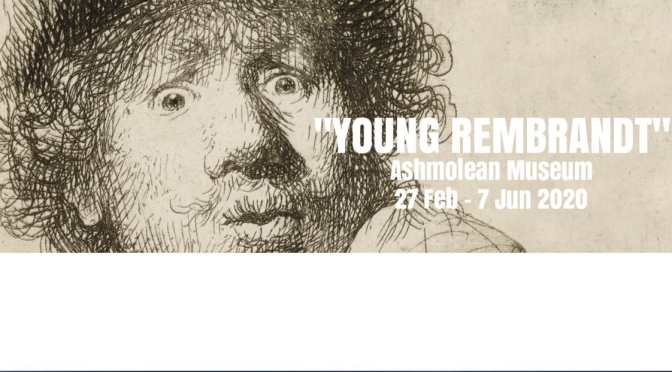
Witness the meteoric rise of Rembrandt, from his first tentative works as a teenager in his home town of Leiden, to the sublime masterpieces he produced in Amsterdam ten years later.
This landmark show explores the early years of the career of the most famous of all Dutch artists, Rembrandt van Rijn (1606–1669). Beginning with his earliest known paintings, prints and drawings made in the mid-1620s, and ending at the moment he rockets to stardom in Amsterdam in the mid-1630s, this exhibition charts an astonishing transformation.
This is the largest collection of works devoted to the young Rembrandt and includes over 30 of his paintings, and 90 drawings and prints from international and private collections. On display for the first time is the newly discovered painting Let the Little Children Come to Me.
Don’t miss this unprecedented opportunity to examine young Rembrandt’s work and observe his remarkable metamorphosis from insecure teenager to the greatest Dutch painter of all time.
In The Making of Poetry, Adam Nicolson embeds himself in the reality of this unique moment, exploring the idea that these poems came from this particular place and time, and that only by experiencing the physical circumstances of the year, in all weathers and all seasons, at night and at dawn, in sunlit reverie and moonlit walks, can the genesis of the poetry start to be understood.
June 1797 to September 1798 is the most famous year in English poetry. Out of it came Samuel Taylor Coleridge’s The Rime of the Ancient Mariner and “Kubla Khan,” as well as his unmatched hymns to friendship and fatherhood, and William Wordsworth’s revolutionary songs in Lyrical Ballads along with “Tintern Abbey,” Wordsworth’s paean to the unity of soul and cosmos, love and understanding.
The poetry Wordsworth and Coleridge made was not from settled conclusions but from the adventure on which they embarked, thinking of poetry as a challenge to all received ideas, stripping away the dead matter, looking to shed consciousness and so change the world. What emerges is a portrait of these great figures seen not as literary monuments but as young men, troubled, ambitious, dreaming of a vision of wholeness, knowing they had greatness in them but still in urgent search of the paths toward it.
The artist Tom Hammick accompanied Nicolson for much of the year, making woodcuts from the fallen timber in the park at Alfoxden where the Wordsworths lived. Interspersed throughout the book, his images bridge the centuries, depicting lives at the source of our modern sensibility: a psychic landscape of doubt and possibility, full of beauty and thick with desire for a kind of connectedness that seems permanently at hand and yet always out of reach.
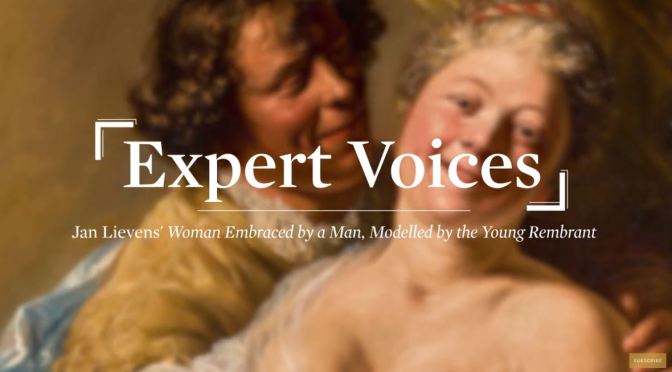
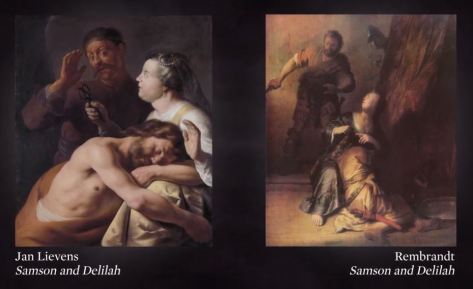
In this episode of Expert Voices, Otto Naumann explores their friendship and budding rivalry through Lievens’ masterwork Woman Embraced by a Man, Modelled by the Young Rembrandt. From the outset of his career, Lievens was at times bolder than Rembrandt, and the two constantly learned from one another during this critical period in their development.
In early 17th century Holland, a young Rembrandt spent his days studying and working with fellow artist Jan Lievens. After apprenticing together in Amsterdam, the two likely shared a studio in their hometown of Leiden and even depicted each other in their compositions.
This signature audacity is on full display in in Woman Embraced by a Man, which will be offered as a highlight of Sotheby’s Master Painting Evening Sale. (29 January | New York)
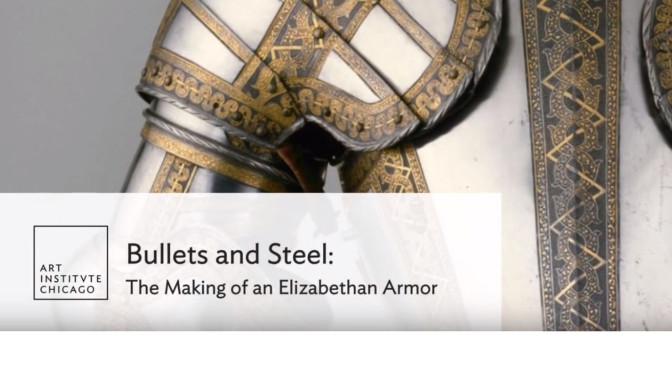
Jeffrey D. Wasson, the armorer who crafted the accurate replica of the Art Institute’s Greenwich armor, and Jonathan Tavares, the Art Institute’s associate curator of arms, armor and European decorative arts before 1700, discuss how utilizing experimental archaeology allowed them to uncover the methods used by Renaissance armorers in crafting the bulletproof protection.
The mahout (elephant keeper), the turbaned Ottoman warriors, and the crowning crescent all allude to the Eastern origins of the elephant. Within the Kunstkammer the elephant represented rulership. This automaton clock, which strikes at both the quarter hour and the hour, is driven by a movement connected to a wheel mounted on the walkway of the howdah (saddle). On the hour, the four Muslim warriors revolve around the brickwork tower. The mahout thumps his arm up and down, as though he were leading the animal, and his counterweighted eyes move back and forth as the machine travels.
Presented to Empress Maria Theresa in Vienna in 1760, this automaton was made at the height of the “century of writing.” Written communication connected scientists, dignitaries, scholars, and artists across long distances, and the act of writing was celebrated in every form. This piece is the last in a series of increasingly complicated ones that Friedrich von Knaus produced during his tenure as Austrian court machinist; he presented other examples to dignitaries such as the French king Louis XV and Duke Charles Alexander of Lorraine.
The machine writes through the hand of the small statuette seated at its top, one of the first mechanical writing figures in human form. This video shows the mechanisms inside the sphere that produce its precise movements. Up to 107 words can be preprogrammed by the arrangement of pegs on a barrel. The figure can also be set via a hand-worked control to appear to write from dictation; this technology that presaged the first typewriter.
Duke Charles Alexander of Lorraine, who bought this automaton clock in 1777, collected luxury objects made in his realm that demonstrated local technical advances. The self-moving components of this timepiece represent the height of Flemish invention in a fashionable Neoclassical style. Mechanically complex and visually impressive, this sparkling clock was a worthy addition to the duke’s collection of timepieces and scientific instruments.
This video shows the movement of the dials for hours, minutes, and seconds; days of the month; and phases of the moon, as well as that of the seven dynamic design elements. The cross-of-Lorraine pendulum swings steadily over the main dial, underneath a dancing letter M. Above the calendar dial turns a Catherine wheel, while the four dragons supporting the obelisk flap their wings and spit pearls. Another Catherine wheel spins above the moon-phase dial, and the entire obelisk is topped by a rotating planetarium. The fourth dial shows the maker’s signature.

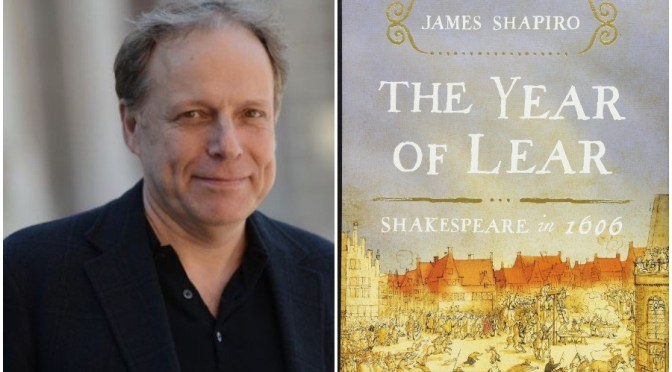
 Octavian Report “Rostrum” spoke with him about a major theme in Shakespeare’s work and life: disease. Specifically, pandemic plagues, which ravaged London repeatedly throughout Shakespeare’s career, shuttering the theaters, and which appear (obliquely and otherwise) in some of his greatest plays.

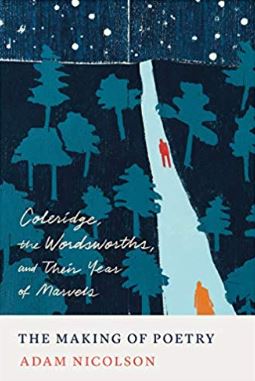 In The Making of Poetry, Adam Nicolson embeds himself in the reality of this unique moment, exploring the idea that these poems came from this particular place and time, and that only by experiencing the physical circumstances of the year, in all weathers and all seasons, at night and at dawn, in sunlit reverie and moonlit walks, can the genesis of the poetry start to be understood.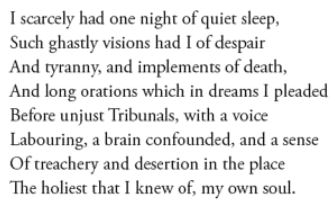

 Boomers Daily