
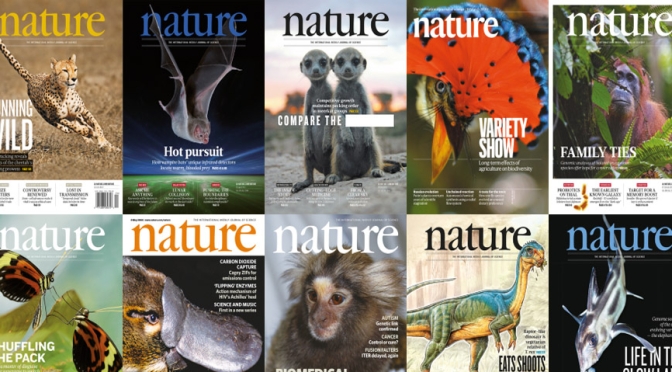
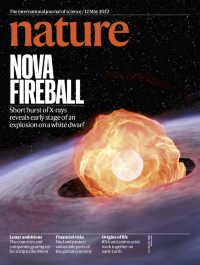
Nova explosions occur when a runaway thermonuclear reaction is triggered in a white dwarf that is accreting hydrogen from a companion star. The massive amount of energy released ultimately creates the bright light source that can be seen with a naked eye as a nova. But some of the energy has been predicted to be lost during the initial stages of the reaction as a flash of intense luminosity — a fireball phase — detectable as low-energy X-rays. In this week’s issue, Ole König and his colleagues present observations that corroborate this prediction. Using scans taken by the instrument eROSITA, the researchers identified a short, bright X-ray flash from the nova YZ Reticuli a few hours before it became visible in the optical spectrum. The cover shows an artist’s impression of the nova in the fireball phase.
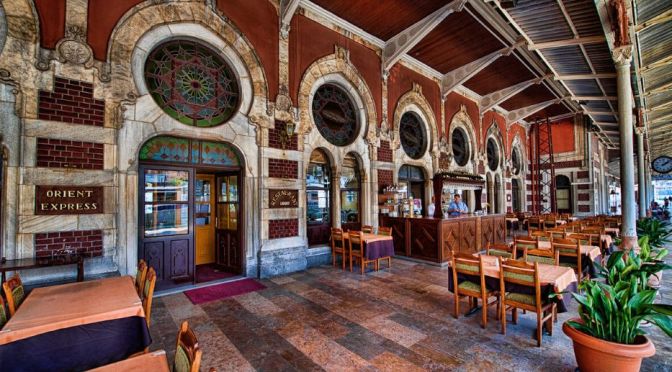
Travels: History Of The Orient Express & Istanbul
Gavin Stamp retraces the route of the old Orient Express, from London, via Paris, Vienna, Budapest, Belgrade, Bucharest, to Istanbul, in search of the treasures of ‘Old Europe’. Stamp’s adventures on and off the train are punctuated by his candid, entertaining reflections on life, the world, and the strange and wonderful people he meets.
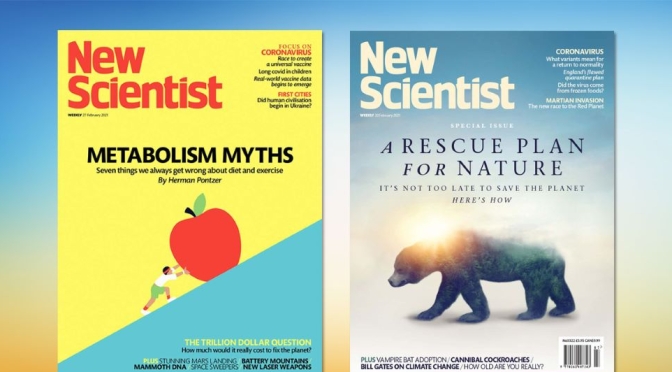
Previews: New Scientist Magazine – May 14, 2022
New Scientist Magazine, May 14, 2022
COVER STORIES
- FEATURES Fascia: The long-overlooked tissue that shapes your health
- FEATURES The grand plan to create a periodic table of all animal intelligence
- FEATURES Have we been measuring the expansion of the universe wrong all along?
- NEWS Simple webcam test could show whether you lack a mind’s eye
- NEWS How quickly can you catch covid-19 again if you have already had it?
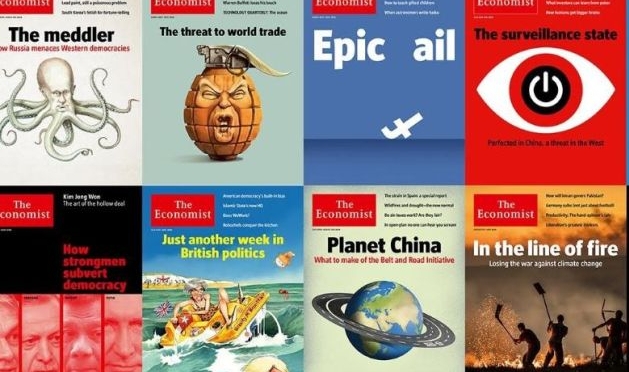
Previews: The Economist Magazine – May 14, 2022
The Economist, May 14, 2022 – The Indian economy is being rewired. The opportunity is immense—and so are the stakes.

Cover Previews: Time Magazine – May 23, 2022

Guided Travel Tours: The Cities And Sights Of Israel
Israel, a Middle Eastern country on the Mediterranean Sea, is regarded by Jews, Christians and Muslims as the biblical Holy Land. Its most sacred sites are in Jerusalem. Within its Old City, the Temple Mount complex includes the Dome of the Rock shrine, the historic Western Wall, Al-Aqsa Mosque and the Church of the Holy Sepulchre. Israel’s financial hub, Tel Aviv, is known for its Bauhaus architecture and beaches.
On this journey, I’m traveling through the Holy Land, a region important to the three main monotheistic religions, and what is known today as Israel and Palestine. In this episode, I’m exploring Israel, a country that was established in 1948, but is located in a region that has been at the crossroads of religions and cultures for many centuries. From the beautiful beaches and dynamic streets of modern Tel Aviv, to the religious landmarks and atmospheric alleys of the Old City of Jerusalem. From the salty water of the Dead Sea to the surreal desert landscapes of the Negev. Along the way, I meet some of the people that live here, and taste some of the local food.

Morning News: Finland Looks To NATO, Abortion Rights, Las Vegas Violence
Finland wants to join NATO; the country has a long border with Russia and has remained neutral in wartime since WWII.
The White House faces pressure to protect abortion rights nationwide after legislation failed in the US Senate. And Las Vegas faces a series of violent school incidents involving both students and parents.

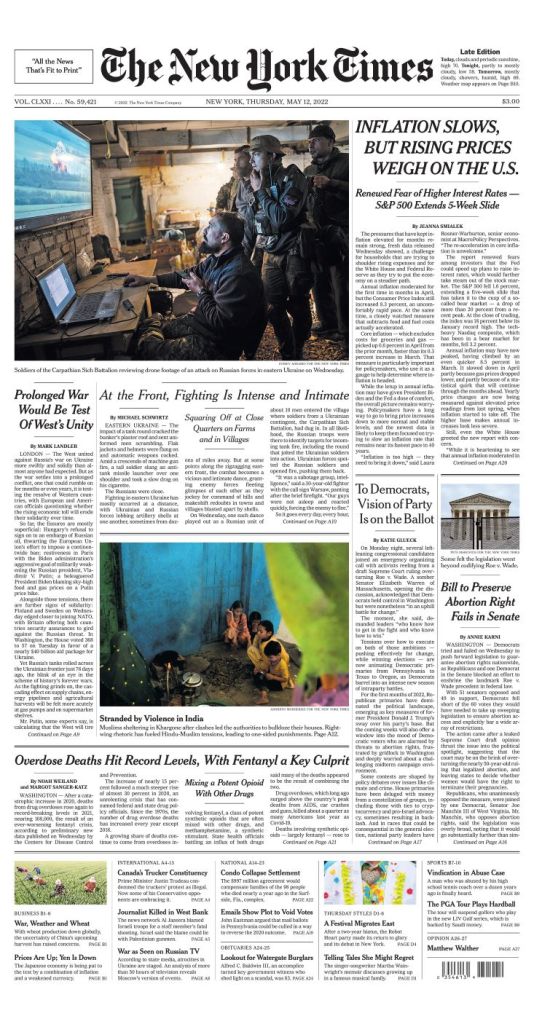
Front Page View: The New York Times – May 12, 2022

Science: Reviving Retinas, Floral Chocolates, First Life From RNA + Proteins
Reviving retinas to understand eyes
Research efforts to learn more about diseases of the human eye have been hampered as these organs degrade rapidly after death, and animal eyes are quite different to those from humans.
To address this, a team have developed a new method to revive retinas taken from donors shortly after their death. They hope this will provide tissue for new studies looking into the workings of the human eye and nervous system.
Research article: Abbas et al.
8:05 Research Highlights
A technique that simplifies chocolate making yields fragrant flavours, and 3D imaging reveals some of the largest-known Native American cave art.
Research Highlight: How to make a fruitier, more floral chocolate
Research Highlight: Cramped chamber hides some of North America’s biggest cave art
10:54 Did life emerge in an ‘RNA world’?
How did the earliest biochemical process evolve from Earth’s primordial soup? One popular theory is that life began in an ‘RNA world’ from which proteins and DNA evolved. However, this week a new paper suggests that a world composed of RNA alone is unlikely, and that life is more likely to have begun with molecules that were part RNA and part protein.
Research article: Müller et al.
News and Views: A possible path towards encoded protein synthesis on ancient Earth
17:52 Briefing Chat
We discuss some highlights from the Nature Briefing. This time, the ‘polarised sunglasses’ that helped astronomers identify an ultra-bright pulsar, and how a chemical in sunscreen becomes toxic to coral.
Nature: A ‘galaxy’ is unmasked as a pulsar — the brightest outside the Milky Way
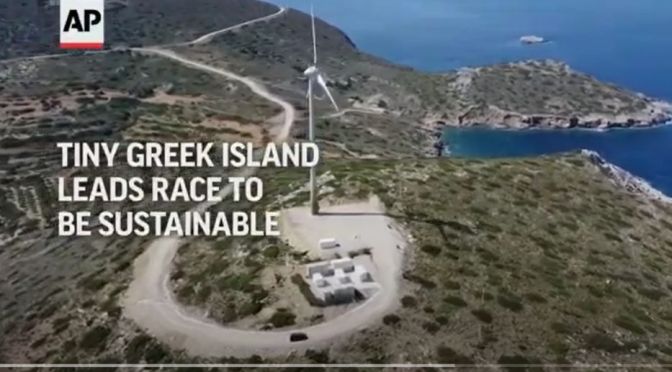
Sustainability: Island Of Tilos, Aegean Sea, Greece
The remote Greek island of Tilos has pioneered a recycling plant that could act as a blueprint for other islands — including popular holiday destinations — that struggle with waste disposal. (May 11)
Tílos is a small Greek island and municipality located in the Aegean Sea. It is part of the Dodecanese group of islands, and lies midway between Kos and Rhodes. It has a population of 780 inhabitants.
 Boomers Daily