


The Globalist (February 22, 2024): Broadcast live from the Polish capital to assess the state of the fast-changing nation. We discuss the role that Poland has played in the diplomatic arena, take a look at Warsaw’s green ambitions with architect Marlena Happach and talk about the future of the media industry with voices from Polityka Insight and ‘Gazeta Wyborcza’.
Plus: Polish hospitality with Puro hotel.
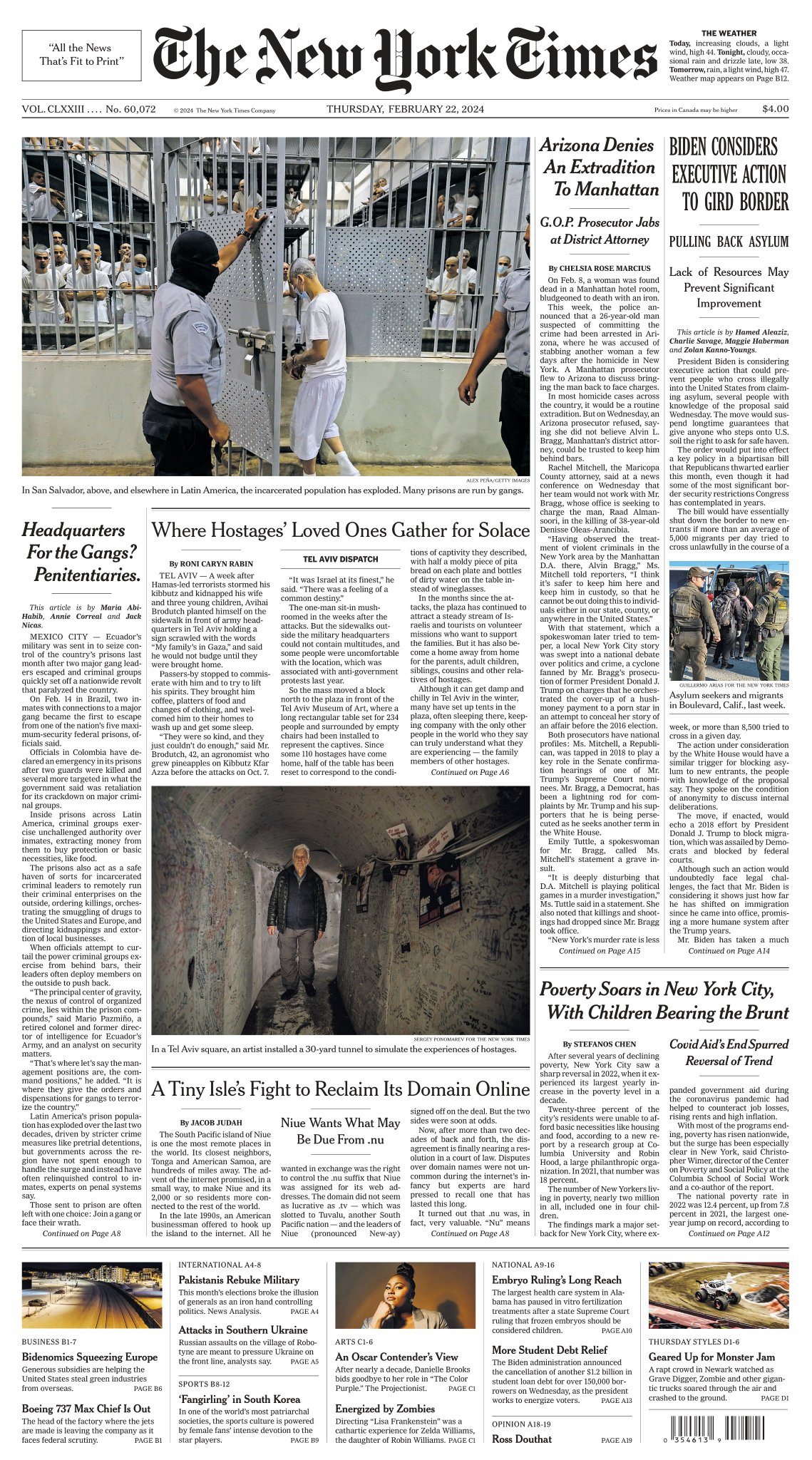
The action under consideration could prevent people from making asylum claims during border crossing surges. The White House says it is far from a decision on the matter.
The Maricopa County attorney in Arizona said she would fight to keep a man who authorities believe bludgeoned a woman to death in a New York City hotel.
Intended to fight crime, Latin American prisons have instead become safe havens and recruitment centers for gangs, fueling a surge in violence.
A plaza in Tel Aviv has become a home away from home. “If I don’t know what to do, I come here,” one relative said.
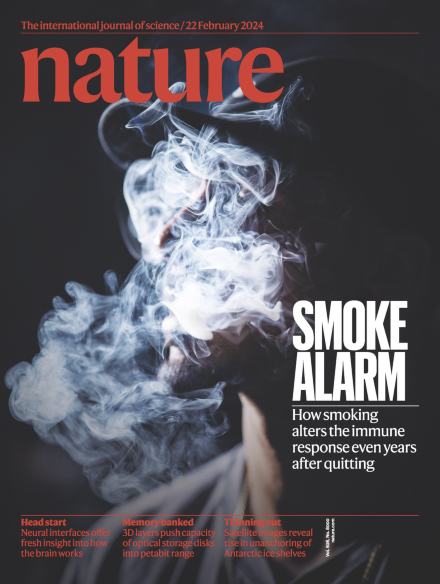

Megastructure stretching nearly 1 kilometre long is probably one of the oldest known hunting aids on Earth.
People infected with the virus that causes COVID-19 cleared the virus more quickly if they had high levels of certain immune cells.
The laboratory-grown food uses rice as a scaffold for cultured meat.

An evaluation of global dietary guidelines highlights the need for clearer warnings on what common foods fall under the ‘UPF’ banner. Some of them may surprise you. Today, Decomplicated examines what exactly defines ultra-processed foods, the impact they have on both society and the environment, and what can you do to minimize your consumption of them.


Country Life Magazine – February 21, 2024: The ‘The Fine Arts Issue’ – Artists who say it with flowers and the AI debate; Wig law, daffodils and how does your hedgerow grow?….
With the technology powering artificial intelligence advancing so rapidly, what can artists do to protect their original work?
Michael Prodger examines how flowers have inspired artists for centuries, from the ancient Egyptians up to the present day

The periwigs that were a 17th-century status symbol are still a mainstay of our legal system, as Agnes Stamp discovers
They have long been used to contain cattle or define boundaries, but hedges can be beautiful, too, argues Charles Quest-Ritson

Alan Titchmarsh takes a wander with Wordsworth as he dreams of spring daffodils ‘fluttering and dancing in the breeze’
The architect falls under the spell of a gritty, but humorous work
Jamie Blackett is ready to man the barricades to scupper plans for an unwanted national park
John Goodall applauds the restoration of Leighton House in London, which formed the hub of a 19th-century celebrity circle

Mary Miers follows the globe-trotting Sir John Lavery from Ireland to Africa and beyond
An inspiring oil painting was at the centre of a heist with a happy ending, reveals Carla Passino
A protective force in China and Wales, but a symbol of greed and evil in England: Lucien de Guise delves into dragon lore

Hetty Lintell celebrates the best of the Art Deco era with earrings old and new, but always modern
The astonishing King’s Lodge suite at The Connaught is fit for a monarch, finds Rosie Paterson
Amelia Thorpe shares the very best of London Design Week
Tilly Ware meets the wild-seed pioneer ‘nurturing the future’
Ben Lerwill finds the salt of the earth on the coast of Scotland

Melanie Johnson on rhubarb
A real-life couple are in harmony on stage, finds Michael Billington
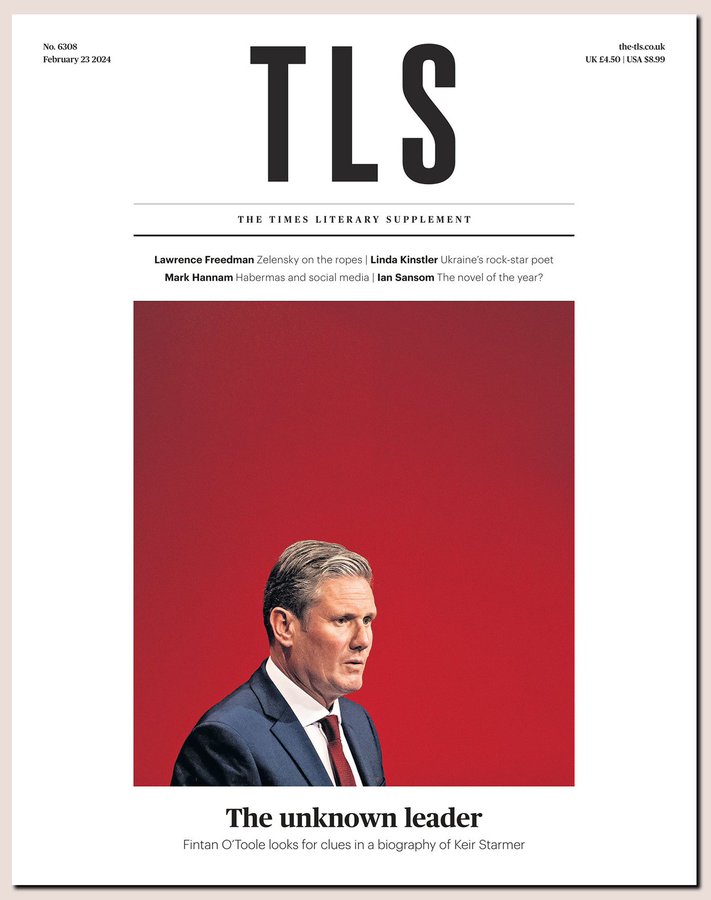

Times Literary Supplement (February 21, 2024): The latest issue features ‘The Unknown Leader’ – Fintan O’Toole looks for clues in a biography of Keir Starmer; Zelensky on the ropes; Ukraine’s rock star poet; Habermas and social media and The novel of the Year?….
The Globalist (February 21, 2024): G20 foreign ministers gather in Rio de Janeiro as a diplomatic spat engulfs Brazil and Israel. Then: Burkina Faso, Mali and Niger juntas confirm their commitment to form a new tri-state confederation, the Philippines conducts joint air patrols with the US and we hear from Portugal’s foreign minister, João Cravinho on Ukraine and Israel.
Plus: the commercial airport set to open on Italy’s Amalfi Coast this summer.
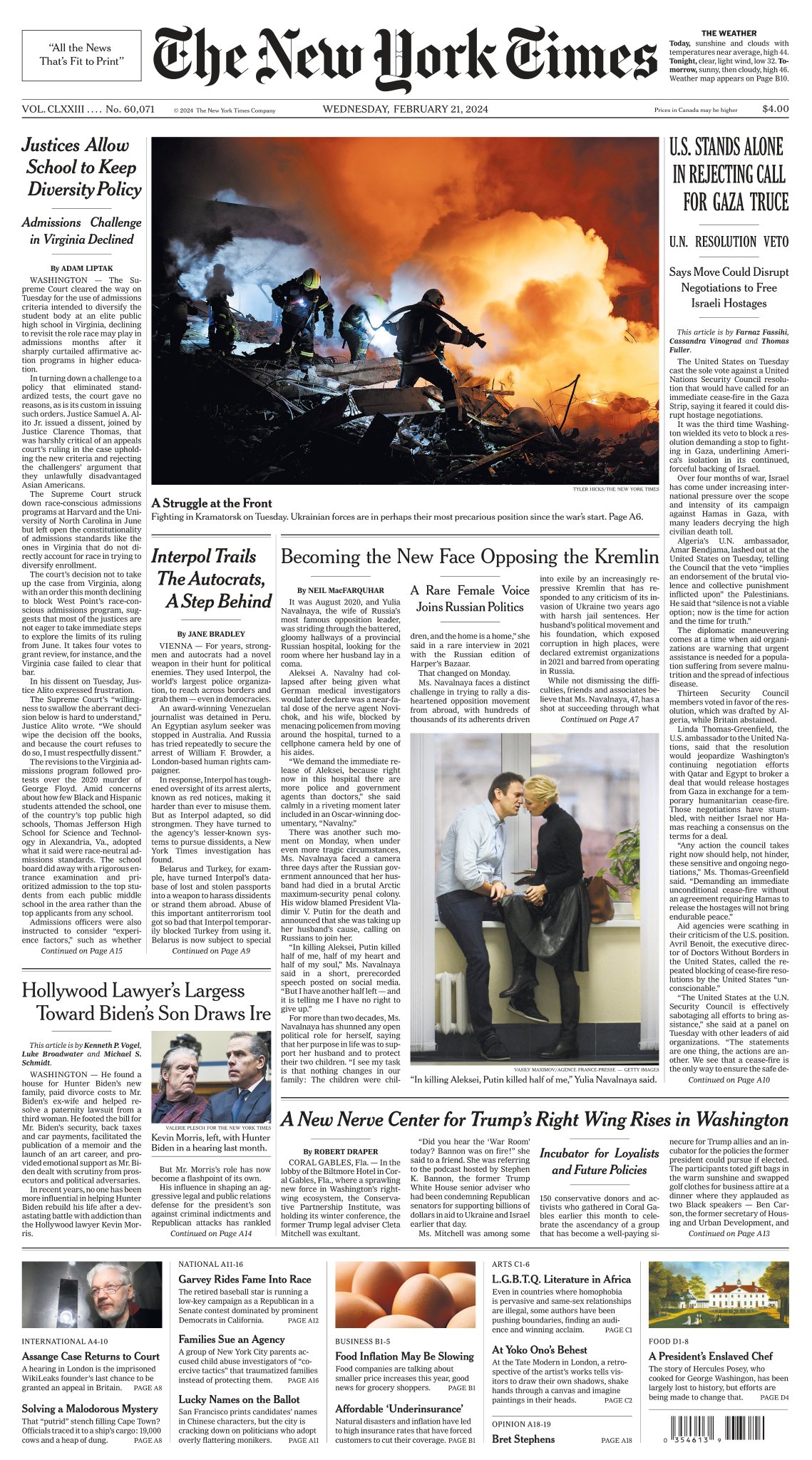
The United States said the resolution could have disrupted its negotiations to free hostages and secure a temporary cease-fire, but its vote drew outcry from many diplomats and aid workers.
The decision, along with an order this month declining to block West Point’s admissions program, suggests that most justices are not eager to immediately explore the limits of its ruling from June.
The international police organization has toughened oversight of its protocols, which autocrats have used to pursue dissidents. But the autocrats have adapted.
The wife of Russia’s most famous opposition leader long shunned the spotlight, but his death in prison may make that impossible. “I have no right to give up,” she said.
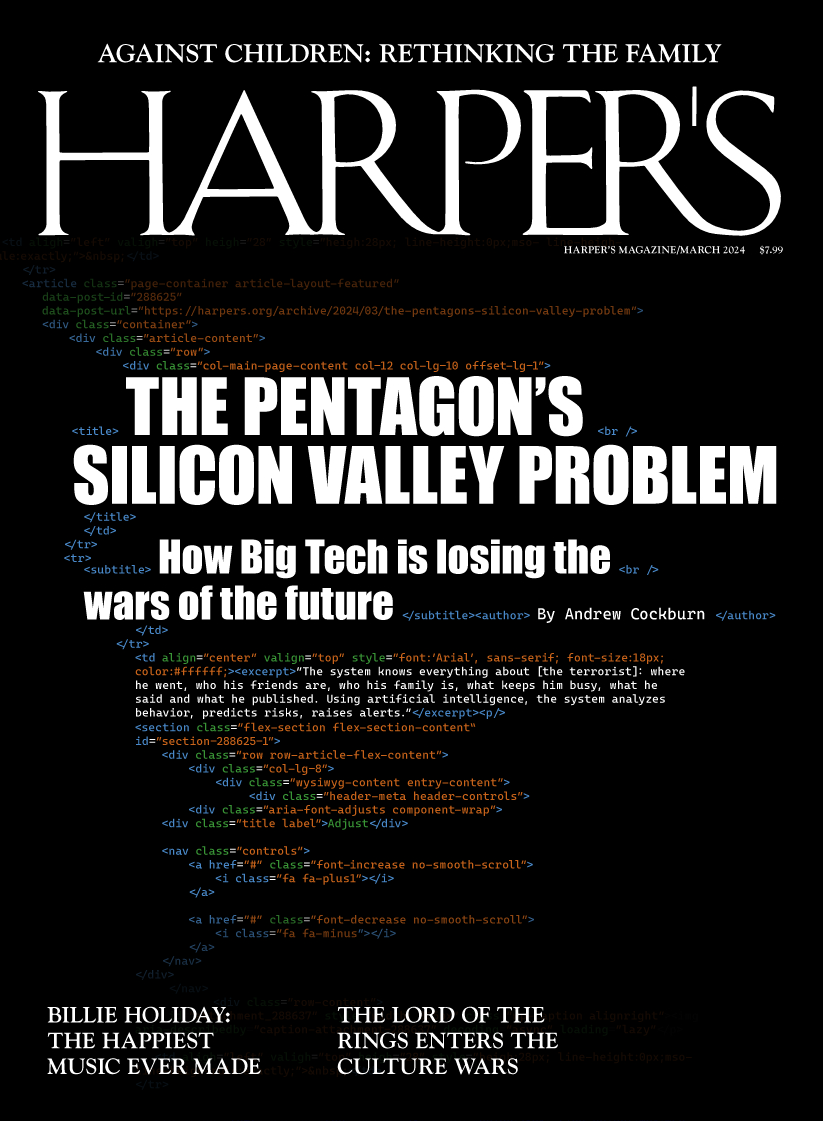

How Big Tech is losing the wars of the future

“Artificial intelligence may indeed affect the way our military operates. But the notion that bright-eyed visionaries from the tech industry are revolutionizing our military machine promotes a myth that this relationship is not only new, but will fundamentally improve our defense system—one notorious for its insatiable appetite for money, poorly performing weapons, and lost wars. In reality, the change flows in the other direction, as new recruits enter the warm embrace of the imperishable military-industrial complex, eager to learn its ways.”

Among the antinatalists
“People would rather be enthusiastic collaborators in a global project than be skeptics of its fundamental integrity. Antinatalism implies or counts on our eventual extinction, and thinking this way is painful.”





 Boomers Daily