New Books: “Brain Fables – The Hidden History of Neurodegenerative Diseases” (Cambridge, 2020)

An estimated 80 million people live with a neurodegenerative disease, with this number expected to double by 2050. Despite decades of research and billions in funding, there are no medications that can slow, much less stop, the progress of these diseases. The time to rethink degenerative brain disorders has come. With no biological boundaries between neurodegenerative diseases, illnesses such as Parkinson’s and Alzheimer’s result from a large spectrum of biological abnormalities, hampering effective treatment.

Acclaimed neurologist Dr Alberto Espay and Parkinson’s advocate Benjamin Stecher present compelling evidence that these diseases should be targeted according to genetic and molecular signatures rather than clinical diagnoses. There is no Parkinson’s or Alzheimer’s, simply people with Parkinson’s or Alzheimer’s. An incredibly important story never before told, Brain Fables is a wakeup call to the scientific community and society, explaining why we have no effective disease-modifying treatments, and how we can get back on track.
Read more or purchase

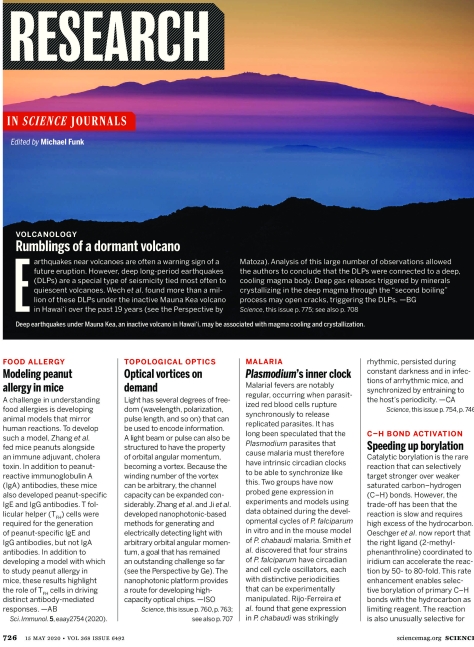
Top New Science Podcasts: Inequality In Pandemics, Hawaii’s Mauna Kea Volcano Earthquakes

science-magazine-podcastsContributing Correspondent Lizzie Wade talks with host Sarah Crespi about the role of inequality in past pandemics. Evidence from medical records and cemeteries suggests diseases like the 1918 flu, smallpox, and even the Black Death weren’t indiscriminately killing people—instead these infections caused more deaths in those with less money or status. 

Also this week, Aaron Wech, a research geophysicist for the U.S. Geological Survey at the Alaska Volcano Observatory, joins Sarah to talk about recordings of more than 1 million earthquakes from deep under Hawaii’s Mauna Kea volcano, which hasn’t erupted in 4500 years. They discuss how these earthquakes, which have repeated every 7 to 12 minutes for at least 20 years, went undetected for so long.

Italian Wines: “Gaja – The Next Generation Of Winemakers” (Monocle)

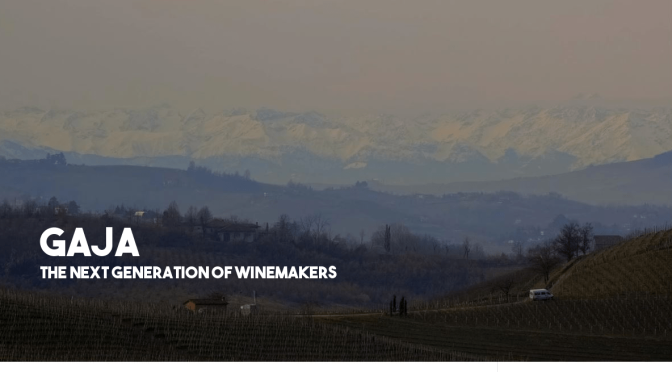
Monocle FilmsFive generations after Giovanni Gaja founded his eponymous winery in the Piedmont town of Barbaresco, the family continues to produce some of Italy’s best vintages. Their uncompromising commitment to quality is helping to maintain one of the world’s finest vintners.
.

OVERVIEW

The Gaja Winery was founded by Giovanni Gaja in 1859 and has been owned and operated by five generations of the Gaja family. Giovanni Gaja was the great-grandfather of Angelo Gaja, the Winery’s current owner.

In 1994, GAJA acquired its first wine estate in Tuscany, Pieve Santa Restituta in Montalcino. This estate produces three Brunello di Montalcino wines- including the single vineyard Sugarille- from vineyard holdings totaling sixty five acres.

In 1996 Gaja acquired a second property in Tuscany, Ca’Marcanda, located in Castagneto Carducci in Bolgheri. Of the property’s 200 acres, 150 have been planted with new vineyards: primarily Cabernet Sauvignon and Merlot, as well as Cabernet Franc and Syrah.

Currently, the Gaja Winery owns 250 acres of vineyards in Piedmont, located in the Barbaresco district (Barbaresco and Treiso) and the Barolo district (Serralunga d’Alba and La Morra).

Since its inception, the Gaja Winery has continuously evolved in ways that have always focused on meticulous care of and attention to the quality of its wines.

Website

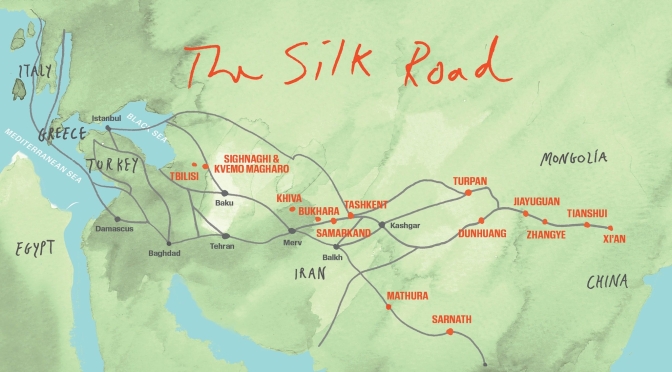
Travel: “The New York Times Style Magazine” – The Silk Road (May 2020)

For years, Silk Road travelers made the grueling trek past towering mountain ranges and ancient cities now lost to time. Centuries later, one writer attempts to retrace the journey.

T Magazine - The New York Times


This year, T’s spring Travel issue is devoted to just five stories, each an account of its writer’s journey along a different section of the Silk Road — the ancient network of trade routes that until the 15th or 16th century spanned some 4,000 miles of the globe, from Central Asia across the Middle East to Southern Europe, and formed a vital conduit for both new commodities and new ideas. While venturing to faraway places might seem like a distant possibility now, a year after this issue began to take shape, as we reckon with the global pandemic, these pieces are a powerful reminder of our innate desire to move and explore.

Read more

Future Of Pet Care: “My Virtual Veterinarian” – Smartphone Video And Chat Appointments App

My Virtual Veterinarian connects pet parents with veterinarians for video and chat appointments. Through our platform, pet parents can access their primary veterinarian, or find a different veterinarian who is available for virtual veterinary appointments.

My Virtual Veterinarian - How It Works

Website

History: “Travels With A Curator: Westminster Abbey, London” (The Frick)

In this episode of “Travels with a Curator,” we visit the world-famous Westminster Abbey in London, with Xavier F. Salomon, Peter Jay Sharp Chief Curator. Xavier shares connections between Westminster Abbey and the Frick through an examination of the life of General John Burgoyne, a playwright, parliamentarian, and military officer buried in the Abbey’s north cloister. Sir Joshua Reynolds’s portrait of Burgoyne was acquired by The Frick Collection in 1943.

To see this painting in detail, please visit our website: https://collections.frick.org/objects.

Top New Science Podcasts: Image Manipulation, Tully Monster & Air Pollution

nature-podcastsThis week, Elisabeth Bik tells us about her work uncovering potential image manipulation, and a new route for particulate pollution formation.

In this episode:

00:45 Seeing double

Elisabeth Bik spends her days identifying duplicated images in science papers. She tells us about her efforts, and why they’re important. Feature: Meet this super-spotter of duplicated images in science papersNews: Publishers launch joint effort to tackle altered images in research papers

08:11 Research Highlights

New insights on the mysterious Tully Monster, and how football fans can stoke air pollution. Research Highlight: Unmasking the Tully Monster: fossils help to tackle a decades-old mysteryResearch Highlight: The meaty link between a city’s football matches and its foul air

10:29 Understanding air pollution

Particulate pollution is a serious threat to human health, but the way that new particles form is poorly understood. This week, new research suggests a new mechanism for it to happen. Research article: Wang et al.News and Views: Airborne particles might grow fast in cities

15:09 Pick of the Briefing

We pick some highlights from the Nature Briefing, including the closest discovered black hole to Earth, and how wriggly worms are helping physicists model microscopic processes. National Geographic: Closest black hole to Earth found ‘hiding in plain sight’Physics: Worm Viscosity

Subscribe to Nature Briefing, an unmissable daily round-up of science news, opinion and analysis free in your inbox every weekday.

Design Lectures: 86-Year Old Italian-British Architect Richard Rogers

In the second talk as part of our Virtual Design Festival collaboration with Architects, not Architecture, architect Richard Rogers discusses his reluctance to enter the Centre Pompidou competition and liking the Lloyd’s building. The idea behind Architects, not Architecture is for architects to discuss their path, influences and experiences.

In his lecture in November 2017, Rogers explained that he’d been told he couldn’t use buildings for his talk, as the main rule of the series is that architects aren’t allowed to discuss their projects. “I said: That’s like saying I can’t use my two hands,” Rogers said.

“Architecture is part of me. And architecture is not just about buildings, it’s about spaces and places.” Born in Florence, Rogers moved to England with his family and studied at the Architectural Association School in London, where he founded Richard Rogers Partnership with Su Rogers, now Rogers Stirk Harbour + Partners, in 1977.

Website

News, Views and Reviews For The Intellectually Curious