Israel, a Middle Eastern country on the Mediterranean Sea, is regarded by Jews, Christians and Muslims as the biblical Holy Land. Its most sacred sites are in Jerusalem. Within its Old City, the Temple Mount complex includes the Dome of the Rock shrine, the historic Western Wall, Al-Aqsa Mosque and the Church of the Holy Sepulchre. Israel’s financial hub, Tel Aviv, is known for its Bauhaus architecture and beaches.
On this journey, I’m traveling through the Holy Land, a region important to the three main monotheistic religions, and what is known today as Israel and Palestine. In this episode, I’m exploring Israel, a country that was established in 1948, but is located in a region that has been at the crossroads of religions and cultures for many centuries. From the beautiful beaches and dynamic streets of modern Tel Aviv, to the religious landmarks and atmospheric alleys of the Old City of Jerusalem. From the salty water of the Dead Sea to the surreal desert landscapes of the Negev. Along the way, I meet some of the people that live here, and taste some of the local food.
Nestled in a private corner of the award-winning village of Great Abington is Abington Lodge: Where over 19 acres of gardens and grounds meet with elegant interiors and wonderful ancillary accommodation.
It’s hard to tell what’s best about Grade II-listed Abington Lodge, in Great Abington —whether the idyllic setting in a little more than 19 acres of parkland and paddocks coursed by the River Granta, the 8,600sq ft interior with magnificent spiral staircase and floor-to-ceiling sash windows or the intriguing history: the house was once a hunting lodge for Richard, Earl of Grosvenor, whose wife scandalised Georgian Britain for her relationship with the Duke of Cumberland.
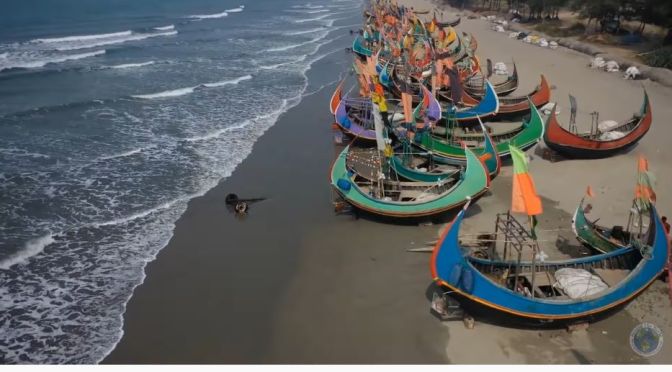
Bangladesh, which means the land of the Bengals, is one of the most populated countries in the world with an estimated 170 million people. In the past, Buddhists ruled for centuries, but by the 10th century, Bengal was primarily Hindu.
In 1576, Bengal became part of the Mogul Empire, and the majority of East Bengalis converted to Islam. Bengal was ruled by British India from 1757 until Britain withdrew in 1947. At this time, the province of Bengal was partitioned into East Bengal and West Bengal.
In 1971, Bangladesh fought Pakistan for independence and became the independent country Bangladesh that it is today. The country is home to the world’s largest river delta, and the longest natural uninterrupted sea beach in Asia, which is 120 km long. The villages appear to be buried in groves of mango, jackfruit, bamboo, betel nut, coconut, and date palm. However, only a small portion of the country’s land surface is covered with forests.
The most significant feature of the Bangladesh landscape is provided by the rivers. None of the major rivers of Bangladesh originates within the country’s territory. Thus, Bangladesh lacks full control over the flow of any of the streams that irrigate it. In addition, there are many severe storms during the rainy season. Each year between June and October, the rivers overflow their banks and inundate the countryside.
The inundations are both a blessing and a disaster. Without them, the fertile silt deposits would not be replenished, but severe floods regularly damage crops and sometimes take a heavy toll on human and animal populations. The typical household in Bangladesh, particularly in the villages, includes several generations of extended family. Most marriages are arranged by parents or other relatives, but increasing numbers of educated men and women choose their own partners.
The best time to discover Bangladesh is from October to March. The easiest and cheapest way to get around is by rickshaw. The rickshaws in Bangladesh are unique and colorful. Bangladesh is covered by more than 700 rivers, producing a deliciously lush landscape with more shades of green than you ever imagined. Traveling by boat is a way of life here, and provides a fabulous opportunity to see the country from a more unusual angle. As an un-touristed destination, Bangladesh also lacks much infrastructure, and traveling around can be hard work. So don’t try to pack too much into your itinerary. It’s a place to relax, meet people and discover new ideas and ways of life.
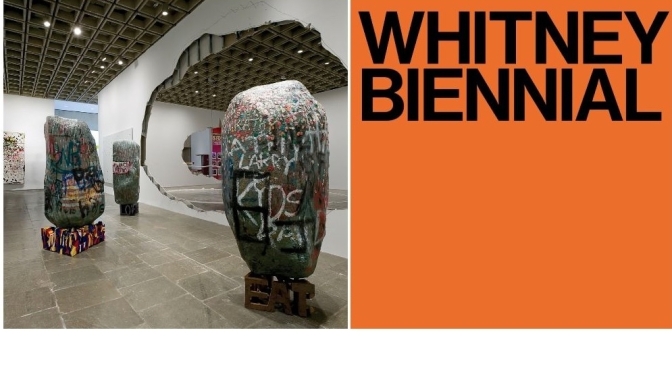
The Whitney Biennial has surveyed the landscape of American art, reflecting and shaping the cultural conversation, since 1932. The eightieth edition of the landmark exhibition is co-curated by David Breslin, DeMartini Family Curator and Director of Curatorial Initiatives, and Adrienne Edwards, Engell Speyer Family Curator and Director of Curatorial Affairs. Titled Quiet as It’s Kept, the 2022 Biennial features an intergenerational and interdisciplinary group of sixty-three artists and collectives whose dynamic works reflect the challenges, complexities, and possibilities of the American experience today.
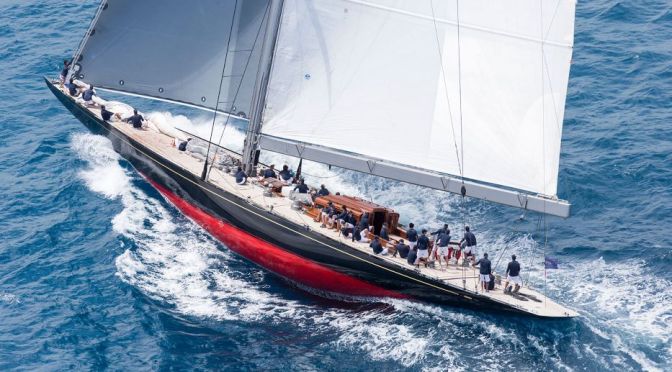
Rainbow exudes a sense of grace and power, but is a thoroughly modern recreation of its 1930s namesake. Launched in 2012 by Holland Jachtbouw, she faintly resembles the 1934 J Class America’s Cup winner. Because she mixes classic design with modern technology, this new-generation Rainbow packs more pedigree into her 140-foot aluminum hull than most other modern sailing yachts combined.
Flinders Residence is a modern cabin mansion imbued with the romantic character of a farm-style home. Created by Abe McCarthy Architects with an interior crafted by AV-ID, the coastal building combines minimalism and luxury to benefit a growing family.
Timeline: 00:00 – Introduction to The Modern Cabin Mansion 00:46 – The Reveal 02:09 – Collaboration Between Architect and Interior Designer 02:47 – Use of Materials 03:27 – Contrast Between Light and Dark 04:10 – Design and Detail 04:44 – Materials, Products and Furniture Round-Up 06:18 – What the Interior Designer is Most Proud Of
Aptly removed from the city workings of nearby Melbourne, Flinders Residence sits in its namesake town as a modern cabin mansion. The building is first revealed at the end of a long driveway, standing as three interconnected pavilions nestled within the landscape. Located at the entry point of the home is an architecturally framed view of the horizon, whilst a sense of volume created by the barn-style framework contributes to the dramatic experience of the internal envelope of the modern cabin mansion.
The interior design of the modern cabin mansion intertwines the aesthetic preferences of both homeowners. A minimalist scheme of contrasting light and dark tones is complemented by luxurious materials and finishes, including Brazilian granite, marble, brass and bronze.
The use of timber pays homage to both clients’ involvement in the timber industry. Inspired by European and American homesteads, Flinders Residence stands as a refined and modern cabin mansion. Using a sophisticated and restrained materiality, the design successfully captures the romantic appeal of a farm-style home whilst adding a luxurious touch.
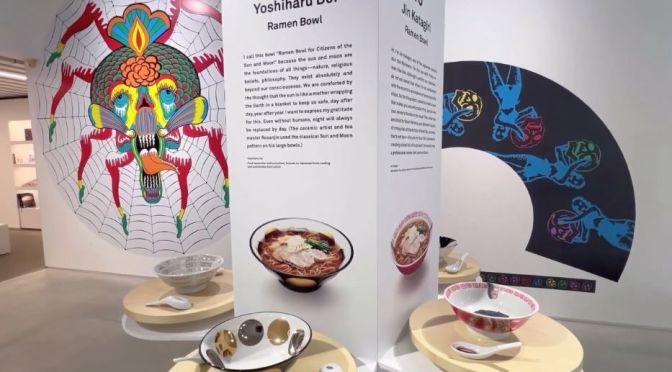
This exhibition touches on the history and culture of ramen, but its primary goal is to spotlight the donburi itself. To examine donburi more closely, these bowls are “dissected” and observed in detail, like a specimen. Then, in the hands of thirty artists, the bowls serve as blank canvases on which the fun, the deliciousness and the many possibilities of ramen are uniquely expressed. In addition, the exhibition introduces the region of Mino – Japan’s largest producer of porcelain ramen bowls – and its long and important history of ceramic production, from tea bowls to house wares to donburi.
Ramen – wheat noodles served in soup with toppings – were introduced to Japan in the late 19th century, grew popular over the following decades and became deeply connected with the culture of postwar Japan. A fast food served in a single bowl, the hot noodle soup can satisfy hunger for a reasonable price. Originally Chinese, this everyday dish has evolved differently in each region of Japan, featuring diverse ingredients and seasonings.
Through September 26, “Surrealism and Magic: Enchanted Modernity”, curated by Gražina Subelytė, Associate Curator, Peggy Guggenheim Collection. A joint project between the museum and the Museum Barberini, where it will be on view from Oct. 22, 2022 to Jan. 2023.
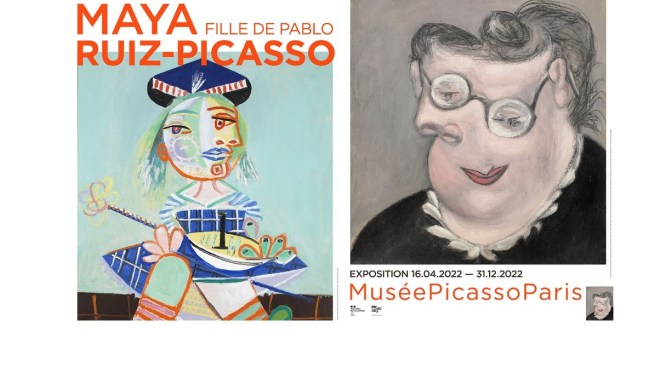
This exhibition celebrates the addition of nine masterpieces to the French national collections – six paintings, two sculptures and a sketchbook – via the country’s gifts-in-lieu scheme, which was introduced on 31 December 1968, allowing inheritance tax to be paid in kind. This unique acquisition mode is key to the very identity of Musée Picasso, which was founded in 1979 specifically to house the donation made by Pablo Picasso under this system.
Pablo Ruiz Picasso was a Spanish painter, sculptor, printmaker, ceramicist and theatre designer who spent most of his adult life in France.
Located on an uninhabited five-island cluster in the Noonu Atoll, Soneva Jani features 51 enormous overwater pool villas that come with retractable roofs and water slides. The villas are spread along two jetties that curve into a 5.6 km (3,4 mi) magnificent lagoon of crystal clear waters.
Known as Chapter One and Chapter Tow, both jetties are connected to the Maldives’ largest resort island, a tropical paradise fringed by pristine beaches and blanketed with lush tropical greenery.
News, Views and Reviews For The Intellectually Curious





 Boomers Daily