
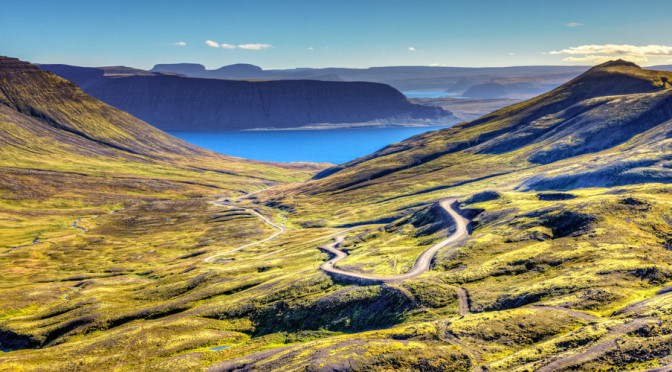
Rarely do tourists make it as far as the Westfjords peninsula in Iceland. Only 10 percent of visitors to the country in the far northwest of Europe come to this remote region. Yet the landscape is simply magical: with huge waterfalls, lonely beaches and raw, wild nature. The Westfjords are one of Lonely Planet’s top travel destinations for 2022. Iceland-based photographer and filmmaker @ISLEY REUST takes us on a tour!
Category Archives: Tours
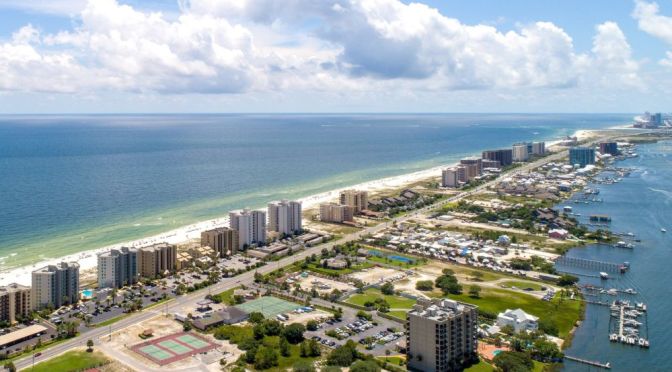
Travel Guides: Pensacola In Northwestern Florida
Pensacola, city, seat (1822) of Escambia county, extreme northwestern Florida, U.S. It lies on Pensacola Bay (an arm of the Gulf of Mexico), about 35 miles (55 km) west of Fort Walton Beach and 60 miles (100 km) southeast of Mobile, Alabama.
A Spanish settlement was made on the bay coast in 1559 but was abandoned two years later. The Spaniards formally took possession in 1698 and built Fort San Carlos de Austria, but this was ravaged during the colonial fighting between France and Spain in 1719–20. After the British gained control in 1763, Pensacola (a name derived from Pansfalaya, a local Native American tribe) became the capital of West Florida.
It became a haven for loyalists during the American Revolution but in 1781 was taken by a Spanish force from Louisiana. In 1818 Gen. Andrew Jackson captured the city during the First Seminole War.
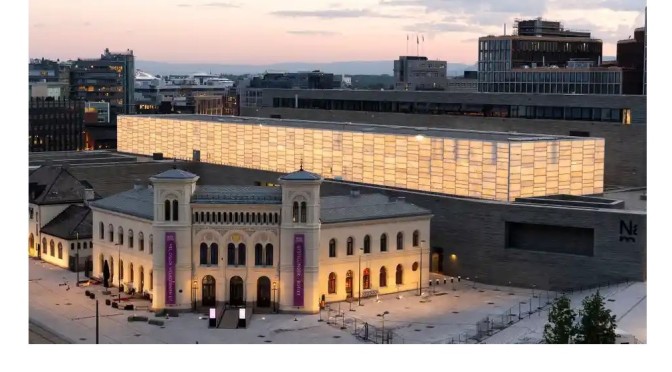
Views: The New National Museum Of Norway, Oslo
The Norwegian capital Oslo is getting a new national museum for classical and modern art, architecture and design. The museum’s collection includes around 100,000 objects, ranging from medieval tapestries to modern design classics and contemporary artworks.
There will be rooms dedicated to, among others, the works of Edvard Munch , including “The Scream,” 19th-century landscape painting, royal robes worn by the Norwegian queens, as well as works by prominent artists, such as Gustav Vigeland, Hannah Ryggen, Claude Monet, Vincent Van Gogh and Ida Ekblad.
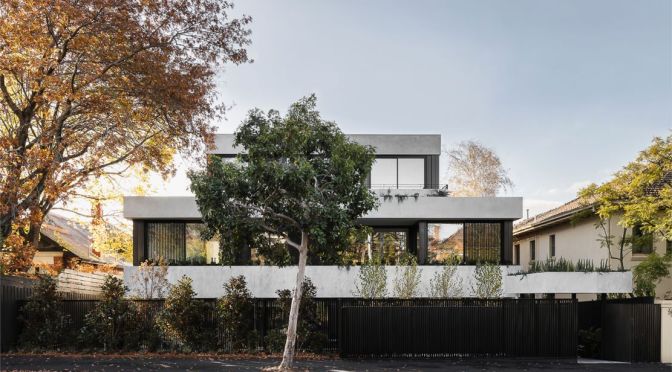
Architecture: The Gallery House, Toorak, Australia
The exact sum of its parts, The Gallery House features spaces both grand and small, each expressing their own narrative. Crafted by Workroom, the super house stands as an exemplary piece of interior design and architecture. Situated in the well-established suburb of Toorak,
00:00 – The Local Project Print Publication 00:10 – Introduction to the Super House 01:27 – Creating Continuity with Materials 02:30 – Use of Stone in the House 02:47 – Landscape Design 03:21 – Natural Light 03:50 – A Sense of Timelessness 04:27 – What the Architect is Most Proud Of
The Gallery House sits amongst other large family homes and gardens. Despite its spatial openness, the super house is designed in allusion to experiences yet to come, flowing towards other aspects of itself and its context. A house tour of the property reveals the extent of its size. A true super house, the residence contains 4 bedrooms, 2 lounge rooms and vast, double-height voids. Workroom purposely conceals the size of the home from the street, creating anticipation and intrigue, using a curved concrete wall to the entry as a reveal of what is to come. The modern materials of concrete, terrazzo, timber and stone feature consistently in the super house. Subverting expectations, Workroom uses the characteristically heavy concrete to craft an elegant staircase that appears effortlessly lightweight, whilst timber and green stone facilitate an open connection to the lush landscaping. Embracing a raw materiality, Workroom creates a super house that will gracefully express the passage of time. With the capacity to visually evolve with age, The Gallery House is a successful interpretation of modern refinement.

Tourism & Climate Change: The Future Of Air Travel
Exotic destinations, or staycations? As we make choices like these, we ask ourselves: Will we ever be able to fly without feeling guilty again? This film examines the tourism business today, and asks how the industry envisages the future.
The pandemic brought the tourist industry to a standstill. But it also highlighted something we have long suspected: Namely, too much travel is bad for the environment.
Not only that, but tourism transforms entire regions – not always for the better. It profoundly impacts communities and often brings benefits for only a very few. But our wanderlust remains. So, do travelers have to decide between the two extremes: exotic destinations (and high carbon footprints) or holidays at home? Given the climate emergency, can we fly without feeling guilty? How environmentally damaging are cruises? And what does it mean to have a sustainable holiday?
This documentary examines an industry that had gotten ahead of itself, even before it was hit by the pandemic. We hear from mayors, tourism managers, a climate expert, an internet activist and a sociologist. The film travels to the European tourist hotspots of Barcelona, Venice and Dubrovnik. The tiny island of Palau in the Pacific Ocean demonstrates how sustainable travel can be sensibly organized, and a Parisian start-up develops a concept for virtual travel experiences.
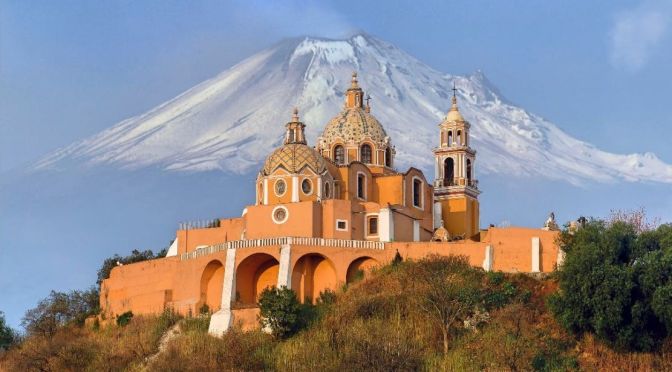
Magical Towns: Cholula & Puebla, Southern Mexico
@Eva zu Beck takes you on a journey to Cholula and Puebla, two cities in central Mexico designated as Pueblos Mágicos, or Magical Towns. These are places that offer visitors a very special experience, owing to their typical historic character and in some cases, colonial-era architecture. As well as a spectacular pyramid and a miniature volcano, the towns are a great place to experience the Danza de los Voladores, or Dance of the Flyers.
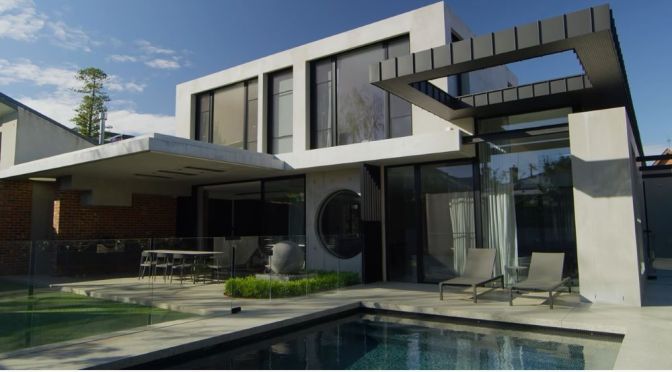
Australian Architecture: ‘Round Choreography’
Evolving from a symmetrical design, Round Choreography is a playful geometric home with a familial tenor. With the architecture, interior design and build undertaken by mckimm, the forever house sees a clear design intent rigorously executed.
00:00 – Introduction to the Forever Home 00:38 – Designing with Unique Geometries 01:08 – In-Situ Concrete 01:40 – Intuitive Design 02:14 – Wellness and Gym Area 02:31 – Collaborative Approach to Design 03:28 – The Material Palette 04:07 – What the Architect’s Are Most Proud Of
Settled into the leafy suburb of Malvern, Round Choreography is named in homage to the original floorplan of the home that flourished into the completed forever house. Geometric in nature, the interiors celebrate a circular motif, visible from the kitchen to the ensuite and the internal courtyard of the home’s lower level.
As architect, interior designer and builder, mckimm’s construction team had intimate knowledge of the design intent, enabling efficiency to undertake strenuous tasks to deliver the desired forever house. The unique frameless window in the living area is a particular triumph. The practical nature of the forever house extends to its materiality. mckimm chooses a durable palette comprised of concrete, timber and stone to express a commitment to longevity whilst celebrating aesthetic rawness.
Polished concrete flooring with hydronic heating meets walls of the same material, creating an architecturally consistent envelope. Designed in the knowledge that the clients are growing their family, Round Choreography captures the excitement of embedding oneself in a location. The light-filled forever house marks the beginning of family life.
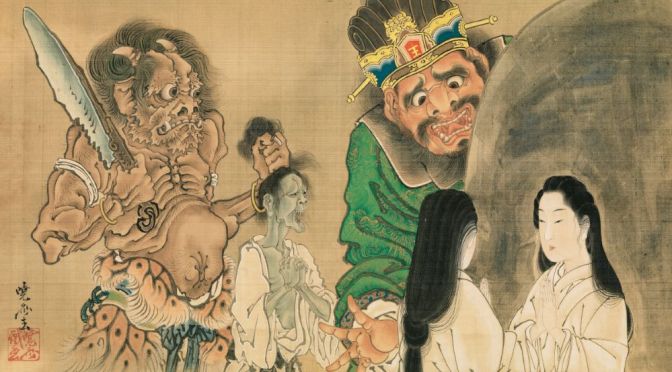
Top Exhibition Tour: 19th Century Japanese Painter Kawanabe Kyōsai, London
The Japanese painter Kawanabe Kyōsai (1831–1889) was one of the most innovative artists of his day. He lived during a turbulent time, experiencing the downfall of the Tokugawa shogunate (the hereditary military government) and the new imperial regime’s reforms to modernise and Westernise the country. Kyōsai’s drive to capture the world with his brush earned him the nickname ‘demon of painting’ – which he lived by.
00:00 Room 1: From Tradition to Innovation
Kyōsai, as a highly trained painter, was proficient in traditional methods and subjects. He broke with convention by blurring the established boundary between ‘serious’ and comic pictures. Traditionally, complex painting techniques were reserved for literary classics, historical and legendary figures, auspicious themes and religious images. Comic pictures were typically produced in a lighter, more fluid style.
Kyōsai often saw humour in ‘serious’ subjects and introduced comic and everyday content in highly finished, detailed paintings. The selection in this room demonstrates Kyōsai’s range and skill across diverse genres. Subjects include animals, monsters, ghosts, protective deities and Buddhist icons. Some paintings display powerful Kano-style ink techniques, others depict humorous creatures – recalling works by his first teacher, Utagawa Kuniyoshi, and referencing medieval picture scrolls. He can be seen exploring Western techniques such as perspective, shading and the study of anatomy, which attests to his insatiable curiosity and desire to push beyond tradition.
04:17 Room 2: Laughing at Modernity
Kyōsai had a keen interest in society, and captured contemporary events in his pictures with humour and piquancy. His satirical prints from the 1860s, the period leading up to the collapse of the shogunate regime, reflect widespread anxiety about the political turmoil, economic instability and foreign presence. He channelled the febrile atmosphere into dynamic images of frog battles, monster parties and wildly dancing tengu (mischievous, semi-human creatures). Under the new Meiji government, the sudden influx of Western-style culture greatly shocked many Japanese, after over 260 years of relative isolation.
Kyōsai’s comic pictures express both the excitement of the new era, with modern technologies such as the telegraph and trains, and a certain scepticism towards those who blindly followed the new trends. The government’s policy of hiring European and American specialists to teach at new institutions in Japan brought the painter a personal benefit. The British architect Josiah Conder (1852–1920) became his pupil around 1881, and remained a student, patron and friend until Kyōsai’s death in 1889.
05:54 Room 3: The Artist Meets His Public
In nineteenth-century Japan, artists often produced works impromptu in front of an audience. The creative process was appreciated as a performance. At commercially organised calligraphy and painting parties called shogakai, attendees would pay for admission, and once inside, could ask the artists to create works for them at no extra charge. These gatherings were frequently a platform for collaboration. Multiple painters would complete a picture together or a calligrapher would inscribe a poem by the painter’s work. Kyōsai often depicted a scene of art viewing, and the artworks within the image would be painted by other artists.
Collaboration has always been an important part of the creative process in Japan, among artist friends or between teacher and pupils, sharing and marking the occasion. Event flyers, newspaper articles and anecdotes attest that Kyōsai was famous for his speedy, skilful and witty performances. The parties involved copious alcohol. Kyōsai loved saké and his brush became even more playful and expressive when intoxicated. Josiah Conder wrote in his master’s obituary: ‘under the influence of BACCHUS some of his strangest fancies, freshest conceptions and boldest touches were inspired.’
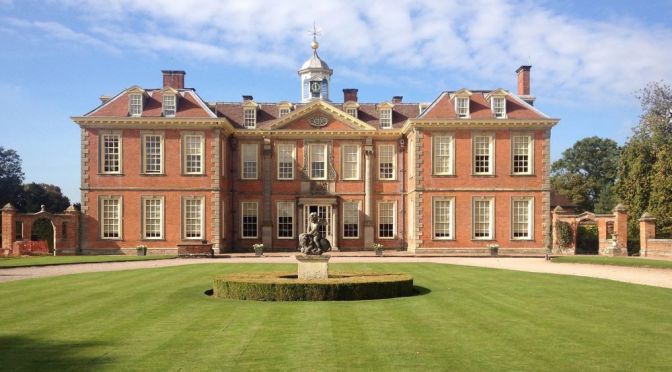
Tours: The Gardens At Hanbury Hall In England
The gardens at Hanbury Hall in Worcestershire are thought to be one of the most faithful recreations of the formal style used by 18th-century garden designer George London.
Watch this video to find out how the National Trust has created a sunken parterre, bowling green and veg garden using plans made in 1730. You’ll learn about how rhythmic planting scales, ordered planting and bare soil have been used to revive a long-forgotten style and approach.
The National Trust protects and cares for places so people and nature can thrive. Everyone can get involved, everyone can make a difference. Nature, beauty, history. For everyone, for ever.

Home Tour: Brighton East 4 In Melbourne, Australia
Complementing the Australian climate, Brighton East 4 is a mid-century inspired home crafted to meet the demands of a young family. Designed and built by Inform with architecture by Pleysier Perkins, the house takes inspiration from Palm Springs.
00:00 – Introduction to the Mid-Century Inspired Home 00:56 – The Client Brief 01:20 – Walking Through the Home 02:02 – Interior Design Style 02:43 – The Island Bench 03:04 – Colour Palette and Materiality 03:36 – Collaboration between the Client, Architect and Builder 04:06 – The Feel of the Home 04:41 – Successfully Meeting the Client Brief
Settled into the same-named Melbourne suburb, Brighton East 4 articulates quintessential Australian living. As a mid-century inspired home, the residence has an informal, open-plan layout and natural materiality, including the use of stone and timber.
Architecturally, Brighton East 4 curves, further evidencing its existence as a mid-century inspired home. Present in both the external and internal architecture, curves effortlessly unify the outdoor and indoor aspects of the home, creating fluidity and softness. Natural materials are a key feature of a mid-century inspired home and are incorporated throughout the project.
Behind the staircase sits a feature wall of stack-bond brickwork, whilst the bathroom sees terrazzo used generously. In the kitchen, the island bench sports an elegant stone top, with slatted timber battens at its base. Showcasing their proficiency in architecture and interiors, Inform and Pleysier Perkins craft a comfortable residence with a strong sense of spatial flow. As a mid-century inspired home, Brighton East 4 testifies to its Palm Springs influence through a natural and restrained materiality.
 Boomers Daily