

Tesla is fast becoming one of the leading automakers due to its innovation of electric cars. Elon Musk is known as a ruthless entrepreneur and a serial risk-taker, well, it seems that reputation is not going anywhere anytime soon. His company is up for another technological marvel- the Tesla Model Y Yacht. Hey, before we get into the video, be sure to enter our brand new giveaway, we’ll be giving away any of these items. To enter the giveaway, comment the secret keyword in the video, subscribe and turn on post notifications….Ooh and most importantly watch the whole video. It’s that simple!
Category Archives: Technology

Future Housing: ‘iOhouse – The Space’ Is A Fully Off-Grid, Prefab Smart Home
iOhouse has built a luxurious fully off-grid living space for people who value privacy, design and nature, called the Space.
All the utilities you need are integrated and completely autonomous, including water, electricity, heating and Wi-Fi. A smart device is all that is required to monitor and manage your living experience.
The SPACE offers you the most advanced conveniences of modern life with the smallest ecological footprint. Our model has been constructed only with the best premium materials and we genuinely believe this is the future of modern living.



Media: How ‘Youtube’ Dominated Internet Video
With more than 500 hours of video uploaded every minute and over 1 billion hours watched every day, Google’s YouTube is the world’s second largest search engine. And its meteoric growth hasn’t subsided, over 2 billion users visit the site every month. CNBC takes a look at how the video platform has changed over the past 15 years and if it can stay on top.

Innovative Architecture: ‘Single-Story’ High-Tech Concrete Home In East Sussex, England (Video)
Professional deep-sea diver Adrian Corrigall and his wife Megan plan to build their new family home in rural East Sussex almost entirely out of concrete, with construction involving cutting-edge technologies conceived in Switzerland and never used to build a house before. However, the perils of being a pioneer soon become evident, and with both schedule and budget under strain, Adrian is forced to resume work as a diver, taking him away from the project for a month at a time.

Health: ‘Risks & Benefits Of AI Revolution In Medicine’

It has taken time — some say far too long — but medicine stands on the brink of an AI revolution. In a recent article in the New England Journal of Medicine, Isaac Kohane, head of Harvard Medical School’s Department of Biomedical Informatics, and his co-authors say that AI will indeed make it possible to bring all medical knowledge to bear in service of any case.
Properly designed AI also has the potential to make our health care system more efficient and less expensive, ease the paperwork burden that has more and more doctors considering new careers, fill the gaping holes in access to quality care in the world’s poorest places, and, among many other things, serve as an unblinking watchdog on the lookout for the medical errors that kill an estimated 200,000 people and cost $1.9 billion annually.
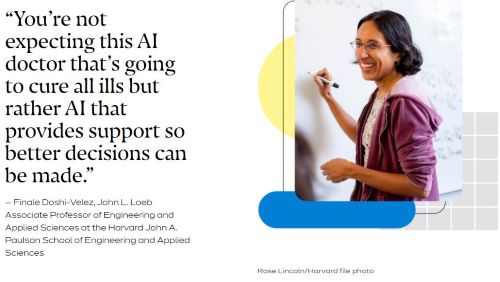
“I’m convinced that the implementation of AI in medicine will be one of the things that change the way care is delivered going forward,” said David Bates, chief of internal medicine at Harvard-affiliated Brigham and Women’s Hospital, professor of medicine at Harvard Medical School and of health policy and management at the Harvard T.H. Chan School of Public Health. “It’s clear that clinicians don’t make as good decisions as they could. If they had support to make better decisions, they could do a better job.”

Health & Technology: New MIT AI Model Detects Asymptomatic Covid-19
A team of MIT researchers have developed an AI model that can distinguish asymptomatic people with Covid-19 from healthy individuals without the disease through forced-cough recordings. (Learn more: http://news.mit.edu/2020/covid-19-cou…

Classic Car Restorations: ‘2021 Alpha Romeo Giulia GT Electric’ By Totem Automobili, Italy (Video)
With the idea of revamping the car we elegantly redesigned the original lines giving the car a stunning shape whilst maintaining the authentic signature of the Giulia GTA.
Starting from one of the best iconic Italian cars of the 60’s & 70’s, the Alfa Romeo Giulia GTA, we have created one of the most advanced restomod in the business, producing the ever fastest and most fascinating Giulia GTA. The Giulia GTA was presented in 1965 and in the following seven years obtained a series of successes and prizes which led this car to be considered as a legend. Our goal was to rebuild a car which remembers in spirit and shape the victorious Alfa of the 60ies, emerging as a reference for sportsmanship and craftsmanship.

Energy Economics: How China Plans To Go Carbon Neutral By 2060 (Video)
In the biggest climate commitment made by any nation, China pledged to go carbon neutral by 2060. While it will be challenging for Beijing to achieve its goal, China’s plan to become a green superpower will have ripple effects around the world.
Illustration: Crystal Tai

Future Of Hospitals: ‘The New Pavilion At Penn Medicine – 2021’ (Video)
The new Pavilion at Penn Medicine will be one of the most state-of-the-art patient care facilities in the world when it opens in 2021.

Smart Technology: ‘The Internet Of Bodies’ (IoB)
Internet-connected “smart” devices are increasingly available in the marketplace, promising consumers and businesses improved convenience and efficiency. Within this broader Internet of Things (IoT) lies a growing industry of devices that monitor the human body and transmit the data collected via the internet.
This development, which some have called the Internet of Bodies (IoB), includes an expanding array of devices that combine software, hardware, and communication capabilities to track personal health data, provide vital medical treatment, or enhance bodily comfort, function, health, or well-being. However, these devices also complicate a field already fraught with legal, regulatory, and ethical risks. In this video,
RAND mathematician Mary Lee examines this emerging collection of human body–centric and internet-connected technologies; explores their benefits, security and privacy risks, and ethical implications; surveys the nascent regulatory landscape for these devices and the data they collect; and makes recommendations to balance IoB risks and rewards.
Read more about the Internet of Bodies here: https://www.rand.org/pubs/research_re…
 Boomers Daily