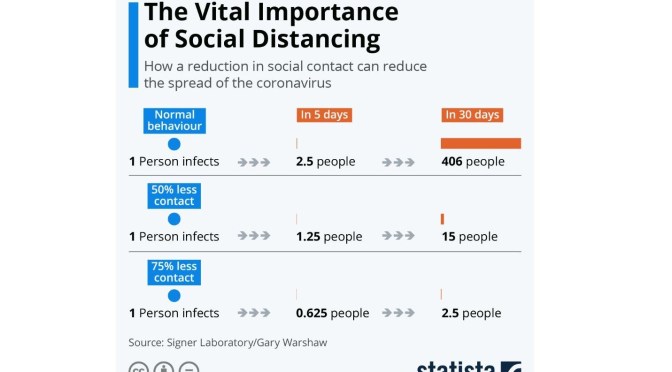
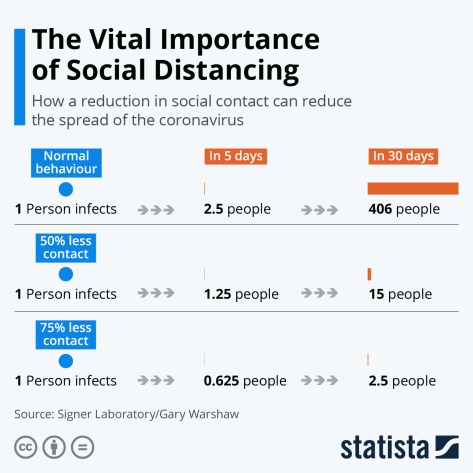
In order to stem the spread of the coronavirus, social interactions around the world are being restricted. This infographic, based on calculations by Robert A. J. Signer, Assistant Professor of Medicine at the University of California San Diego, shows how this so-called social distancing can reduce the spread of the virus.
With no changes to social behaviour, one infected person will on average pass the virus to 2.5 people within five days. After 30 days, the figure would rise to a devastating 406 new infections. The number can be significantly reduced though by engaging in less social contact. With a 50 percent reduction, the number of new infections caused by the average person after 30 days is just 15 people. A 75 percent change would result in an even lower 2.5 new cases – greatly reducing the burden on health services and, if followed by everybody, allowing a country to ‘flatten the curve’ of new infections.
Nordic citizens experience a high sense of autonomy and freedom, as well as high levels of social trust towards each other, which play an important role in determining life satisfaction.
From 2013 until today, every time the World Happiness Report (WHR) has published its annual ranking of countries, the five Nordic countries – Finland, Denmark, Norway, Sweden, and Iceland – have all been in the top ten, with Nordic countries occupying the top three spots in 2017, 2018, and 2019. Clearly, when it comes to the level of average life evaluations, the Nordic states are doing something right, but Nordic exceptionalism isn’t confined to citizen’s happiness.
No matter whether we look at the state of democracy and political rights, lack of corruption, trust between citizens, felt safety, social cohesion, gender equality, equal distribution of incomes, Human Development Index, or many other global comparisons, one tends to find the Nordic countries in the global top spots.
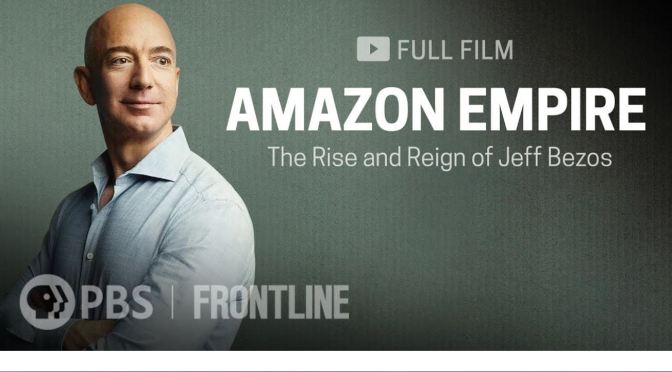
An inside look at how Amazon CEO Jeff Bezos built one of the largest and most influential economic forces in the world — and the cost of Amazon’s convenience.
Jeff Bezos is not only the richest man in the world, he has built a business that is without precedent in the history of American capitalism. His power to shape everything from the future of work to the future of commerce to the future of technology is unrivaled. As politicians and regulators around the world start to consider the global impact of Amazon — and how to rein in Bezos’ power — FRONTLINE investigates how he executed a plan to build one of the most influential economic and cultural forces in the world.
It has been 55 years since civil-rights activist, James Baldwin, and founder of the conservative National Review, William F. Buckley, Jr., met for a debate on race in America. That discussion and the lives of the two cultural giants are subjects of a new book, “The Fire is Upon Us.” Zachary Green spoke with author and political scientist Nicholas Buccola about how the debate’s still resonating.
Bloomberg Opinion columnist Barry Ritholtz interviews economist, bestselling author and New York Times columnist Paul Krugman, whose most recent book is “Arguing With Zombies: Economics, Politics, and the Fight for a Better Future.”
Paul Robin Krugman (born February 28, 1953) is an American economist who is the Distinguished Professor of Economics at the Graduate Center of the City University of New York, and a columnist for The New York Times. In 2008, Krugman was awarded the Nobel Memorial Prize in Economic Sciences for his contributions to New Trade Theory and New Economic Geography. The Prize Committee cited Krugman’s work explaining the patterns of international trade and the geographic distribution of economic activity, by examining the effects of economies of scale and of consumer preferences for diverse goods and services.
Krugman was previously a professor of economics at MIT, and later at Princeton University. He retired from Princeton in June 2015, and holds the title of professor emeritus there. He also holds the title of Centenary Professor at the London School of Economics. Krugman was President of the Eastern Economic Association in 2010, and is among the most influential economists in the world. He is known in academia for his work on international economics (including trade theory and international finance),economic geography, liquidity traps, and currency crises.
Krugman is the author or editor of 27 books, including scholarly works, textbooks, and books for a more general audience, and has published over 200 scholarly articles in professional journals and edited volumes. He has also written several hundred columns on economic and political issues for The New York Times, Fortune and Slate. A 2011 survey of economics professors named him their favorite living economist under the age of 60.[13] As a commentator, Krugman has written on a wide range of economic issues including income distribution, taxation, macroeconomics, and international economics. Krugman considers himself a modern liberal, referring to his books, his blog on The New York Times, and his 2007 book The Conscience of a Liberal. His popular commentary has attracted widespread attention and comments, both positive and negative. According to the Open Syllabus Project, Krugman is the second most frequently cited author on college syllabi for economics courses.
Doing good is increasingly about more than giving away money. Living kidney donations are rising and a new movement is pushing altruistically minded people to choose careers in fields, such as AI, that will shape the world’s future.
A new look at antique US railroad maps reveals how cities grew over the past 200 years. The FT’s Alan Smith and Steven Bernard trace how cities, people and the economy spread from coast to coast.
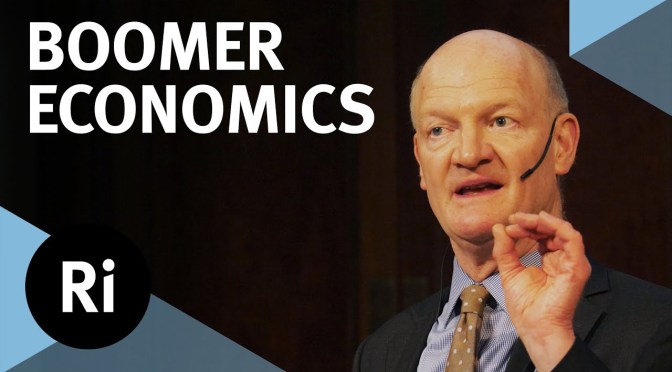
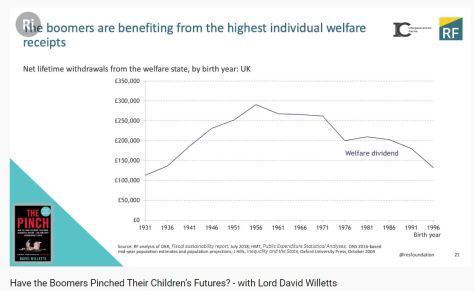
The post-war baby boom of 1945-65 produced the biggest and richest generation in British history. David Willetts discusses how these boomers have attained this position at the expense of younger generations.
Lord Willett’s book “The Pinch – How the Baby Boomers Took Their Children’s Future – And Why They Should Give it Back” is available now – https://geni.us/B0Gvq
Lord Willetts is a visiting Professor at King’s College London, Governor of the Ditchley Foundation, Chair of the British Science Association and a member of the Council of the Institute for Fiscal Studies. He is also an Honorary Fellow of Nuffield College, Oxford. Lord Willetts has written widely on economic and social policy.
His book ‘The Pinch’, which focused on intergenerational equity, was published in 2010, and he recently published ‘A University Education’. Lord Willetts served as the Member of Parliament for Havant, as Minister for Universities and Science and previously worked at HM Treasury and the No. 10 Policy Unit.
This talk was filmed in the Ri on 28 November 2019.
News, Views and Reviews For The Intellectually Curious


 Nordic citizens experience a high sense of autonomy and freedom, as well as high levels of social trust towards each other, which play an important role in determining life satisfaction.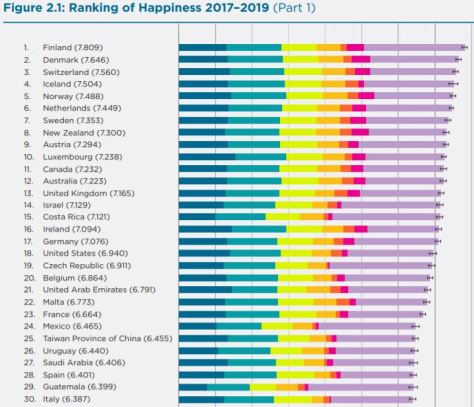

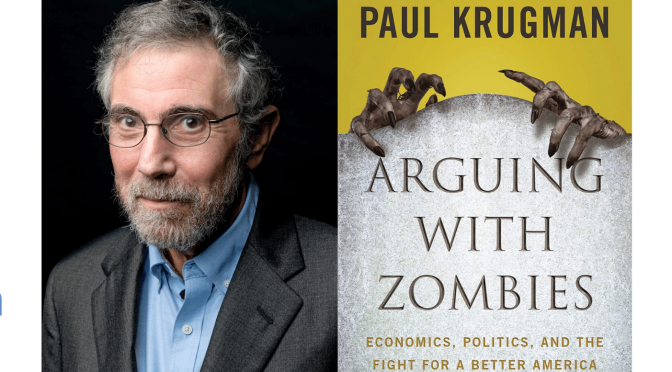
 Bloomberg Opinion columnist Barry Ritholtz interviews economist, bestselling author and New York Times columnist Paul Krugman, whose most recent book is “Arguing With Zombies: Economics, Politics, and the Fight for a Better Future.”
 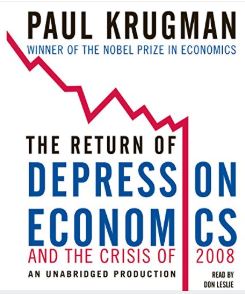 Paul Robin Krugman (born February 28, 1953) is an American economist who is the Distinguished Professor of Economics at the Graduate Center of the City University of New York, and a columnist for The New York Times. In 2008, Krugman was awarded the Nobel Memorial Prize in Economic Sciences for his contributions to New Trade Theory and New Economic Geography. The Prize Committee cited Krugman’s work explaining the patterns of international trade and the geographic distribution of economic activity, by examining the effects of economies of scale and of consumer preferences for diverse goods and services.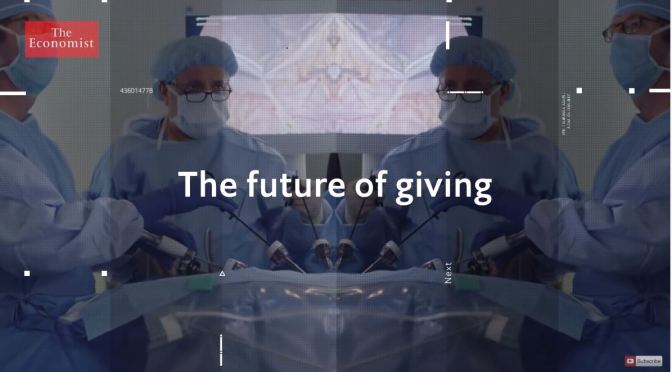

 Boomers Daily