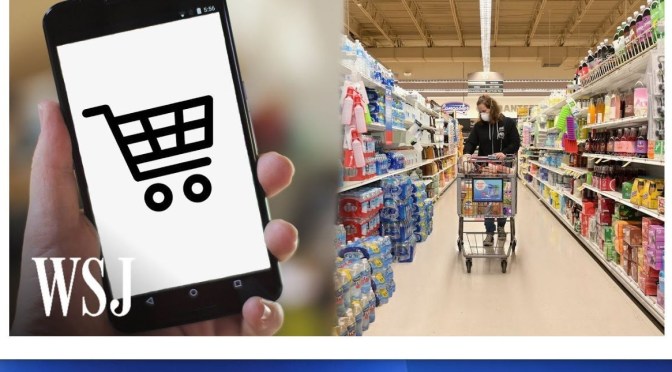
Will the coronavirus pandemic lead to long-term changes in how we shop for food? To better understand the challenges facing grocery stores, WSJ’s Alexander Hotz spoke with an industry insider, a store owner and a Walmart executive.

Will the coronavirus pandemic lead to long-term changes in how we shop for food? To better understand the challenges facing grocery stores, WSJ’s Alexander Hotz spoke with an industry insider, a store owner and a Walmart executive.
 In the first of a new series of The Monocle Weekly, Andrew Mueller hosts a panel discussion with leading academics and analysts in urbanism and sociology, taking a deeper look at the changing make-up of our cities and social structures.
 In recent weeks, protests have erupted in response to police violence against citizens – specifically communities of color – forcing departments to reconsider how officers do their jobs. Police forces have been using tech – like Tasers and body cameras – to try and reduce the use of lethal force and improve accountability.
In this episode, we’ll explore how emerging technology – like virtual reality training – could improve police training by boosting empathy and tackling racial bias.

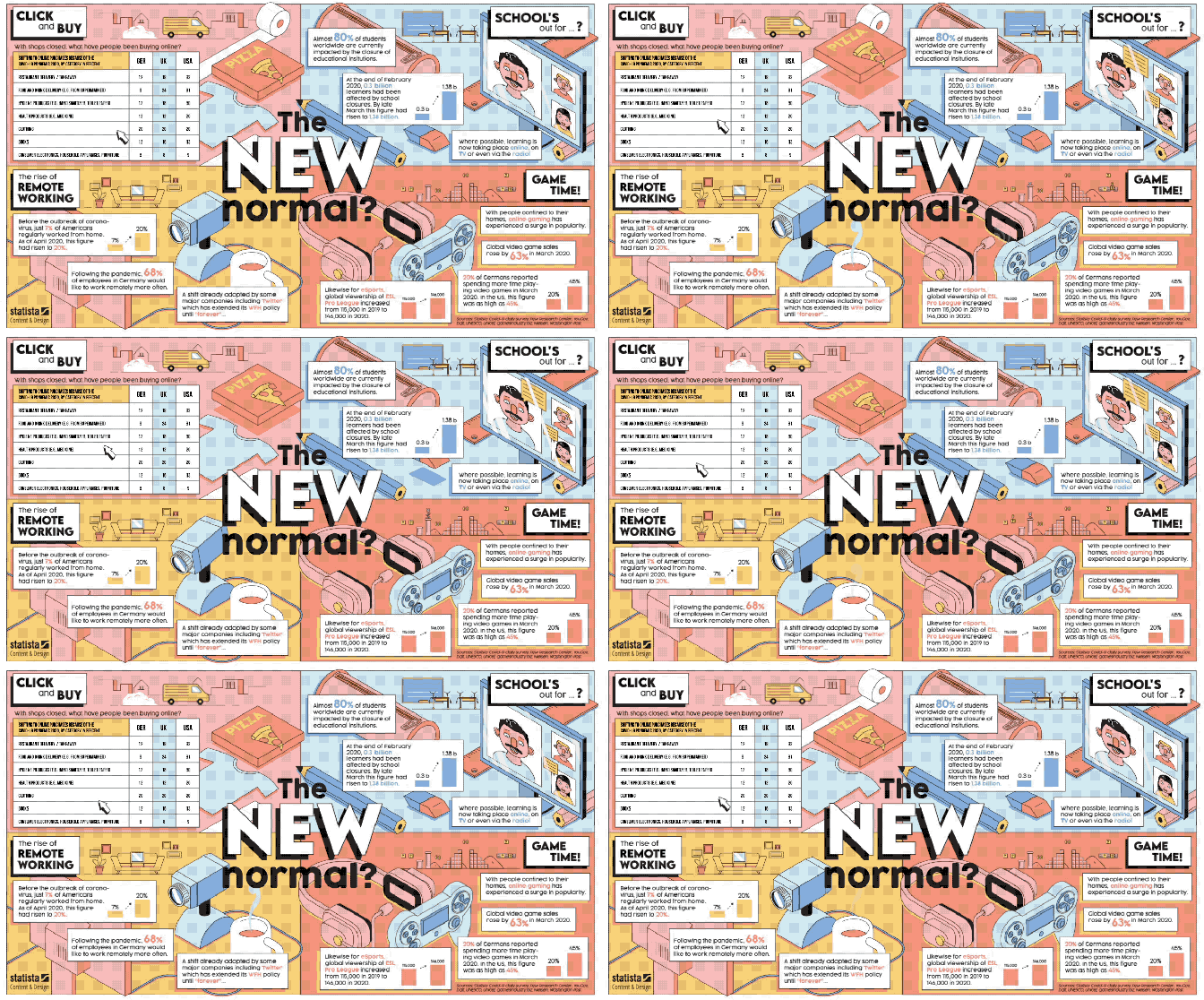
 It is impossible to ignore the ongoing impact the Covid-19 pandemic is having on our lives. This month our infographic shows how some aspects of daily life have changed as a result. The widespread closure of schools, for example, is thought to have affected up to 1.38 billion learners as of late March. Meanwhile, the sudden shift to remote working is one such change expected to have long-lasting effects. Following the pandemic, 68% of Germans have stated they would like to work remotely more often.
Our designer Raphael Hammer has created an isometric-style illustration, with each topic area allocated its own quarter of the infographic. Each topic is then afforded its own principle colour and corresponding design details. The almost monochrome effect of the illustrations allows them to perfectly complement the data presented. Especially effective, are the subtle movements which bring the entire graphic to life.


 In this two-part series, six US museum directors discuss the pandemic and its repercussions for their institutions. These candid, insightful conversations address wide-ranging topics, from the logistical challenges of when to close and how to reopen to philosophical exchanges about the role of museums in society.
This first episode features Max Hollein of The Metropolitan Museum of Art in New York, Kaywin Feldman of the National Gallery of Art in Washington, DC, and James Rondeau of the Art Institute of Chicago.
This second episode features Matthew Teitelbaum of the Museum of Fine Arts, Boston, Ann Philbin of the Hammer Museum in Los Angeles, and Timothy Potts of the J. Paul Getty Museum.
 Contributing Correspondent Kai Kupferschmidt talks with host Sarah Crespi about countries planning a comeback from a coronavirus crisis. What can they do once cases have slowed down to go back to some sort of normal without a second wave of infection?
Contributing Correspondent Lizzie Wade joins Sarah to talk about water management and the downfall of the ancient Wari state. Sometimes called the first South American empire, the Wari culture successfully expanded throughout the Peruvian Andes 1400 years ago.
Also this week, Yon Visell of the University of California, Santa Barbara, talks with Sarah about his Science Advances paper on the biomechanics of human hands. Our skin’s ability to propagate waves along the surface of the hand may help us sense the world around us.
From a CityLab online article (April 10, 2020):
 What might that mean for the bathrooms of the post-coronavirus world? Americans have already demonstrated a keen fixation with this household feature: In the last 50 years, the number of home bathrooms per person has doubled. One could easily see the lavatory-building boom accelerate further as future homeowners keep the needs of the self-quarantined in mind. And many have speculated that sales of bidet attachments will surge as toilet-paper shortages encourage Americans to embrace this more sustainable alternative.
Alter predicted that disease-avoidance would rise to the fore of bathroom design a few years ago, when he observed the traumatizing effects of the 2003 SARS outbreak on Toronto, which killed 44 people. But home design in general — and bathroom design in particular — has long been influenced by infectious disease.
The modern bathroom developed alongside outbreaks of tuberculosis, cholera and influenza; its standard fixtures, wallcoverings, floorings, and finishes were implemented, in part, to promote health and hygiene in the home at a time of widespread public health concerns.
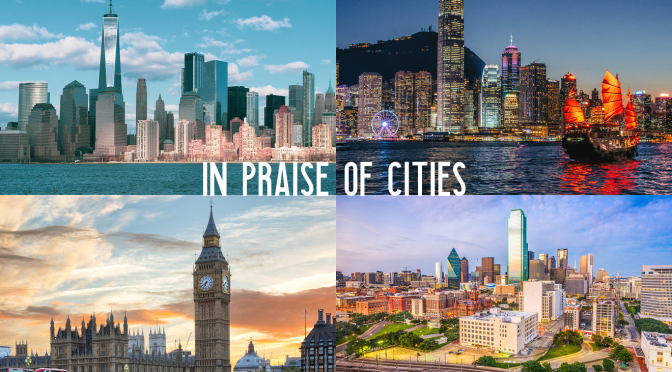
 We ask our housebound editors and correspondents across the globe to reflect on what they cherish about the places in which they live and to pen a love letter to their cities: London, Hong Kong, Rio de Janeiro, Toronto and Milan.
From a The Guardian article (April 9, 2020):
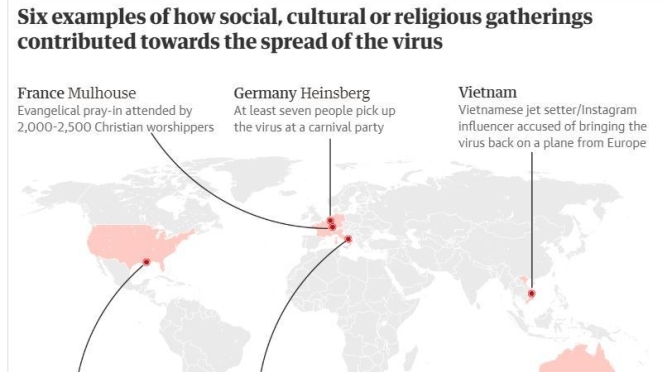
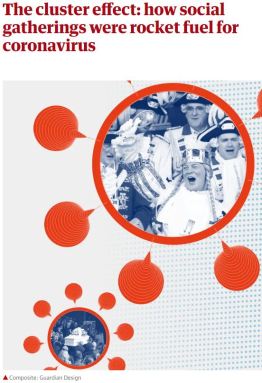 A hundred days after a Chinese government website announced the discovery of a “pneumonia of unknown cause”, it has become clearer that the dynamics behind the virus’s rapid expansion across the globe has relied heavily on such “cluster effects”.
Each of the countries most heavily hit by the pandemic has reported similar stories of social, cultural or religious gatherings where large numbers spent numerous hours in close company – holding hands, kissing, sharing drinks from the same glass – which then turbo-charged the spread of the pandemic.
“Most infections didn’t take place in supermarkets or restaurants,” Streeck said of his preliminary findings. In Heinsberg, his team of coronavirus detectives could find scant evidence of the virus being transmitted via the surfaces of door handles, smart phones or other objects.




 Boomers Daily