Produced by: Simon Mulvaney & Emily Brinnand
VFX Artist: Michael Nixon
Music: Borrtex (“Snowflake”)
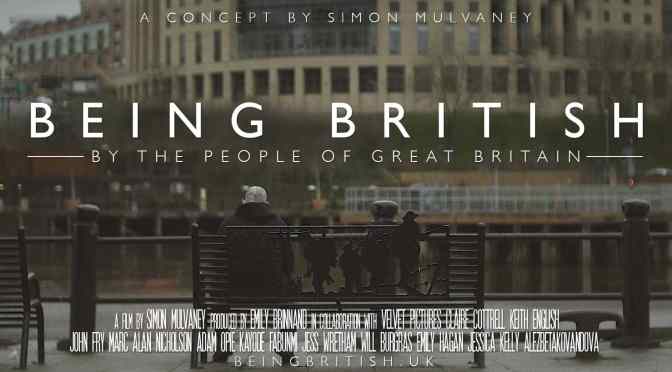
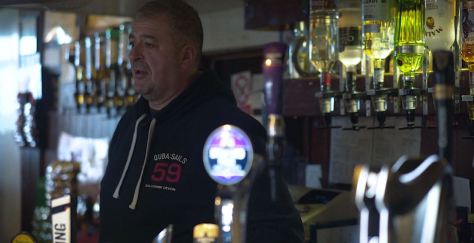
BEING BRITISH is a short-form documentary created independently by the filmmakers of Great Britain, to answer the question, ‘WHAT DOES IT MEAN TO BE BRITISH?’
Filmed, Edited and Directed by: Juan Carlos Cortina
Music by: Marco Martini
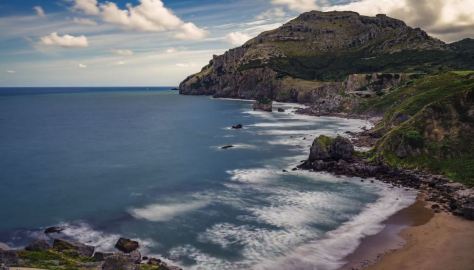
In Euskadi and Cantabria, an adventure that began in 2017 on the Galician coast ends and that has meant a trip of 3 years throughout the north of Spain portrayed in 3 different timelapses. A trilogy that supposes the first time that a work of this type is realized in all the Cantabrian coast.
In this last part the trip begins in Santander and ends in Biarritz and the protagonist is mainly the marine and interior landscape of the Basque Country. With 14,500 photographs, it is the first time I explore Euskadi in depth and I have to say that I have returned absolutely in love with its corners, especially with all the wonderful area of the Urdaibai estuary. Recorded in May, September and October 2019.
Producers – Nicolas de Rosanbo and Carole Lambert
Scriptwriter – Julien Lilti
Editer – Benjamin Massoubre and Vincent Tricon
Sound designer – Xavier Dreyfuss
Line Producer – Céline Vanlint
Original score by Ali Helnwein
With the voices of :
John Fitch – Nathan Willcocks
Alfred Neubauer – Joe Sheridan
Pierre Levegh – Nicholas Mead
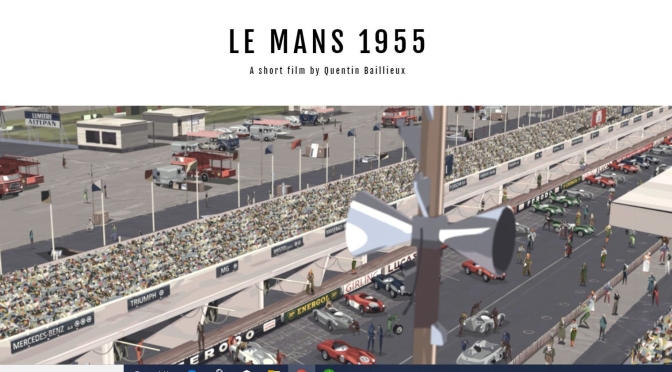
This film was inspired by a 1950s racing car exhibition I visited at the Louvre. I was struck by the beauty of the exhibited sports cars, especially a Jaguar which had competed in 1955 at Le Mans. I began researching the that event and two very contradictory photos appeared next to one another on my screen.
On one side, the image of a tragedy : people in a panic, a blazing inferno behind them. Bodies were sprawled across the stadium. The photo beside it depicted delighted drivers celebrating their victory with champagne.
The mahout (elephant keeper), the turbaned Ottoman warriors, and the crowning crescent all allude to the Eastern origins of the elephant. Within the Kunstkammer the elephant represented rulership. This automaton clock, which strikes at both the quarter hour and the hour, is driven by a movement connected to a wheel mounted on the walkway of the howdah (saddle). On the hour, the four Muslim warriors revolve around the brickwork tower. The mahout thumps his arm up and down, as though he were leading the animal, and his counterweighted eyes move back and forth as the machine travels.
Presented to Empress Maria Theresa in Vienna in 1760, this automaton was made at the height of the “century of writing.” Written communication connected scientists, dignitaries, scholars, and artists across long distances, and the act of writing was celebrated in every form. This piece is the last in a series of increasingly complicated ones that Friedrich von Knaus produced during his tenure as Austrian court machinist; he presented other examples to dignitaries such as the French king Louis XV and Duke Charles Alexander of Lorraine.
The machine writes through the hand of the small statuette seated at its top, one of the first mechanical writing figures in human form. This video shows the mechanisms inside the sphere that produce its precise movements. Up to 107 words can be preprogrammed by the arrangement of pegs on a barrel. The figure can also be set via a hand-worked control to appear to write from dictation; this technology that presaged the first typewriter.
Duke Charles Alexander of Lorraine, who bought this automaton clock in 1777, collected luxury objects made in his realm that demonstrated local technical advances. The self-moving components of this timepiece represent the height of Flemish invention in a fashionable Neoclassical style. Mechanically complex and visually impressive, this sparkling clock was a worthy addition to the duke’s collection of timepieces and scientific instruments.
This video shows the movement of the dials for hours, minutes, and seconds; days of the month; and phases of the moon, as well as that of the seven dynamic design elements. The cross-of-Lorraine pendulum swings steadily over the main dial, underneath a dancing letter M. Above the calendar dial turns a Catherine wheel, while the four dragons supporting the obelisk flap their wings and spit pearls. Another Catherine wheel spins above the moon-phase dial, and the entire obelisk is topped by a rotating planetarium. The fourth dial shows the maker’s signature.
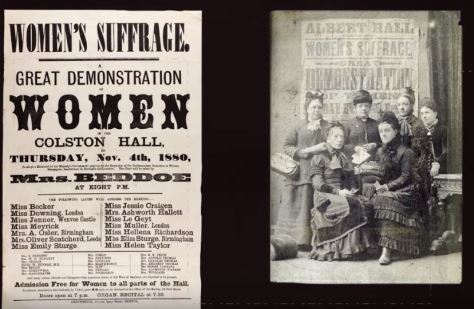
‘Nameless and Friendless’ was painted in 1857 by Emily Mary Osborn. It captures a single woman trying, and failing, to earn a living as an artist in Victorian England. In a trade traditionally occupied by men, she becomes nameless and friendless.
Osborn was actively involved in the campaign for women’s rights during the mid-19th century. She was supported by wealthy patrons, including Queen Victoria. But she used her position of power to help improve the lives of women like those depicted in her paintings.
Partners –
Los Angeles Tourism and Convention Board – discoverla.com
Los Angeles World Airports – flylax.com
American Airlines – aa.com
H Hotel Los Angeles – hhotellosangeles.com
Star Alliance Lounge LAX
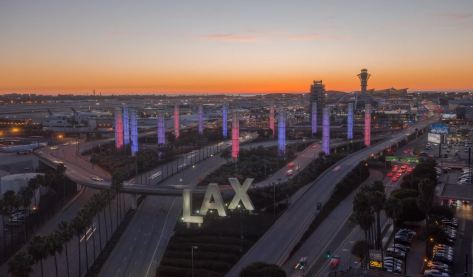
The impetus for “WORLD WAY: The City of LAX” was born in 2013 as I sat on a rooftop in El Segundo, waiting for a shoot to begin and looking out over LA. The incoming planes looked like a highway, evenly spaced and spread across multiple lanes. This led my eye to the end of their path – LAX. I realized I had a fully unobstructed view of the airport, and immediately started capturing timelapses of it. I became fascinated with the many layers of movement that were visible – planes taking off and landing, planes taxiing, ground support equipment moving on the ramp and throughout the airport, passenger vehicles on World Way, passengers on foot outside and inside the airport – all moving at their own unique pace. It made me realize that LAX is a city unto itself, with so many moving pieces and individual people all doing their part to keep it moving. Despite its struggles, it is a logistical and modern marvel. I wanted to show it in a way it had never been seen.
In 2016, I was able to bring this project to life with help from the Los Angeles Tourism and Convention Board, Los Angeles World Airports, and a group of talented shooters. We set out to capture these layers of movement in a way that cannot be seen with the naked eye, and from vantage points that few get to experience. It’s been a long journey from then until now, but was very much worth it. Getting to experience every aspect of LAX as a non-traveler, and having the opportunity to work with so many people who help keep it operating has given me a new perspective on this place.
Director of Photography – Christophe Collette
Underwater DoP – Vincent Kardasik
Executive producer – Blaise Izard
Line Producer – Manu Henoque
Editor Andreas – Arvidsson
Composer – Gustav Karlström
Sound design – Anton Ahlberg
Colorist – Nicke Jacobsson
Production co – badassfilms.tv
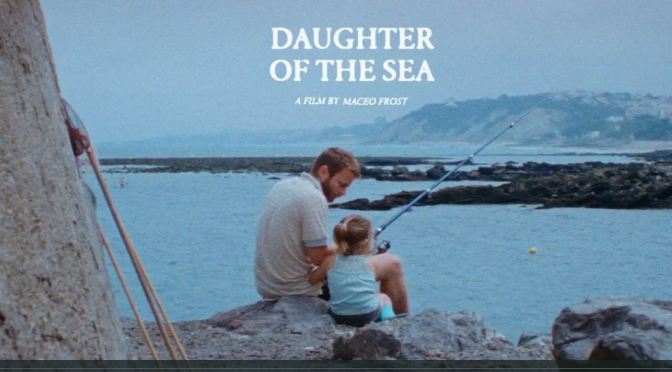
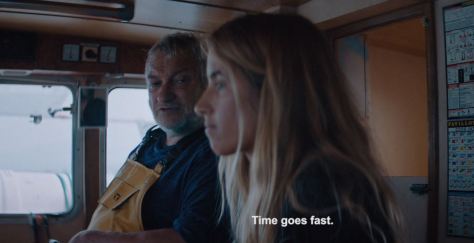
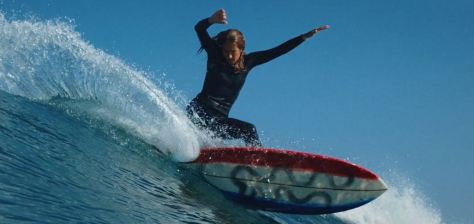
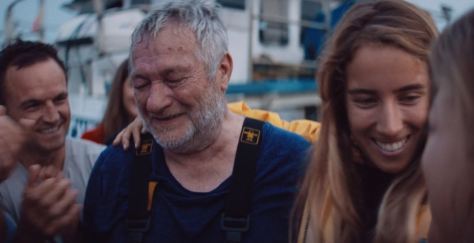
“Daughter of the Sea” is a short film exploring a fishermans relationship with his daughter and the sea. Shot in the French town St Jean de Luz.










 Boomers Daily