THE NEW YORKER MAGAZINE: The latest issue cover features ‘Roz Chast’s “City Beasts” – Where the wild things are. Also, Jon Lee Anderson on Cuba’s crumbling regime, Jia Tolentino on Robyn, Jill Lepore on entrusting A.I. with moral judgment, and more.
The cruellest irony is that of a President who addresses the Iranian people in the language of liberation and then threatens freedom of the press back home. By David Remnick
Does A.I. Need a Constitution?
A new set of precepts is meant to make the chatbot Claude wise, decent, and safe. It also marks a striking transfer of public responsibility from constitutional government to private tech firms. By Jill Lepore
Is Cuba Next?
Trump’s campaign to topple foreign adversaries encounters a battered but defiant regime. By Jon Lee Anderson
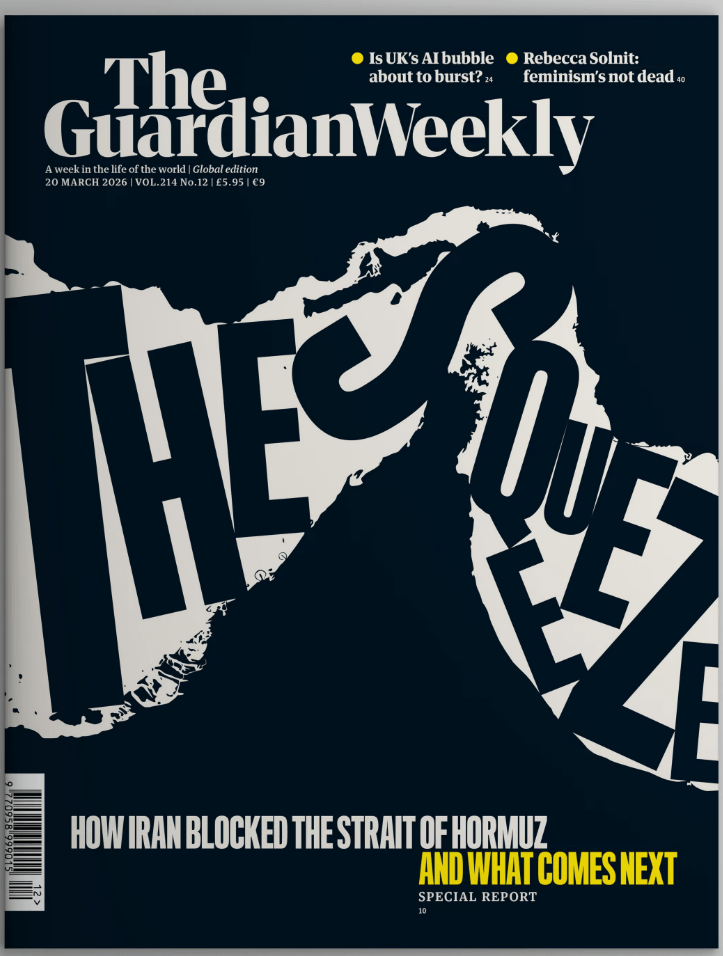
As fighting in the Middle East entered its third week, focus has shifted to Tehran’s closure of a key maritime passage, and the potentially huge global economic impact.
For our big story this week, Jillian Ambrose explains how the war in Iran has effectively blocked the Gulf states from exporting a fifth of the world’s oil supply through the strait of Hormuz. Peter Beaumont sets out the significance of the route and the possible options to counter the blockade, while Hannah Ellis-Petersen reports on the building anger and resentment in the region over being dragged into a war they did not start and had diplomatically tried to prevent.
Peter also looks at “the escalation trap” that lies ahead for both sides in the conflict, and we have on-the-ground reports from Jason Burke in northern Israel and William Christou in southern Lebanon, as well as a stark account of day-to-day life from inside Tehran.
Spotlight | ‘Extraordinary cruelty’ Kaamil Ahmed and Alex Clark examine the evidence that starvation is being used as a weapon of war in Sudan
Technology | Star fruit As Apple reaches its half-century, Chris Stokel-Walker rounds up its biggest triumphs and flops
Feature | Feminism’s not dead! In a stirring riposte to all those who have declared the death of the women’s movement, Rebecca Solnit outlines the advances that have been made and argues it’s no time to give up the fight
Opinion | The British right’s Maga obsession UK conservatives were once hostile to the US, but now are keen to emphasise loyalty to Trump above all else, writesKojo Koram
Culture | One win after another After 11 nominations without a single win, film-maker Paul Thomas Anderson deservedly struck gold at the Oscars with One Battle After Another, says Xan Brooks
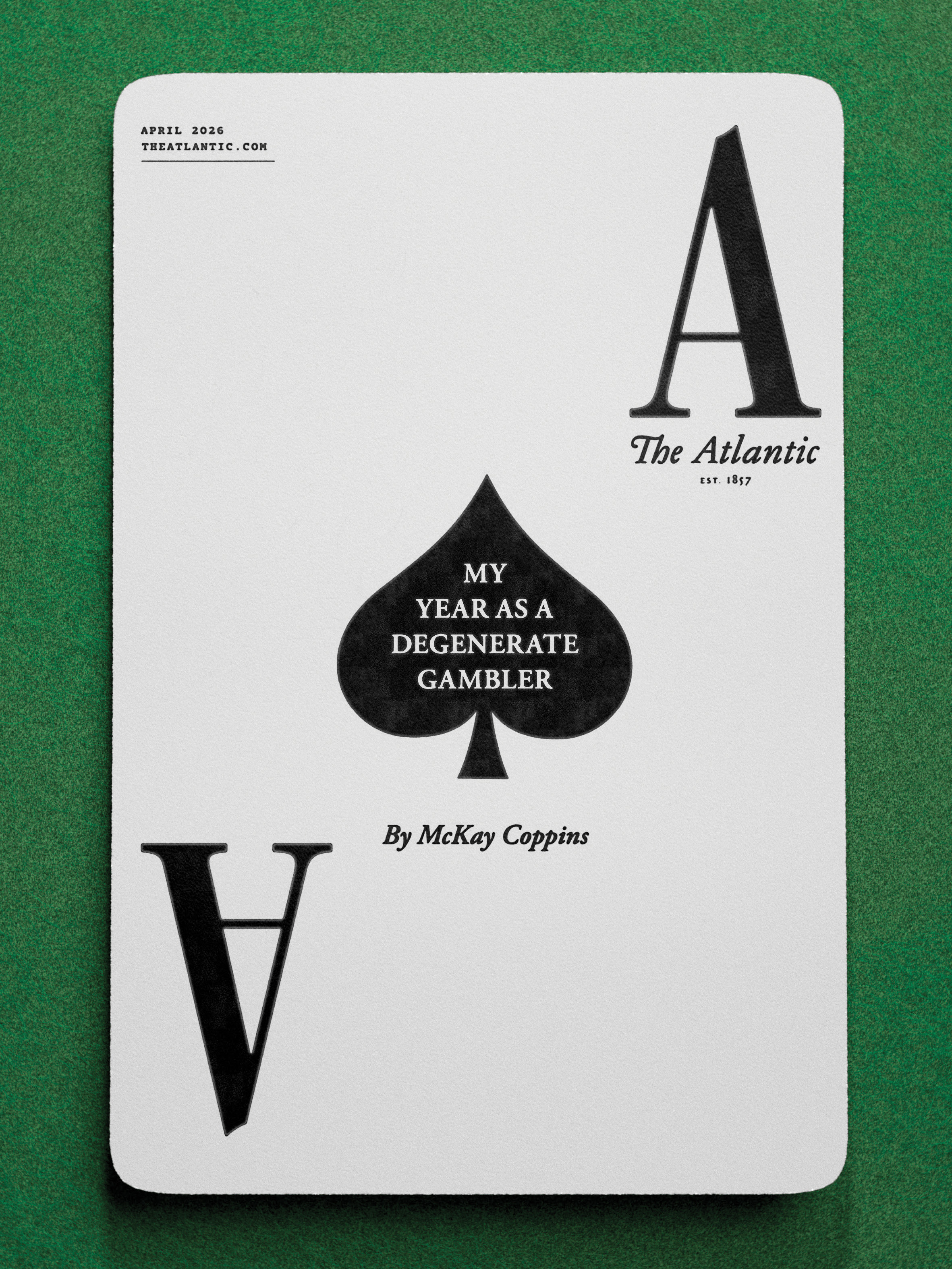
On a Thursday evening in September, I excused myself from the family dinner table and slipped into my bedroom. I didn’t want my kids to see what I was about to do.
With the door locked behind me, I pulled out my phone and downloaded the DraftKings betting app. I felt a certain thrill as I typed in my debit-card information and deposited $500. The first game of the NFL season was a few minutes away. Anything seemed possible. …By McKay Coppins
The odds of being struck by lightning in America in a given year are one in 1.2 million. How does the experience reorient a person’s sense of chance, of fate? By Jacob Stern









 Boomers Daily