Deceptive videos and images created using generative AI could sway elections, crash stock markets and ruin reputations. Researchers are developing methods to limit their harm.
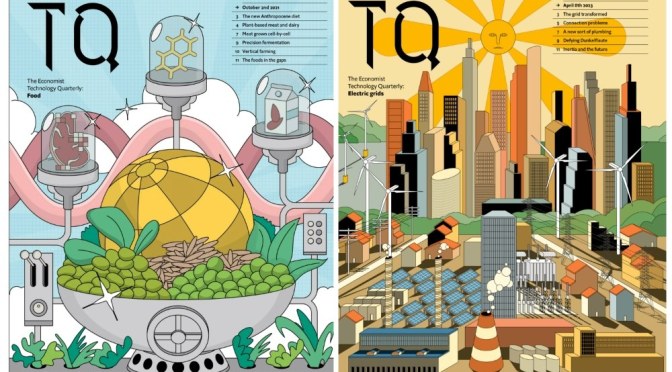
TECHNOLOGY QUARTERLY (SEPTEMBER 27, 2023) – The new issue features ‘In search of forever’ – Slowing, let alone reversing, the process of ageing was once alchemical fantasy. Now it is a subject of serious research and investment, Geoffrey Carr reports.
And some of it is making progress, writes Geoffrey Carr
“All my possessions for a moment of time.” Those, supposedly, were the last words of Elizabeth I, who as queen of England had enough possessions to be one of the richest women of her era. Given her patronage of alchemists—who searched, among other things, for an elixir of life—she may have meant it literally. But to no avail. She had her last moment of time in March 1603, a few months short of the three score years and ten asserted by the Bible to be “the days of our years”.
And various existing medicines may offer similar benefits
In 1991 eight volunteers sealed themselves into a huge greenhouse in the desert near Tucson, Arizona. They were part of an experiment seeking to discover whether a carefully curated selection of plants and animals could develop into a self-sustaining ecosystem: a “Biosphere 2” independent of “Biosphere 1”, aka the outside world.
Country Life Magazine – September 27, 2023: The new issue features The Need For Tweed; A perfect pre-trained gundog; A new Jacobean drawing room is the crowning glory at Shilstone, Devon, and more…
The need for tweed
A true Hebridean hero weaves his magic to create an ‘estate’ Harris tweed for David Profumo
Here’s one I trained earlier
Has your over-excited pup left you red-faced on a shoot day? Katy Birchall has the answer: a perfect, pre-trained gundog
Loved to life
A new Jacobean drawing room is the crowning glory at Shilstone, Devon, discovers John Goodall
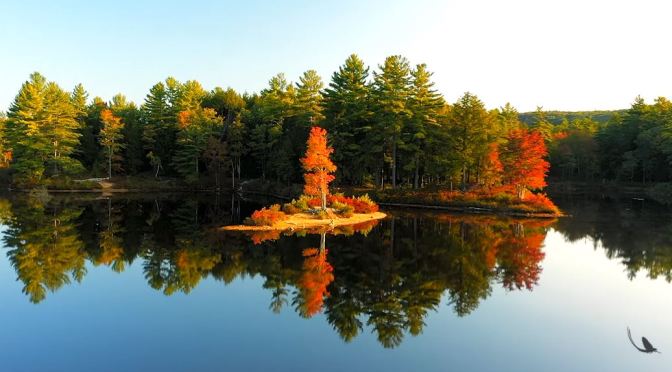
The brilliant mountain maples, birches and beeches in the White Mountains of New Hampshire
NEW YORK TIMES TRAVEL (September 25, 2023) – Here are five beautiful places to catch the leaves — and while you’re there, you can peek out of covered bridges, gaze up at waterfalls, ride a tramway or a train, or even try to spot a legendary Bigfoot-like creature known as the Grassman.
NEW HAMPSHIRE
White Mountains Trail
Driving the White Mountains Trail, a 108-mile loop that winds through groves of gold birches, bronze beeches, and orange, yellow and red mountain maples, you may find yourself unable to resist stopping in the middle of a covered bridge to peek through the walls.
The Albany Covered Bridge, which crosses the rocky Swift River in the White Mountain National Forest near Conway, N.H., is one of 54 remaining covered bridges in the state. Built in 1858, it features a red roof and weathered brown walls with gaps that let the leaves peep at you.
MASSACHUSETTS
Mount Greylock State Reservation
From the study at his farmhouse in Pittsfield, in western Massachusetts, Herman Melville gazed at 3,491-foot Mount Greylock, whose humped shape possibly inspired the white whale in “Moby-Dick.” When the trees on that hump start to change, it becomes more of a gloriously mottled whale.
The mountain’s colors typically peak in early to mid-October, with golds, bright oranges and vivid reds, mainly from tamarack, striped maple and yellow birch. The wet summer may lead to some spotting and discoloration on some leaves, said Nicole Keleher, the director of forest health for the Massachusetts Department of Conservation and Recreation, but she predicted a wide variety of colors overall.
GEORGIA
Chattahoochee-Oconee National Forest
The Russell-Brasstown National Scenic Byway, a 40-mile loop through the nearly 867,000-acre Chattahoochee-Oconee National Forest, winds through mountains drenched in the yellows of tulip poplars, the crimsons of dogwood, and the scarlets and purples of maples — with most expected to peak the week of Oct. 24, said Steven Bekkerus, a public affairs officer for the forest.
Deep in those woods, you’ll find two waterfalls to complement the autumn palette.
OHIO
Cuyahoga Valley National Park
From a vintage rail car on the Cuyahoga Valley Scenic Railroad, the reds and golds of Cuyahoga Valley, Ohio’s only national park, roll by — and if you see a shadow darting among the trees, it could be the Ohio Grassman, also known as the eastern Bigfoot, a creature reputed to reside in the woods there.
The colors, which peak in mid- to late October, “range from brilliant reds of the sugar maples to the deep browns of the white oaks,” said Pamela Barnes, a public information officer at the park, which is just south of Cleveland.
LA Review of Books (Autumn 2023) – The latest issue features The Funny Thing About Misogyny; The New Scarcity Studies: On Two New Socioeconomic Histories and Endgame Emotions: The Melting of Time, the Mourning of the World…
THE FUNNY THING about misogyny is it’s structured like a joke. Not a very good joke—a groaner, a dad joke. Why are they called “women”? Because they’re a woe to men. Get it? Woman is a container for man; language engenders gender subordination. As Mike Myers recites on stage in his role as a moody slam poet in the thrillingly zany 1993 Hitchcockian send-up So I Married an Axe Murderer, “Woman! Whoa, man. Whoaaaaaa. Man!”
Scarcity: A History from the Origins of Capitalism to the Climate Crisis by CARL WENNERLIND
WATER FALLS FROM the sky, literally. It is the most abundant chemical compound on Earth, and yet many people buy it in plastic bottles. Nestlé and other corporations source water cheaply and add labels that depict something other than heavy-industry and fossil-fuel derivatives, as though you’re drinking straight from a pristine spring. By bottling this natural resource and selling it as a commodity, Nestlé creates a form of scarcity.
London Review of Books (LRB) – October 5, 2023: The new issue features Animal Ethics; Orca Life – We may understand less about orcas than they do about us, and Why Weber? – Weber insists that everything remain in its rightful place. Politicians should stick to politics, and scientists to science.
We may be tempted to throw up our hands and say: fuck it, I’m having a burger. Peter Singer would think this illogical: we should endeavour to do the least harm we can. But we might wonder whether something is wrong with the ethical approach that has led us to this point.
‘Editor’s Picks’ Podcast (September 25, 2023) – A selection of three essential articles read aloud from the latest issue of The Economist. This week, how to win a long war in Ukraine, what Asia’s economic revolution means for the world (11:05) and why a disgraced comedian is the symbol of a cruel, misogynistic and politically vacant era in Britain (18:52).
By the Seine – Vincent van Gogh – Paris, May-July 1887
Van Gogh Museum (September 22, 2023) – In the 19th century, bridges and trains made it easier to visit places outside of Paris. And yet smoking factory chimneys increasingly dominated the horizon. This exhibition reveals how artists captured these changes in their artworks.
‘And when I painted landscape in Asnières this summer I saw more colour in it than before.’
Vincent van Gogh to his sister Willemien van Gogh, late October 1887
Bank of the Seine – Vincent van Gogh – Paris, May-July 1887
‘Van Gogh along the Seine’
13 October 2023 until 14 January 2024
Five ambitious artists – Van Gogh, Seurat, Signac, Bernard and Angrand – travelled to the banks of the Seine to paint. Surrounded by green, they captured the changes ushered in by the burgeoning industry. Here they found new, contemporary motifs and developed their use of colour and painting techniques. Asnières had a particular impact on the artistic development of these artists.
THE NEW YORK TIMES MAGAZINE (September 22, 2023): The 9.24.23 Issue features Hannah Dreier on migrant children working in dangerous conditions; McKenzie Funk on Hank Asher, a drug smuggler who became a pioneer in data mining; Sonia Shah on new research that suggests animals are saying more than we think; and more.
Language was long understood as a human-only affair. New research suggests that isn’t so.
Can a mouse learn a new song?
Such a question might seem whimsical. Though humans have lived alongside mice for at least 15,000 years, few of us have ever heard mice sing, because they do so in frequencies beyond the range detectable by human hearing. As pups, their high-pitched songs alert their mothers to their whereabouts; as adults, they sing in ultrasound to woo one another. For decades, researchers considered mouse songs instinctual, the fixed tunes of a windup music box, rather than the mutable expressions of individual minds.
Last year, UNESCO officially deemed harissa, the brick red, aromatic chile paste, “an integral part of domestic provisions and the daily culinary and food traditions of Tunisian society.” Keyword: Tunisian.
News, Views and Reviews For The Intellectually Curious
















/https%3A%2F%2Fdev.lareviewofbooks.org%2Fwp-content%2Fuploads%2F2023%2F09%2FScarcity.jpg)














 Boomers Daily