

From a Bon Appétit magazine online review:
 Immediately upon checking into one of the Sound View’s cedar-paneled rooms, all clean white sheets and sailcloth pillows and views straight out onto the beach (ALL of the rooms at the Sound View look straight out onto the beach), I felt my blood pressure slow. For lunch, we jammed lobster rolls the size of our faces into our faces by the pool. Come late afternoon, we sat on our sandswept porch drinking canned rosé and watched the sky turn gold.


 For dinner at The Halyard (Sound View’s hotel-restaurant-that-decidedly-doesn’t-suck), we grabbed a corner table on the open-air deck and ate peak-season heirloom tomato gazpacho and crisply seared scallops caught just a few miles away. Afterwards, loose on Greenport IPAs, we moseyed over to the piano bar for karaoke night and performed Alanis Morissette duets for a group of drunken Scottish people (all of whom are now our best friends) late into the night. It was a perfect weekend, the kind that made summer feel as endless as it did in the good old days, back before Google calendars existed.
https://soundviewgreenport.com/
To read more: https://www.bonappetit.com/story/sound-view-hotel-north-fork

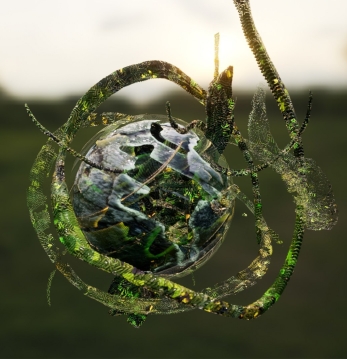 Designed as an augmented reality and spatial audio work downloadable as an app for mobile devices, it is both a site specific public artwork and a digital archive of these species, using tools and platforms from a range of fields including video games, computer generated images and film. Inspired by ecological science-fiction and scientific research, Kudsk Steensen creates a form of ‘slow media’ that uses the technological to foster attention rather than distraction.
 Compared to the
  To get started, the company requires a scan of your license, accompanied by an in-app selfie, to go through a $19 background check approval. What you don’t need is a motorcycle license, or any prior experience piloting these kinds of vehicles. And that could prove to be a challenge for some.
 Despite the overwhelming presence of boutique inns along the Atlantic, they’re not a strictly East Coast commodity. Case in point: Sonoma’s Farmhouse Inn.
  Beyond its aesthetically-pleasing interiors, the inn also knows a thing or two about food—starting with a nightly turndown service that includes homemade cookies and milk, and ending with the
 At first glance, Stephen Wilkes’ photographs look like a single moment in time. It is only upon closer inspection that viewers discover that each of his works is actually the result of shooting thousands of photographs from a stationary position over the course of a day and stitching them together digitally to create one cohesive panorama. The painstaking task of editing all of this information and whittling it down into one image can take months to complete, but the results capture a sense of place that can’t be expressed by a single frame alone.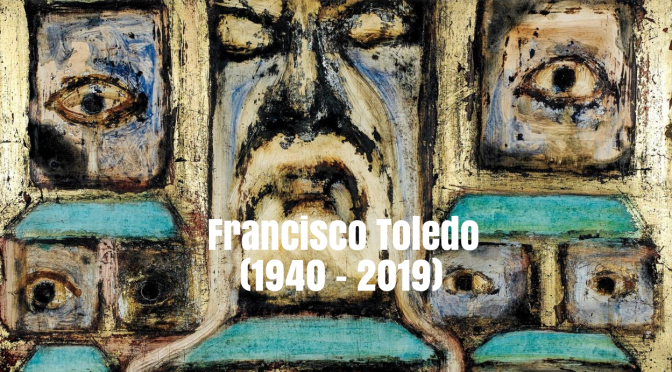
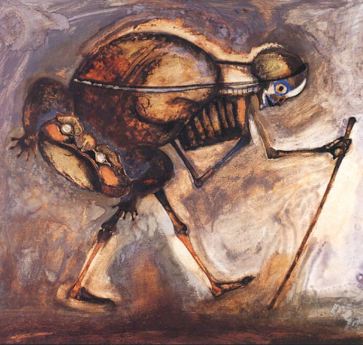 Though his paintings and sculptures sell all over the world for fabulous prices, he has not enriched himself. He lives simply, with his wife, Trine Ellitsgaard Lopez, an accomplished weaver, in a traditional house in the middle of Oaxaca, and has used his considerable profits to found art centers and museums, an ethnobotanical garden and at least three libraries.
 Toledo, whose origins were obscure and inauspicious, was the son of a leatherworker—shoemaker and tanner. He was born in Mexico City, but the family soon after moved to their ancestral village near Juchitán de Zaragoza in the Isthmus of Tehuantepec, nearer to Guatemala than to Mexico City—and being ethnically Zapotec, nearer culturally to the ancient pieties of the hinterland too.
 On “Travel Man,” Ayoade is fun to look at (snappy suits, thick-framed glasses, expression of amused diffidence) and fun to listen to. (Of a monastery turned hotel in Naples, he says, “As well as modish guff, like a rooftop pool and a spa, it retains attractive old shiz, like staircases dug into the hillside.”) His persona is warmly amused, broadly skeptical, and gently astringent—i.e., British. He’s not a joiner. His intros conclude with him saying, in that episode’s particular city and with that episode’s particular guest, “We’re here, but should we have come?”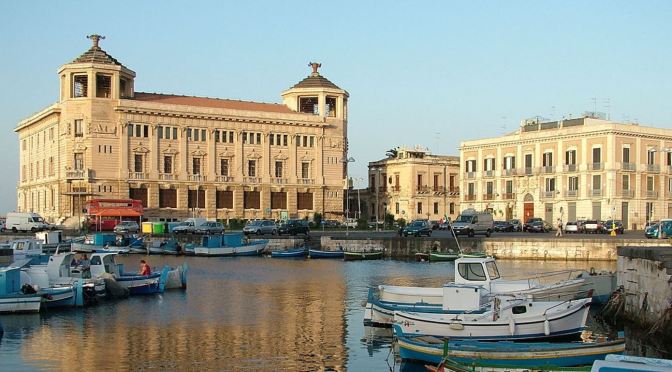
 A passeggiata, or evening walk, around the perimeter of Ortigia reveals many notable structures and stories. Start from the Parco Letterario Elio Vittorini, on the eastern side, and head clockwise. As waves crash against the rocks below the sea wall, you’ll pass crenelated lookout points and the chiseled facade of the 17th-century Chiesa dello Spirito Santo, before finding yourself in the palm-planted gardens of the 13th-century Castello Maniace.
 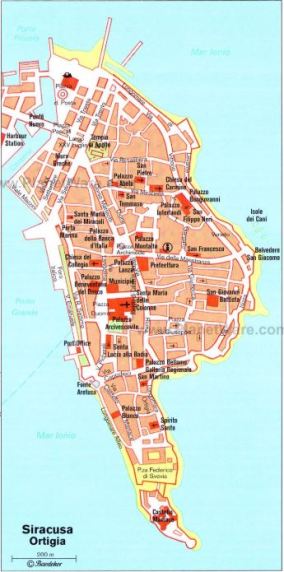 Ithe southeastern Sicilian city that Cicero called “the greatest and most beautiful of all Grecian cities” achieved a size and status in the ancient world that made it a rival of major powers like Athens and Carthage. Takeovers and makeovers by Romans, Byzantines, North Africans, Normans and others left their marks as well, influencing everything from religious art to the region’s distinctive savory-sweet-sour cooking style. Much of the ancient city has crumbled since Cicero’s day, though the ruins can still be explored in Syracuse’s celebrated archaeological park and museum. But the main attraction today is the historical center of Syracuse: Ortigia island, a maze of narrow streets, ornate Baroque churches and centuries-old palazzi.
 Researchers have identified how Salmonella ‘persister’ cells can spread antibiotic resistance genes in mice intestines.
 Quichotte opens with a brilliant parody of Cervantes’s first sentence: ‘There once lived, at a series of temporary addresses across the United States of America, a travelling man of Indian origin, advancing years, and retreating mental powers.’ The temporary addresses are a fine revision of Cervantes’s pretending not to remember the name of the place where Quixote lived – literally, he says he doesn’t want to remember. But in spite of this and many other echoes, Quichotte is not all that close to the original Don Quixote in style or mood, and doesn’t seek to be. The leading character chooses his pseudonym because a recording of Massenet’s opera Don Quichotte was his father’s favourite LP, and echoes of the musical Man of La Mancha, with the obligatory ‘impossible dream’, are all over the place.
 Boomers Daily