Robert De Niro, Al Pacino and Joe Pesci star in Martin Scorsese’s THE IRISHMAN, a saga of organized crime in post-war America told through the eyes of World War II veteran Frank Sheeran, a hustler and hitman who worked alongside some of the most notorious figures of the 20th century. Academy Award winning Director Martin Scorsese on his vision and the making-of THE IRISHMAN. Now playing in theaters and on Netflix.
He became one of the most unpopular Fed chairmen in history for pushing interest rates as high as 20% to break the soaring inflation that consumed the U.S. economy in the 1970s. But his actions succeeded in bringing inflation, making Mr. Volcker one of the most successful central bankers in history.
Paul Volcker, who defeated runaway inflation as Federal Reserve chairman in the 1980s, establishing the importance to the economy of an independent central bank, and whose “Volcker Rule” became a controversial element of postcrisis banking regulation in the Obama administration, has died at 92 years old.
Mr. Volcker died Sunday at his home following a long illness, his family said.
Mr. Volcker served in government across Democratic and Republican administrations for almost three decades in roles guiding monetary policy and overseeing the nation’s financial system.
Mike Nichols, who died in 2014, was a film and stage director of genius, and he wasted no time in showing it. The first two films he directed were “Who’s Afraid of Virginia Woolf?” and “The Graduate.” In the new oral history “Life Isn’t Everything,” Ash Carter and Sam Kashner draw on 150 respondents to tell the story of his incredible career.
Jamie Lee Curtis comes from Hollywood royalty as the daughter of Janet Leigh and Tony Curtis. She credits her mother’s role in “Psycho” for helping her land her first feature role, as the lead in “Halloween,” in 1978. “I’m never going to pretend I got that all on my own,” she tells The New Yorker’sRachel Syme. But Curtis says she never intended to act, and never saw herself as a star: “I was not pretty,” she explains; “I was ‘cute.’ ”
Eventually, the pressure she felt to conform in order to keep working led to a surgical procedure, which led to an opiate addiction. Curtis talks with Syme about recovery, second chances, and more than forty years of films between “Halloween” and Rian Johnson’s “Knives Out.” Plus, the chef at one of Los Angeles’s best restaurants on how to build a woman-friendly kitchen.
An iconic American designer, Klein has defined the last half century of fashion with his visionary minimalist design philosophy, characterised by a dedication to simplicity, comfort, and elegance. In this time, he has transformed his clothing line into a multi-million dollar global lifestyle empire, spanning ready-to-wear, fragrances, furniture, and more. He is now retired, and recently published a survey of his legendary career.
Part 2 of our series on pivotal moments in the lives of the 2020 Democratic presidential contenders. Michael Barbaro speaks with Bernie Sanders, the democratic socialist senator from Vermont.
Mr. Sanders reflected on his early schooling in politics and how he galvanized grass-roots support to evolve from outraged outsider to mainstream candidate with little shift in his message.
Guest: Bernie Sanders, the Vermont senator and candidate for the 2020 Democratic presidential nomination. We also speak with Alexander Burns, who covers national politics for The New York Times. For more information on today’s episode, visit nytimes.com/thedaily.
My paintings are inspired by an intensely personal introspective journey of life, from the ever-changing complexities of love, loss, birth, and death. The context of my work is what I call, “Absence and Presence” pertaining to how someone or something can be physically gone, but the essence still remains. Capturing the physical mixed with spirituality on canvas. My application of paint is an extension of that thought process. Continuously building up and tearing down, layer upon layer, adding and subtracting. A visceral dance between the conscious and the unconscious until the emotion is expressed. Painting the essence of something rather than a depiction. My message is about the human condition, that joy is sweetened by the memory of the pain endured to reach it.
Time brings new colour to old materials, and what makes Ways of Seeing so enduring might not be the same as what made it so electrically influential when it first appeared. We are now more aware of the fissures in the show, in its slight hesitations and indecisions, and in the hedges to what was otherwise such a freight train of an argument. The pictorial tradition of the female nude, Berger argues throughout the second episode, was not a celebration of humanist virtue but a fantasy of the acquisitive ‘male gaze’ (the term was coined a year later by Laura Mulvey).
At the start of the first TV episode of Ways ofSeeing, John Berger takes a scalpel to Botticelli’s Venus and Mars. The opening beat of the programme is the audio of the incision – the blade’s rough abrasion on canvas – before the soundtrack settles into voiceover. ‘This is the first of four programmes,’ Berger says, ‘in which I want to question some of the assumptions usually made about the tradition of European painting. That tradition which was born about 1400, died about 1900.’
Ways of Seeing first aired on Sunday evenings on BBC2 at the start of 1972. It attracted few initial viewers but, through rebroadcasts and word of mouth, the show gathered steam. By the end of 1972, it had gone viral. People in London and New York argued about Berger’s ideas. When Penguin commissioned a paperback adaptation, the first two print runs sold out in months. Regularly assigned in art schools and introductory art history courses, Berger’s project has never really waned in popularity. That first episode now has close to 1.4 million views on YouTube, and the paperback regularly sits atop Amazon’s Media Studies bestseller list.
Three-quarters of a century later, at age 97, Goodenough will become the oldest person to receive the Nobel Prize in Chemistry. At a Dec. 10 ceremony in Sweden, he will be honored for pioneering breakthroughs that led to the widespread use of the lithium-ion battery—and helping spark the wireless revolution. The descendants of his batteries now power modern smartphones and hold the potential to one day sustainably harvest solar and wind power.
John B. Goodenough can still remember, word for word, what a University of Chicago professor told him when he arrived on campus following World War II: “I don’t understand you veterans,” said John A. Simpson, a new UChicago instructor who had just helped achieve the first nuclear reaction. “Don’t you know that anyone who has ever done anything significant in physics had already done it by the time he was your age—and you want to begin?”
His work was displayed in many exhibitions in the UK and twenty four of his paintings were exhibited in New York in 1960. the exhibition was entitled ‘British Motoring Achievements’ and was a collection of paintings depicting outstanding performances of British cars during the previous ten years. These included the Vanwall and Cooper in Grand Prix, Monte Carlo and Alpine Rallies, speed records by MG and Austin, and Le Mans wins by Jaguar and Aston Martin.
Roy Anthony Nockolds was born in Croydon in south London, England on the 24th January 1911. He was the last of seven children; one of his brothers Harold F. L. Nockolds would later become a motoring journalist and author of the classic Rolls-Royce history, “Magic of a Name”. His mother Flora Mary van der Heyden was the great grand daughter of Dutch Baroque-era painter and inventor, Jan van der Heyden. His farther Walter Herbert Nockolds was a descendent of farmers who had originally come to Britain from the Frisian Islands.



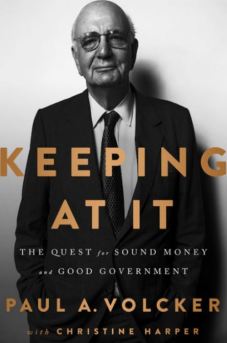 Paul Volcker, who
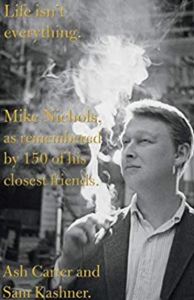 Mike Nichols, who died in 2014, was a film and stage director of genius, and he wasted no time in showing it. The first two films he directed were “Who’s Afraid of Virginia Woolf?” and “The Graduate.” In the new oral history

 Jamie Lee Curtis comes from Hollywood royalty as the daughter of Janet Leigh and Tony Curtis. She credits her mother’s role in “Psycho” for helping her land her first feature role, as the lead in “Halloween,” in 1978. “I’m never going to pretend I got that all on my own,” she tells The New Yorker’s

 Part 2 of our series on pivotal moments in the lives of the 2020 Democratic presidential contenders. Michael Barbaro speaks with Bernie Sanders, the democratic socialist senator from Vermont.

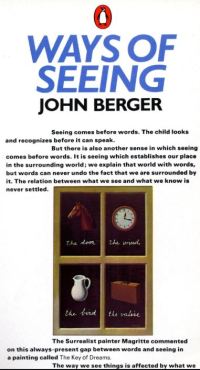 Time brings new colour to old materials, and what makes Ways of Seeing so enduring might not be the same as what made it so electrically influential when it first appeared. We are now more aware of the fissures in the show, in its slight hesitations and indecisions, and in the hedges to what was otherwise such a freight train of an argument. The pictorial tradition of the female nude, Berger argues throughout the second episode, was not a celebration of humanist virtue but a fantasy of the acquisitive ‘male gaze’ (the term was coined a year later by Laura Mulvey).
 Three-quarters of a century later, at age 97, Goodenough will become the oldest person
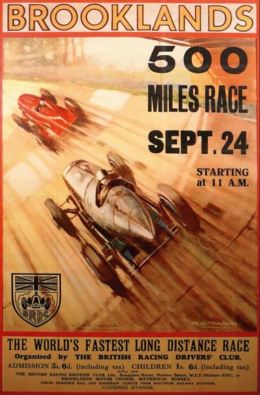 His work was displayed in many exhibitions in the UK and twenty four of his paintings were exhibited in New York in 1960. the exhibition was entitled ‘British Motoring Achievements’ and was a collection of paintings depicting outstanding performances of British cars during the previous ten years. These included the Vanwall and Cooper in Grand Prix, Monte Carlo and Alpine Rallies, speed records by MG and Austin, and Le Mans wins by Jaguar and Aston Martin.
 Boomers Daily