
Category Archives: Previews

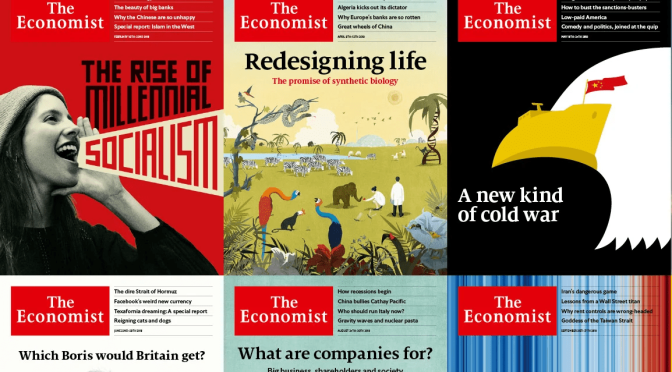
The Economist Magazine – January 27, 2024 Preview

How the border could cost Biden the election

The Economist Magazine (January 25, 2024): The latest issue features How the border could cost Biden the election; Could AI transform the emerging world?; Saving coffee from climate change and Why you shouldn’t retire…

How the border could cost Biden the election

Could AI transform the emerging world?

AI holds tantalising promise for the emerging world

Saving coffee from climate change

A warming planet threatens the world’s favourite drug

Britain’s nuclear plans

The government has yet another plan for a nuclear renaissance

Why you shouldn’t retire

Pleasure cruises, golf and tracing the family tree are not that fulfilling

Research Preview: Science Magazine -January 26, 2024

Image

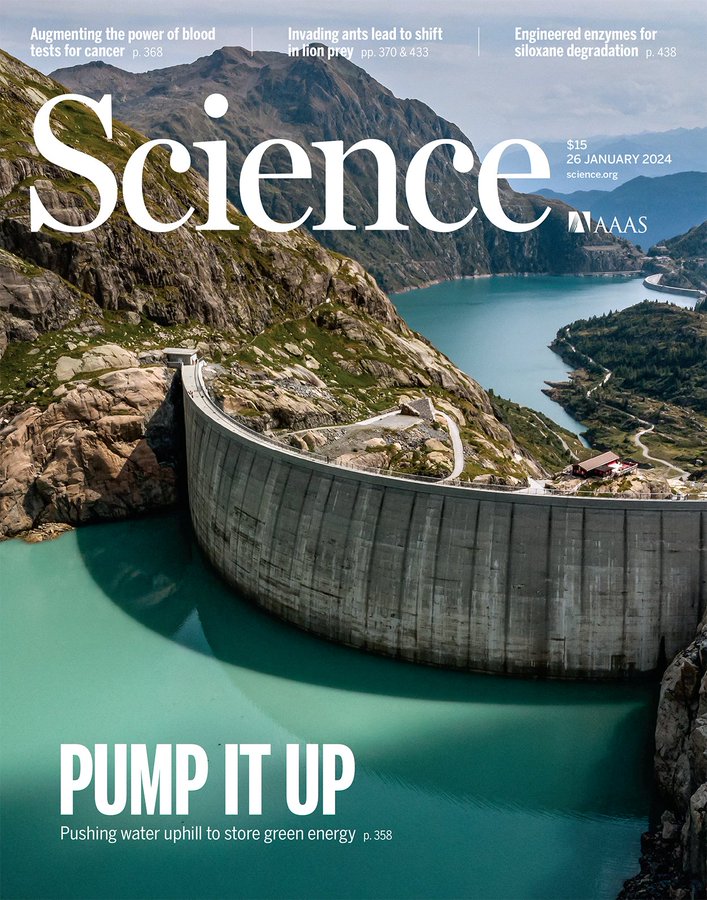
Science Magazine – January 25, 2024: The new issue features ‘Pump It Up’ – Pushing water uphill to store green energy…

How giant ‘water batteries’ could make green power reliable

For times when wind and solar fall short, some utilities are turning to an old technology called pumped storage hydropower

A ghostly quasiparticle rooted in a century-old Italian mystery could unlock quantum computing’s potential

Before he disappeared, Ettore Majorana made a strange prediction. Researchers are still hunting for the truth about him—and his namesake particles

Politics: The Guardian Weekly – January 26, 2024

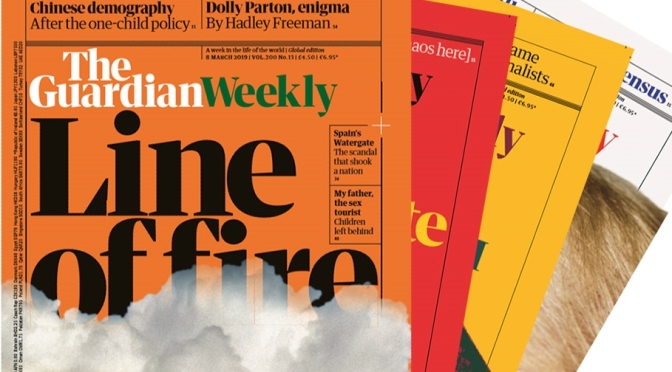
The Guardian Weekly (January 25, 2024) – The new issue features ‘True Colours’ – What the AFD really wants for Germany; The fading hopes for Middle East Peace; Trump’s victory and DeSantis’s doomed campaign…

Events in the Middle East continue to unfold at a bewildering pace, with pockets of conflict opening up across the region. Diplomatic editor Patrick Wintour rounds up a week of flashpoints and assesses increasingly slim hopes for controlling the situation. And Oliver Holmes provides a revealing profile of Yemen, one of the most unchanging and least visited countries in the Middle East.

The Weekly went to press before news of Donald Trump’s victory in the New Hampshire Republican primary on Tuesday night, but you can catch up with all the latest Guardian coverage and reaction here. In the magazine, David Smith delivers a postmortem on Ron DeSantis’s doomed campaign, while Jonathan Freedland argues that Trump’s march to the White House can still be stopped.

Our long-read features take somewhat divergent paths this week. First, Charlotte Edwardes meets Gary Lineker, the former England footballer turned TV presenter whose penchant for regularly airing his liberal worldviews has made him public enemy No 1 for Britain’s anti-woke brigade.

Then, Chananya Groner unearths a remarkable story of factionalism and messianic fervour within New York’s Hasidic Jewish community, stretching back 30 years, which led to secret tunnels recently being discovered beneath a Brooklyn synagogue.

And in Culture, Charlotte Higgins meets the classical musicians Dalia Stasevska and Joshua Bell, who are resurrecting a long-forgotten Ukrainian concerto as a gesture of defiance to Russia.

Finally, we’re on the lookout for your best photographs of the world around us. For a chance for your picture to feature in the magazine, send us your best shot, telling us where you were in the world when you took it and why the scene resonated with you at that particular time.

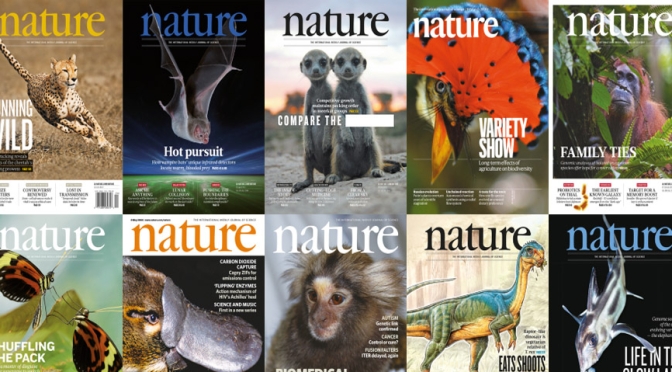
Research Preview: Nature Magazine- January 25, 2024

Volume 625 Issue 7996

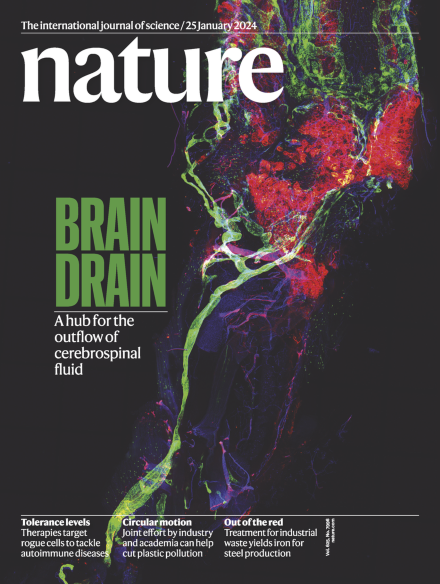
Nature Magazine – January 24, 2024: The latest issue cover features ‘Brain Drain’ – A hub for the outflow of Cerebrospinal Fluid…

A quantum fix makes e-commerce more tamper-resistant

Light pulses with specific quantum properties could be harnessed to send digital ‘contracts’ between buyer and seller.

How an exercise habit paves the way for injured muscles to heal

Mice that work out regularly have higher levels of a molecule that promotes muscle regeneration than sedentary mice do.

Flexible geothermal power makes it easier to harness Earth’s inner heat

Next-generation plants that respond to demand could be key to making a low-carbon energy source more economically appealing.

Arts/Books: Times Literary Supplement – Jan 26, 2024

Image

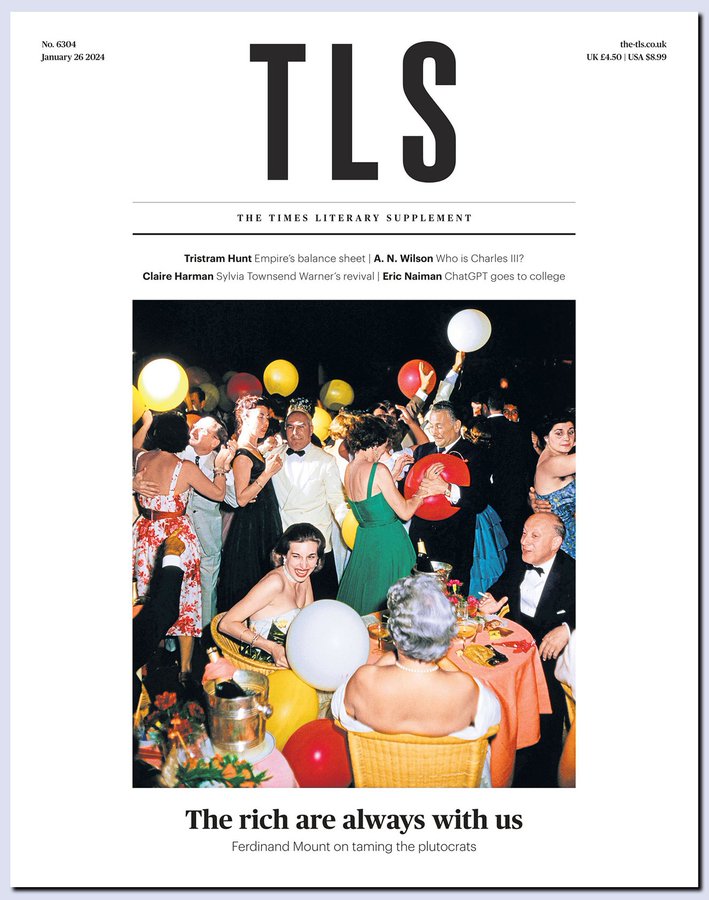
Times Literary Supplement (January 24, 2024): The latest issue features ‘The Rich Are Always With Us’ – Ferdinand Mount on taming the plutocrats; Empire’s balance sheet; Who is Charles III?; Silvia Townsend Warner’s revival and ChatGPT goes to college…

Finance Preview: Barron’s Magazine- January 22, 2024

Image

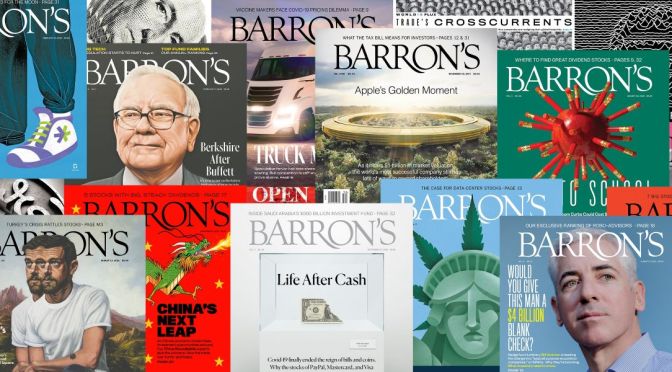
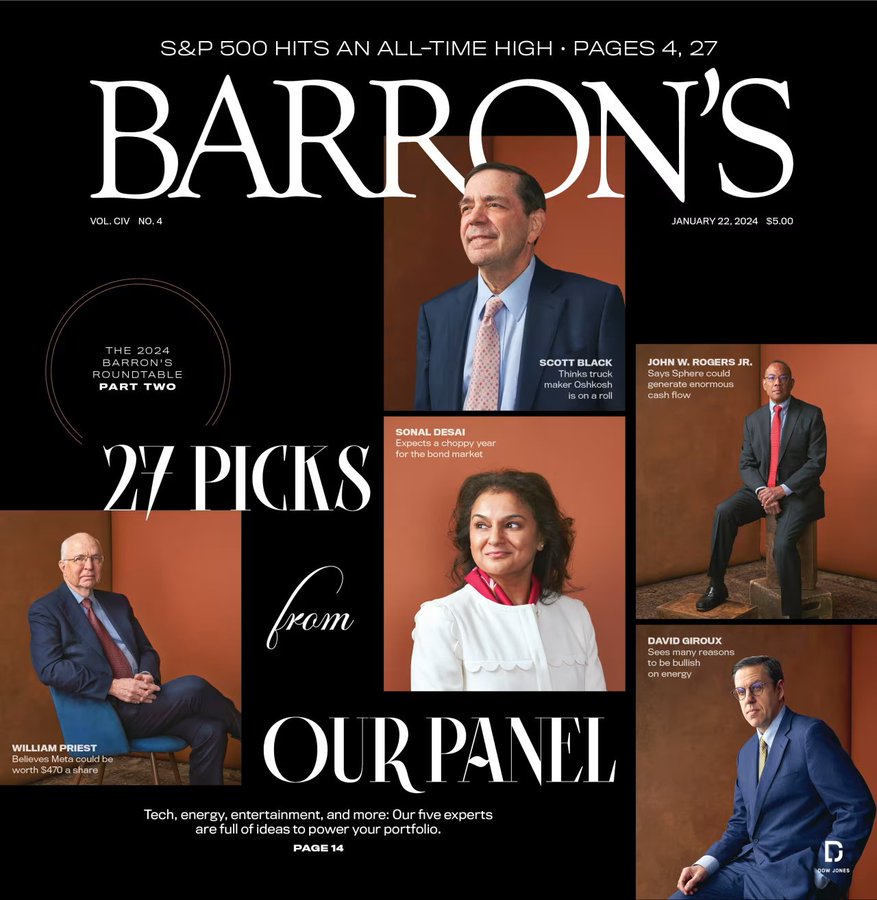
BARRON’S MAGAZINE – JANUARY 22, 2024 ISSUE:

Sizing Up Barron’s Stock Picks of 2023. Why We Trailed the Market.

Sizing Up Barron’s Stock Picks of 2023. Why We Trailed the Market.

The 77 companies featured in bullish Barron’s articles last year returned nearly 10% on average, slightly trailing their benchmarks. Here’s what we got right—and wrong.

The S&P 500 Just Hit a New High. 27 Picks for the Year Ahead, From Our Roundtable Pros.

Tech, energy, entertainment, and more ideas to power your portfolio.

Dividend Cuts Are Coming. They Bring Big Opportunities.

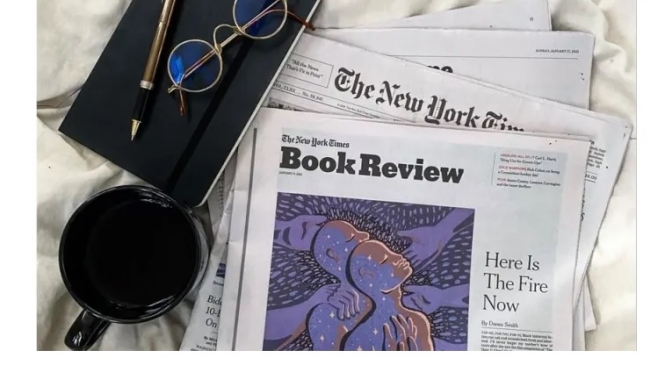
The New York Times Book Review – January 21, 2024

Image

THE NEW YORK TIMES BOOK REVIEW (January 19, 2024): The latest issue features the excitement over advance copy reviews of a January novel, Kaveh Akbar’s “Martyr!” …“You’ve got to read this,” one editor said. “One of the most electric novels I’ve read in a long while,” another said. This kind of thing — everyone thrilled by the same book — is unusual at the TBR, and explains why “Martyr!,” about a grieving young man’s search for meaning, graces our cover this week.

A Death-Haunted First Novel Incandescent With Life

This colorful illustration features a large red bird and a horse’s head and neck, both adorned with Farsi letters, as well as a skyward-bound airplane and a black-hooded figure with many faces holding a torch in one hand and a sword in the other. These details are laid over a backdrop of blue-green mountains and yellow sky.

In “Martyr!,” the poet Kaveh Akbar turns a grieving young man’s search for meaning into a piercing family saga.

Martyr!, by Kaveh Akbar

Reviewed by By Junot Díaz


Cyrus Shams, the aching protagonist at the heart of Kaveh Akbar’s incandescent first novel, is a veritable Rushdiean multitude: an Iranian-born American, a “bad” immigrant, a recovering addict, a straight-passing queer, an almost-30 poet who rarely writes, an orphan, a runner of open mics, an indefatigable logophile, a fiery wit, a self-pitying malcontent. But above all else Cyrus is sad; profoundly, inconsolably, suicidally sad.

Here are the books discussed in this week’s episode:

  • “Knife,” by Salman Rushdie
  • “James,” by Percival Everett
  • “The Book of Love,” by Kelly Link
  • “Martyr,” by Kaveh Akbar
  • “The Demon of Unrest,” by Erik Larson
  • “The Hunter,” by Tana French
  • “Wandering Stars,” by Tommy Orange
  • “Anita de Monte Laughs Last,” by Xochitl Gonzalez
  • “Splinters,” by Leslie Jamison
  • “Neighbors and Other Stories,” by Diane Oliver
  • “Funny Story,” by Emily Henry
  • “Table for Two,” by Amor Towles
  • “Grief Is for People,” by Sloane Crosley
  • “One Way Back: A Memoir,” by Christine Blasey Ford
  • “The House of Hidden Meanings: A Memoir,” by RuPaul

The New Criterion – February 2024 Preview

Image
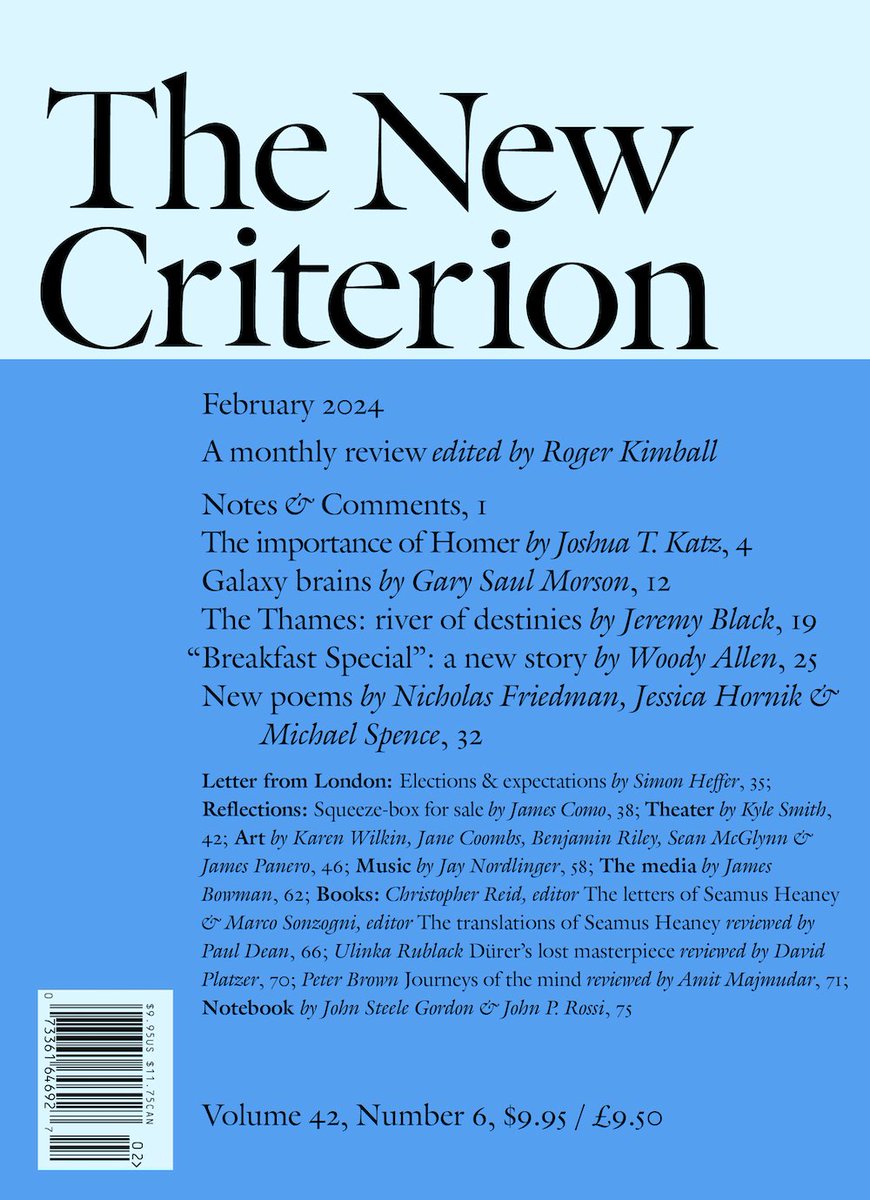
The New Criterion – The February 2024 issue features:

The importance of Homer  by Joshua T. Katz
Galaxy brains  by Gary Saul Morson
The Thames: river of destinies  by Jeremy Black
“Breakfast Special”: a new story  by Woody Allen

New poems  by Nicholas Friedman, Jessica Hornik & Michael Spence

The New York Times Magazine- January 21, 2024

Image

THE NEW YORK TIMES MAGAZINE (January 19, 2024): The new issue features ‘The Whale Who Went AWOL’ – How do you solve a problem like Hvaldmir?; How Group Chats Rule the World – They quietly became the de facto spaces to share dumb jokes, grief or even plans for an insurrection…

The Whale Who Went AWOL

Hvaldimir escaped captivity and became a global celebrity. Now, no one can agree about what to do with him.

By Ferris Jabr

On April 26, 2019, a beluga whale appeared near Tufjord, a village in northern Norway, immediately alarming fishermen in the area. Belugas in that part of the world typically inhabit the remote Arctic and are rarely spotted as far south as the Norwegian mainland. Although they occasionally travel solo, they tend to live and move in groups. This particular whale was entirely alone and unusually comfortable around humans, trailing boats and opening his mouth as though expecting to be fed. And he seemed to be tangled in rope.

How Group Chats Rule the World

An illustration of people falling into chat bubbles.

They quietly became the de facto spaces to share dumb jokes, grief or even plans for an insurrection.

By Sophie Haigney

I am texting all the time. I am, at the very least, receiving texts all the time, a party to conversations in which I am alternately an eavesdropper and an active participant. This is because I am in a lot of group chats — constant, interlinked, text-message-based conversations among multiple friends that happen all day long. I dip into and out of these conversations, on my phone and on my computer. Sometimes I will put both away for two hours and return to find 279 new messages waiting.

The New York Review Of Books – February 8, 2024

Image

The New York Review of Books (January 18, 2024)The latest issue features Crime Fiction Addiction; Chantal Akerman’s Proust & Albertine; Toward and Ethics of Spycraft; Regarding the Pain of Avatars; Was Weimar Doomed to Fail? and The Truth About Tampons….

Ethical Espionage

What moral principles should guide our intelligence-gathering agencies?

By Tamsin Shaw

Spies: The Epic Intelligence War Between East and West by Calder Walton

Spying Through a Glass Darkly: The Ethics of Espionage and Counter-Intelligence by Cécile Fabre

On October 7, as Hamas fighters roared into southern Israel from Gaza, bringing terror and death to anyone they encountered—Israeli soldiers, Bedouins, young people dancing and getting high together, kibbutzniks scooping up small children into desperate arms—I was sleeping in a comfortable hotel room in Georgia. All around me in the sultry darkness of a beautiful resort, many of the US intelligence community’s finest minds were also slumbering. We awoke with the expectation that we would be addressed by CIA director William Burns at the opening of the Cipher Brief’s annual Threat Conference, a yearly gathering of national security professionals from the private and public sectors, plus a few academics and journalists.