Scientists around the world are racing to develop a vaccine for COVID-19. But experts have said it could take a year to 18 months for one to hit the market. The process for testing and approving a vaccine is long and complicated.
That can be frustrating when the coronavirus is taking more and more lives every day. But cutting corners to push a vaccine through faster can lead to devastating consequences. We know that, because it’s happened before.
This week, reassessing the age of the ‘Broken Hill skull’, and unearthing evidence of an ancient forest near the South Pole.
In this episode:
01:25 A skull’s place in history
After nearly a century scientists believe they’ve finally pinned down an age for the ‘Broken Hill skull’ hominid specimen. Research Article: Grun et al.
Digging deep below the sea-floor, researchers have uncovered evidence of a verdant forest that existed on Antarctica around 90 million years ago. Research Article: Klages et al.
Facing shortages of critical equipment, medical workers must make life-or-death decisions about who receives care. WSJ’s Joe Palazzolo reports from an emergency room that’s running short on ventilators, and Chris Weaver explains the plans hospitals are putting in place to decide who gets them.
Arthur Caplan, a bioethicist at NYU’s School of Medicine, talks about how hospitals think about these difficult choices.
Octavian Report “Rostrum” spoke with him about a major theme in Shakespeare’s work and life: disease. Specifically, pandemic plagues, which ravaged London repeatedly throughout Shakespeare’s career, shuttering the theaters, and which appear (obliquely and otherwise) in some of his greatest plays.
The latest episode of the Rostrum’s coronavirus series features James Shapiro, the Larry Miller professor of English and comparative literature at Columbia University, and a leading expert on Shakespeare. Shapiro has published widely on this subject, most recently Shakespeare in a Divided America. He is also an advisor to the Royal Shakespeare Company and to the Public Theater.
James S. Shapiro (born 1955) is Professor of English and Comparative Literature at Columbia University who specialises in Shakespeare and the Early Modern period. Shapiro has served on the faculty at Columbia University since 1985, teaching Shakespeare and other topics, and he has published widely on Shakespeare and Elizabethan culture.
A selection of essential articles read aloud from the latest issue of The Economist. This week, the role of big government in the time of covid-19, (10:20) assessing the havoc the pandemic is causing in emerging countries, (17:45).
In just a few weeks a virus a ten-thousandth of a millimetre in diameter has transformed Western democracies. States have shut down businesses and sealed people indoors. They have promised trillions of dollars to keep the economy on life support. If South Korea and Singapore are a guide, medical and electronic privacy are about to be cast aside. It is the most dramatic extension of state power since the second world war.
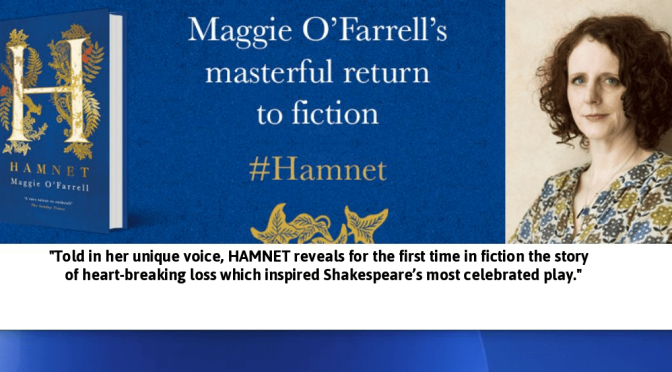
BBC Radio 4 “Books And Authors” Talks To Maggie O’Farrell on her new novel, “Hamnet”
On a summer’s day in 1596, a young girl in Stratford-upon-Avon takes to her bed with a fever. Her twin brother, Hamnet, searches everywhere for help. Why is nobody at home?
Their mother, Agnes, is over a mile away, in the garden where she grows medicinal herbs. Their father is working in London. Neither parent knows that one of the children will not survive the week.
Hamnet is a novel inspired by the son of a famous playwright. It is a story of the bond between twins, and of a marriage pushed to the brink by grief. It is also the story of a kestrel and its mistress; flea that boards a ship in Alexandria; and a glovemaker’s son who flouts convention in pursuit of the woman he loves. Above all, it is a tender and unforgettable reimagining of a boy whose life has been all but forgotten, but whose name was given to one of the most celebrated plays ever written.
Monocle 24 speaks with Gill Saunders and Margaret Timmers about their upcoming book ‘The Poster’ from Thames & Hudson in partnership with the V&A.
Featuring posters from the world-class collection of the Victoria and Albert Museum, this book is the perfect resource for all those who appreciate one of the most popular art forms.
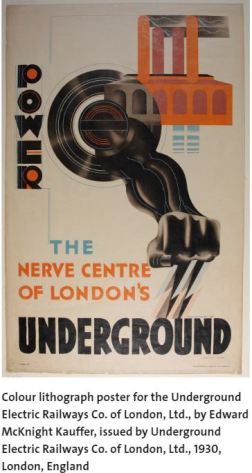
Even in the digital age, the printed poster has continued to be one of the most influential and well-loved ways of informing and entertaining audiences. A powerful means of mass communication, posters are an invaluable resource for understanding the time periods in which they were produced and distributed and have often played key roles in shaping society.
Organized into seven thematic chapters, The Poster brings together more than 300 examples that offer a comprehensive history of the poster as a medium that has been used to share, sell, or incite political and social change. The text traces the poster through innovations in design, illustration, typography, and printing, as well as movements in art, including Art Nouveau, modernism, Art Deco, psychedelia, and punk.
Featuring works by A. M. Cassandre, Henri de Toulouse-Lautrec, Alphonse Mucha, Milton Glaser, Paula Scher, and Peter Gee, and many more, this book is an essential resource for graphic designers, illustrators, and anyone interested in social and political history.
Monocle 24’s Tyler Brûlé is joined by Benno Zogg and Juliet Linley for a look at how the global press is covering the pandemic and whether the tone of the discussion needs a rethink. Plus: Andrew Mueller’s look at what we learnt this week.
Monocle 24 “The Stack” speaks with creative director Jim Moore about his latest book ‘Hunks and Heroes: Jim Moore – Four Decades of Fashion at GQ’.
GQ is revered globally as the ultimate style guide for modern men, and Hunks and Heroes is an epic journey into the world of men’s style as told and edited by Jim Moore. He began his career at GQ as an intern in 1979 and has since played a pivotal role in reshaping men’s fashion during his nearly forty-year tenure at the magazine. From discovering new designers, distilling the latest men’s trends, and extolling fashion advice and critiques in his popular online video series GQ Rules, to Channing Tatum wearing a “JIM F&%#ING MOORE” T-shirt, Moore’s influence and impact on men’s style is unequivocal.
In these pages, Moore takes us through forty years of men’s fashion: featuring the most iconic GQ fashion looks, the magazine’s unforgettable covers and editorial shoots, essential styling tips like how to dress up denim or style a khaki suit, insights on developing your own personal style, and stories showcasing Moore’s knack at reworking the look of everyday men the magazine literally pulled off the street. This volume features 250 of Moore’s iconic men’s fashion photographs produced with internationally renowned image makers like Peggy Sirota, Craig McDean, and Inez & Vinoodh, and includes seminal GQ images of cultural icons such as celebrities, athletes, and politicians. This is the must-have style bible for all readers interested in men’s fashion, style, culture, and celebrity.
Alexander von Humboldt might not be a name you know, but you can bet you know his ideas. Back when the United States were a wee collection of colonies huddled on the eastern seaboard, colonists found the wilderness surrounding them scary.
It took a zealous Prussian explorer with a thing for barometers to show the colonists what they couldn’t see: a global ecosystem, and their own place in nature. In this episode, we learn how Humboldt—through science and art—inspired a key part of America’s national identity.
More fascinating Humboldt facts:
He strongly opposed slavery in the early 19th century, calling it the “greatest of all the evils which have afflicted mankind.”
He was the first to theorize human caused climate change by changing how water flows through a landscape, on a local level, and warned about deforestation.
He invented isotherms, the lines on a weather map that we still use today. He used them to show which parts of the world were experiencing similar temperatures.
He made the world’s most detailed map of Mexico and the American west.
He nearly summited what was then thought to be the world’s tallest mountain (while wearing 18th century wools, no less.).
Another thing Humboldt and Jefferson bonded over? Mastodons. Humboldt was the first to discover remains of a species now known as Cuvieronius hyodon in Ecuador, which were similar to the “giant elephants” being found in Ohio. The teeth Humboldt found were the clue that these weren’t modern elephants; they looked pretty different. And because these teeth looked sharp, Jefferson and some American scientists thought they were for meat eating! Eventually Georges Cuvier, a French scientist who was friends with Humboldt, proved that these were different from Indian and African elephants, and even woolly mammoths—and the species eventually ended up renamed after him. One of the few eponymous misses for our friend Humboldt!


 Scientists around the world are racing to develop a vaccine for COVID-19. But experts have said it could take a year to 18 months for one to hit the market. The process for testing and approving a vaccine is long and complicated.
 This week, reassessing the age of the ‘Broken Hill skull’, and unearthing evidence of an ancient forest near the South Pole.
 Facing shortages of critical equipment, medical workers must make life-or-death decisions about who receives care. WSJ’s Joe Palazzolo reports from an emergency room that’s running short on ventilators, and Chris Weaver explains the plans hospitals are putting in place to decide who gets them.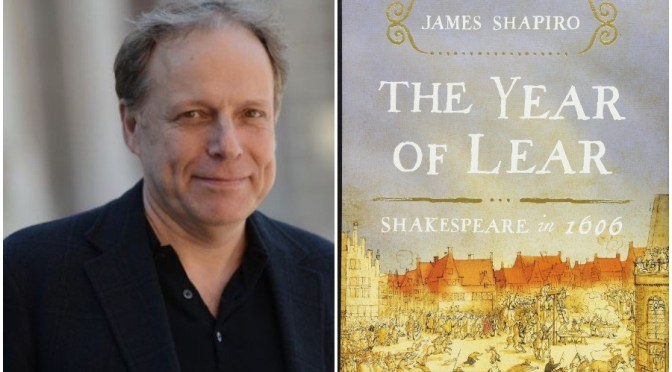
 Octavian Report “Rostrum” spoke with him about a major theme in Shakespeare’s work and life: disease. Specifically, pandemic plagues, which ravaged London repeatedly throughout Shakespeare’s career, shuttering the theaters, and which appear (obliquely and otherwise) in some of his greatest plays.
 BBC Radio 4 “Books And Authors” Talks To Maggie O’Farrell on her new novel, “Hamnet”
 On a summer’s day in 1596, a young girl in Stratford-upon-Avon takes to her bed with a fever. Her twin brother, Hamnet, searches everywhere for help. Why is nobody at home?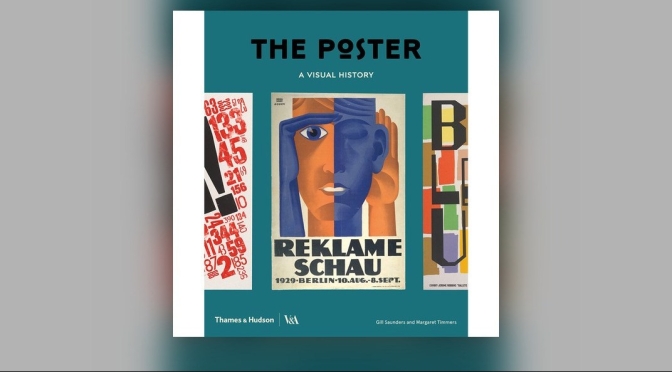
 Monocle 24 speaks with Gill Saunders and Margaret Timmers about their upcoming book ‘The Poster’ from Thames & Hudson in partnership with the V&A.
 Museum, this book is the perfect resource for all those who appreciate one of the most popular art forms.
 Monocle 24’s Tyler Brûlé is joined by Benno Zogg and Juliet Linley for a look at how the global press is covering the pandemic and whether the tone of the discussion needs a rethink. Plus: Andrew Mueller’s look at what we learnt this week.
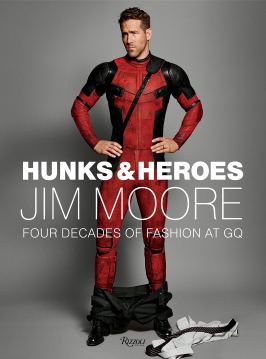 He began his career at GQ as an intern in 1979 and has since played a pivotal role in reshaping men’s fashion during his nearly forty-year tenure at the magazine. From discovering new designers, distilling the latest men’s trends, and extolling fashion advice and critiques in his popular online video series GQ Rules, to Channing Tatum wearing a “JIM F&%#ING MOORE” T-shirt, Moore’s influence and impact on men’s style is unequivocal.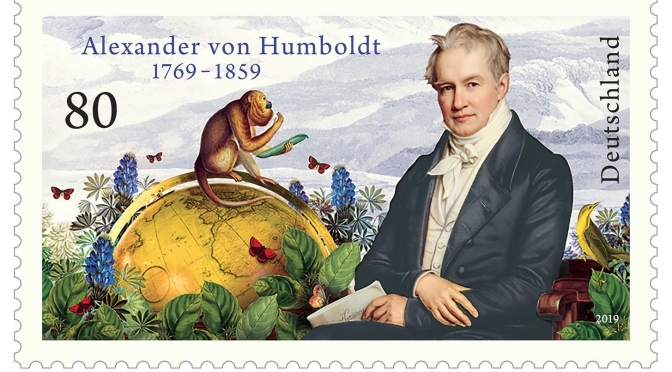
 Alexander von Humboldt might not be a name you know, but you can bet you know his ideas. Back when the United States were a wee collection of colonies huddled on the eastern seaboard, colonists found the wilderness surrounding them scary.
 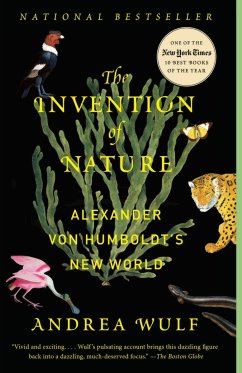 episode, we learn how Humboldt—through science and art—inspired a key part of America’s national identity.
 Boomers Daily