Alexander Walton Masters is the managing director of The Out, an on-demand luxury car-rental company that exists to help Londoners escape the city.
The company was born out of Jaguar Land Rover’s venture-capital arm InMotion, which incubates and invests in companies in the mobility space. From delivery to pick-up of its Jaguar and Land Rover vehicles, The Out aims to take away the usual pains of renting.
From a Nuro online Blog news release (February 6, 2020):
Today, the US Department of Transportation (DOT) and the National Highway Traffic Safety Administration (NHTSA) approved a regulatory exemption for R2, Nuro’s second-generation vehicle. As the first company to be granted approval for a self-driving vehicle exemption, it’s an important moment for Nuro and a milestone for the industry. Under Secretary of Transportation Elaine Chao’s leadership, DOT is advancing a future of improved safety, mobility, and commerce.
This decision provides regulatory certainty for Nuro to operate our second-generation self-driving vehicle, built to carry packages instead of people. We custom-designed R2 to enrich local commerce with last-mile delivery of consumer products, groceries, and hot food from local stores and restaurants. With its specially designed size, weight, pedestrian-protecting front end, operating speed, electric propulsion, and cautious driving habits, R2 is ready to begin service as a socially responsible neighborhood vehicle that you can trust. In the coming weeks, R2 will begin public road testing to prepare for its first deliveries to customers’ homes with our partners in Houston, Texas. With this vehicle, we can also bring our service to new cities, so more Americans can benefit from safe, efficient, convenient on-demand deliveries.
As more and more Americans move south, Lake Wylie, a suburb of Charlotte, has tripled in size. Now, the town is saying no more. WSJ’s Valerie Bauerlein explains.
LAKE WYLIE, S.C.—This lakefront suburb of Charlotte, N.C., is among the Sunbelt’s strongest magnets for young families.
Since 2000, Lake Wylie has tripled in population to 12,000 on the strength of its good schools, low taxes and proximity to Charlotte’s jobs in the financial and technology sectors. But those schools are filling up, the water system frequently fails under increased demand and 20-mile commutes are stretching to 90 minutes.
Now, the town that grew too fast wants to stop growth.
On this week’s show, Staff Writer Jennifer Couzin-Frankel joins host Sarah Crespi to talk about a Science paper that combines two hot areas of research—CRISPR gene editing and immunotherapy for cancer—and tests it in patients.
Sarah also talks with Damien Finch, a Ph.D. candidate in the School of Earth Sciences at the University of Melbourne, about the Kimberly region of Australia and dating its ice age cave paintings using charcoal from nearby wasp nests.
In rural towns across the U.S. hospitals are in crisis. Since 2010, 121 rural hospitals have closed. And, the National Rural Health Association says more than one-third of all rural hospitals in the U.S. are at serious risk of shutting down.
But not all hospitals are losing money. A series of mergers and acquisitions that began in the 1990’s has created massive hospital groups. Many of these hospital consortiums are turning huge profits every year by offering high priced services to well insured patients.
The hope, Lee says, is that ultrasound will kill cancer cells in a specific way that will also engage the immune system and arouse it to attack any cancer cells remaining after the treatment.
A new technique could offer a targeted approach to fighting cancer: low-intensity pulses of ultrasound have been shown to selectively kill cancer cells while leaving normal cells unharmed.
Ultrasound waves—sound waves with frequencies higher than humans can hear—have been used as a cancer treatment before, albeit in a broad-brush approach: high-intensity bursts of ultrasound can heat up tissue, killing cancer and normal cells in a target area. Now, scientists and engineers are exploring the use of low-intensity pulsed ultrasound (LIPUS) in an effort to create a more selective treatment.
A study describing the effectiveness of the new approach in cell models was published in Applied Physics Letters on January 7. The researchers behind the work caution that it is still preliminary—it still has not been tested in a live animal let alone in a human, and there remain several key challenges to address—but the results so far are promising.
From website: Congratulations to Oleg Ershov, Russian Federation, the International Landscape Photographer of the Year 2019!
And to all the other winners and, most importantly, all the Top 101 photographers! It was a huge year and one of the toughest yet – the quality continues to get better and better!
The prize winners are:
Oleg Ershov, Russian Federation, the International Landscape Photographer of the Year 2019
光 杨 (Yang Guang), China, The International Landscape Photographer of the Year 2019 – Second Place
Blake Randall, Canada, The International Landscape Photographer of the Year 2019 – Third Place
“It is with tremendous sadness that my brothers and I announce that Kirk Douglas left us today at the age of 103. To the world he was a legend, an actor from the golden age of movies who lived well into his golden years, a humanitarian whose commitment to justice and the causes he believed in set a standard for all of us to aspire to.
But to me and my brothers Joel and Peter he was simply Dad, to Catherine, a wonderful father-in-law, to his grandchildren and great grandchild their loving grandfather, and to his wife Anne, a wonderful husband.
Kirk’s life was well lived, and he leaves a legacy in film that will endure for generations to come, and a history as a renowned philanthropist who worked to aid the public and bring peace to the planet.
Let me end with the words I told him on his last birthday and which will always remain true. Dad- I love you so much and I am so proud to be your son.”
Featuring articles on lung-cancer screening in the NELSON trial, ribociclib and fulvestrant in metastatic breast cancer, vitamin D in pregnancy and asthma, treatment thresholds for neonatal hypoglycemia, and CAR-NK cells in anti-CD19 lymphoid tumors; a review article on placebo and nocebo effects; a Clinical Problem-Solving describing a rapid change in pressure; and Perspective articles on altruism in Extremis, on abuses of FDA regulatory procedures, and on joining forces against delirium.
Hear the latest from the world of science, brought to you by Benjamin Thompson and Nick Howe. This week, how setting an out-of-office email could help promote a kinder academic culture.
In this episode:
00:47 Being truly out of office
Last year, a viral tweet about emails sparked a deeper conversation about academics’ work-life-balance. Could email etiquette help tip the balance? Careers Article: Out of office replies and what they can say about you


 Alexander Walton Masters is the managing director of The Out, an on-demand luxury car-rental company that exists to help Londoners escape the city.
  The company was born out of Jaguar Land Rover’s venture-capital arm InMotion, which incubates and invests in companies in the mobility space. From delivery to pick-up of its Jaguar and Land Rover vehicles, The Out aims to take away the usual pains of renting.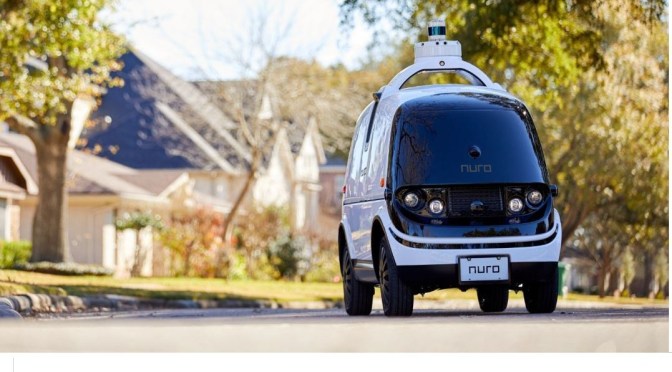
 Today, the US Department of Transportation (DOT) and the National Highway Traffic Safety Administration (NHTSA) approved a regulatory exemption for R2, Nuro’s second-generation vehicle. As the first company to be granted approval for a self-driving vehicle exemption, it’s an important moment for Nuro and a milestone for the industry. Under Secretary of Transportation Elaine Chao’s leadership, DOT is advancing a future of improved safety, mobility, and commerce.

 LAKE WYLIE, S.C.—This lakefront suburb of Charlotte, N.C., is among the Sunbelt’s strongest magnets for young families.
 On this week’s show, Staff Writer Jennifer Couzin-Frankel joins host Sarah Crespi to talk about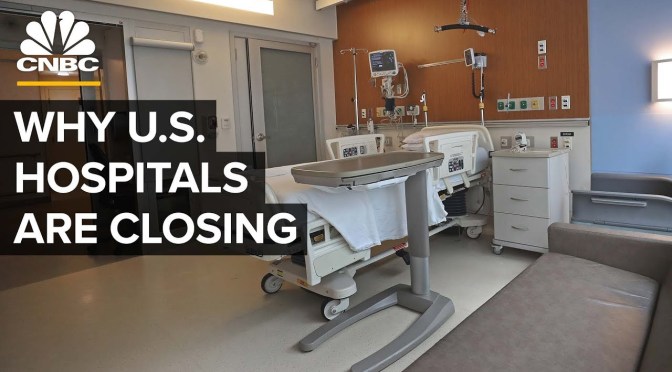
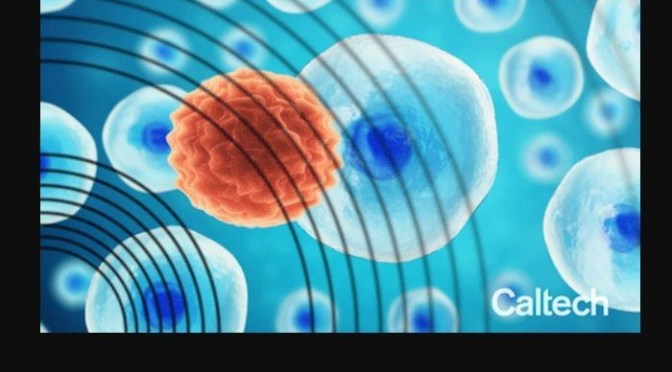
 The hope, Lee says, is that ultrasound will kill cancer cells in a specific way that will also engage the immune system and arouse it to attack any cancer cells remaining after the treatment.
 Ultrasound waves—sound waves with frequencies higher than humans can hear—have been used as a cancer treatment before, albeit in a broad-brush approach: high-intensity bursts of ultrasound can heat up tissue, killing cancer and normal cells in a target area. Now, scientists and engineers are exploring the use of low-intensity pulsed ultrasound (LIPUS) in an effort to create a more selective treatment.




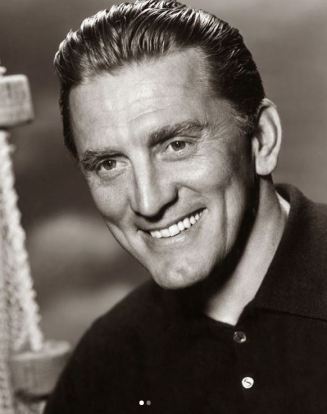 “It is with tremendous sadness that my brothers and I announce that Kirk Douglas left us today at the age of 103. To the world he was a legend, an actor from the golden age of movies who lived well into his golden years, a humanitarian whose commitment to justice and the causes he believed in set a standard for all of us to aspire to.
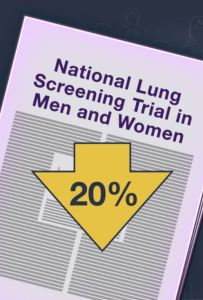 Featuring articles on lung-cancer screening in the NELSON trial, ribociclib and fulvestrant in metastatic breast cancer, vitamin D in pregnancy and asthma, treatment thresholds for neonatal hypoglycemia, and CAR-NK cells in anti-CD19 lymphoid tumors; a review article on placebo and nocebo effects; a Clinical Problem-Solving describing a rapid change in pressure; and Perspective articles on altruism in Extremis, on abuses of FDA regulatory procedures, and on joining forces against delirium.
 Hear the latest from the world of science, brought to you by Benjamin Thompson and Nick Howe. This week, how setting an out-of-office email could help promote a kinder academic culture.
 Boomers Daily